
Hydrolyzed Keratin CAS 69430-36-0
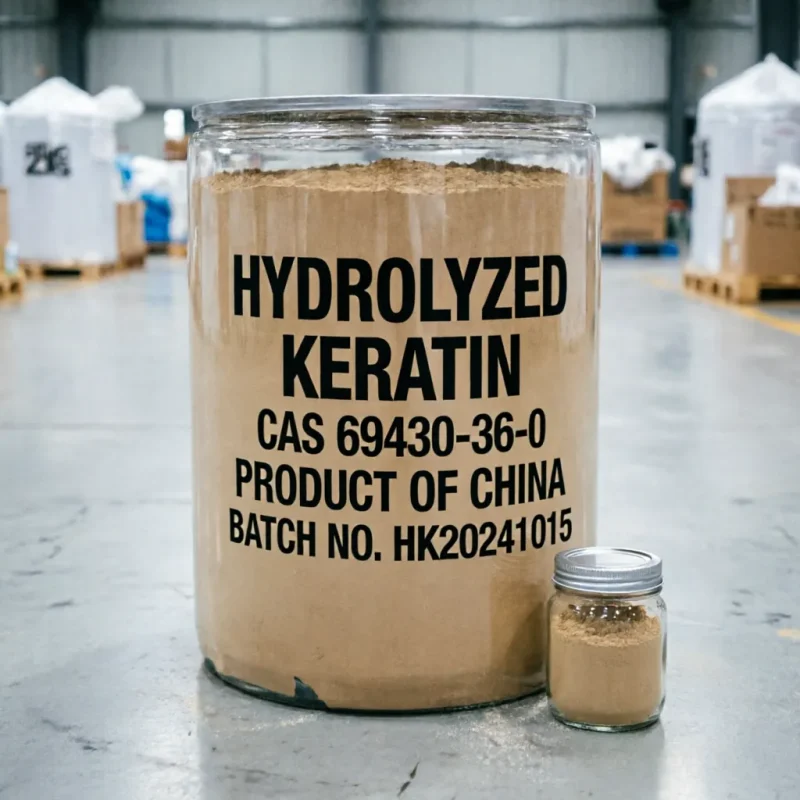
Hydrolyzed Keratin is a low-molecular-weight polypeptide mixture supplied as a light yellow to amber powder or viscous liquid, rich in cysteine and proline. Enzymatic cleavage of disulfide bonds drops the average molecular weight below 1,000 Da, enabling deep penetration into the hair cortex rather than mere surface coating. Core uses include damaged hair repair, skin barrier reinforcement, and nail hardening. Each shipment includes COA, TDS, and SDS.
- CAS No: 69430-36-0
- Synonyms: Keratin hydrolysate, Keratin amino acids
- EC Number: 294-801-4
- Molecular Formula: Not applicable (complex protein hydrolysate)
- Average Molecular Weight: ≤ 1,000 Da (customizable up to 3,000 Da)
- Appearance: Light yellow to amber powder or clear to slightly hazy liquid
- Protein Content (Kjeldahl): ≥ 90.0% (powder) / ≥ 20.0% (liquid)
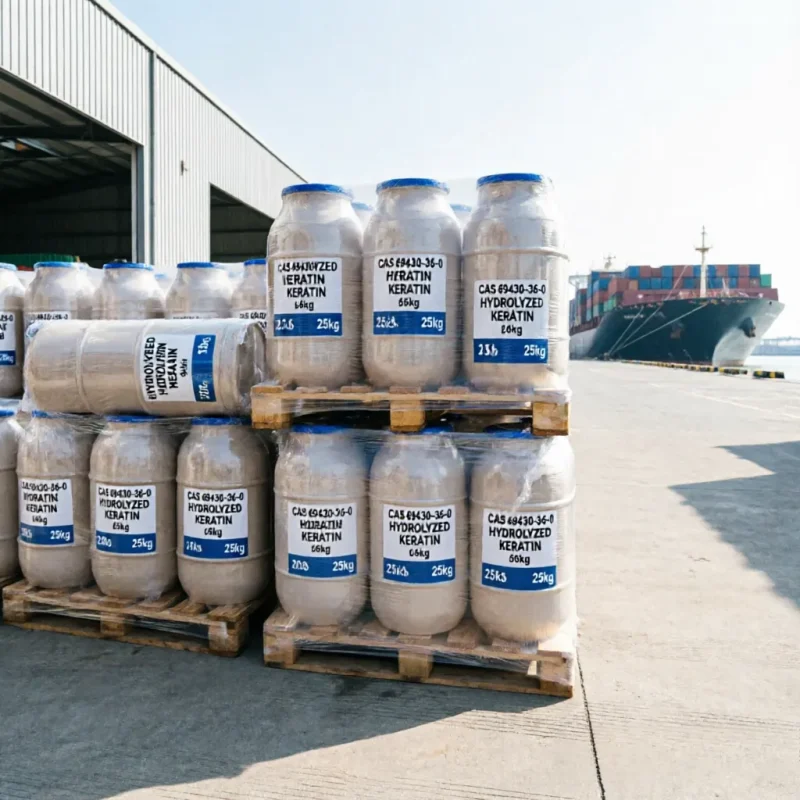
- Packaging: 25 kg (55 lb) fiber drum with PE liner; 200 kg (440 lb) HDPE drum for liquid. Custom packaging available upon request.
- Main Applications: Hair repair masks, sulfate-free shampoos, anti-aging serums, nail strengtheners
Introduction to Hydrolyzed Keratin
Hydrolyzed Keratin is a complex polypeptide mixture derived from the controlled enzymatic or alkaline hydrolysis of natural keratin sources like wool or feathers. The process breaks down the rigid alpha-helix structure and cleaves disulfide bonds, releasing free amino acids and short peptide chains. Cosmetic formulators dose this material at 1.0–5.0% in rinse-off and leave-on products to rebuild structural integrity in chemically bleached or heat-damaged hair.
The primary formulation advantage lies in the low average molecular weight, which allows the peptides to penetrate the cuticle and bind to exposed cortical proteins via hydrogen and ionic bonds. A practical handling note involves natural batch variations: because the raw material is biological, slight shifts in amber color intensity and a faint characteristic sulfurous or ammonia odor are normal and do not indicate degradation. Store powder grades tightly sealed to prevent severe caking from ambient moisture.
Key Features of Hydrolyzed Keratin
- Deep cortical penetration. Average molecular weight below 1,000 Da allows peptides to bypass the intact cuticle layer and anchor directly into the damaged hair cortex, restoring tensile strength from the inside out.
- High cysteine content. The abundance of sulfur-containing amino acids provides reactive thiol groups that help reconstruct broken disulfide bridges in bleached or permed hair fibers.
- Substantive film-forming. Cationic and polar peptide sequences bind electrostatically to negatively charged damaged hair surfaces, reducing static flyaway and improving wet combability without heavy buildup.
- Skin barrier support. In skincare, the high proline and serine concentration mimics natural moisturizing factors (NMF), drawing water into the stratum corneum and forming a breathable, non-occlusive protective film.
Hydrolyzed Keratin Chemical & Physical Properties
| Property | Value |
|---|---|
| Molecular Formula | Not applicable (complex protein hydrolysate) |
| Average Molecular Weight | ≤ 1,000 Da (powder); customizable distribution |
| Thermal Behaviour | Decomposes above 200 °C (392 °F) without melting; avoid prolonged heating above 60 °C (140 °F) in aqueous solutions to prevent peptide aggregation. |
| Density | Bulk powder density approx. 0.45–0.55 g/cm³ (28–34 lb/ft³); liquid density approx. 1.05–1.10 g/cm³. |
| Solubility | Highly soluble in water; forms clear to slightly opalescent solutions. Insoluble in oils and non-polar solvents. |
| pH (5% aqueous solution) | 5.0 – 7.0 |
| Ash Content | ≤ 5.0% |
| Heavy Metals (as Pb) | ≤ 10 ppm |
Applications of Hydrolyzed Keratin
Intensive hair repair masks and conditioners: Formulated at 2.0–5.0%, the low-molecular-weight peptides penetrate bleached hair cuticles, increasing tensile strength and elasticity. The amino acids fill voids in the cortex, reducing breakage during mechanical brushing.
Sulfate-free and clarifying shampoos: Dosed at 1.0–3.0%, the substantive peptides co-deposit onto the hair shaft during rinsing. This mitigates the stripping effect of harsh surfactants, maintaining wet combability and reducing static charge.
Skin barrier and anti-aging serums: Blended at 1.0–2.0% in aqueous phases, the high serine and proline content acts as a humectant. The peptides form a breathable, non-tacky film on the epidermis, reducing transepidermal water loss (TEWL) without clogging pores.
Nail strengthening treatments: Applied at 3.0–5.0% in water-based nail primers, the cysteine-rich peptides integrate into the keratin matrix of the nail plate, improving flexibility and preventing brittle splitting.
Storage & Safety Precautions for Hydrolyzed Keratin
- Storage: Keep powder sealed in a cool, dry warehouse below 25 °C (77 °F). The high amino acid content is highly hygroscopic; an opened drum left in 65% relative humidity will absorb moisture and cake into a solid block within 48 hours. Liquid grades require 4–8 °C (39–46 °F) cold-chain storage or adequate preservation to prevent microbial spoilage.
- Safety: Classified as non-hazardous. Wear standard dust masks and safety goggles when handling dry powder to avoid respiratory and eye irritation. Wash skin with water after contact.
- Transport: Hydrolyzed Keratin is Non-DG under IATA/IMDG/ADR. Not a marine pollutant. Standard 25 kg (55 lb) drums ship in standard dry containers.
- QC note: Verify average molecular weight by Gel Permeation Chromatography (GPC) or SEC. A fresh powder lot has a faint, characteristic meaty or sulfurous odor; a sharp, putrid smell indicates bacterial degradation during transit and requires immediate rejection.
Hydrolyzed Keratin FAQ
Q: Why does Hydrolyzed Keratin (CAS 69430-36-0) have a slight ammonia or sulfur smell?
A: Normal. Cleaving natural disulfide bonds releases trace sulfur and ammonia compounds. The odor dissipates after formulation and rinsing. Reject only if the smell is putrid, indicating bacterial spoilage.
Q: Can Hydrolyzed Keratin replace silicones for hair slip?
A: No. Keratin repairs internal structure and reduces static but lacks the extreme surface lubricity of dimethicone. Blend with amodimethicone or cationic guar for optimal wet-combing slip.
Q: Does adding salt to the formula precipitate the keratin?
A: Yes. High electrolyte concentrations cause “salting out” and peptide aggregation. Keep NaCl below 1.0% in leave-on serums, or add keratin after salt dissolves and the batch cools.
Related products
Manufacturer & Exporter Since 2006
Get Tailored Chemical Raw Material Solutions — Reply Within 1 Hour
Factory-direct pricing, stable high-purity supply and complete compliance documentation for your industrial formulations.
- 1000+Products
- 200+QC Protocols
- 7–15Days Delivery
- Factory-Direct Pricing
- COA / TDS / SDS Included
- Free Samples for Testing
- 40+ Export Countries
Request a Free Quote
Our engineers reply within 1 hour during GMT+8 business hours.
Please include in your inquiry:
- Product name or CAS number
- Required quantity
- Destination country or port
- Preferred packaging