
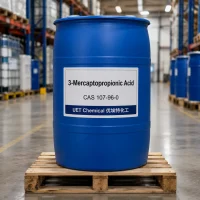
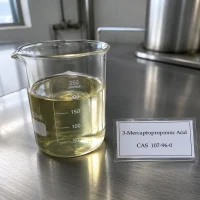
3-Mercaptopropionic Acid CAS 107-96-0
3-Mercaptopropionic Acid (3-MPA) is a short-chain bifunctional mercaptan containing both a thiol group and a carboxylic acid group, solving broad molecular weight distribution, low coupling efficiency, and poor polymer chain termination challenges in radical polymerization and organic synthesis. Polymer, pesticide, and pharmaceutical manufacturers rely on it for acrylic resin chain transfer agents, phosphorus-based flame retardants, and pharmaceutical building blocks. UETChem supplies this product with strict control over purity, discoloration, and residual disulfides, ensuring maximum thiol reactivity and precise molecular weight regulation in every batch. Each shipment includes COA, TDS, SDS.
- CAS No: 107-96-0
- Synonyms: 3-MPA; β-Mercaptopropionic acid; 3-Thiopropionic acid; Hydracrylic thioacid
- EINECS: 203-537-0
- Molecular Formula: C3H6O2S
- Molecular Weight: 106.15 g/mol (106.15 lb/lbmol)
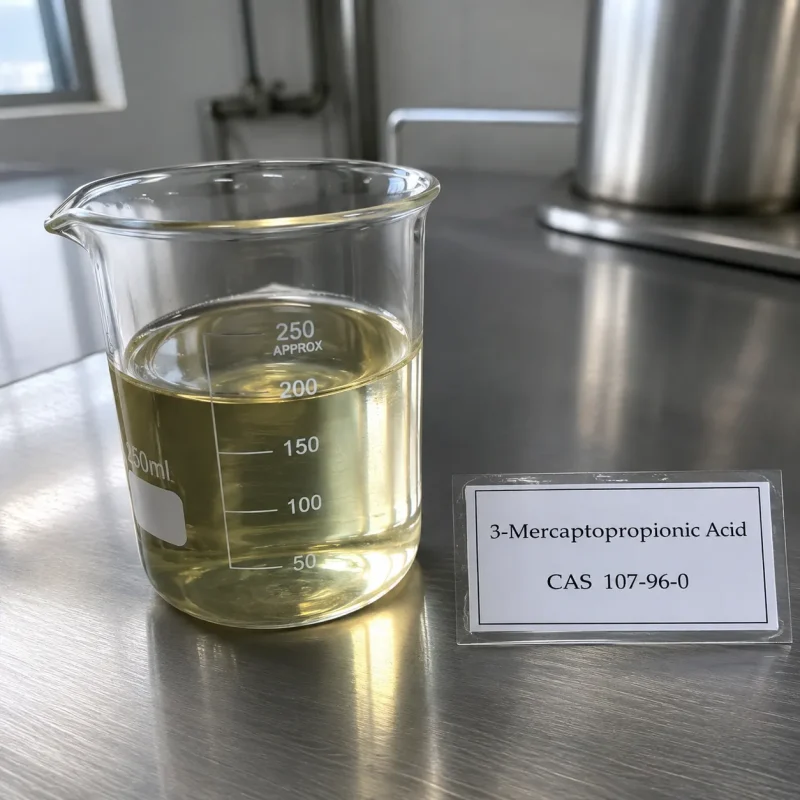
- Appearance: Colorless to pale yellow transparent liquid
- Purity: 99.0% min (GC)
- Moisture: 0.1% max
- Color (APHA): 30 max
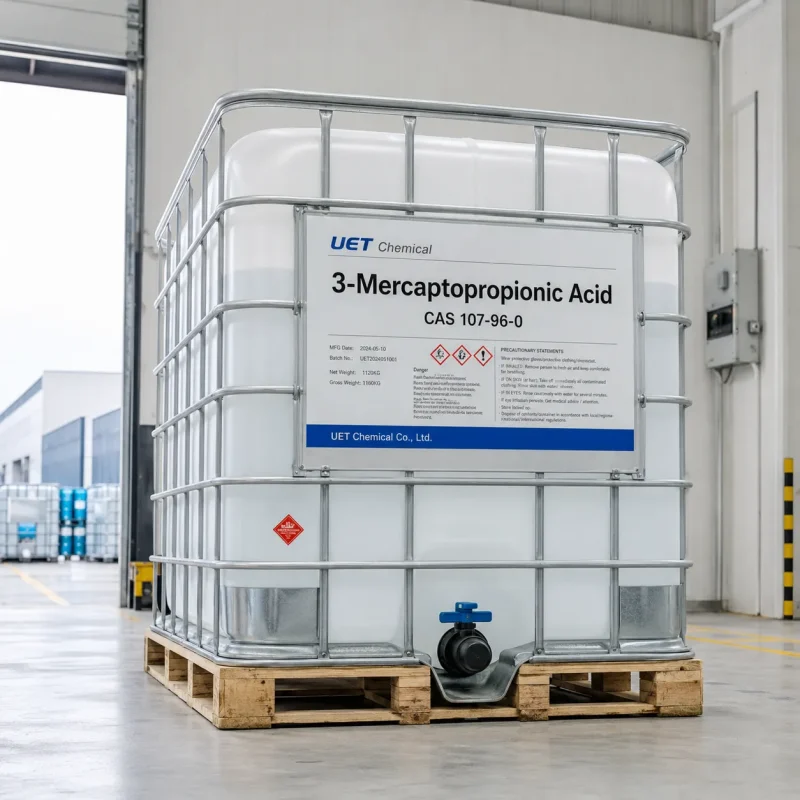
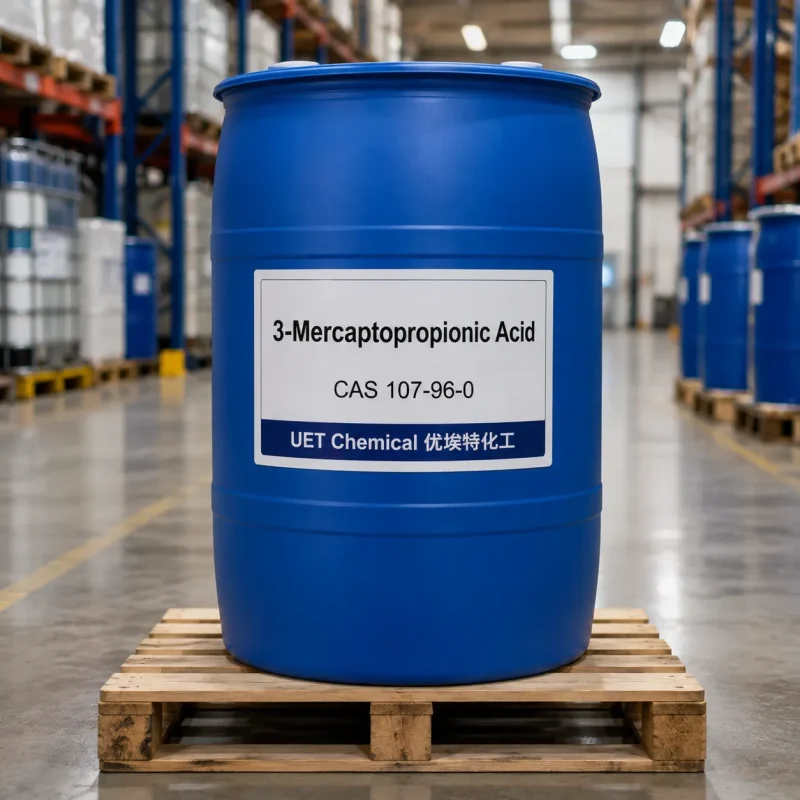
- Packaging: 200 kg (441 lb) HDPE drum, 1000 kg (2205 lb) IBC. Custom packaging available upon request.
- Main Applications: Polymer chain transfer agents, flame retardant intermediates, pharmaceutical synthesis, PVC stabilizers, metal chelating agents
Introduction to 3-Mercaptopropionic Acid
3-Mercaptopropionic Acid is a short-chain organosulfur compound consisting of a three-carbon backbone bearing a terminal thiol (-SH) group and a carboxylic acid (-COOH) group. The molecular architecture places both functional groups within a compact spatial arrangement, enabling simultaneous participation in radical transfer and esterification reactions. At room temperature, the material presents as a colorless to pale yellow transparent liquid with an intensely pungent, sulfurous odor detectable at trace concentrations.
The compound is completely miscible with water and dissolves readily in methanol, ethanol, diethyl ether, and acetone. Industrial polymerization and fine chemical facilities consume this intermediate to terminate growing polymer chains, construct phosphorus-sulfur linkages, and build heterocyclic pharmaceutical scaffolds. The dual-functional nature of the molecule allows chemists to anchor the thiol moiety to metal surfaces while simultaneously esterifying the acid group with alcohols or amines.
Key Features of 3-MPA
- Bifunctional reactivity: The thiol group undergoes rapid radical transfer and thiol-ene addition, while the carboxyl group participates in esterification, amidation, and metal salt formation.
- High chain transfer constant: The weak S-H bond (bond dissociation energy ~365 kJ/mol) is readily cleaved by propagating polymer radicals, providing efficient molecular weight regulation.
- Complete water miscibility: Eliminates the need for co-solvents in aqueous emulsion polymerizations and water-based treatment formulations.
3-MPA Chemical & Physical Properties
| Property | Value |
|---|---|
| Molecular Formula | C3H6O2S |
| Molecular Weight | 106.15 g/mol (106.15 lb/lbmol) |
| Appearance | Colorless to pale yellow transparent liquid |
| Boiling Point | 110 – 111 °C (230 – 232 °F) at 15 mmHg |
| Density | 1.22 g/cm³ (10.17 lb/gal) at 20 °C |
| Flash Point | 88 °C (190 °F) closed cup |
| Solubility | Miscible with water; soluble in alcohols, ethers, acetone |
| pKa | 4.75 (carboxyl) / 10.3 (thiol) |
Applications of 3-Mercaptopropionic Acid
Radical polymerization chain transfer: Dosed at 0.1% – 2.0% in emulsion, suspension, and bulk polymerizations of acrylic, methacrylic, and styrenic monomers. The labile S-H bond rapidly donates a hydrogen atom to the propagating polymer radical, capping the growing chain and generating a new thiyl radical that re-initiates monomer addition. This process narrows the molecular weight distribution and controls melt viscosity for downstream extrusion and coating operations.
Phosphorus-based flame retardant synthesis: Esterified with polyols and subsequently phosphorylated to produce reactive flame retardant intermediates. The thiol moiety also undergoes Michael addition with vinyl phosphonates to construct P-C-S linkages used in intumescent coating systems and thermoplastic flame retardant concentrates.
Pharmaceutical and agrochemical intermediates: Serves as a building block for synthesizing thioester-containing API intermediates, herbicide precursors, and heterocyclic compounds. The carboxyl group condenses with amines to form amide linkages, while the thiol group undergoes selective alkylation or oxidation to disulfides.
PVC thermal stabilizers: Reacted with organotin compounds to produce organotin mercaptides. These stabilizers scavenge labile chlorine atoms from degraded PVC chains, preventing discoloration and maintaining mechanical integrity during high-temperature extrusion.
Metal surface treatment: The thiol group forms strong thiolate bonds with gold, silver, and copper surfaces. This self-assembled monolayer (SAM) formation is exploited in microelectronics passivation, anti-tarnish coatings, and nanomaterial functionalization.
Storage & Safety Precautions for 3-MPA
- Oxidation and discoloration control: Store in tightly sealed, opaque HDPE drums or nitrogen-blanked stainless steel tanks below 25 °C (77 °F). The thiol group is extremely susceptible to air oxidation, forming disulfide dimers that increase viscosity and yellow the liquid. Facilities run nitrogen padding on all storage tanks to exclude atmospheric oxygen.
- Odor management: The detection threshold is below 0.001 ppm. Even micro-leaks produce intense malodor complaints. Equip all dispensing areas with activated carbon scrubbers and continuous H2S/thiol gas monitors.
- Handling and PPE: The liquid is corrosive to skin and eyes and causes respiratory irritation. Wear full-face respirators with acid/organic vapor cartridges, heavy-duty nitrile gloves, and chemical splash aprons during drum decanting.
- Field note: When charging 3-MPA into a polymerization reactor, use a nitrogen-pressurized metering pump. Drawing the liquid through a vented suction line introduces air, oxidizing the thiol and consuming the active chain transfer agent before it reaches the reactor.
3-MPA FAQ
Q: How does 3-Mercaptopropionic Acid control polymer molecular weight?
A: 3-MPA donates its thiol hydrogen to a propagating polymer radical, terminating the chain. The resulting thiyl radical re-initiates monomer addition. This rapid transfer cycle caps chain growth, producing a narrower molecular weight distribution with predictable melt viscosity.
Q: Why does 3-Mercaptopropionic Acid turn yellow during storage?
A: The thiol group in 3-MPA oxidizes upon air exposure, forming disulfide dimers that yellow the liquid and reduce active thiol content. Store the acid in opaque, nitrogen-blanked drums below 25 °C to prevent oxidation and preserve full chain transfer reactivity.
Q: Is 3-Mercaptopropionic Acid miscible with water?
A: Yes, 3-MPA is completely miscible with water due to its polar carboxyl and thiol groups. This property eliminates co-solvent requirements in aqueous emulsion polymerizations and allows direct dosing into water-based metal treatment baths and surface passivation systems.
Related products
Manufacturer & Exporter Since 2006
Get Tailored Chemical Raw Material Solutions — Reply Within 1 Hour
Factory-direct pricing, stable high-purity supply and complete compliance documentation for your industrial formulations.
- 1000+Products
- 200+QC Protocols
- 7–15Days Delivery
- Factory-Direct Pricing
- COA / TDS / SDS Included
- Free Samples for Testing
- 40+ Export Countries
Request a Free Quote
Our engineers reply within 1 hour during GMT+8 business hours.
Please include in your inquiry:
- Product name or CAS number
- Required quantity
- Destination country or port
- Preferred packaging