
4-Aminobenzophenone CAS 1137-41-3
4-Aminobenzophenone is a highly reactive aromatic amino ketone that addresses shallow UV cure depth, dull dye shades and poor photosensitivity challenges in advanced polymer and colorant manufacturing. It serves as a core feedstock for UV-curable photoinitiators, azo dye intermediates and pharmaceutical building blocks. UETChem supplies this product with strict control over purity, isomeric impurities and color, ensuring exceptional radical generation efficiency and brilliant chromophore yields. Each shipment includes COA, TDS, SDS.
- CAS No: 1137-41-3
- Synonyms: p-Aminobenzophenone; 4-Benzoylaniline
- EINECS: 214-471-7
- Molecular Formula: C₁₃H₁₁NO
- Molecular Weight: 197.23 g/mol
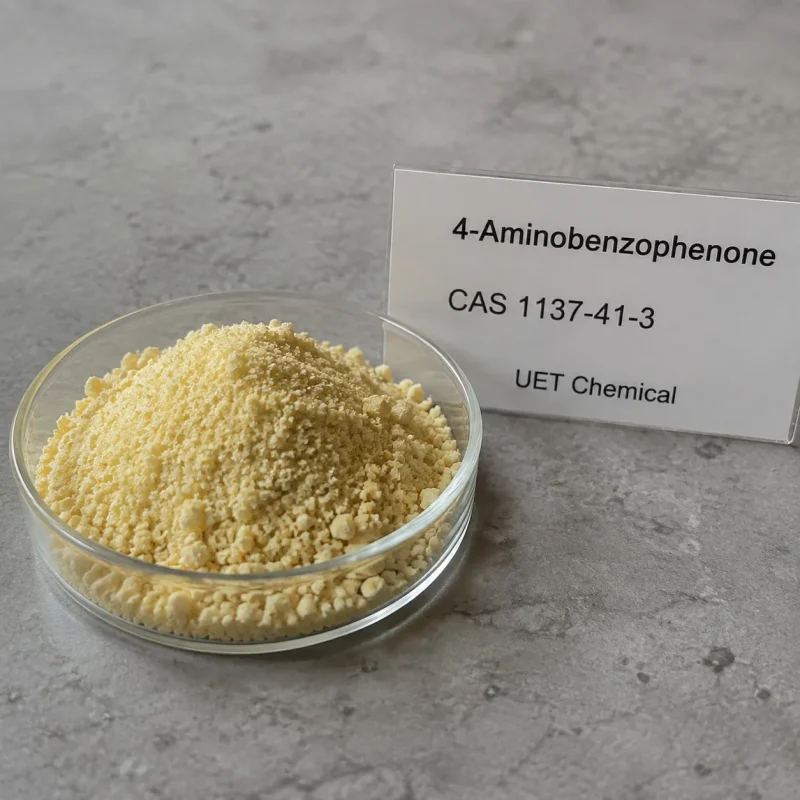
- Appearance: Pale yellow to yellow crystalline powder
- Purity: 99.0% min
- Moisture: 0.5% max
- Melting Point: 122 – 125 °C
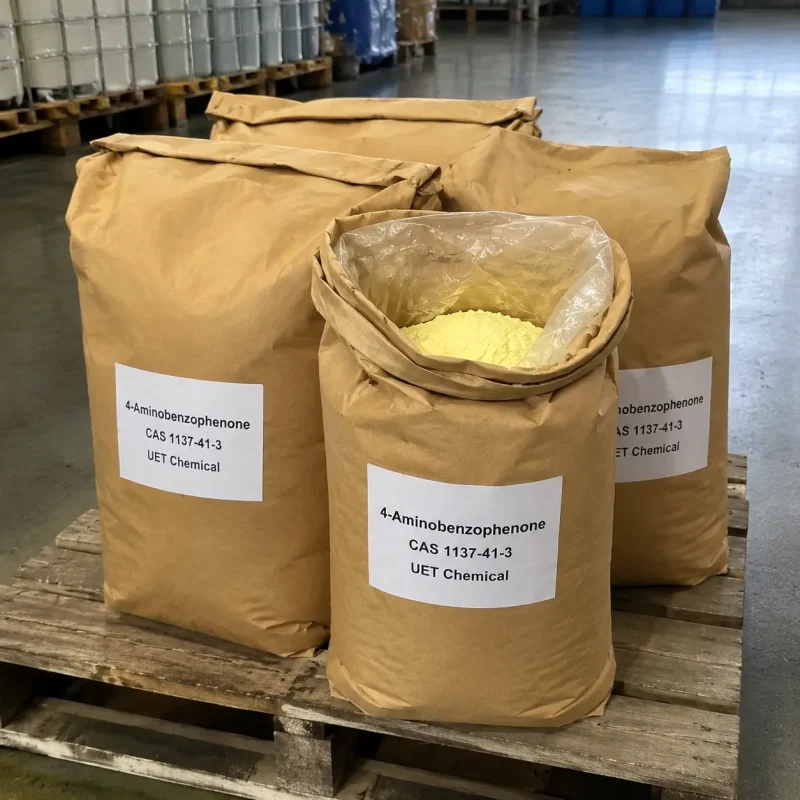
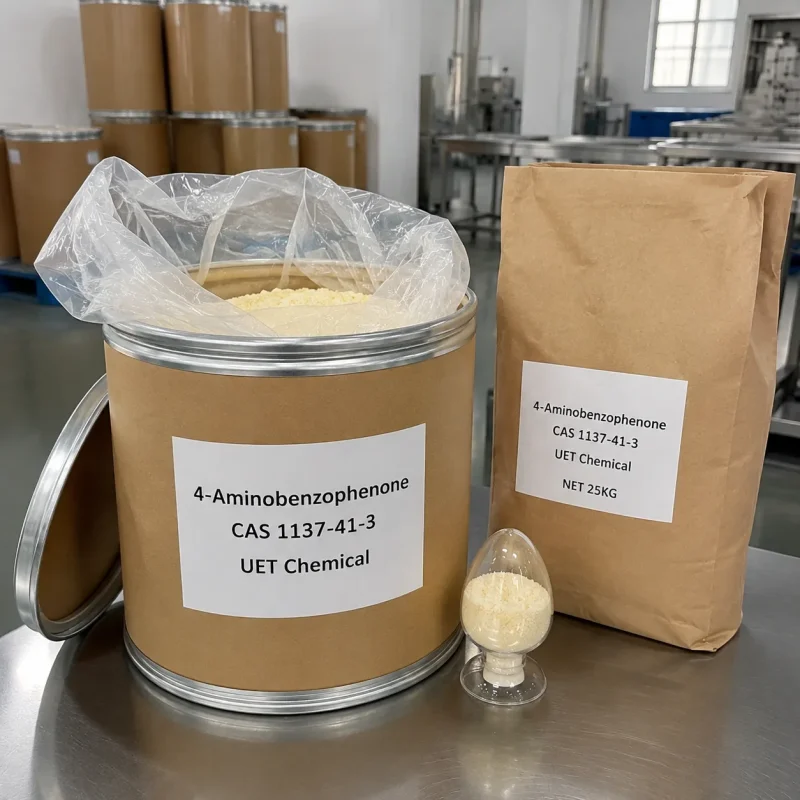
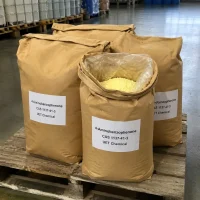
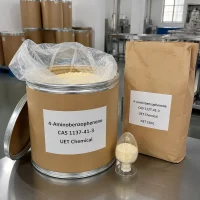
- Packaging: 25 kg fiber drum, 200 kg drum. Custom packaging available upon request.
- Main Applications: UV photoinitiators, azo dye intermediates, pharmaceutical synthesis, agrochemical building blocks
Introduction to 4-Aminobenzophenone
4-Aminobenzophenone is an aromatic organic compound built on a benzophenone backbone substituted with a primary amine group at the para position. Its molecular architecture combines a strong ultraviolet-absorbing carbonyl moiety with a highly nucleophilic amino group. At room temperature, the material appears as a pale yellow to yellow crystalline powder with a faint characteristic odor. It is practically insoluble in water but dissolves readily in ethanol, acetone and hot aromatic hydrocarbons.
The photoactive carbonyl group readily absorbs UV radiation and transitions to an excited triplet state to generate free radicals. The para-amino group enables smooth diazotization, acylation and alkylation reactions for constructing complex heterocyclic scaffolds. The extended conjugated pi-system also acts as a strong chromophore, imparting intense color and high lightfastness to downstream dye molecules.
4-Aminobenzophenone Chemical & Physical Properties
| Property | Value |
|---|---|
| Molecular Formula | C₁₃H₁₁NO |
| Molecular Weight | 197.23 g/mol |
| Appearance | Pale yellow to yellow crystalline powder |
| Melting Point | 122 – 125 °C |
| Boiling Point | > 300 °C (with decomposition) |
| Solubility | Insoluble in water; soluble in ethanol, acetone, hot toluene |
| Purity | 99.0% min |
| Moisture | 0.5% max |
Applications of 4-Aminobenzophenone
UV-curable photoinitiators: Blended into free-radical polymerization systems for inks, adhesives and clear coats. The molecule absorbs long-wave UV light and initiates crosslinking of acrylate oligomers. It is often copolymerized with reactive monomers to create polymer-bound photoinitiators that eliminate surface migration and odor issues in food packaging applications.
Azo dye and pigment intermediates: Reacts with sodium nitrite and acid to form stable diazonium salts, which then couple with aromatic compounds to synthesize vibrant, high-molecular-weight azo dyes. The bulky benzophenone structure significantly enhances the thermal stability and lightfastness of the resulting colorants for textiles and plastics.
Pharmaceutical and agrochemical synthesis: Serves as a foundational building block for synthesizing biologically active molecules. The amine group undergoes condensation with various electrophiles to construct benzodiazepines, antihistamines and crop protection agents. Reaction pH is typically carefully buffered to prevent unwanted side reactions during complex multi-step syntheses.
Storage & Safety Precautions for 4-Aminobenzophenone
- Store in tightly sealed, opaque fiber drums or foil-lined bags in a cool, dark warehouse below 25 °C. The aromatic amine is highly photosensitive and prone to air oxidation, which darkens the powder and degrades its photochemical reactivity.
- Wear N95 respirators, safety goggles and nitrile gloves during dry blending and reactor charging operations. Fine dust is a respiratory sensitizer and mild skin irritant; avoid prolonged inhalation and skin contact.
- When preparing diazonium salts for dye coupling, maintain reaction temperature strictly between 0 °C and 5 °C. Exceeding this range causes rapid thermal decomposition of the diazonium intermediate, releasing nitrogen gas and drastically lowering final dye yield.
4-Aminobenzophenone FAQ
Q: How does 4-Aminobenzophenone function as a photoinitiator?
A: It absorbs UV radiation and transitions to an excited triplet state, then abstracts hydrogen from co-initiators to generate free radicals. This initiates rapid crosslinking of acrylic monomers in UV-curable inks and coatings without requiring deep-penetrating UV light.
Q: Why is 4-Aminobenzophenone used in dye synthesis?
A: It undergoes diazotization to form stable diazonium salts, which couple with compounds like 2-Naphthol to produce vibrant azo dyes. The bulky benzophenone structure enhances the lightfastness and thermal stability of final colorants for textiles and plastics.
Q: What storage conditions are required for 4-Aminobenzophenone?
A: It is photosensitive and prone to oxidation when exposed to light and air. Store the crystalline powder in tightly sealed, opaque fiber drums in a cool, dry warehouse. Low ambient humidity prevents moisture ingress and preserves chemical reactivity.
Related products
Manufacturer & Exporter Since 2006
Get Tailored Chemical Raw Material Solutions — Reply Within 1 Hour
Factory-direct pricing, stable high-purity supply and complete compliance documentation for your industrial formulations.
- 1000+Products
- 200+QC Protocols
- 7–15Days Delivery
- Factory-Direct Pricing
- COA / TDS / SDS Included
- Free Samples for Testing
- 40+ Export Countries
Request a Free Quote
Our engineers reply within 1 hour during GMT+8 business hours.
Please include in your inquiry:
- Product name or CAS number
- Required quantity
- Destination country or port
- Preferred packaging