
Methyl D-Lactate / Methyl (R)-(+)-lactate (CAS 17392-83-5)
Methyl D-Lactate (also known as Methyl (R)-(+)-lactate) is a high-purity chiral ester and green solvent supplied as a colorless to pale yellow liquid. Its strict stereochemical control makes it an essential chiral building block for pharmaceutical and agrochemical synthesis, while its low toxicity profile supports use as a biodegradable specialty solvent. Each shipment includes COA, TDS, and SDS.
- CAS No: 17392-83-5
- Synonyms: Methyl (R)-2-hydroxypropanoate, (R)-(+)-Methyl lactate, D-Methyl lactate
- EC Number: 241-392-9
- Molecular Formula: C4H8O3
- Molecular Weight: 104.10 g/mol
- Appearance: Colorless to pale yellow clear liquid
- Purity (GC): ≥ 99.0%
- Optical Purity (ee): ≥ 98.0%
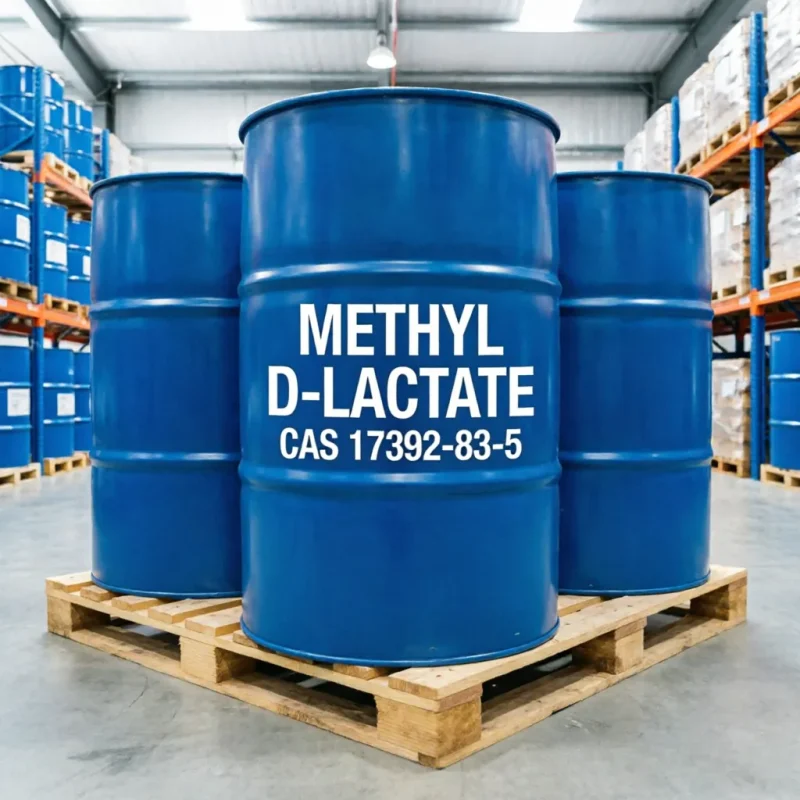
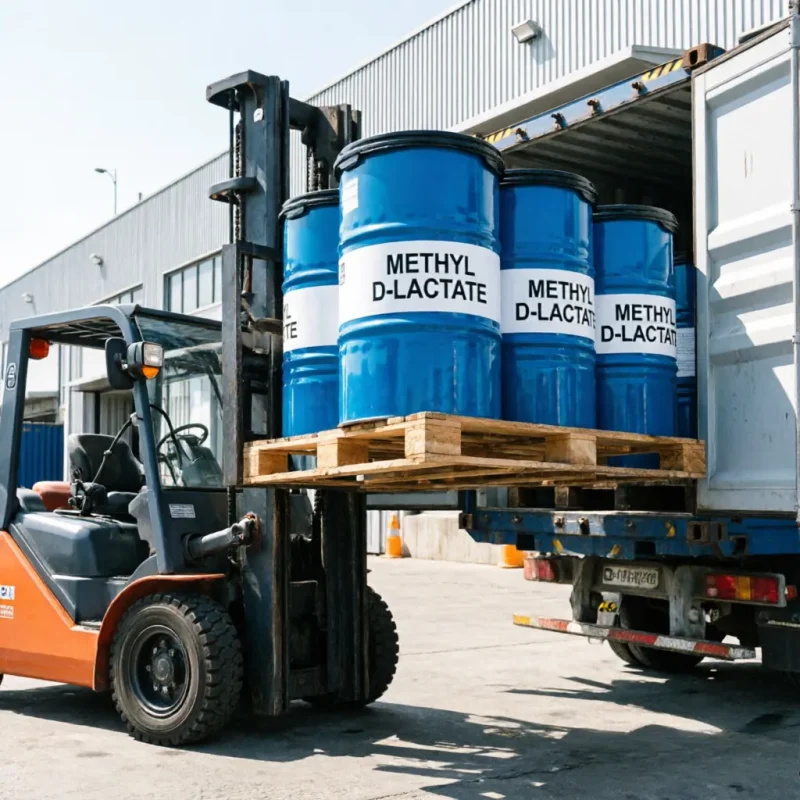
- Packaging: 25 kg (55 lb) HDPE drum; 200 kg (440 lb) HDPE drum; 1000 kg (2200 lb) IBC tote. Custom packaging available upon request.
- Main Applications: Chiral pharmaceutical intermediate, agrochemical synthesis, biodegradable solvent, flavor & fragrance formulation
Introduction to Methyl D-Lactate
Methyl D-Lactate is the methyl ester of D-lactic acid, featuring a highly defined (R)-stereocenter. Pharmaceutical manufacturers and fine chemical laboratories rely on its strict enantiomeric excess to synthesize complex optically active compounds, such as macrolide antibiotics, herbicides, and pheromones. Furthermore, as a bio-based “green solvent,” it offers an environmentally benign alternative to traditional halogenated and petroleum-derived solvents in coatings and cleaning applications.
The primary processing advantage is its dual functionality: it acts as both a reactive chiral synthon and a high-boiling, slow-evaporating solvent with excellent resin solvency. The critical handling risk is moisture sensitivity; as an ester with a free hydroxyl group, prolonged exposure to water or extreme pH levels can induce hydrolysis back to lactic acid and methanol. Store drums tightly sealed in a dry warehouse and blanket with nitrogen if long-term bulk storage is required.
Key Features of Methyl D-Lactate
- Strict chiral integrity. Guaranteed enantiomeric excess (ee ≥ 98.0%) ensures predictable stereoselective outcomes in asymmetric synthesis, preventing costly racemization in API manufacturing.
- Bio-based green solvent. Derived from renewable fermentation pathways, it boasts high flash points, low VOC emissions, and excellent biodegradability, replacing toxic solvents like NMP or chlorinated hydrocarbons.
- High boiling point and slow evaporation. Provides excellent flow and leveling properties in specialty coatings, inks, and adhesive formulations without causing blushing or pinholing.
- Excellent solvency power. Readily dissolves nitrocellulose, acrylics, epoxies, and various natural/synthetic resins, acting as an effective coalescing agent.
Methyl D-Lactate Chemical & Physical Properties
| Property | Value |
|---|---|
| Molecular Formula | C4H8O3 |
| Molecular Weight | 104.10 g/mol |
| Boiling Point | 145 °C (293 °F) at 760 mmHg |
| Flash Point | ~ 60 °C (140 °F) (Closed Cup) |
| Density | 1.080 – 1.090 g/cm³ at 20 °C (68 °F) |
| Refractive Index (n20/D) | 1.415 – 1.420 |
| Specific Rotation [α]D20 | +10.0° to +14.0° (neat) |
| Solubility | Miscible with water, ethanol, diethyl ether, and most organic solvents. |
| Moisture Content | ≤ 0.10% |
Applications of Methyl D-Lactate
Chiral pharmaceutical and agrochemical synthesis: Serves as a crucial (R)-chiral pool starting material for synthesizing optically active alpha-hydroxy acids, macrolide antibiotics (e.g., erythromycin analogues), and stereospecific herbicides. The hydroxyl and ester groups allow for diverse functionalization without disturbing the stereocenter.
Biodegradable industrial solvent: Used in high-performance paint strippers, industrial cleaners, and polyurethane coatings. Its high boiling point and slow evaporation rate improve film formation and reduce VOC emissions compared to MEK or toluene.
Flavor and fragrance intermediates: Acts as a precursor or carrier in the synthesis of complex fruity and dairy notes for the food and cosmetic industries, leveraging its naturally derived safety profile.
Storage & Safety Precautions for Methyl D-Lactate
- Storage: Store in tightly sealed HDPE drums or IBC totes in a cool, dry, and well-ventilated warehouse below 30 °C (86 °F). Protect from moisture to prevent ester hydrolysis. For bulk storage, nitrogen blanketing is recommended to prevent oxidative degradation over time.
- Safety: Combustible liquid. Mild irritant to eyes and skin. Wear chemical splash goggles and solvent-resistant gloves during transfer. Avoid breathing mists or vapors when heated or sprayed. Ensure adequate local exhaust ventilation.
- Transport: Methyl D-Lactate is generally classified as Non-DG or a Combustible Liquid (depending on specific regional flash point thresholds) for IATA/IMDG transport. Not a marine pollutant. Ship in standard dry containers.
- QC note: Verify optical rotation and GC purity upon receipt. A drop in specific rotation or the appearance of a lactic acid peak on the GC chromatogram indicates moisture ingress and partial hydrolysis during transit. Reject lots with moisture > 0.10%.
Methyl D-Lactate FAQ
Q: What is the difference between Methyl D-Lactate and Methyl L-Lactate?
A: They are enantiomers. Methyl D-Lactate (CAS 17392-83-5) has the (R)-configuration and rotates plane-polarized light to the right (+). Methyl L-Lactate has the (S)-configuration. Selecting the correct isomer is critical in pharmaceutical synthesis, as the wrong enantiomer will yield inactive or potentially toxic biological targets.
Q: Can it be used as a direct replacement for NMP or glycol ethers in coatings?
A: Yes. As a bio-based green solvent, it effectively replaces NMP (N-Methyl-2-pyrrolidone) and toxic glycol ethers in many resin systems. It offers excellent solvency and a favorable environmental profile, though formulators must adjust for its slightly different evaporation rate and hydrogen-bonding capacity.
Q: Why did my drum arrive with a slightly acidic pH?
A: Methyl lactate is prone to hydrolysis if exposed to water or extreme temperatures during transit, generating trace amounts of free lactic acid. Ensure drums are tightly sealed and stored dry. If acidity exceeds specifications, the lot may require redistillation or rejection for sensitive pharmaceutical applications.
Related products
Manufacturer & Exporter Since 2006
Get Tailored Chemical Raw Material Solutions — Reply Within 1 Hour
Factory-direct pricing, stable high-purity supply and complete compliance documentation for your industrial formulations.
- 1000+Products
- 200+QC Protocols
- 7–15Days Delivery
- Factory-Direct Pricing
- COA / TDS / SDS Included
- Free Samples for Testing
- 40+ Export Countries
Request a Free Quote
Our engineers reply within 1 hour during GMT+8 business hours.
Please include in your inquiry:
- Product name or CAS number
- Required quantity
- Destination country or port
- Preferred packaging