
Hydroxypropyl Starch Ether (HPS) CAS 9049-76-7
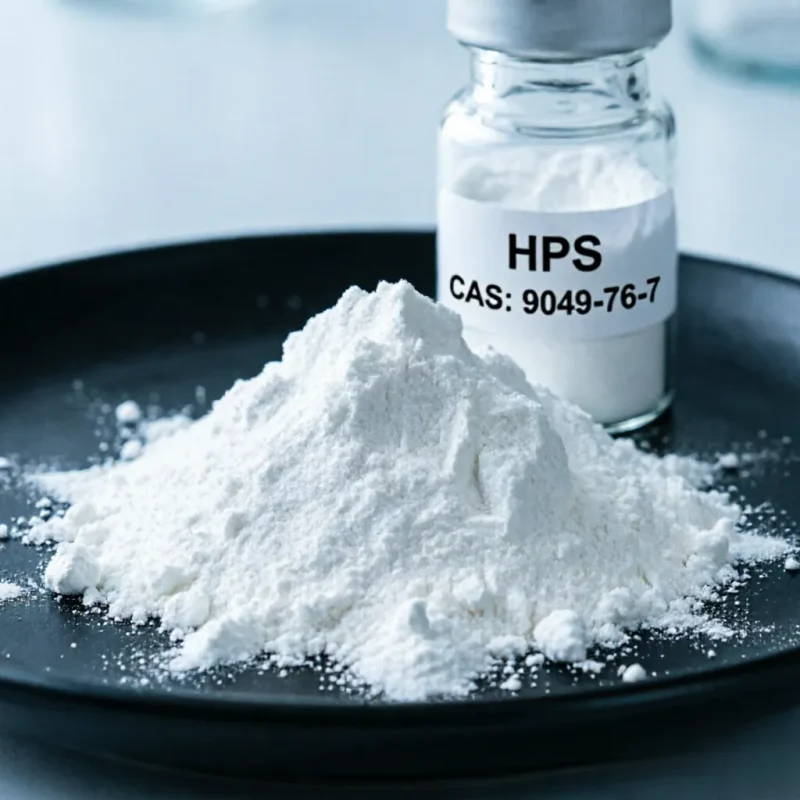
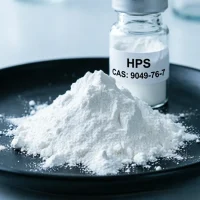
Hydroxypropyl Starch Ether (HPS) is a non-ionic starch ether modified with propylene oxide supplied as white to off-white free-flowing powder. Its excellent water retention and anti-sagging properties make it the cost-effective alternative to HPMC for tile adhesives, cement mortars, and putty powders. Each shipment includes COA, TDS, and SDS.
- CAS No: 9049-76-7
- Synonyms: Hydroxypropyl starch, Starch 2-hydroxypropyl ether, HPS ether
- EC Number: 232-919-0
- Molecular Formula: Modified starch backbone with –OCH2CH(OH)CH3 groups
- Molecular Weight: 10⁵ – 10⁷ Da (Polymer)
- Appearance: White to off-white free-flowing powder
- Molar Substitution (MS): 0.05 – 0.20 (Customizable)
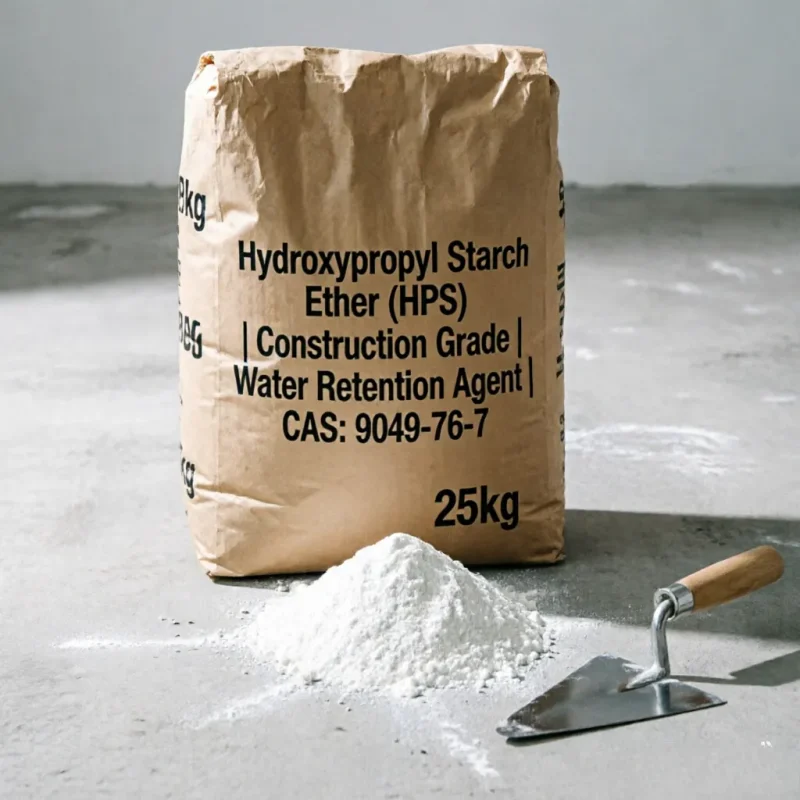
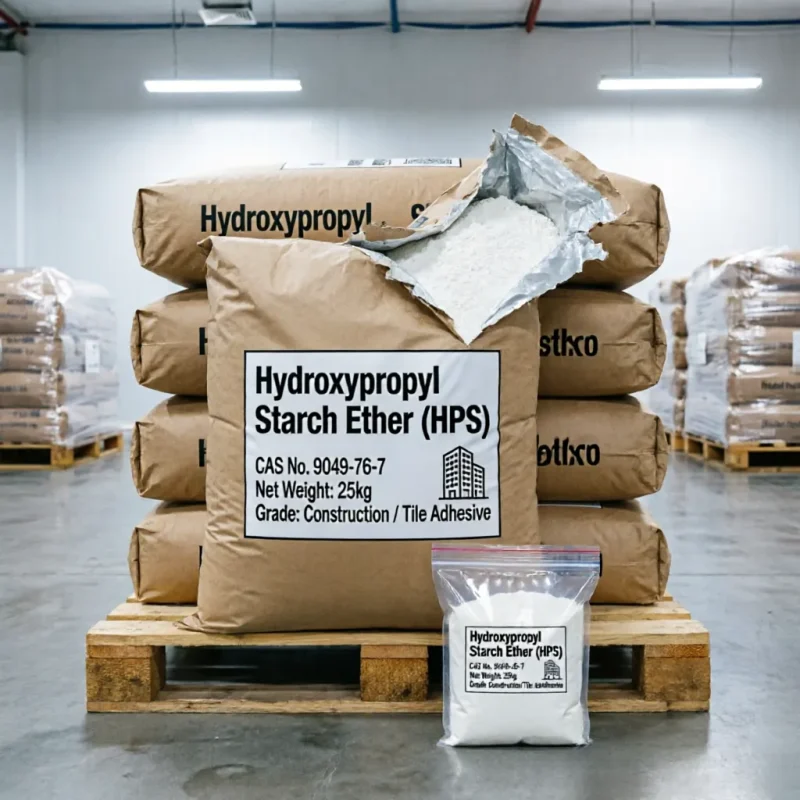
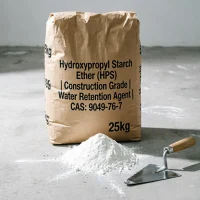
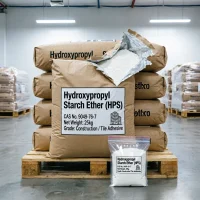
- Packaging: 25 kg (55 lb) woven PP bag with PE liner; 1,000 kg (2,200 lb) jumbo bag. Custom packaging available upon request.
- Main Applications: Tile adhesives, cement mortar water retention, putty powder thickener, paper coating binder
Introduction to Hydroxypropyl Starch Ether (HPS)
Hydroxypropyl Starch Ether (HPS) is produced by etherifying native corn or potato starch with propylene oxide under alkaline conditions, introducing hydroxypropyl groups onto the glucose units. In dry-mix construction materials, HPS acts as a highly efficient water-retaining agent and rheology modifier. When mixed with water, the polymer chains swell and form a colloidal network that prevents rapid water loss to porous substrates like bricks and concrete blocks, ensuring complete cement hydration and strong bond development.
The primary processing advantage is its significant cost reduction compared to cellulose ethers (HPMC/HEMC) while maintaining 70–80% of their water-retention efficiency. The critical storage risk is hygroscopicity: once exposed to humid air, the powder absorbs moisture, forms hard lumps, and loses flowability. Store bags on pallets in a dry warehouse below 35 °C (95 °F) and reseal the PE liner immediately after opening.
Key Features of Hydroxypropyl Starch Ether (HPS)
- Superior water retention. The hydroxypropyl groups and swollen starch network lock mixing water within the mortar matrix, preventing premature drying on absorbent substrates and extending open time by 15–30 minutes.
- Anti-sagging and thixotropy. Provides structural viscosity at rest, preventing tile slippage on vertical walls, while shear-thinning behavior ensures smooth troweling and easy pumpability.
- Non-ionic compatibility. Compatible with cement, gypsum, lime, and redispersible polymer powders (RDP) across pH 5–11, without causing coagulation or reducing setting speed.
- Cost-effective HPMC replacement. Delivers comparable water retention at 30–50% lower raw material cost, ideal for mid-range tile adhesives and interior putty formulations.
Hydroxypropyl Starch Ether (HPS) Chemical & Physical Properties
| Property | Value |
|---|---|
| Molecular Formula | Modified starch with hydroxypropyl groups |
| Molar Substitution (MS) | 0.05 – 0.20 (Standard construction grade) |
| Hydroxypropoxy Content | 1.5% – 5.0% |
| Thermal Behaviour | Gelatinizes at 55–65 °C (131–149 °F) in water; powder decomposes above 200 °C (392 °F). |
| Solubility in Water | Dispersible in cold water; forms viscous colloidal paste in alkaline conditions or upon heating above gelatinization point. |
| pH (5% aqueous dispersion) | 5.0 – 7.5 |
| Moisture Content | ≤ 12.0% |
| Bulk Density | 0.50 – 0.70 g/cm³ (31–44 lb/ft³) |
| Heavy Metals (as Pb) | ≤ 10 ppm |
| Sulfur Dioxide (SO2) | ≤ 50 ppm |
Applications of Hydroxypropyl Starch Ether (HPS)
Tile adhesives and cement mortars: Dosed at 0.05–0.3% of dry mix weight. HPS retains mixing water, preventing rapid absorption by porous tiles and substrates, extending open time, and improving slip resistance. Compatible with HPMC to reduce total cellulose ether loading.
Putty powder and wall plaster: Added at 0.1–0.5% to improve workability, water retention, and sanding properties. Prevents cracking and powdering caused by rapid drying on concrete or aerated block walls.
Paper coating and surface sizing: Used at 5–15 parts per 100 parts pigment in coating colors. Improves binder strength, water retention, and printability of coated paper.
Textile warp sizing: Applied at 10–25% on weight of yarn for cotton/polyester blends, providing smooth film formation and reducing fluff shedding during weaving.
Storage & Safety Precautions for Hydroxypropyl Starch Ether (HPS)
- Storage: Keep tightly sealed in a dry, ventilated warehouse below 35 °C (95 °F). The powder is hygroscopic; exposure to humidity causes caking, reduces flowability, and can promote microbial growth. Do not store directly on concrete floors; use pallets and keep away from exterior walls. Reseal the PE liner after each use.
- Safety: Classified as non-hazardous. Starch dust may cause mild mechanical irritation to eyes and respiratory tract. Wear standard dust masks and safety goggles when transferring or mixing. In case of dust cloud, ventilate the area.
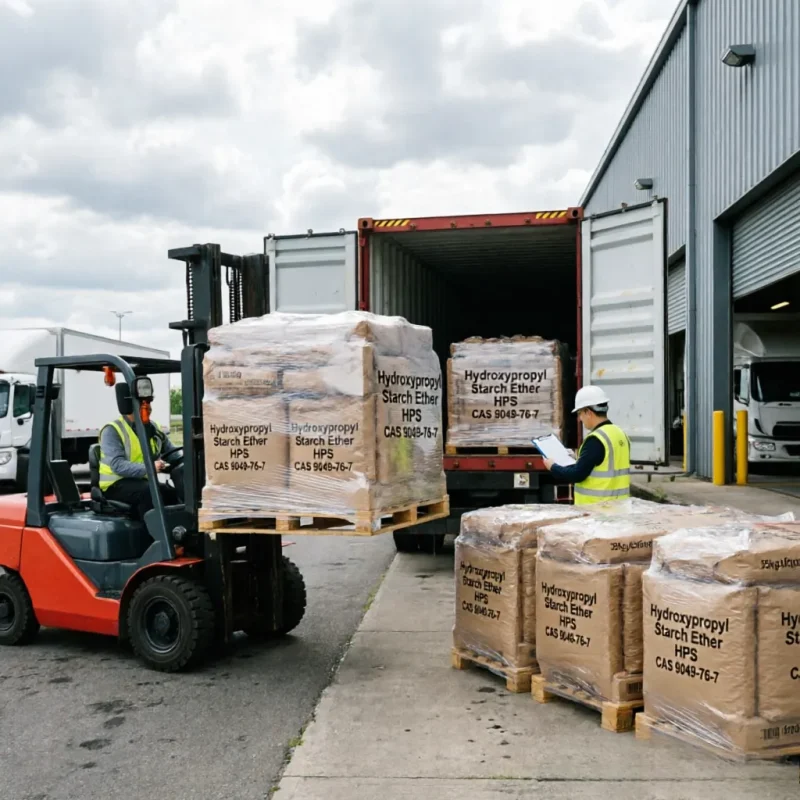
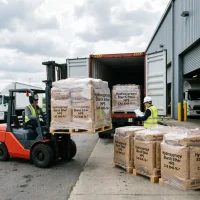
- Transport: Hydroxypropyl Starch Ether is Non-DG under IATA/IMDG/ADR. Not a marine pollutant. Standard 25 kg (55 lb) bags or 1,000 kg (2,200 lb) jumbo bags ship in standard dry containers. Protect from rain and moisture during loading/unloading.
- QC note: Verify Hydroxypropoxy content (ISO 15083 method) and paste viscosity upon receipt. A sour or musty odor, visible black specks, or hard lumps exceeding 5% of the bag indicate moisture ingress or microbial contamination—reject such lots.
Hydroxypropyl Starch Ether (HPS) FAQ
Q: What is Molar Substitution (MS) and how does it affect mortar performance?
A: MS represents the average number of hydroxypropyl groups per glucose unit. For tile adhesives, MS 0.10–0.15 provides optimal water retention and open time. Higher MS (>0.18) increases solubility but may reduce anti-sagging; lower MS (<0.08) may cause incomplete dispersion.
Q: How should I mix HPS into dry mortar to avoid lumps?
A: Pre-blend HPS with other fine powders (cement, filler) in a ribbon mixer for 3–5 minutes before adding coarse aggregates. Avoid direct contact with concentrated water streams; use dry-mix dispersion or add gradually under agitation.
Q: Can HPS fully replace HPMC in tile adhesive formulations?
A: Not always 1:1. HPS provides excellent water retention at lower cost but lower viscosity and thickening power than HPMC. For high-performance adhesives, blend 30–50% HPS with HPMC to balance cost and slip resistance.
Related products
Manufacturer & Exporter Since 2006
Get Tailored Chemical Raw Material Solutions — Reply Within 1 Hour
Factory-direct pricing, stable high-purity supply and complete compliance documentation for your industrial formulations.
- 1000+Products
- 200+QC Protocols
- 7–15Days Delivery
- Factory-Direct Pricing
- COA / TDS / SDS Included
- Free Samples for Testing
- 40+ Export Countries
Request a Free Quote
Our engineers reply within 1 hour during GMT+8 business hours.
Please include in your inquiry:
- Product name or CAS number
- Required quantity
- Destination country or port
- Preferred packaging