
n-Heptadecane (CAS 629-78-7)
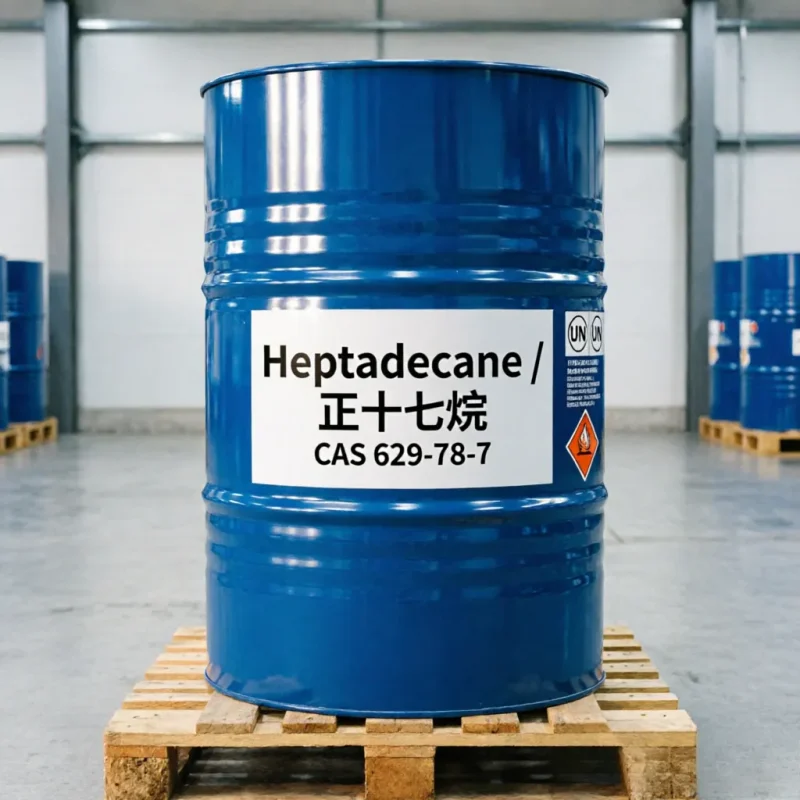
n-Heptadecane is a high-purity straight-chain aliphatic hydrocarbon supplied as a colorless liquid or white crystalline solid depending on ambient temperature. Its distinct melting point and chemical inertness make it an essential phase change material (PCM) for thermal energy storage and a primary retention index standard for gas chromatography (GC). Each shipment includes COA, TDS, and SDS.
- CAS No: 629-78-7
- Synonyms: Heptadecane, n-Heptadecane, Normal heptadecane
- EC Number: 211-105-8
- Molecular Formula: C17H36
- Molecular Weight: 240.47 g/mol
- Appearance: Colorless liquid to white crystalline solid (Melting point ~22 °C / 72 °F)
- Purity (GC): ≥ 99.0%
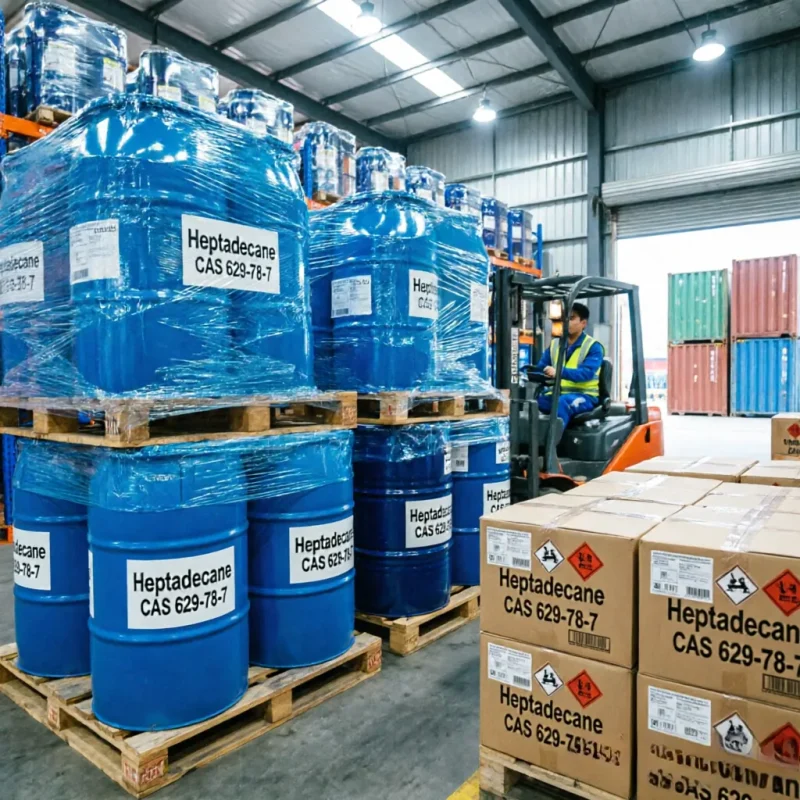
- Packaging: 25 kg (55 lb) HDPE drum; 200 kg (440 lb) HDPE drum; 1000 kg (2200 lb) IBC tote. Custom packaging available upon request.
- Main Applications: Phase change materials (PCM), GC calibration standard, organic synthesis solvent, dielectric fluid component
Introduction to n-Heptadecane
n-Heptadecane is a straight-chain alkane containing 17 carbon atoms. Due to its sharp solid-liquid phase transition at approximately 22 °C (72 °F) and high latent heat of fusion, it is heavily utilized in advanced thermal management systems as a Phase Change Material (PCM). Analytical laboratories also rely on its high chemical purity and predictable volatility to calibrate gas chromatographs and establish Kovats retention indices.
The primary processing advantage is its exceptional chemical stability and non-polar nature, making it an ideal inert solvent and dielectric medium. The critical handling characteristic is its temperature-dependent physical state. During transit or storage in cooler climates, the material will solidify into a white waxy mass. This phase change is fully reversible; gently warming the drum in a temperature-controlled environment restores it to a clear liquid without degrading its chemical properties.
Key Features of n-Heptadecane
- Sharp phase transition for thermal storage. Melts and freezes consistently at ~22 °C (72 °F) with high latent heat, making it ideal for passive temperature control in textiles, building materials, and electronics.
- High-purity analytical standard. ≥ 99.0% GC purity ensures precise retention index calibration and eliminates ghost peaks in high-sensitivity chromatographic assays.
- Chemical inertness. As a saturated aliphatic hydrocarbon, it resists oxidation and does not react with most acids, bases, or oxidizing agents under standard conditions.
- Excellent dielectric properties. Low electrical conductivity and high breakdown voltage make it suitable as a component in specialized transformer and capacitor oils.
n-Heptadecane Chemical & Physical Properties
| Property | Value |
|---|---|
| Molecular Formula | C17H36 |
| Molecular Weight | 240.47 g/mol |
| Melting Point | 21 – 23 °C (70 – 73 °F) |
| Boiling Point | 302 – 303 °C (576 – 577 °F) |
| Flash Point | 113 °C (235 °F) (Closed Cup) |
| Density | 0.776 – 0.780 g/cm³ at 25 °C (77 °F) |
| Solubility | Insoluble in water; miscible with ethanol, diethyl ether, acetone, and non-polar organic solvents. |
| Refractive Index (n20/D) | 1.436 |
| Vapor Pressure | < 1 hPa at 20 °C (68 °F) |
Applications of n-Heptadecane
Phase Change Materials (PCM) for thermal management: Encapsulated or embedded in building panels, cold-chain packaging, and smart textiles. It absorbs excess heat as it melts at 22 °C (72 °F) and releases it upon solidification, maintaining a stable micro-environment without external power.
Analytical chemistry and GC calibration: Used as a primary reference standard to calculate Kovats retention indices for unknown volatile organic compounds. Its predictable boiling point and lack of functional groups provide a reliable baseline for non-polar capillary columns.
Specialized organic synthesis and non-polar solvent: Serves as an inert reaction medium or extraction solvent for highly lipophilic compounds where lower alkanes (like hexane) are too volatile or pose higher inhalation toxicity risks.
Electrical and dielectric fluids: Blended into specialized hydrocarbon oils to adjust viscosity and thermal dissipation characteristics in high-voltage transformers and switchgear.
Storage & Safety Precautions for n-Heptadecane
- Storage: Store in tightly sealed HDPE drums or IBC totes in a cool, well-ventilated warehouse away from direct sunlight and ignition sources. Expect solidification if warehouse temperatures drop below 22 °C (72 °F). To reliquefy, use a drum heater or warm room; do not use open flames or localized high-heat sources.
- Safety: Classified as a combustible liquid (Flash point > 60 °C / 140 °F). Avoid breathing vapors if heated. Wear chemical splash goggles and solvent-resistant gloves during transfer. In case of skin contact, wash with soap and water.
- Transport: n-Heptadecane is generally classified as Non-DG for IATA/IMDG transport due to its high flash point (113 °C / 235 °F), but local regulations may classify it as a Combustible Liquid for domestic ground freight. Ship in standard dry containers.
- QC note: Verify purity via GC-FID upon receipt. Ensure the chromatogram shows a single dominant peak at ≥ 99.0% area without significant branched alkane or olefin impurities, which would depress the melting point and ruin PCM performance.
n-Heptadecane FAQ
Q: Why did my n-Heptadecane (CAS 629-78-7) arrive as a solid white block?
A: This is completely normal. n-Heptadecane has a melting point of ~22 °C (72 °F). If ambient temperatures during transit or in your warehouse fall below this threshold, it will crystallize. Gently warm the drum in a heated room or use a certified drum heater to return it to a liquid state.
Q: Is it suitable for use as a Gas Chromatography (GC) standard?
A: Yes. Our ≥ 99.0% GC grade material is specifically purified to remove branched isomers and olefins, ensuring sharp peaks and accurate Kovats retention index calculations on non-polar columns.
Q: Can it be used outdoors for thermal energy storage?
A: Yes, its 22 °C (72 °F) phase transition makes it excellent for passive cooling in building envelopes or telecom enclosures in temperate climates. For outdoor use, it must be properly micro-encapsulated or macro-encapsulated to prevent leakage when in the liquid phase.
Related products
Manufacturer & Exporter Since 2006
Get Tailored Chemical Raw Material Solutions — Reply Within 1 Hour
Factory-direct pricing, stable high-purity supply and complete compliance documentation for your industrial formulations.
- 1000+Products
- 200+QC Protocols
- 7–15Days Delivery
- Factory-Direct Pricing
- COA / TDS / SDS Included
- Free Samples for Testing
- 40+ Export Countries
Request a Free Quote
Our engineers reply within 1 hour during GMT+8 business hours.
Please include in your inquiry:
- Product name or CAS number
- Required quantity
- Destination country or port
- Preferred packaging