
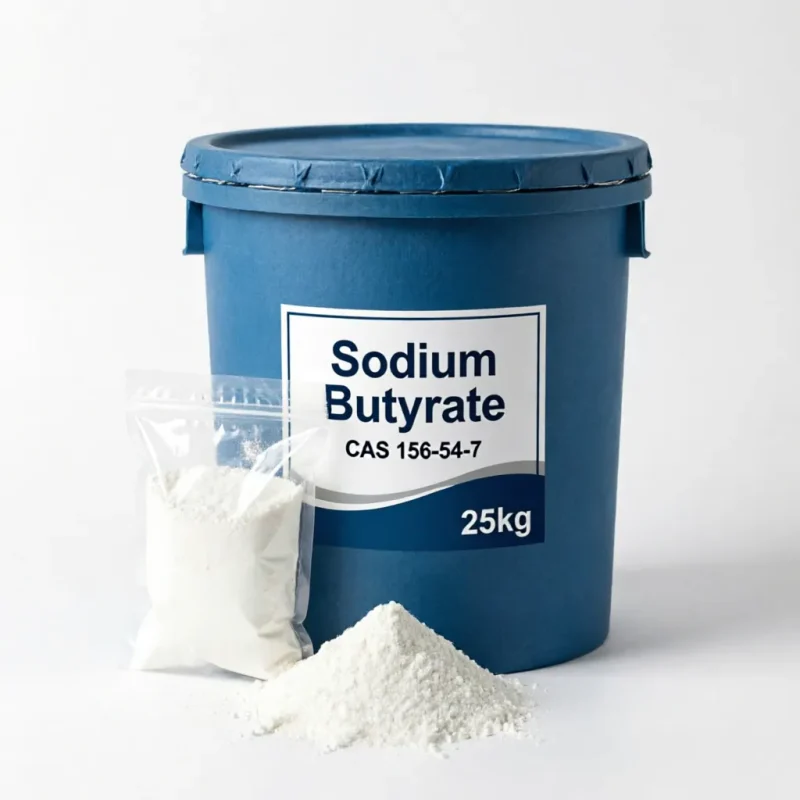
Sodium Butyrate 98% (CAS 156-54-7)
Sodium Butyrate is a short-chain fatty acid salt supplied as white to off-white crystalline powder with a characteristic rancid butter odor. As a highly bioavailable source of butyric acid, it serves as a potent gut health modulator and histone deacetylase (HDAC) inhibitor. Core uses include animal feed additive for intestinal development, cell culture research, and pharmaceutical intermediates. Each shipment includes COA, TDS, and SDS.
- CAS No: 156-54-7
- Synonyms: Butyric acid sodium salt, Sodium n-butyrate
- EC Number: 205-856-0
- Molecular Formula: C4H7NaO2
- Molecular Weight: 110.09 g/mol
- Appearance: White to off-white crystalline powder or granules
- Purity: ≥ 98.0%
- Packaging: 25 kg (55 lb) multi-wall kraft paper bag with double PE liner; 25 kg (55 lb) fiber drum with PE liner. Custom packaging available upon request.
- Main Applications: Animal feed gut-health additive, cell culture HDAC inhibitor, pharmaceutical synthesis, biochemical research
Introduction to Sodium Butyrate
Sodium Butyrate is the sodium salt of butyric acid, presenting as a white to off-white crystalline solid. In animal nutrition, it acts as a primary energy source for intestinal enterocytes, stimulating villus growth, enhancing tight junction integrity, and suppressing pathogenic bacteria like Salmonella and E. coli. In biomedical research, it functions as a classic Class I and II histone deacetylase (HDAC) inhibitor, inducing chromatin relaxation and modulating gene expression for cell differentiation and apoptosis studies.
The primary handling challenge is its intense, intrinsic rancid butter odor and strong hygroscopicity. Exposure to ambient humidity causes rapid caking and odor amplification. To mitigate this, industrial packaging requires high-barrier moisture and odor-proof liners (such as double-layer PE or aluminum foil composites). Store in a dedicated, well-ventilated warehouse below 25 °C (77 °F) and 50% RH. Once opened, reseal the inner liner immediately with a heat sealer or heavy-duty zip tie; leaving the bag rolled down will result in a hardened, unusable block within 48 hours.
Key Features of Sodium Butyrate
- Superior solid-state handling. Unlike free butyric acid (a volatile, corrosive liquid), the sodium salt is a stable, non-corrosive solid that integrates seamlessly into dry feed premixes and tablet formulations without specialized liquid dosing equipment.
- Potent gut mucosal trophic effect. Directly metabolized by colonocytes, it increases intestinal villus height and crypt depth, improving nutrient absorption and feed conversion ratio (FCR) in poultry and swine.
- Non-antibiotic pathogen suppression. Lowers local gut pH and penetrates bacterial cell membranes, disrupting proton motive force and effectively inhibiting Gram-negative pathogens without contributing to antimicrobial resistance (AMR).
- High-efficiency epigenetic modulation. In vitro, it induces rapid histone hyperacetylation at 0.5–5.0 mmol/L concentrations, serving as a benchmark reagent for cancer research and cell reprogramming workflows.
- High aqueous solubility. Dissolves rapidly in water (> 100 g/100 mL at room temperature), making it suitable for liquid supplementation systems and oral solution formulations.
Sodium Butyrate Chemical & Physical Properties
| Property | Value |
|---|---|
| Molecular Formula | C4H7NaO2 |
| Molecular Weight | 110.09 g/mol |
| Thermal Behaviour | Melting point approx. 250–270 °C (482–518 °F) with decomposition. Stable under normal feed pelleting temperatures (up to 85 °C / 185 °F). |
| Density | Bulk powder density approx. 0.60–0.75 g/cm³ (37.5–46.8 lb/ft³). |
| Solubility in Water | Highly soluble, > 100 g/100 mL at 20 °C (68 °F); soluble in methanol; practically insoluble in acetone and diethyl ether. |
| pH (5% aqueous solution) | 8.0 – 10.0 |
| Loss on Drying | ≤ 2.0% |
| Heavy Metals (as Pb) | ≤ 10 mg/kg (Feed/Tech grade) |
| Odor | Characteristic rancid butter / strong unpleasant odor |
Applications of Sodium Butyrate
Animal feed gut-health additive: Incorporate at 0.1–0.3% (1,000–3,000 mg/kg) in poultry and swine premixes. Enhances intestinal morphology, reduces incidence of necrotic enteritis, and improves overall FCR. Often microencapsulated with lipid coatings to mask the odor during mill handling and target release in the hindgut.
Cell culture and epigenetic research: Use at 0.5–5.0 mmol/L working concentrations in cell culture media. Acts as a broad-spectrum HDAC inhibitor to induce hyperacetylation of histones H3 and H4, promoting cell cycle arrest or differentiation in various cancer cell lines. Filter-sterilize aqueous stock solutions before use.
Pharmaceutical intermediate: Serves as a precursor or counter-ion in the synthesis of active pharmaceutical ingredients (APIs) targeting metabolic, gastrointestinal, and neurological disorders. Provides a stable solid form for drug formulation compared to the liquid free acid.
Storage & Safety Precautions for Sodium Butyrate
- Storage: Keep tightly sealed in original multi-wall bags or drums at 15–25 °C (59–77 °F), relative humidity strictly below 50%. The powder is extremely hygroscopic and odor-volatile. Store in a dedicated, well-ventilated area away from strong oxidizers and acids. Do not stack pallets directly against exterior walls to avoid condensation.
- Safety: Not classified as hazardous under GHS, but the intense odor can cause nausea, headaches, or respiratory discomfort in confined spaces. Wear an N95/P2 dust mask with an organic vapor nuisance relief layer, nitrile gloves, and safety goggles during weighing. Use local exhaust ventilation (LEV) when handling bulk powder.
- Transport: Sodium Butyrate is Non-DG under IATA/IMDG/ADR. No UN number, no packing group. Ship in dry, ventilated containers. Ensure packaging is completely odor-proof to prevent cross-contamination of adjacent cargo (especially foodstuffs and sensitive consumer goods).
- QC note: Verify lot identity by checking the characteristic odor and high aqueous solubility. A color shift from white to yellow/brown, combined with severe caking, indicates moisture ingress and potential microbial degradation—reject the lot. Retain sealed samples in odor-proof containers for audit traceability.
Sodium Butyrate FAQ
Q: How does Sodium Butyrate compare to free Butyric Acid in feed applications?
A: Free butyric acid is a volatile, corrosive liquid with an overwhelming odor, requiring specialized stainless steel dosing equipment in feed mills. Sodium Butyrate is a stable, non-corrosive solid that blends easily into dry premixes. It safely releases active butyric acid upon contact with stomach acid or via microbial fermentation in the animal gut.
Q: The powder has a very strong, unpleasant smell. Is it degraded?
A: No. A rancid butter or vomit-like odor is the natural, intrinsic characteristic of butyrate salts. However, if the odor is accompanied by severe caking or a color shift to yellow/brown, it indicates moisture ingress. Ensure your storage area is strictly humidity-controlled and the inner PE liner is heat-sealed after every use.
Q: Can uncoated Sodium Butyrate be used directly in drinking water systems for poultry?
A: Yes, it is highly water-soluble. However, due to its strong taste and odor, it may temporarily reduce water intake. For water medication, it should be dosed gradually to allow flock acclimation, or formulators should opt for microencapsulated or liquid flavor-masked variants to maintain optimal hydration rates.
Related products
Manufacturer & Exporter Since 2006
Get Tailored Chemical Raw Material Solutions — Reply Within 1 Hour
Factory-direct pricing, stable high-purity supply and complete compliance documentation for your industrial formulations.
- 1000+Products
- 200+QC Protocols
- 7–15Days Delivery
- Factory-Direct Pricing
- COA / TDS / SDS Included
- Free Samples for Testing
- 40+ Export Countries
Request a Free Quote
Our engineers reply within 1 hour during GMT+8 business hours.
Please include in your inquiry:
- Product name or CAS number
- Required quantity
- Destination country or port
- Preferred packaging