
Calcium Propionate CAS 4075-81-4
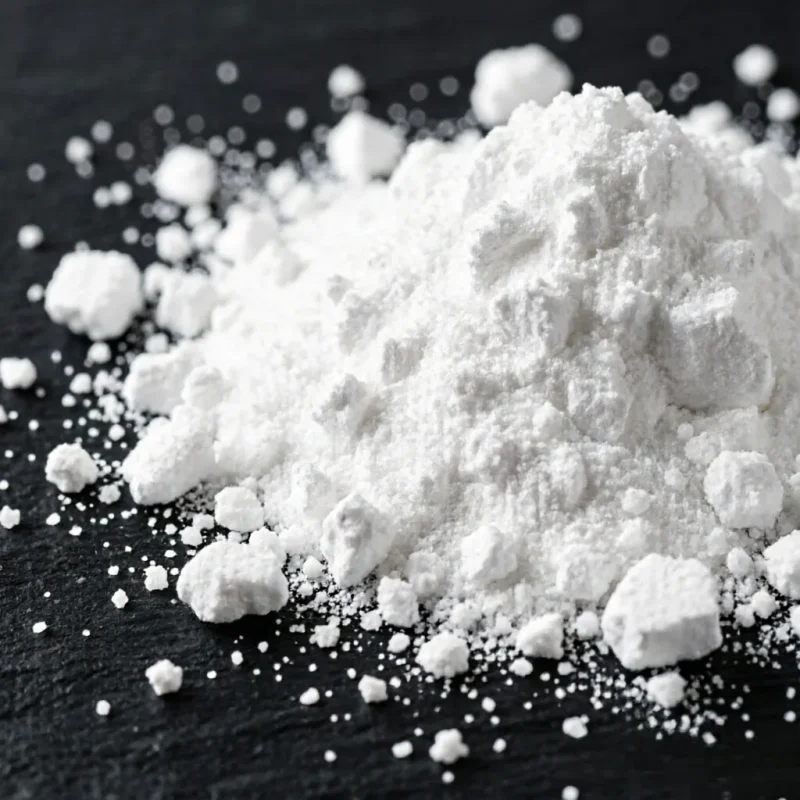
Calcium Propionate is a food-grade mold and rope bacteria inhibitor supplied as white crystalline powder with a faint propionic acid odor. As the calcium salt of propionic acid, it provides broad-spectrum antifungal protection in bakery, dairy, and feed applications without altering product flavor at effective dosages. Core uses include bread and bakery preservation, cheese surface treatment, and animal feed anti-mold addition. Each shipment includes COA, TDS, and SDS.
- CAS No: 4075-81-4
- Synonyms: Calcium propanoate, Calcium dipropionate, Propanoic acid calcium salt, E282
- EC Number: 223-795-8
- Molecular Formula: C6H10CaO4
- Molecular Weight: 186.22 g/mol
- Appearance: White crystalline powder or granules
- Purity (Titration): ≥ 99.0%
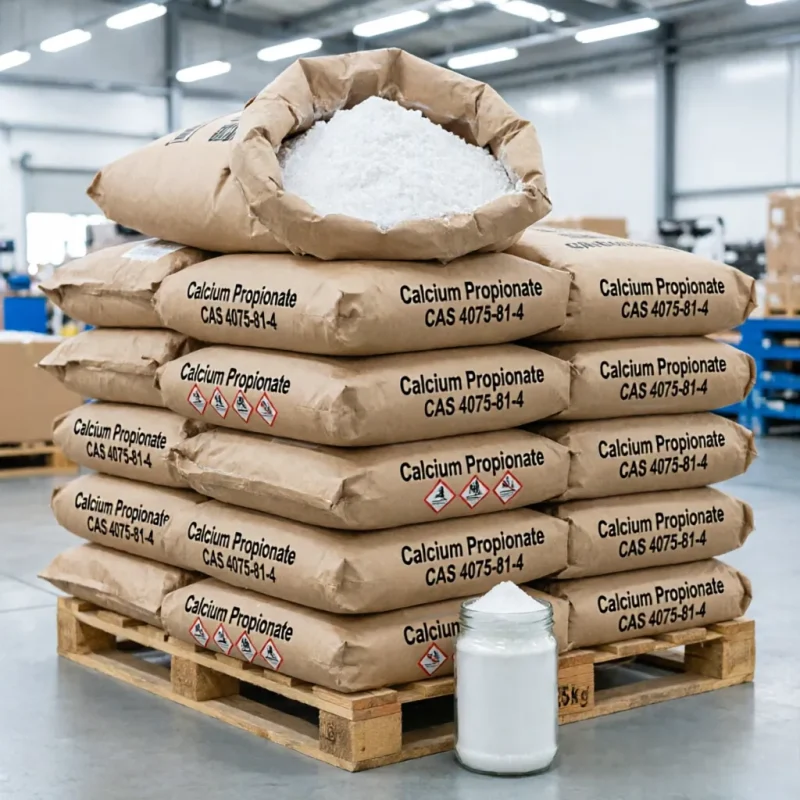
- Packaging: 1 kg (2.2 lb) aluminum foil bag; 5 kg (11 lb) aluminum foil bag; 25 kg (55 lb) multi-wall kraft paper bag with PE liner. Custom packaging available upon request.
- Main Applications: Bread/bakery mold inhibition, cheese and dairy preservation, animal feed anti-mold agent, tobacco storage protection
Introduction to Calcium Propionate
Calcium Propionate is the calcium salt of propionic acid, presenting as a white crystalline powder with a characteristic mild vinegar-like odor. In food and feed matrices, the propionate ion disrupts fungal cell membrane transport and inhibits intracellular enzyme activity, effectively suppressing mold, rope bacteria (Bacillus mesentericus), and certain aerobic spore-formers at concentrations of 0.1–0.4% (w/w). The compound is classified as GRAS (Generally Recognized as Safe) by the US FDA and approved as food additive E282 in the EU, with a maximum permitted level of 3,000 mg/kg in most bakery products.
The calcium counter-ion offers a processing advantage over sodium propionate: it contributes 12–15% supplemental calcium to fortified bread formulations and does not raise dough pH, preserving yeast fermentation kinetics. Storage risk is moisture uptake; the hygroscopic powder cakes above 75% RH. Keep sealed in original kraft bags with PE liner, below 30 °C (86 °F), in a dry warehouse. Once opened, use within 12 months; visible caking or strong acetic odor signals moisture ingress and partial hydrolysis.
Key Features of Calcium Propionate
- Broad antifungal spectrum at low dosage. Effective against Aspergillus, Penicillium, Rhizopus, and rope bacteria at 0.1–0.3% inclusion, extending bread shelf life by 5–7 days without refrigeration.
- GRAS / E282 regulatory status. Approved for direct food use in the US (21 CFR 184.1221), EU (Regulation 1333/2008), and Codex Alimentarius GSFA, simplifying multi-market product registration.
- Neutral impact on yeast fermentation. Unlike sodium propionate, calcium propionate does not elevate dough pH above 5.5 at standard bakery dosages, maintaining consistent proofing time and loaf volume.
- Calcium fortification co-benefit. Delivers approximately 21.5% elemental calcium by weight, contributing to daily calcium intake claims in fortified bread and cereal products.
- Thermal stability through baking. Withstands oven temperatures up to 220 °C (428 °F) without decomposition, ensuring uniform distribution and full preservative activity in the finished crumb.
Calcium Propionate Chemical & Physical Properties
| Property | Value |
|---|---|
| Molecular Formula | C6H10CaO4 |
| Molecular Weight | 186.22 g/mol |
| Thermal Behaviour | Decomposes above 300 °C (572 °F); stable through normal baking at 220 °C (428 °F). No sharp melting point. |
| Density | Approx. 1.49 g/cm³ (93.0 lb/ft³) crystal density; bulk powder density 0.50–0.65 g/cm³ (31.2–40.6 lb/ft³). |
| Solubility in Water | Freely soluble, approx. 49 g/100 mL at 20 °C (68 °F); slightly soluble in ethanol; insoluble in acetone and diethyl ether. |
| pH (10% aqueous solution) | 7.0 – 9.0 |
| Loss on Drying | ≤ 9.5% (105 °C, 2 h) |
| Ash Content (as CaO) | 29.5 – 31.5% |
| Heavy Metals (as Pb) | ≤ 2 mg/kg (food grade) |
Applications of Calcium Propionate
Bread and bakery mold inhibition: Add 0.1–0.3% (1,000–3,000 mg/kg) based on flour weight. Dissolve in the water phase or blend into dry ingredients before mixing. Effective pH range in dough is 4.5–6.5. Typical shelf-life extension is 5–7 days at ambient 25 °C (77 °F) storage. Compliant with EU max 3,000 mg/kg and US GRAS no-limit-in-bread status.
Cheese and dairy surface treatment: Apply as 2–5% aqueous spray or dip on cheese rinds after brining. Inhibits surface mold (Penicillium, Mucor) during 4–12 week ripening without affecting internal flora. Also used in processed cheese slices at 0.2–0.3% for post-packaging mold control.
Animal feed anti-mold agent: Incorporate at 0.5–2.0 kg per metric ton of compound feed (500–2,000 mg/kg). Particularly effective in high-moisture corn or soybean meal blends stored in tropical climates. Reduces aflatoxin risk by suppressing Aspergillus flavus colonization during 30–90 day storage.
Tobacco and paper product preservation: Apply 0.5–1.0% aqueous solution as a surface treatment on stored tobacco leaves or paperboard to prevent mold during humid-season warehousing. Non-toxic residue, no odor transfer at effective dosages.
Storage & Safety Precautions for Calcium Propionate
- Storage: Keep sealed in original kraft paper bags with PE liner at 5–30 °C (41–86 °F), relative humidity below 65%. The powder is mildly hygroscopic; prolonged exposure above 75% RH causes caking and slow hydrolysis releasing free propionic acid odor. Do not store near strong acids or oxidizers. Shelf life 24 months unopened.
- Safety: Not classified as hazardous under GHS. Food-grade, non-toxic at use levels. Avoid inhalation of airborne dust during bulk transfer; wear standard dust mask (N95/P2) and safety glasses during weighing. In case of eye contact, flush with water for 15 min. Mild skin irritation possible with prolonged direct contact.
- Transport: Calcium Propionate is Non-DG under IATA/IMDG/ADR. No UN number, no packing group. Ship in dry, ventilated containers; avoid condensation during sea transit. Ambient temperature transport acceptable for transit under 30 days. Protect from rain and direct sunlight.
- QC note: Verify lot identity on receipt by checking loss on drying (≤ 9.5% at 105 °C) and calcium content via EDTA titration (29.5–31.5% as CaO). A strong acetic or butyric odor upon opening indicates contamination or hydrolysis—reject the lot. Retain sealed samples for 24-month audit traceability.
Calcium Propionate FAQ
Q: How does Calcium Propionate (CAS 4075-81-4) compare to Sodium Propionate in bakery use?
A: Both deliver the same propionate ion antifungal action. Calcium Propionate does not raise dough pH, preserving yeast activity and proofing volume; Sodium Propionate can slightly elevate pH above 6.0 at higher dosages. Calcium Propionate also adds 21.5% elemental calcium as a fortification benefit. Dosage equivalence: 1.0 g calcium propionate ≈ 0.86 g sodium propionate in propionate ion content.
Q: Can Calcium Propionate be used in yeast-leavened bread without affecting rise?
A: Yes, at standard bakery dosages of 0.1–0.3% (flour basis). Propionate inhibits mold and rope bacteria but does not significantly suppress Saccharomyces cerevisiae fermentation below 0.4%. Proofing time and loaf volume remain consistent. Do not exceed 0.4% or yeast activity may slow by 5–10%.
Q: My Calcium Propionate bag has small lumps inside. Is it still usable?
A: Minor caking from moisture uptake during transit is common and does not indicate degradation. Break lumps by hand; if the powder flows freely after crushing and shows no strong acetic smell, it remains within specification. If a persistent vinegar odor is present or the powder does not dissolve completely in water, reject the lot. Prevent recurrence by storing below 65% RH.
Related products
Manufacturer & Exporter Since 2006
Get Tailored Chemical Raw Material Solutions — Reply Within 1 Hour
Factory-direct pricing, stable high-purity supply and complete compliance documentation for your industrial formulations.
- 1000+Products
- 200+QC Protocols
- 7–15Days Delivery
- Factory-Direct Pricing
- COA / TDS / SDS Included
- Free Samples for Testing
- 40+ Export Countries
Request a Free Quote
Our engineers reply within 1 hour during GMT+8 business hours.
Please include in your inquiry:
- Product name or CAS number
- Required quantity
- Destination country or port
- Preferred packaging