


Ammonium Formate CAS 540-69-2
Ammonium Formate is a highly water-soluble white crystalline salt, used mainly as a hydrogen donor in transfer hydrogenation and a volatile buffer for LC-MS. The formate anion and ammonium cation provide a clean, salt-free breakdown pathway in mass spectrometry. COA, TDS, and SDS ship with every order.
- CAS No: 540-69-2
- Synonyms: Formic acid ammonium salt; Ammonium methanoate
- EINECS: 208-753-9
- Molecular Formula: CH5NO2 / HCOONH4
- Molecular Weight: 63.06 g/mol
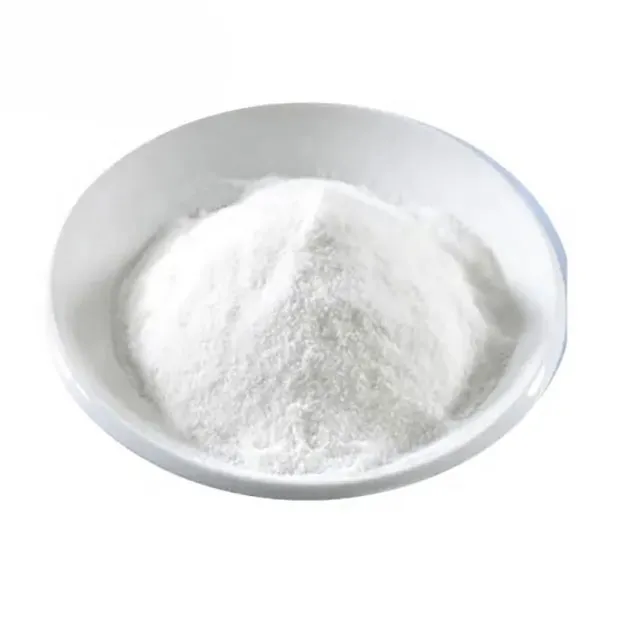
- Appearance: White crystalline powder or granules
- Purity: ≥98.0% (Industrial); ≥99.0% (HPLC/LC-MS)
- Heavy Metals: ≤10 ppm
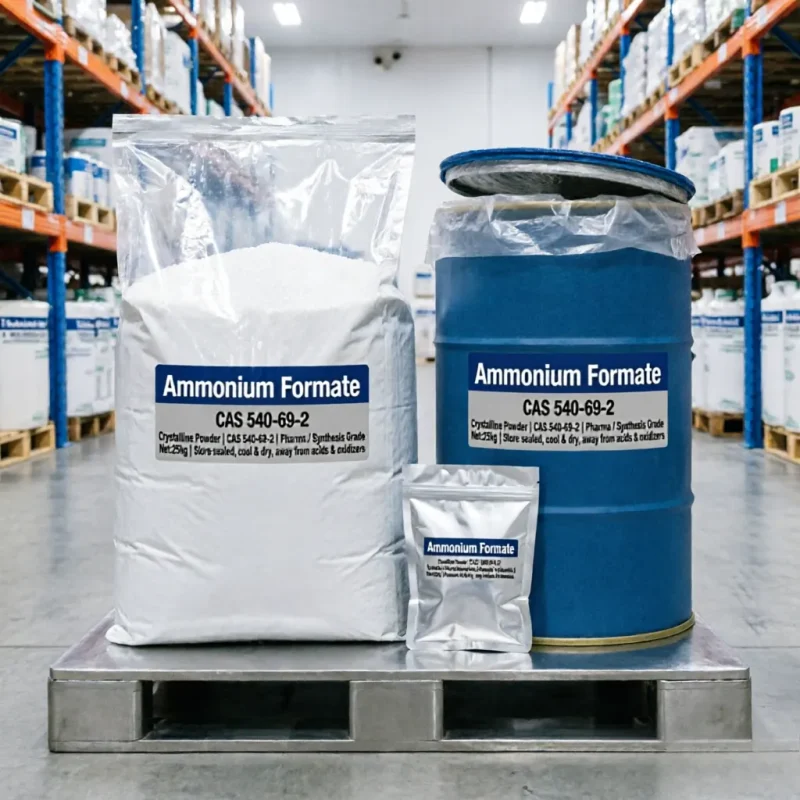
- Packaging: 25 kg PE-lined drum; Custom packaging available upon request.
- Main Applications: LC-MS buffers, Leuckart reactions, pharmaceutical intermediates, textile dyeing
Introduction to Ammonium Formate
Ammonium Formate is a white, highly deliquescent crystalline salt. Pharmaceutical plants use it as a solid hydrogen donor for Leuckart-type reductive aminations. Analytical labs dissolve it to make volatile mobile phases for liquid chromatography. The molecule packs both a weak acid and a weak base into one crystal lattice, giving a near-neutral pH in water without adding non-volatile metal cations.
Handling this salt demands strict moisture control. The crystals pull water straight from humid air and turn into a puddle within hours. Workers must weigh it in dry rooms or gloveboxes. Heating the dry powder above 180 °C (356 °F) drives off water and ammonia, converting the salt into liquid formamide. Keep the warehouse cool and dry. Bulk density shifts when the material absorbs trace moisture and cakes, so volumetric feeders need recalibration when opening a new drum.
Key Features of Ammonium Formate
- Hydrogen Donor Capacity: Releases active hydrogen atoms cleanly during catalytic transfer hydrogenation, reducing ketones and imines without requiring high-pressure H2 gas.
- Volatile Buffer System: Evaporates completely during the ionization process in LC-MS, leaving zero salt residue on the detector cones.
- Dual-Ion pH Control: The formate and ammonium ions buffer aqueous solutions in the pH 3.0 to 4.5 range, stabilizing acidic analytes.
- Low Metal Content: HPLC grades keep transition metals below 10 ppm, preventing unwanted catalytic degradation of sensitive active pharmaceutical ingredients (APIs).
Ammonium Formate Chemical & Physical Properties
| Property | Value |
|---|---|
| Molecular Formula | CH5NO2 / HCOONH4 |
| Molecular Weight | 63.06 g/mol |
| Appearance | White crystalline powder or granules |
| Melting Point | 116 °C (241 °F) |
| Decomposition Temp | >180 °C (356 °F) yields formamide |
| Density | 1.28 g/cm³ at 25 °C (77 °F) |
| Solubility | Highly soluble in water (approx. 250 g/100 mL at 20 °C); soluble in liquid ammonia |
| pH (10% aq. solution) | 6.5 – 7.5 |
Applications of Ammonium Formate
LC-MS Mobile Phases: Add 2–10 mM to water/acetonitrile mixtures. The salt adjusts the pH to protonate basic drugs for positive-ion electrospray ionization. It vaporizes in the mass spec source, keeping the cones clean and preventing signal drop-off.
Reductive Amination (Leuckart Reaction): Dose at 1.5–3.0 molar equivalents against the ketone or aldehyde. The formate ion transfers hydride to the imine intermediate at 100–150 °C (212–302 °F), yielding primary amines without pressurized hydrogen gas.
Textile Dyeing: Use 2–5 g/L in the dyebath. The ammonium and formate ions buffer the bath pH as the temperature rises, ensuring even dye uptake on wool and nylon fibers without shocking the fabric.
Formamide Synthesis: Heat the dry salt to 180–200 °C (356–392 °F) in a reactor. The internal acid-base reaction eliminates water, producing high-purity formamide for pharmaceutical solvent use.
Storage & Safety Precautions for Ammonium Formate
- Storage & Moisture: store at 15–25 °C (59–77 °F) in a low-humidity room; the salt is highly deliquescent and turns to liquid if exposed to air.
- Heat Sensitivity: keep away from steam pipes; temperatures above 180 °C (356 °F) decompose the salt into formamide and ammonia gas.
- Handling & PPE: weigh inside a dry glovebox or low-humidity booth; wear an N95 mask, goggles, and nitrile gloves.
- Transport: Non-DG for air and sea freight; keep drums tightly sealed with desiccant bags inside.
- QC & Testing: verify purity by acid-base titration and check water content by Karl Fischer; expect slight caking if the PE liner was not sealed perfectly during transit.
Ammonium Formate FAQ
Q: Why does CAS 540-69-2 turn into a liquid inside the drum?
A: It is highly deliquescent. If the inner PE liner has a pinhole or the lid is loose, the crystals absorb moisture from the air and dissolve. Always check the inner seal upon arrival. Store in a dry room and reseal the bag immediately after scooping.
Q: How does it work in LC-MS buffers?
A: It provides formate ions to adjust pH and ammonium ions to help ionize basic compounds. Unlike phosphate salts, it vaporizes completely in the mass spectrometer source. This stops salt build-up on the detector cones and maintains sensitivity during long analytical runs.
Q: What happens if it gets too hot during the Leuckart reaction?
A: Heating the dry salt above 180 °C (356 °F) causes it to decompose into formamide, water, and ammonia gas. Keep the reaction temperature between 100–150 °C (212–302 °F) in a high-boiling solvent. This ensures the hydride transfer completes before the crystal lattice breaks down.
Related products
Manufacturer & Exporter Since 2006
Get Tailored Chemical Raw Material Solutions — Reply Within 1 Hour
Factory-direct pricing, stable high-purity supply and complete compliance documentation for your industrial formulations.
- 1000+Products
- 200+QC Protocols
- 7–15Days Delivery
- Factory-Direct Pricing
- COA / TDS / SDS Included
- Free Samples for Testing
- 40+ Export Countries
Request a Free Quote
Our engineers reply within 1 hour during GMT+8 business hours.
Please include in your inquiry:
- Product name or CAS number
- Required quantity
- Destination country or port
- Preferred packaging