
Rubber Accelerator TBBS (NS) CAS 95-31-8
Rubber Accelerator TBBS (NS) is a sulfenamide vulcanization accelerator with an S–N bond linking a benzothiazole ring to a tert-butylamine group. It delivers delayed scorch protection and efficient sulfur curing for NR, SBR, BR and EPDM compounds, especially for tire treads, belts, hoses and molded rubber goods. UETChem supplies high-purity TBBS with consistent melting point and low residue, ensuring reliable curing kinetics and batch-to-batch uniformity. Each shipment includes COA, TDS, SDS.
- CAS No: 95-31-8
- Synonyms: TBBS; NS; N-tert-butyl-2-benzothiazolesulfenamide; Accelerator NS
- EINECS: 202-409-2
- Molecular Formula: C₁₁H₁₄N₂S₂
- Molecular Weight: 238.37 g/mol
- Appearance: Light yellow to off-white powder
- Purity (HPLC): ≥ 97.0%
- Melting Point: ≥ 105 °C
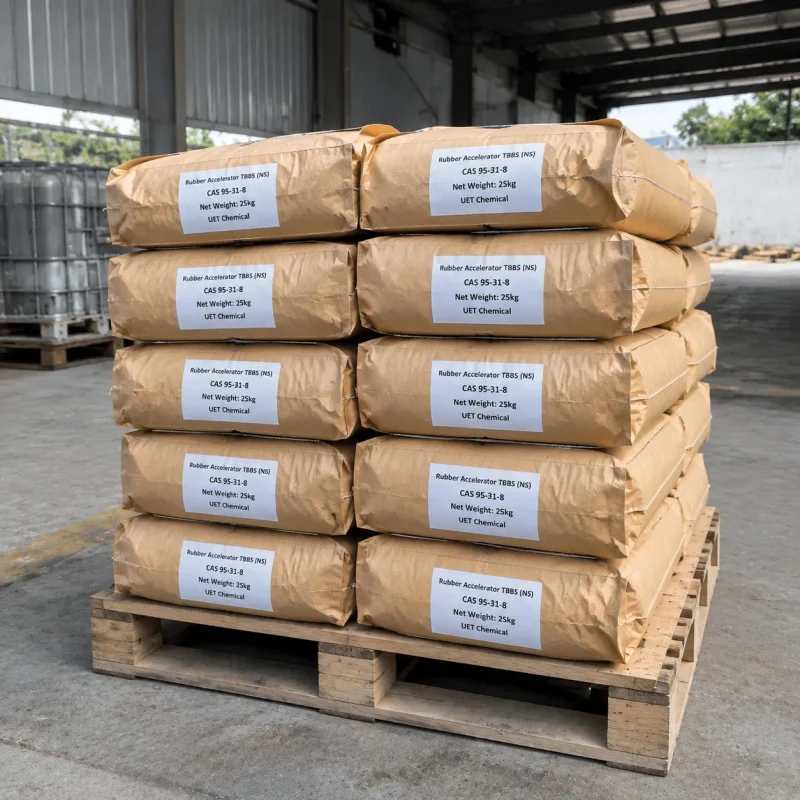
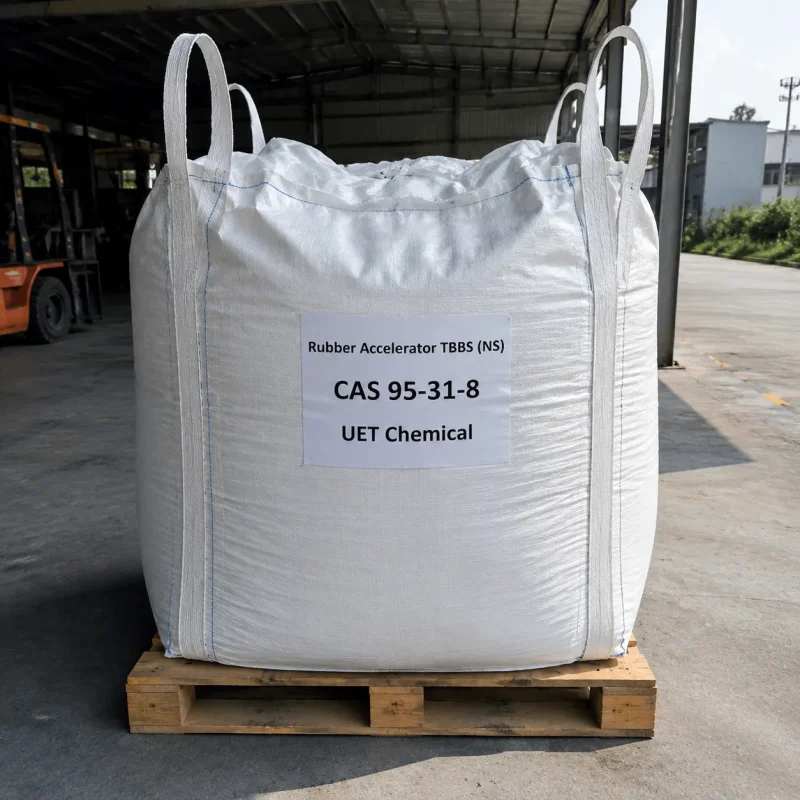
- Packaging: 25 kg paper bag with PE liner. Custom packaging available upon request.
- Main Applications: Sulfur curing of tire rubber, conveyor belts, hoses, footwear and mechanical molded goods
Introduction to Rubber Accelerator TBBS (NS)
Rubber Accelerator TBBS (NS) is a sulfenamide-type vulcanization accelerator consisting of a benzothiazole ring bonded to a tert-butylamine group via an S–N linkage. It delays sulfur vulcanization at mixing and shaping temperatures, then rapidly forms active benzothiazole species at curing temperatures to promote sulfur crosslinking of rubber double bonds. It is widely used as a primary accelerator for tire treads and industrial rubber goods cured at 140–160 °C.
Compared with accelerator CBS (CZ), TBBS typically provides 2–5 minutes longer Mooney scorch time (t5) at 125 °C in comparable NR compounds while maintaining similar cure time (t90). The material is susceptible to hydrolysis under damp storage conditions, which breaks the sulfenamide bond into MBT and tert-butylamine, shortening scorch time and increasing amine odor. Keep bags tightly sealed, follow FIFO inventory practices, and reject torn inner liners during humid storage periods.
TBBS (NS) Chemical & Physical Properties
| Property | Value |
|---|---|
| Molecular Formula | C₁₁H₁₄N₂S₂ |
| Molecular Weight | 238.37 g/mol |
| Appearance | Light yellow to off-white powder |
| Melting Point | ≥ 105 °C (ASTM E324) |
| Density (20 °C) | ≈ 1.29 g/cm³ |
| Solubility | Insoluble in water; soluble in acetone, chloroform, benzene; slightly soluble in ethanol |
| Loss on Drying | ≤ 0.50% |
| Ash Content | ≤ 0.30% |
| Sieve Residue (150 µm) | ≤ 0.10% |
Applications of Rubber Accelerator TBBS (NS)
Tire treads and sidewalls: Acts as the primary sulfenamide accelerator in conventional sulfur curing systems. At 0.5–1.5 phr, it promotes sulfur bridge formation at allylic sites of NR, SBR or BR, delivering high modulus and abrasion resistance while maintaining processing safety during mixing and shaping.
Conveyor belts and calendered plies: Its delayed S–N bond activation keeps skim compounds scorch-safe during hot calendering and building operations. Typical loading is 0.8–2.0 phr with sulfur, with cure activating during platen or drum vulcanization.
Hoses, belts and extruded profiles: In EPDM or NBR blends, it accelerates sulfur addition to residual double bonds, supporting dense crosslink networks in wall sections. Use at 0.5–1.8 phr depending on wall thickness and cure temperature.
Footwear and molded mechanical goods: For SBR/BR sole compounds, it shortens demold time by increasing sulfur crosslink density. Usual loading is 0.7–1.5 phr; a small amount of DPG co-accelerator can be added if faster cure initiation is needed.
Storage & Safety Precautions for TBBS (NS)
- Store below 30 °C in original packaging with heat-sealed PE liners. Keep dry and away from direct sunlight, acids, strong oxidizers and amines. Damp heat causes hydrolysis of the sulfenamide bond, forming MBT and tert-butylamine, which shortens scorch time and produces amine odor. Follow FIFO inventory practices and avoid storage near steam lines or open mixing mills.
- Wear a dust mask or respirator, nitrile gloves and safety glasses during handling. Avoid generating dust clouds; sweep spills with anti-static tools and place waste material in sealed containers. Refer to the current SDS for full hazard classification and protective measures.
- Palletize and stretch-wrap bags for transport. Do not hook bags directly, as liner tears allow moisture ingress. Classified as Non-DG for standard road, sea and air transport.
TBBS (NS) FAQ
Q: Why does TBBS provide delayed scorch but fast cure?
A: TBBS is a latent sulfenamide accelerator. Its S–N bond remains stable at mixing temperatures to delay scorch. At curing temperatures, the bond breaks rapidly, releasing active benzothiazole species to accelerate sulfur crosslinking and ensure a short t90 cure time.
Q: How do I adjust the formula when switching from CBS to TBBS in NR tread compounds?
A: Keep phr constant initially. TBBS gives longer scorch than CBS. If t5 is too long, reduce TBBS by 5–10% or add 0.1–0.2 phr DPG. If t90 is too slow, increase TBBS loading. Always run laboratory rheometer tests before full production release.
Q: Which QC tests best identify degraded TBBS material?
A: Check melting point and moisture content first. Damp storage hydrolyzes TBBS to MBT, lowering the melting point. If the material smells of amine or melts below 105 °C, run HPLC for MBT content and a Mooney scorch test to confirm performance degradation.
Related products
Manufacturer & Exporter Since 2006
Get Tailored Chemical Raw Material Solutions — Reply Within 1 Hour
Factory-direct pricing, stable high-purity supply and complete compliance documentation for your industrial formulations.
- 1000+Products
- 200+QC Protocols
- 7–15Days Delivery
- Factory-Direct Pricing
- COA / TDS / SDS Included
- Free Samples for Testing
- 40+ Export Countries
Request a Free Quote
Our engineers reply within 1 hour during GMT+8 business hours.
Please include in your inquiry:
- Product name or CAS number
- Required quantity
- Destination country or port
- Preferred packaging