
Phenylethyl Resorcinol CAS 85-27-8
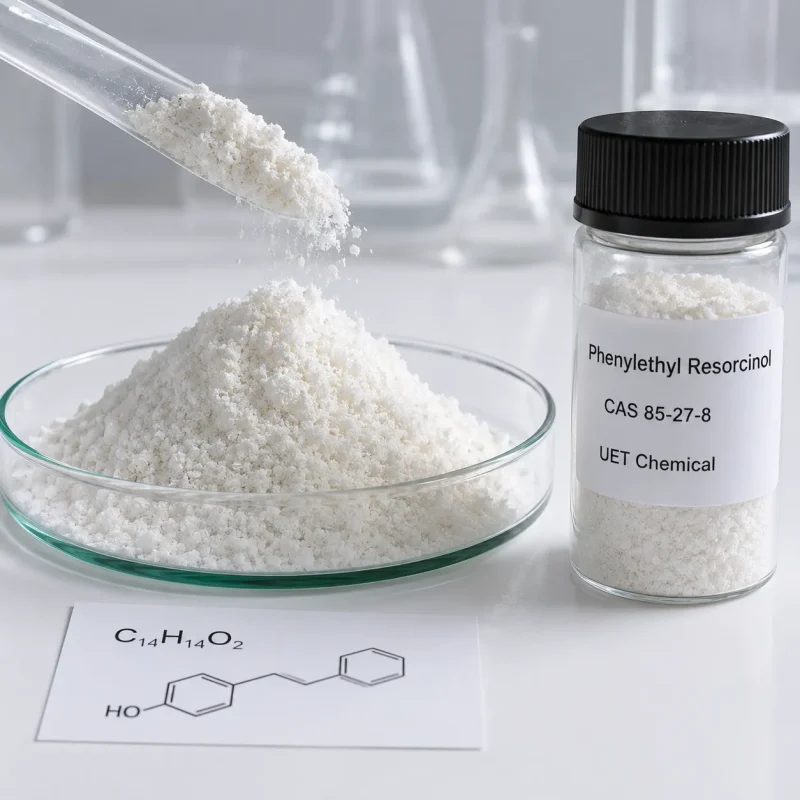
Phenylethyl Resorcinol is a highly potent tyrosinase inhibitor supplied as white to off-white crystalline powder. Derived from resorcinol, its unique phenylethyl substitution delivers exceptional skin-brightening efficacy and antioxidant protection without the severe cytotoxicity of hydroquinone. Core uses include premium skin-lightening serums, anti-aging creams, and hyperpigmentation treatments. Each shipment includes COA, TDS, and SDS.
- CAS No: 85-27-8
- Synonyms: 4-(1-Phenylethyl)benzene-1,3-diol, SymWhite 377, 4-(1-Phenylethyl)resorcinol
- EC Number: 201-602-8
- Molecular Formula: C14H14O2
- Molecular Weight: 214.26 g/mol
- Appearance: White to off-white crystalline powder
- Purity (HPLC): ≥ 99.0%
- Melting Point: 105 – 110 °C (221 – 230 °F)
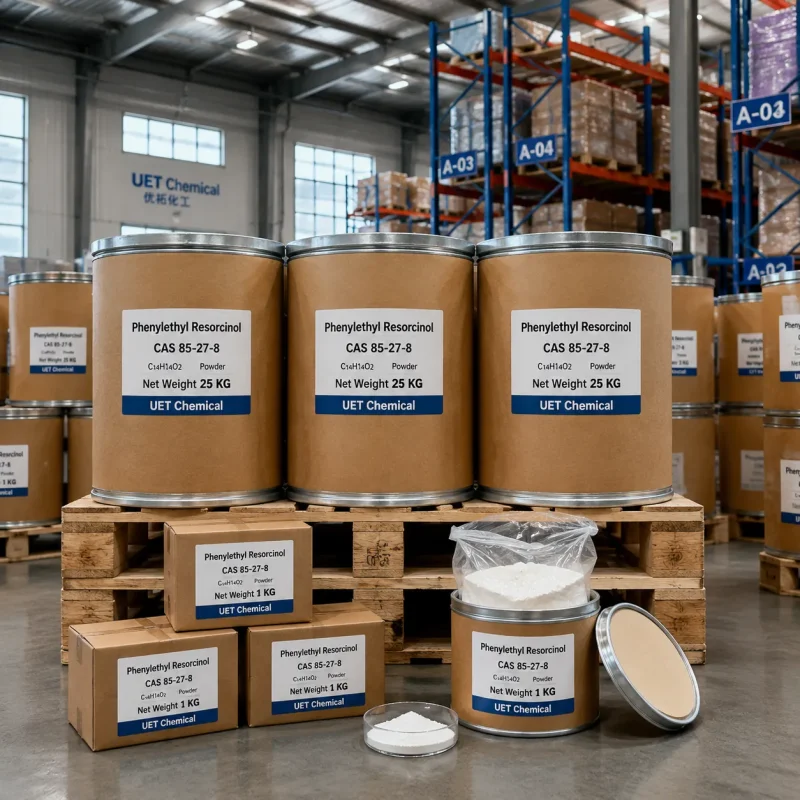
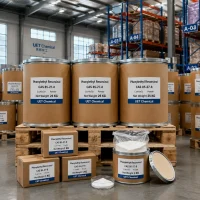
- Packaging: 1 kg (2.2 lb) aluminum foil bag; 5 kg (11 lb) aluminum foil bag; 25 kg (55 lb) fiber drum with PE liner. Custom packaging available upon request.
- Main Applications: Skin-brightening cosmetics, hyperpigmentation treatments, anti-aging formulations
Introduction to Phenylethyl Resorcinol
Phenylethyl Resorcinol (widely known in the cosmetic industry as SymWhite 377) is a synthetic resorcinol derivative engineered specifically for advanced skin-brightening applications. It functions by competitively inhibiting tyrosinase, the key enzyme responsible for melanin synthesis. Cosmetic formulators and contract manufacturers utilize it as the primary active in premium whitening serums and targeted dark-spot correctors.
The primary formulation challenge is its lipophilicity and susceptibility to oxidation. The critical storage risk is photo-oxidation and air-induced degradation; exposure to light or oxygen causes the white powder to rapidly turn pink or brown, permanently destroying its enzymatic inhibitory activity. Store in vacuum-sealed or nitrogen-flushed aluminum foil bags in a dark, climate-controlled warehouse below 25 °C (77 °F).
Key Features of Phenylethyl Resorcinol
- Unmatched tyrosinase inhibition. Exhibits an IC50 value significantly lower than kojic acid (approx. 22 times more potent) and arbutin, delivering rapid and visible reduction in melanin production at low concentrations.
- Dual-action brightening mechanism. Combines direct enzymatic inhibition with strong antioxidant properties, neutralizing UV-induced free radicals that trigger upstream melanogenesis signaling pathways.
- High safety profile vs. Hydroquinone. Provides clinical-grade depigmenting efficacy without the severe cytotoxicity, ochronosis risks, or regulatory bans associated with hydroquinone.
- High-purity crystalline structure. Supplied at ≥ 99.0% purity to minimize the presence of unreacted resorcinol intermediates, drastically reducing the risk of skin irritation and contact dermatitis in final formulations.
Phenylethyl Resorcinol Chemical & Physical Properties
| Property | Value |
|---|---|
| Molecular Formula | C14H14O2 |
| Molecular Weight | 214.26 g/mol |
| Melting Point | 105 – 110 °C (221 – 230 °F). Decomposes upon prolonged heating above 150 °C (302 °F). |
| Solubility | Insoluble in water; highly soluble in ethanol, propylene glycol, butylene glycol, and cosmetic oils/esters. |
| Loss on Drying | ≤ 0.5% |
| Heavy Metals (as Pb) | ≤ 10 ppm |
| Residual Solvents | Meets ICH Q3C guidelines for cosmetic actives. |
Applications of Phenylethyl Resorcinol
Premium Brightening Serums & Creams: Formulated at 0.1% – 0.5% (subject to regional regulatory limits, e.g., NMPA max 0.5% in China). Requires pre-dissolving in warm glycols (like propanediol) or lipid phases at 50–60 °C (122–140 °F) before emulsification to ensure uniform distribution and prevent crystallization in the final product.
Targeted Hyperpigmentation Correctors: Used in localized spot treatments to fade melasma, post-inflammatory hyperpigmentation (PIH), and solar lentigines by interrupting melanin transfer to keratinocytes.
Anti-Pollution & Antioxidant Skincare: Incorporated into day creams and sunscreens to scavenge reactive oxygen species (ROS) generated by urban pollution and UV exposure, preventing oxidative stress-induced dullness and premature aging.
Storage & Safety Precautions for Phenylethyl Resorcinol
- Storage: Keep strictly sealed in original aluminum foil bags, ideally nitrogen-flushed, in a dark, cool warehouse below 25 °C (77 °F). Critical: Any shift in color from white to pink, red, or brown indicates severe oxidative degradation—reject or discard the material immediately as it will ruin cosmetic batches.
- Safety: Classified as GHS07 (Irritant). Can cause skin and eye irritation in its concentrated powder form. Wear nitrile gloves, a dust mask, and safety goggles during weighing and dispersion.
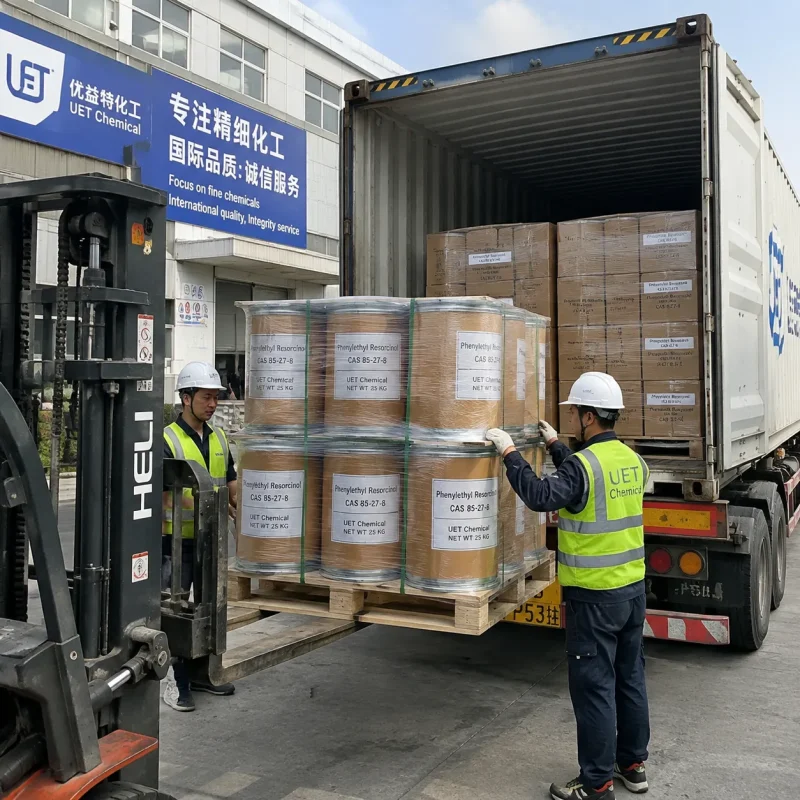
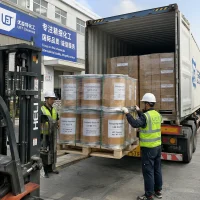
- Transport: Phenylethyl Resorcinol is Non-DG under IATA/IMDG/ADR. Ship in standard dry containers, avoiding extreme heat and direct sunlight during transit.
- QC note: Verify purity via HPLC and confirm the melting point (105–110 °C / 221–230 °F) upon receipt. Perform a strict visual inspection; the powder must be stark white with no pinkish hue.
Phenylethyl Resorcinol FAQ
Q: How does Phenylethyl Resorcinol compare to Kojic Acid and Arbutin?
A: It is vastly more potent. In vitro studies show it inhibits tyrosinase approximately 22 times more effectively than kojic acid and significantly outperforms arbutin, requiring much lower usage levels (0.1-0.5%) to achieve superior brightening results.
Q: The powder has turned slightly pink. Can I still use it in my formulation?
A: No. The pink discoloration indicates that the phenolic hydroxyl groups have oxidized into quinones. This not only destroys its tyrosinase-inhibiting efficacy but will also cause unpredictable color shifts and potential irritation in your final cosmetic product.
Q: How do I incorporate it into a water-based serum?
A: It is practically insoluble in water. You must pre-dissolve it in a warm solvent system (such as propanediol, ethoxydiglycol, or a lipid phase) at 50–60 °C (122–140 °F) before adding it to the aqueous phase or emulsion to prevent recrystallization and graininess in the final texture.
Related products
Manufacturer & Exporter Since 2006
Get Tailored Chemical Raw Material Solutions — Reply Within 1 Hour
Factory-direct pricing, stable high-purity supply and complete compliance documentation for your industrial formulations.
- 1000+Products
- 200+QC Protocols
- 7–15Days Delivery
- Factory-Direct Pricing
- COA / TDS / SDS Included
- Free Samples for Testing
- 40+ Export Countries
Request a Free Quote
Our engineers reply within 1 hour during GMT+8 business hours.
Please include in your inquiry:
- Product name or CAS number
- Required quantity
- Destination country or port
- Preferred packaging