
Methyltetrahydrophthalic Anhydride (MTHPA) CAS 11070-44-3
Methyltetrahydrophthalic Anhydride (MTHPA) is a liquid cyclic acid anhydride featuring a methyl-substituted hydrogenated phthalic ring. It solves the high-viscosity processing and brittleness challenges of solid anhydrides in epoxy systems. Electrical and composite manufacturers rely on MTHPA for electronic encapsulation, dry-type transformer casting, and high-voltage insulators. UETChem supplies this curing agent with strict control over color and free acid content, ensuring low exotherm and long pot life during processing. Each shipment includes COA, TDS, SDS.
- CAS No: 11070-44-3
- Synonyms: MTHPA; Methyltetrahydrophthalic anhydride; 3-Methyl-1,2,3,4-tetrahydrophthalic anhydride
- EINECS: 234-285-0
- Molecular Formula: C9H12O3
- Molecular Weight: 168.19 g/mol
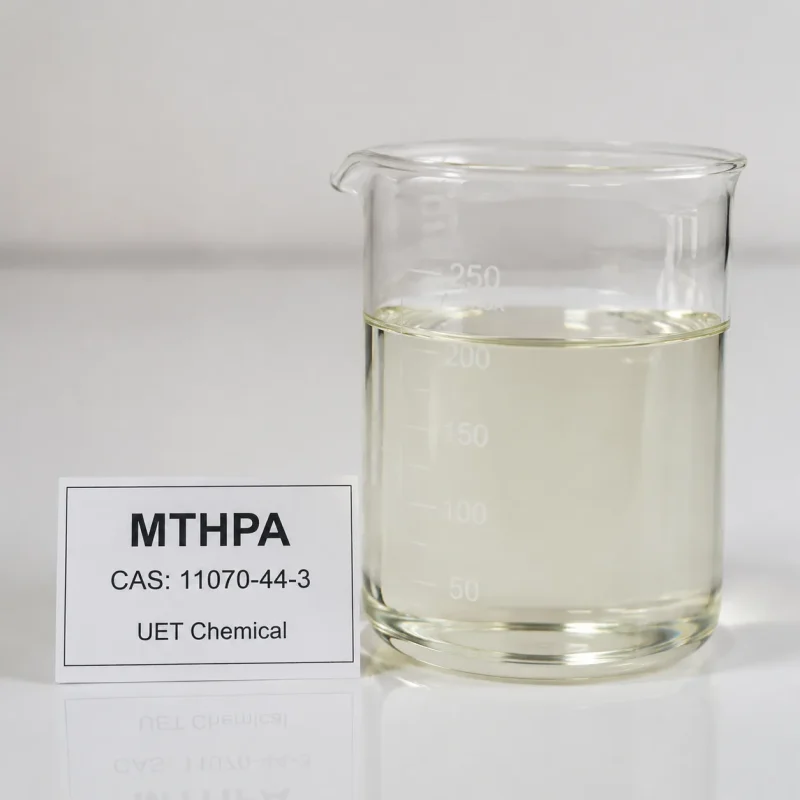
- Appearance: Colorless to pale yellow transparent liquid
- Purity: 98.0% min (GC)
- Viscosity: 40 – 60 mPa·s at 25 °C
- Acid Value: 650 – 670 mg KOH/g
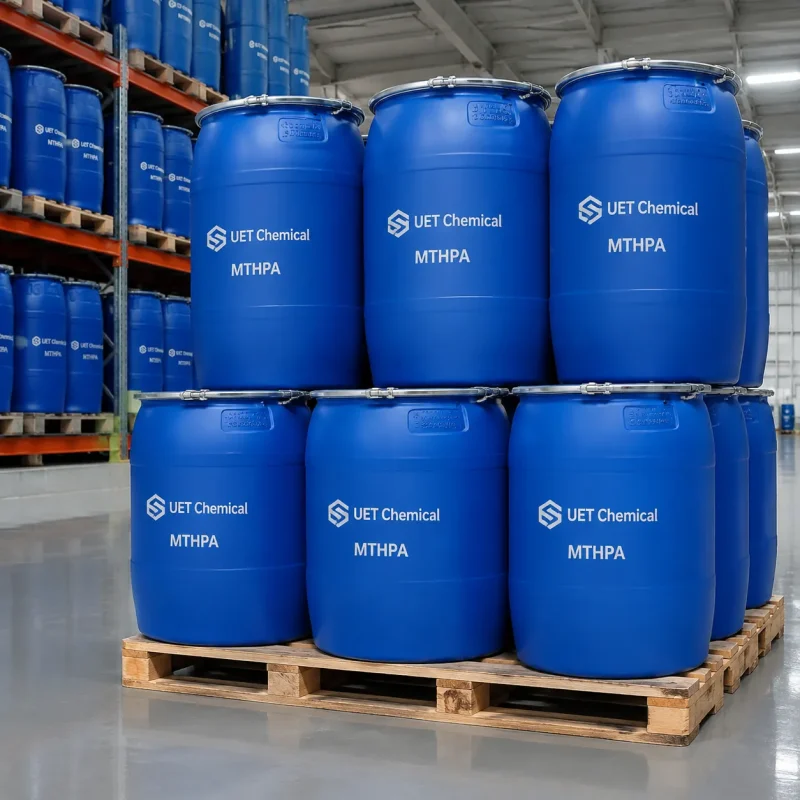
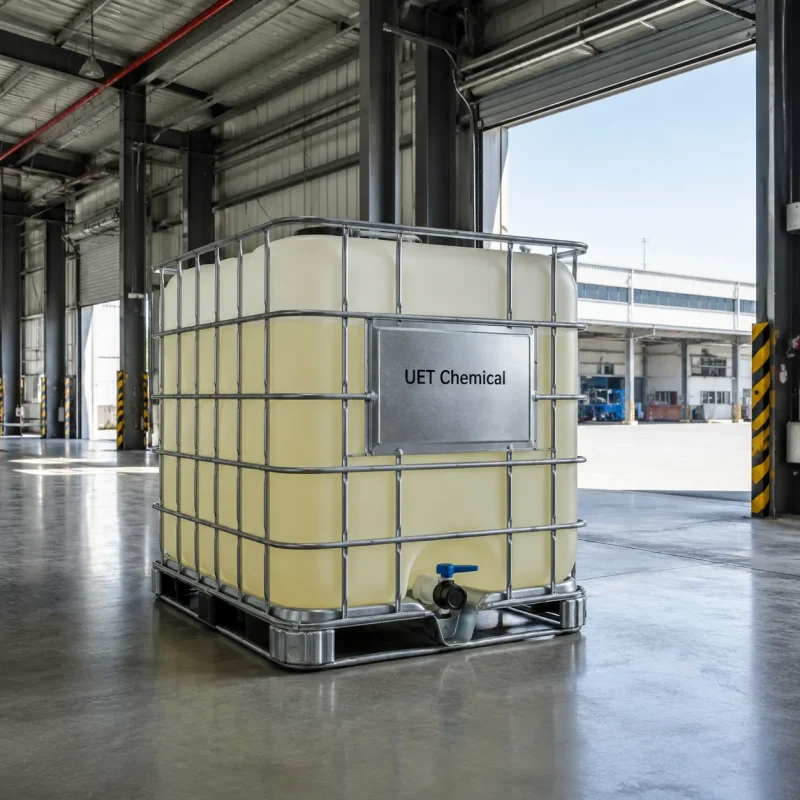
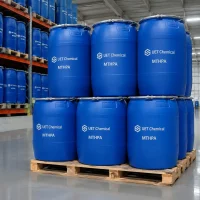
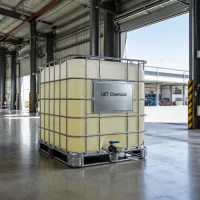
- Packaging: 200 kg (441 lb) drum, 1000 kg (2205 lb) IBC. Custom packaging available upon request.
- Main Applications: Epoxy curing agent, LED encapsulation, electrical casting, composite matrices
Introduction to MTHPA
Methyltetrahydrophthalic Anhydride is a liquid cyclic acid anhydride characterized by a hydrogenated benzene ring substituted with a methyl group. The saturation of the aromatic ring and the presence of the methyl group define its physical state as a low-viscosity liquid at room temperature. In epoxy resin formulations, the anhydride ring undergoes a ring-opening reaction with hydroxyl groups, followed by esterification with the epoxy groups, forming a highly cross-linked three-dimensional network.
Industrial facilities utilize MTHPA as a latent or catalyzed curing agent for bisphenol-A and novolac epoxy resins. The curing process requires elevated temperatures and typically involves tertiary amine or imidazole accelerators. The resulting polymer matrix exhibits a rigid structure with high thermal stability and excellent electrical insulation properties.
Key Features of MTHPA
- Hydrogenated ring structure: The absence of aromatic double bonds provides superior UV resistance and prevents yellowing, making it suitable for outdoor insulators and optical LED encapsulation.
- Liquid state at room temperature: Low viscosity allows for high filler loading, such as silica flour, without requiring solvent dilution or excessive heating during mixing.
- Methyl substitution: The methyl group introduces steric hindrance, which increases the glass transition temperature (Tg) and improves the moisture resistance of the cured epoxy network.
MTHPA Chemical & Physical Properties
| Property | Value |
|---|---|
| Molecular Formula | C9H12O3 |
| Molecular Weight | 168.19 g/mol |
| Appearance | Colorless to pale yellow transparent liquid |
| Viscosity (25 °C) | 40 – 60 mPa·s |
| Density (20 °C) | 1.18 – 1.20 g/cm³ |
| Acid Value | 650 – 670 mg KOH/g |
| Flash Point | > 110 °C (closed cup) |
Applications of MTHPA
Electrical casting and insulators: Used as the primary hardener for high-voltage dry-type transformers and switchgear. The low initial viscosity allows deep penetration into complex coil windings. Formulators often add Antioxidant 1010 to the resin blend to prevent thermal oxidative degradation during the long high-temperature curing cycles.
LED and electronic encapsulation: The non-aromatic structure prevents UV yellowing, maintaining light transmission in LED lenses. MTHPA cures bisphenol-A epoxy resins to form clear, stress-free matrices that protect microchips from moisture and thermal shock.
Composite matrices: Blended with epoxy resins to impregnate glass or carbon fibers in filament winding and pultrusion processes. The methyl group enhances the hydrophobic nature of the cured composite. For specialized structural adhesives requiring different reactive groups, engineers might incorporate Glycidyl Methacrylate (GMA) to modify the crosslink density.
Storage & Safety Precautions for MTHPA
- Moisture sensitivity: Store drums tightly sealed in a dry warehouse. MTHPA is an acid anhydride and readily hydrolyzes into the corresponding dicarboxylic acid when exposed to ambient humidity. This hydrolysis increases viscosity and alters the stoichiometry, leading to incomplete curing and tacky surfaces.
- Material compatibility: Use 316L stainless steel or HDPE for storage tanks and transfer lines. Avoid carbon steel, as trace iron ions can catalyze side reactions and darken the liquid.
- Handling and PPE: The liquid is a skin and respiratory sensitizer. Wear nitrile gloves, long sleeves, and organic vapor respirators when decanting. Wash splashes immediately with soap and water; do not use solvents for skin cleaning.
- Field note: When calculating the mix ratio, base the formulation on the Acid Value rather than theoretical molecular weight. Batch-to-batch acid value drift will change the optimal epoxy-to-hardener ratio and affect the final Tg of the casting.
MTHPA FAQ
Q: Why does my MTHPA epoxy casting have a sticky surface?
A: A sticky surface indicates incomplete curing, often caused by MTHPA absorbing moisture from humid air. Water hydrolyzes the anhydride into dicarboxylic acid, reducing active curing sites and altering the stoichiometry. Keep MTHPA drums tightly sealed and verify the acid value before batching.
Q: How do I calculate the correct MTHPA dosage for epoxy resin?
A: Calculate the MTHPA dosage using the specific Acid Value provided on the COA, not just the theoretical molecular weight. Multiply the epoxy equivalent weight (EEW) by the anhydride equivalent weight (AEW) and apply a stoichiometric factor, typically 0.85, to achieve maximum Tg.
Q: Does MTHPA require an accelerator to cure bisphenol-A resins?
A: Yes, MTHPA reacts very slowly with epoxy groups on its own. You must add 0.5-2.0% of a tertiary amine or imidazole accelerator to initiate the ring-opening esterification. The accelerator lowers the activation energy and dictates the pot life and gel time of the mixture.
Related products
Manufacturer & Exporter Since 2006
Get Tailored Chemical Raw Material Solutions — Reply Within 1 Hour
Factory-direct pricing, stable high-purity supply and complete compliance documentation for your industrial formulations.
- 1000+Products
- 200+QC Protocols
- 7–15Days Delivery
- Factory-Direct Pricing
- COA / TDS / SDS Included
- Free Samples for Testing
- 40+ Export Countries
Request a Free Quote
Our engineers reply within 1 hour during GMT+8 business hours.
Please include in your inquiry:
- Product name or CAS number
- Required quantity
- Destination country or port
- Preferred packaging