
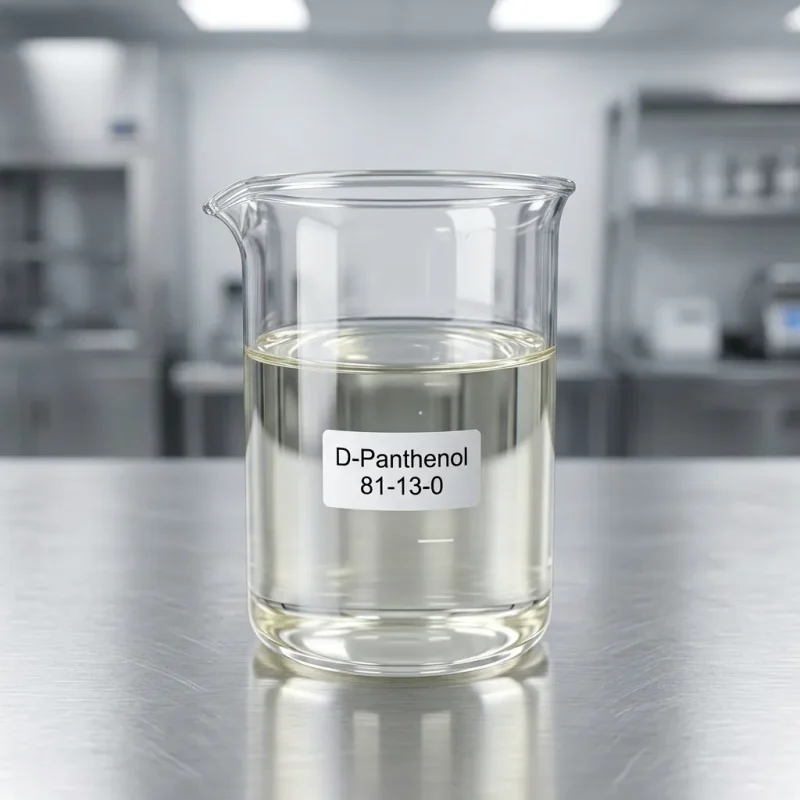
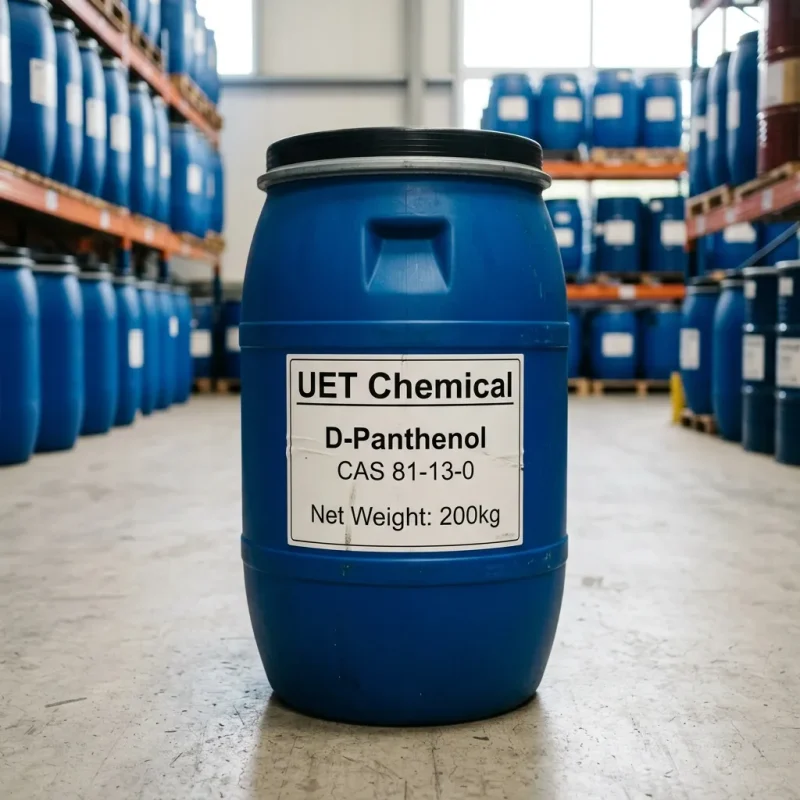
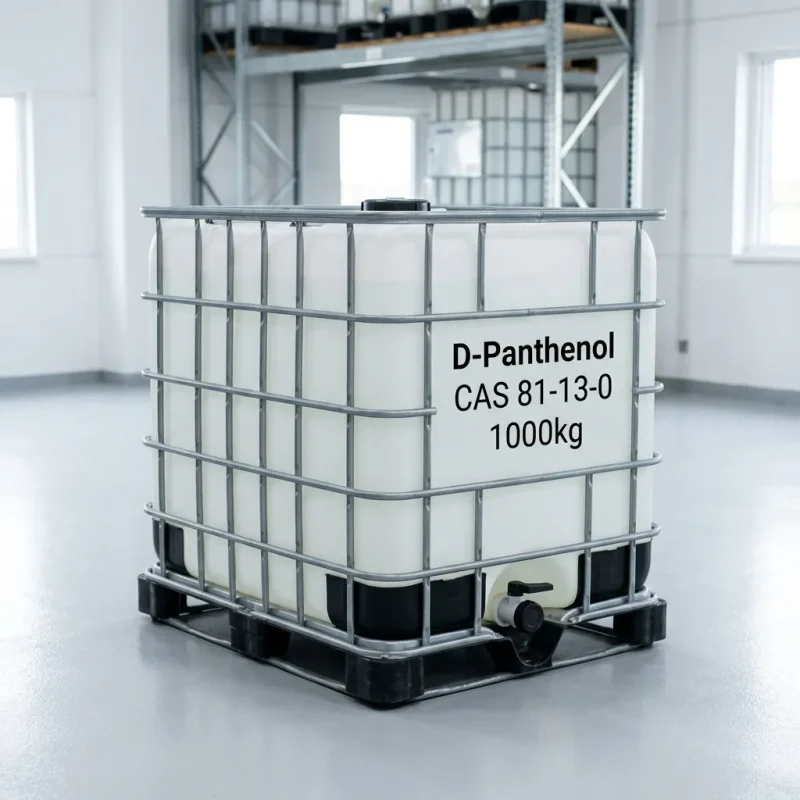
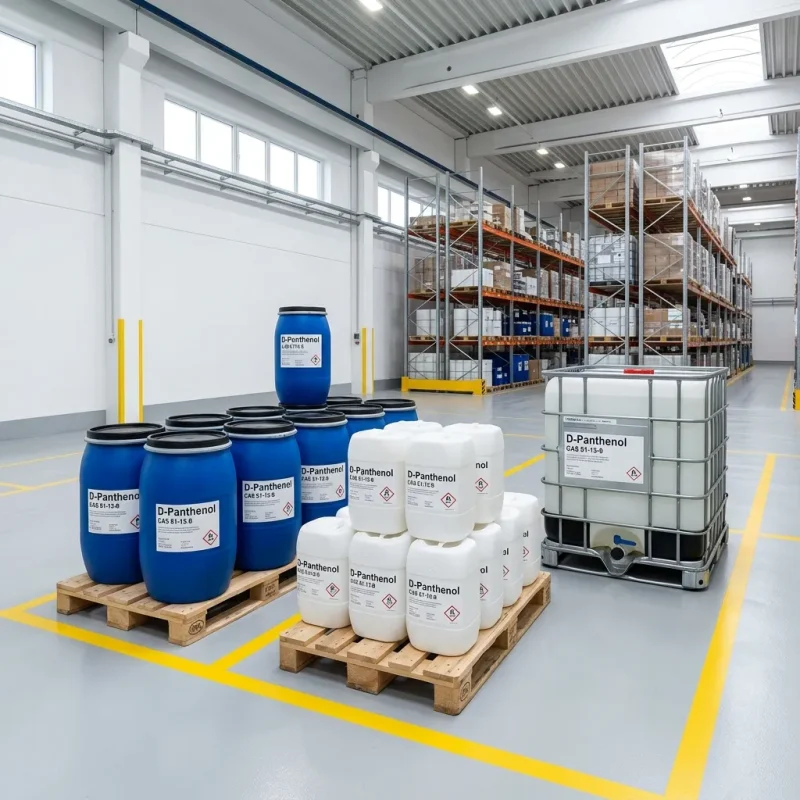
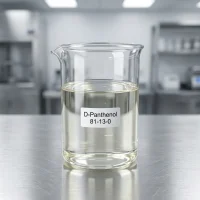
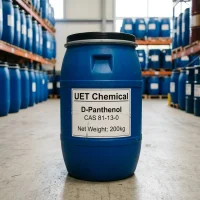
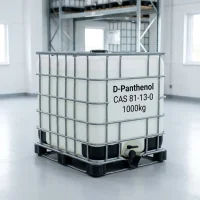
D-Panthenol CAS 81-13-0
D-Panthenol (Dexpanthenol) is the biologically active D-enantiomer of panthenol, functioning as the stable alcohol analogue and direct metabolic precursor of Vitamin B5 (pantothenic acid). Supplied as a high-purity white crystalline powder or colorless viscous liquid (≥99.0% HPLC), it penetrates the stratum corneum and is rapidly enzymatically oxidized to pantothenic acid, a vital component of Coenzyme A. Formulators rely on it as a premier active in dermatological skincare, wound-healing ointments, and deep-conditioning haircare. Each shipment includes COA, TDS, and SDS.
- CAS No.: 81-13-0
- Synonyms: Dexpanthenol; Provitamin B5; D-(+)-Pantothenyl alcohol
- EINECS: 201-327-3
- Molecular Formula: C₉H₁₉NO₄
- Molecular Weight: 205.25 g/mol
- Appearance: White crystalline powder or colorless to slightly yellow viscous liquid
- Assay (HPLC, dry basis): ≥99.0%
- Specific Rotation [α]D20: +29.0° to +31.5°
- Packaging: 25 kg fibre drum / 1 kg aluminium bottle. Custom packaging available upon request.
- Main Applications: Barrier-repair skincare; wound-healing ointments; hair conditioning; ophthalmic preparations
Introduction to D-Panthenol
D-Panthenol (Dexpanthenol) is the biologically active D-enantiomer of panthenol, functioning as the stable alcohol analogue and direct metabolic precursor of Vitamin B5 (pantothenic acid). Supplied as a high-purity white crystalline powder or colorless viscous liquid, it penetrates the stratum corneum and is rapidly enzymatically oxidized to pantothenic acid, a vital component of Coenzyme A. Formulators rely on it as a premier active in dermatological skincare, wound-healing ointments, and deep-conditioning haircare for its ability to stimulate fibroblast proliferation, accelerate epidermal regeneration, and provide profound humectancy. Its unique molecular structure ensures exceptional stability across a broad pH range, making it a versatile cornerstone in both leave-on and rinse-off personal care and pharmaceutical formulations.
Key Features of D-Panthenol
- Provitamin B5 bioconversion. The D-enantiomer possesses 100% vitamin activity. Upon skin or mucosal absorption, alcohol dehydrogenases rapidly oxidize it into pantothenic acid, directly feeding the Coenzyme A metabolic pathway for lipid synthesis and cellular repair.
- Transdermal penetration & hydration. The lipophilic hydrocarbon chain combined with hydrophilic hydroxyl groups allows deep penetration into the stratum corneum, where it binds water molecules and significantly reduces transepidermal water loss (TEWL) without leaving a tacky residue.
- Fibroblast proliferation. Clinically proven to stimulate fibroblast proliferation and accelerate the re-epithelialization of damaged tissue, making it the gold-standard active for post-procedure recovery, sunburn soothing, and minor wound healing.
- Hair shaft substantivity. Readily penetrates the hair cuticle and cortex, acting as an internal humectant that restores elasticity, reduces split ends, and imparts a natural, long-lasting shine to damaged hair fibers.
- Formulation versatility. Highly soluble in water and ethanol, and remarkably stable in the optimal pH 4.0–7.0 window, allowing seamless integration into emulsions, serums, clear gels, and aqueous aerosols.
D-Panthenol Chemical & Physical Properties
| Property | Value |
|---|---|
| Molecular Formula | C₉H₁₉NO₄ |
| Molecular Weight | 205.25 g/mol |
| Melting Point | 64–66 °C (Pure D-form; often supercools to a viscous liquid at room temp) |
| Specific Rotation [α]D20 | +29.0° to +31.5° (c = 5, H₂O) |
| pH (5% aq. solution) | 8.0–10.0 (Pure form); 6.0–8.0 (75% commercial solution) |
| Solubility | Freely soluble in water, ethanol, methanol; slightly soluble in ether |
| Assay (HPLC) | ≥99.0% |
| Loss on Drying | ≤1.0% |
| Heavy Metals (as Pb) | ≤10 ppm |
| Aminopropanol | ≤0.1% (Related substance) |
Applications of D-Panthenol
Dermatological & barrier-repair skincare: Dosed at 1.0–5.0% in creams, lotions, and serums. Accelerates stratum corneum lipid synthesis, repairs compromised skin barriers, and soothes erythema induced by UV exposure or chemical peels.
Wound healing & infant care: Formulated at 2.0–5.0% in diaper rash creams, post-laser balms, and minor burn ointments. Promotes rapid re-epithelialization and reduces scar formation by modulating fibroblast activity.
Haircare & scalp treatments: Used at 0.5–3.0% in shampoos, conditioners, and leave-in masks. Penetrates the hair shaft to provide internal hydration, improving tensile strength and reducing breakage during mechanical styling.
Ophthalmic & nasal preparations: Added at 1.0–5.0% in artificial tears and nasal sprays. Supports the regeneration of corneal epithelial cells and soothes dry, irritated mucosal membranes.
Storage & Safety Precautions for D-Panthenol
Storage conditions. Store in sealed, light-resistant fibre drums or aluminium bottles at 15–25 °C, in a dry environment. Pure D-Panthenol is highly hygroscopic; exposure to high humidity (>70% RH) will cause the powder to absorb moisture and form a thick, syrupy liquid. This phase change is physical and does not degrade the active ingredient. Keep away from strong oxidising agents.
Safety and PPE. GHS: Not classified as hazardous. Non-toxic, non-irritating, and non-sensitising. Wear standard nitrile gloves and safety glasses during dispensing to prevent stickiness. Spills are non-toxic but extremely tacky; wash with warm water.
Transport classification. Non-DG. Not regulated under IMDG, IATA, or ADR. Ship as standard general cargo. Ensure container seals are intact to prevent moisture ingress during ocean freight.
Practitioner note: For incoming QC, verify the D-enantiomer purity via polarimetry. The specific rotation must read between +29.0° and +31.5°. A reading near zero indicates the presence of the inactive DL-Panthenol racemate. Confirm assay via HPLC against a Dexpanthenol reference standard.
D-Panthenol FAQ
Q: What is the difference between D-Panthenol and DL-Panthenol?
A: Only the D-enantiomer (Dexpanthenol) possesses 100% Vitamin B5 biological activity and can be converted into Coenzyme A in the human body. DL-Panthenol is a 50/50 racemic mixture; while it still offers excellent surface humectancy for cosmetics, it only provides half the biological wound-healing and cellular-regeneration benefits. For pharmaceutical and high-efficacy dermal applications, D-Panthenol is mandatory.
Q: My pure D-Panthenol powder arrived as a thick, sticky liquid. Is it degraded?
A: No. Pure D-Panthenol has a melting point of 64–66 °C but frequently supercools into a highly viscous, colorless liquid at room temperature, especially if it absorbed trace moisture during transit. Gently warm the container in a 40–50 °C water bath to homogenise it before weighing. The biological activity remains fully intact.
Q: What is the optimal pH window for formulating with D-Panthenol?
A: D-Panthenol is most stable in the pH 4.0–7.0 range. In highly acidic (pH < 3) or strongly alkaline (pH > 8) formulations, especially when subjected to prolonged heat, the amide bond can slowly hydrolyse, cleaving the molecule back into pantothenic acid and 3-aminopropanol. For extreme pH systems, consider encapsulating the active or adding it during the cool-down phase.
Related products
Manufacturer & Exporter Since 2006
Get Tailored Chemical Raw Material Solutions — Reply Within 1 Hour
Factory-direct pricing, stable high-purity supply and complete compliance documentation for your industrial formulations.
- 1000+Products
- 200+QC Protocols
- 7–15Days Delivery
- Factory-Direct Pricing
- COA / TDS / SDS Included
- Free Samples for Testing
- 40+ Export Countries
Request a Free Quote
Our engineers reply within 1 hour during GMT+8 business hours.
Please include in your inquiry:
- Product name or CAS number
- Required quantity
- Destination country or port
- Preferred packaging