
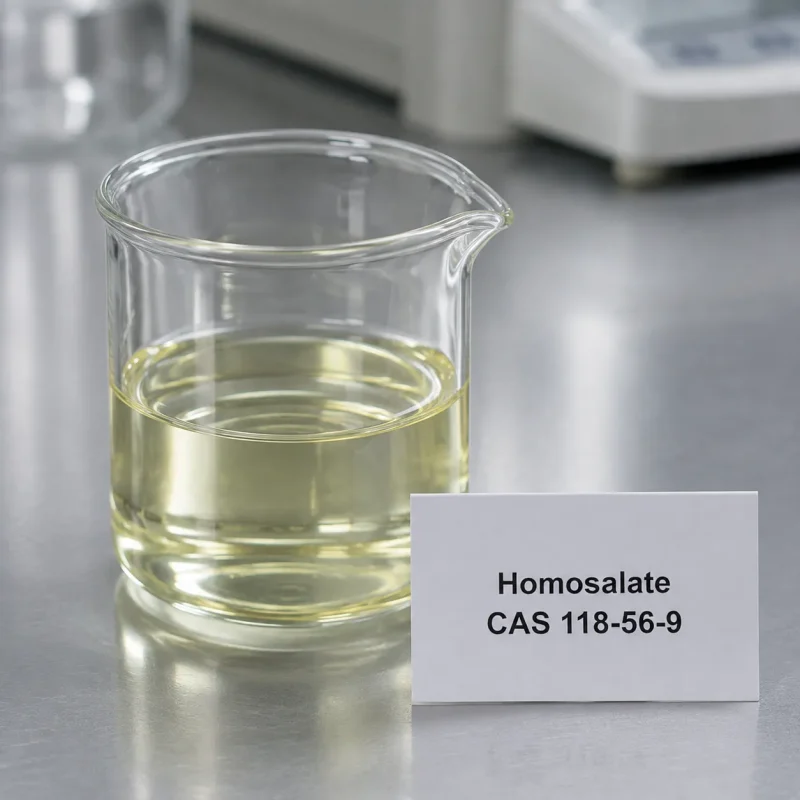
Homosalate CAS 118-56-9
Homosalate is an organic UVB filter built from a salicylate ester of 3,3,5-trimethylcyclohexanol. Clear, colorless to pale-yellow liquid, ≥98.0% GC purity. Absorbs across the 295–315 nm band (λmax ≈ 306 nm) and doubles as a solvent for solid UV filters in sunscreen emulsions and SPF moisturisers. The trimethylcyclohexyl tail (log P ≈ 6.1) forms water-resistant films. Each shipment includes COA, TDS, and SDS.
- CAS No.: 118-56-9
- Synonyms: Homomenthyl salicylate; 3,3,5-Trimethylcyclohexyl salicylate; INCI: Homosalate
- EINECS: 204-260-8
- Molecular Formula: C₁₆H₂₂O₃
- Molecular Weight: 262.34 g/mol
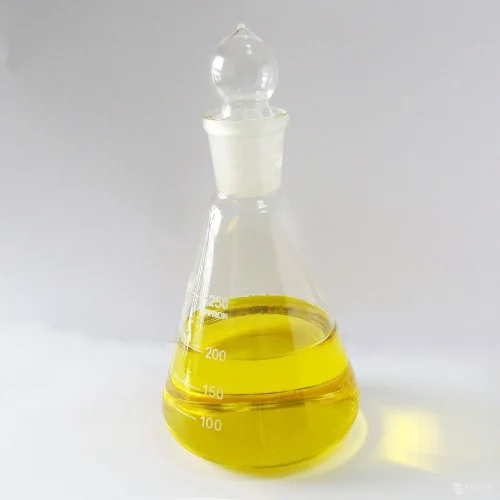
- Appearance: Clear, colorless to pale-yellow liquid
- Purity (GC): ≥98.0%
- Density (20 °C): 1.045–1.055 g/cm³
- Refractive Index (20 °C): 1.516–1.518
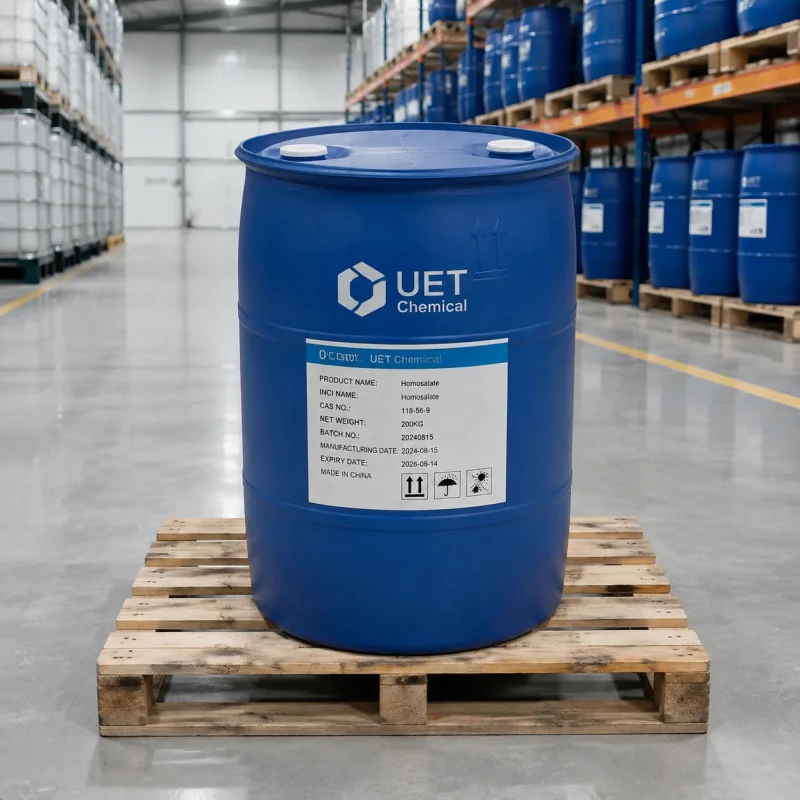
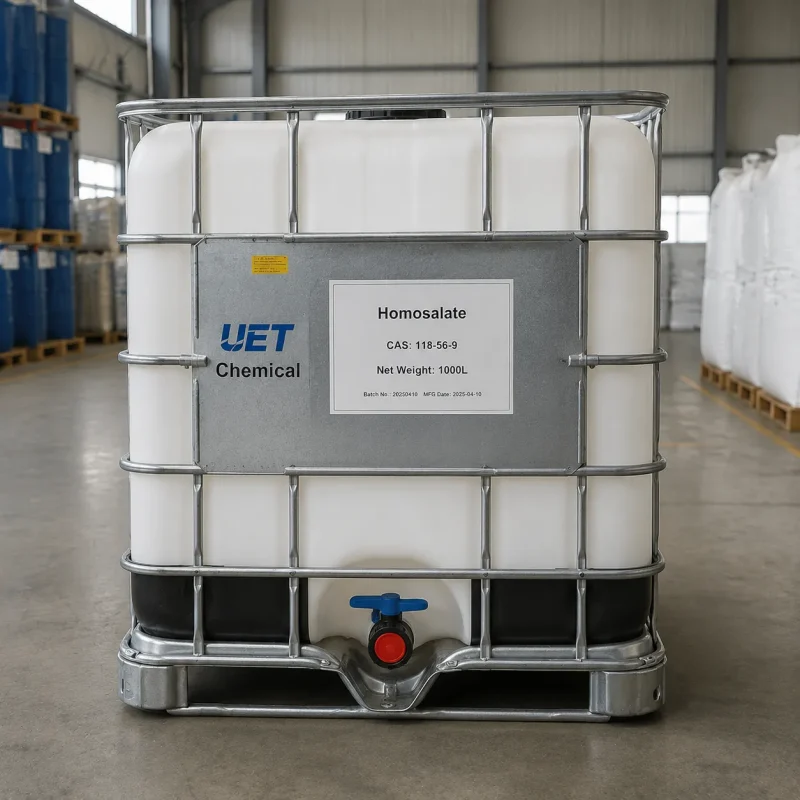
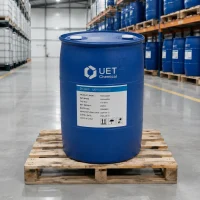
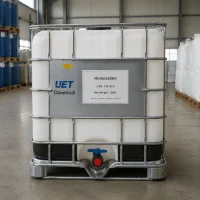
- Packaging: 200 kg HDPE drum / 1000 L IBC tote. Custom packaging available upon request.
- Main Applications: Sunscreen emulsions; SPF moisturisers; UV-filter solvent; lip care sticks
Introduction to Homosalate
Homosalate is a clear, colorless to pale-yellow liquid, the salicylate ester of 3,3,5-trimethylcyclohexanol. The aromatic salicylate ring absorbs UVB radiation across 295–315 nm with a peak near 306 nm, while the bulky trimethylcyclohexyl group drives strong lipophilicity (log P ≈ 6.1). Formulators use it as a UVB filter in sunscreen emulsions and as the oil-phase solvent that keeps solid filters such as avobenzone dissolved.
The low molar extinction coefficient (~4,500 L·mol⁻¹·cm⁻¹ at 306 nm) is the defining constraint: even a 10% dose contributes only moderate SPF, so homosalate must be paired with high-extinction filters to reach SPF 30+. One practical caution: at 10–15% loads the oil phase turns heavy and can break O/W emulsions; keep total oil phase below 30% or balance with lighter emollients and polymeric emulsifiers.
Key Features of Homosalate
- UVB absorption at 295–315 nm. The salicylate chromophore peaks at ~306 nm, covering the erythema-effective UVB range and keeping the filter profile predictable in combination systems.
- Solvent for solid filters. Dissolves crystalline filters such as avobenzone in the oil phase, preventing recrystallisation in bulk storage and on skin during wear.
- Water-resistant film former. Log P ≈ 6.1 keeps the molecule in the oil film after water immersion, supporting 80-minute water-resistance claims when paired with film formers.
- Limited skin penetration. The 262.34 g/mol weight and bulky cyclohexyl group restrict stratum corneum permeation, underpinning favourable safety assessments.
- Photostable ester backbone. With no non-aromatic double bonds, UV exposure neither isomerises nor cleaves the molecule, so absorbance holds during sun exposure.
Homosalate Chemical & Physical Properties
| Property | Value |
|---|---|
| Molecular Formula | C₁₆H₂₂O₃ |
| Molecular Weight | 262.34 g/mol |
| Appearance | Clear, colorless to pale-yellow liquid |
| Density (20 °C) | 1.045–1.055 g/cm³ |
| Refractive Index (20 °C) | 1.516–1.518 |
| Boiling Point | 161–165 °C (4–12 mmHg) |
| Flash Point | 169–173 °C (closed cup) |
| Solubility | Insoluble in water (<0.1 g/L); miscible with ethanol, esters, cosmetic oils |
| UV λmax | ~306 nm (ethanol) |
| Free Salicylic Acid | ≤0.5% |
Applications of Homosalate
Sunscreen emulsions (O/W and W/O): Dosed at 5–15% where regulations allow. The salicylate ring absorbs UVB at 295–315 nm; combined with UVA filters it builds broad-spectrum systems. Under EU Regulation 2022/2195, face products (excluding propellant sprays) cap at 7.34%.
Solvent and carrier for solid UV filters: Used at 3–8% of the formula to hold 1–3% avobenzone in solution. The ester environment suppresses needle formation during cold storage at 5 °C and keeps the filter optically active on skin.
Daily-wear SPF moisturisers and primers: Added at 2–6%. Contributes UVB protection while plasticising the emollient phase, giving a smooth spread without the white residue of mineral filters.
Lip care and anhydrous stick products: Formulated at 2–6% in wax-based sticks. The liquid ester lowers the brittle point of the wax matrix and delivers uniform UVB coverage across the applied film.
Storage & Safety Precautions for Homosalate
Storage conditions. Store in sealed HDPE drums or IBC totes at 10–30 °C, protected from light. Viscosity rises sharply below 10 °C; warm drums to 25–30 °C and homogenise before pumping. Keep away from strong oxidisers and strong alkalis—the ester bond hydrolyses above pH 10 at elevated temperature, releasing salicylic acid and 3,3,5-trimethylcyclohexanol.
Safety and PPE. GHS: Not classified as hazardous. Mild eye irritant. Wear standard nitrile gloves and safety goggles during drum transfers. Spills are non-toxic but extremely slippery; contain with inert absorbent and wash with warm soapy water.
Transport classification. Non-DG. Not regulated under IMDG, IATA, or ADR. Ship as standard general cargo. Ensure drum bungs are sealed to prevent moisture ingress during ocean freight.
Practitioner note: For incoming QC, assay by GC-FID with an internal standard and confirm identity by refractive index (1.516–1.518 at 20 °C). An RI below 1.514 signals dilution with unreacted 3,3,5-trimethylcyclohexanol; titrate free salicylic acid and reject above 0.5%. Colour may drift from water-clear to pale yellow between lots without affecting UV absorbance.
Homosalate FAQ
Q: What is the maximum dose of Homosalate (CAS 118-56-9) in EU and US sunscreens?
A: In the EU, Regulation 2022/2195 limits homosalate to 7.34% in face products (excluding propellant sprays), enforceable from 2025. The US FDA OTC monograph allows up to 15%. For EU-bound face creams, cap at 7.34% and rebuild SPF with companion filters; for US-only products, 10–15% remains compliant.
Q: Why does 10% homosalate alone fail to reach SPF 30?
A: The salicylate chromophore has a low molar extinction coefficient (~4,500 L·mol⁻¹·cm⁻¹ at 306 nm). A 10% dose alone delivers roughly SPF 6–8. Treat homosalate as a booster and solvent, not the primary filter: pair it with high-extinction UVB and UVA filters to reach SPF 30+ without an oily, unstable oil phase.
Q: Will homosalate keep avobenzone dissolved during cold storage?
A: Yes at typical loads. With homosalate at ≥5% of the formula, 1–3% avobenzone stays in solution down to 5 °C. Below that, run a 7-day crystallisation check at 5 °C; if needles appear, raise the homosalate share or add a co-solvent ester. Always pre-dissolve avobenzone in the homosalate before adding the remaining oil phase.
Related products
Manufacturer & Exporter Since 2006
Get Tailored Chemical Raw Material Solutions — Reply Within 1 Hour
Factory-direct pricing, stable high-purity supply and complete compliance documentation for your industrial formulations.
- 1000+Products
- 200+QC Protocols
- 7–15Days Delivery
- Factory-Direct Pricing
- COA / TDS / SDS Included
- Free Samples for Testing
- 40+ Export Countries
Request a Free Quote
Our engineers reply within 1 hour during GMT+8 business hours.
Please include in your inquiry:
- Product name or CAS number
- Required quantity
- Destination country or port
- Preferred packaging