
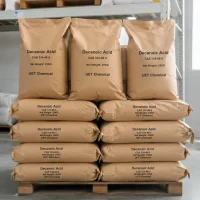
Decanoic Acid CAS 334-48-5
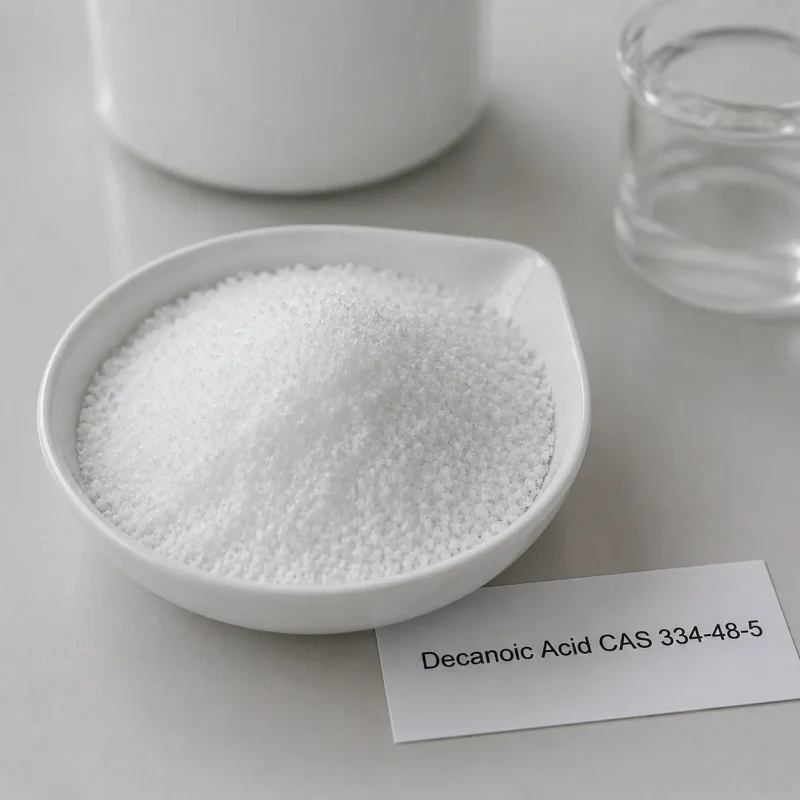
Decanoic Acid is a C10 medium-chain saturated fatty acid featuring a straight ten-carbon aliphatic chain terminating in a single carboxyl group. Supplied as white crystalline solids or clear liquid (≥99.0% GC purity), it acts as a primary building block for synthetic esters, agrochemical intermediates, and fragrance derivatives. The C10 chain length provides optimal lipophilicity for rapid esterification and high-yield MCT (medium-chain triglyceride) synthesis. Each shipment includes COA, TDS, and SDS.
- CAS No.: 334-48-5
- Synonyms: Capric Acid; Decylic Acid; C10 Fatty Acid; n-Decanoic acid
- EINECS: 206-376-4
- Molecular Formula: C₁₀H₂₀O₂
- Molecular Weight: 172.26 g/mol
- Appearance: White crystalline solid (below 31 °C) / Colorless liquid (above 31 °C)
- Purity (GC): ≥99.0%
- Acid Value: 322–330 mg KOH/g
- Melting Point: 31–33 °C
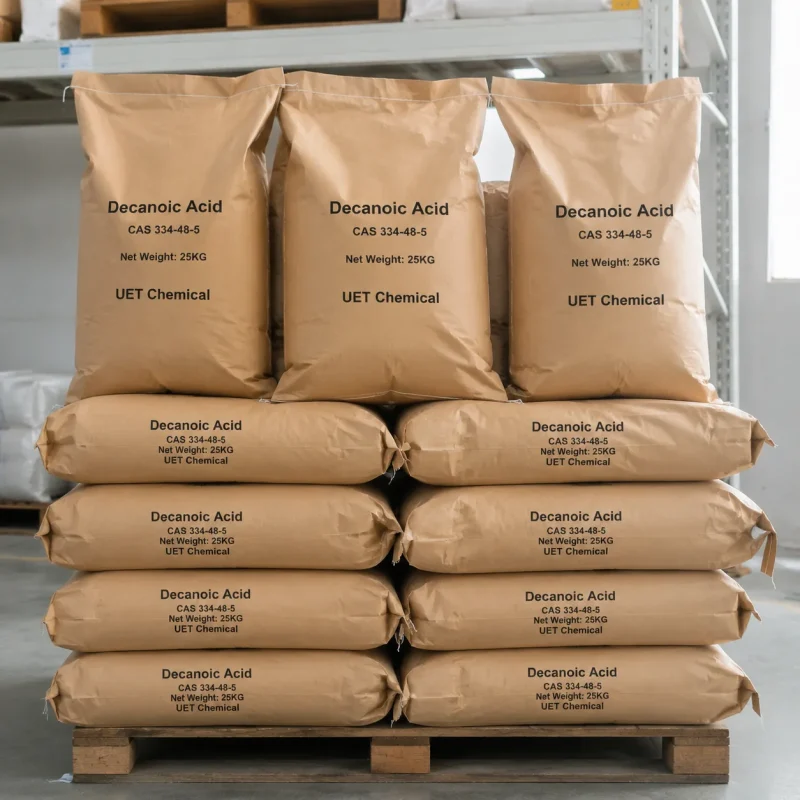
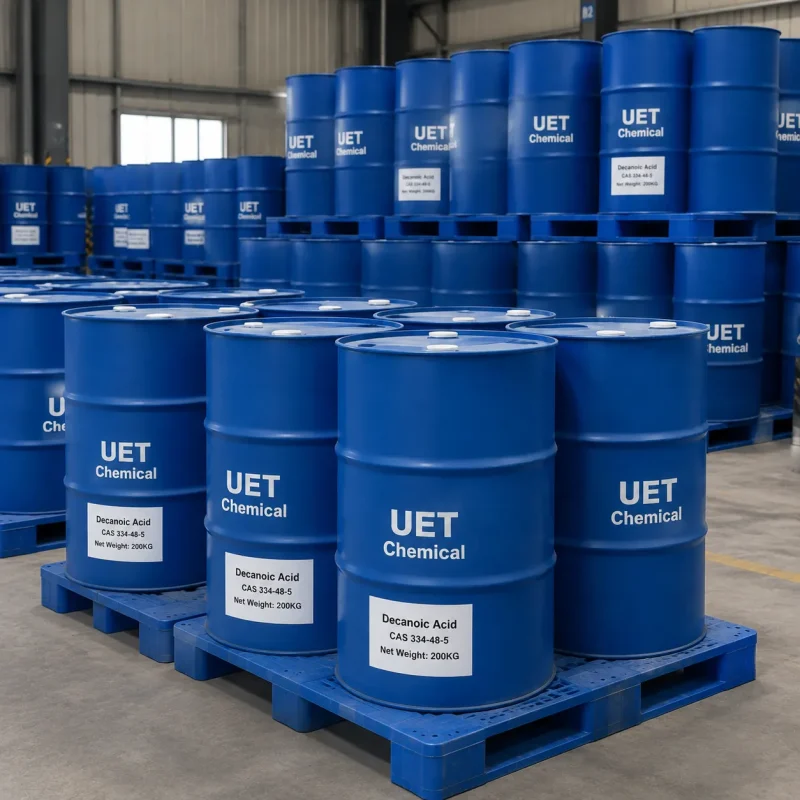
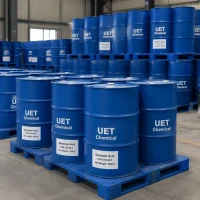
- Packaging: 25 kg PE bag / 180 kg HDPE drum / 900 kg IBC tote. Custom packaging available upon request.
- Main Applications: Synthetic esters (MCT oils); agrochemical intermediates; fragrance synthesis; pharmaceutical excipients
Introduction to Decanoic Acid
Decanoic Acid is a C10 medium-chain saturated fatty acid characterized by a straight ten-carbon aliphatic chain and a single terminal carboxyl group. Supplied as high-purity white crystals or clear liquid, it serves as a foundational building block for synthetic ester manufacturing, agrochemical intermediates, and fragrance derivatives.
The C10 carbon length delivers an ideal hydrophilic-lipophilic balance, enabling rapid esterification kinetics and high-yield medium-chain triglyceride (MCT) production without the severe volatility issues of shorter-chain acids. One practical caution: Decanoic Acid melts sharply at 31.4 °C. In unheated warehouses or during winter transit, the material solidifies into a hard crystalline mass, requiring controlled jacketed melting to prevent localized thermal oxidation and yellowing before reactor charging.
Key Features of Decanoic Acid
- Optimal C10 esterification kinetics. The straight-chain structure and moderate steric profile allow rapid, high-yield condensation with polyols and glycerol, outperforming branched or longer-chain fatty acids in MCT oil synthesis.
- High-purity fractional distillation. ≥99.0% GC purity ensures minimal C8 or C12 homologues, preventing off-odour shifts and securing precise saponification values for downstream pharmaceutical excipients.
- Favourable lipophilicity (Log P ~4.1). The ten-carbon tail provides excellent solubility in non-polar organic solvents and lipid phases, facilitating seamless integration into agrochemical emulsifiable concentrates (EC).
- Sharp phase-transition behaviour. The distinct 31–33 °C melting point allows easy product recovery via crystallisation in cold-room processing, simplifying purification steps in fine-chemical synthesis.
Decanoic Acid Chemical & Physical Properties
| Property | Value |
|---|---|
| Molecular Formula | C₁₀H₂₀O₂ |
| Molecular Weight | 172.26 g/mol |
| Melting Point | 31–33 °C |
| Boiling Point | 269 °C (atmospheric) / 155 °C (15 mmHg) |
| Density (liquid, 40 °C) | 0.885–0.895 g/cm³ |
| Flash Point | >100 °C (closed cup, ASTM D93) |
| Acid Value | 322–330 mg KOH/g |
| Solubility | Insoluble in water; miscible with ethanol, ether, and most organic solvents |
Applications of Decanoic Acid
Synthetic esters and MCT oils: Reacted with glycerol or propylene glycol at 180–220 °C under vacuum. The C10 chain yields medium-chain triglycerides (MCT) that provide rapid metabolic energy and high oxidative stability for nutritional supplements and cosmetic emollients. Typical catalyst: 0.1–0.5% tin-based or solid acid resin.
Agrochemical intermediates: Converted to decanoyl chloride using thionyl chloride, then acylated to form active fungicide or herbicide molecules. The C10 lipophilic tail enhances the cuticular penetration of the final active ingredient on waxy plant leaves.
Fragrance and flavour derivatives: Esterified with short-chain alcohols to produce fruity, floral, or dairy-like aroma chemicals (e.g., ethyl decanoate for cognac and fruit notes). High GC purity prevents the goaty off-notes associated with lower-grade C10 fractions.
Pharmaceutical and cosmetic excipients: Used to synthesise metal stearates or zinc decanoate, which act as anti-fungal agents, deodorant actives, and tablet-release agents. The C10 chain disrupts microbial cell membranes while remaining non-irritating to human skin at formulated doses.
Storage & Safety Precautions for Decanoic Acid
Storage conditions. Store in sealed drums or bags at 15–30 °C, protected from moisture. Below 31 °C, Decanoic Acid crystallises into a solid block. If solidification occurs, melt the material using a warm water bath (40–50 °C) or a temperature-controlled jacketed tank. Never apply direct steam or open flames, as localized hot spots (>80 °C) trigger oxidative degradation and permanent yellowing.
Safety and PPE. GHS: Skin Corr. 1B (H314); Eye Dam. 1 (H318). Causes severe skin burns and eye damage in pure form. Wear heavy-duty neoprene or butyl rubber gloves, chemical-splash goggles, and an apron during drum transfers. In case of skin contact, wash immediately with copious water and mild alkaline soap.
Transport classification. Class 8, Packing Group III (UN 3265, Corrosive liquid/acidic, organic, n.o.s.). Ship in UN-approved HDPE drums or stainless-steel IBCs. Ensure adequate ventilation to prevent accumulation of mild fatty-acid vapours in closed containers.
Practitioner note: When verifying incoming QC via Acid Value titration (ISO 660), dissolve the sample in a neutralised ethanol/diethyl ether mixture warmed to 40 °C. If the solution cools below 31 °C during titration, the acid precipitates, causing erratic endpoint detection and falsely low Acid Value readings. Keep the titration flask on a warm hotplate.
Decanoic Acid FAQ
Q: How do I safely melt solid Decanoic Acid (CAS 334-48-5) for reactor charging without degrading it?
A: Decanoic Acid melts at 31–33 °C but degrades and yellows if exposed to localized high heat. Transfer the drums to a heated room (35–40 °C) for 24 hours, or use a recirculating warm-water bath (max 50 °C). For bulk IBCs, use low-pressure hot water in the heating coils. Never use direct steam lances or electric drum heaters without thermostatic control, as the metal surface will exceed 100 °C, oxidising the C10 chain and introducing peroxides that ruin downstream esterification catalysts.
Q: Why does my MCT oil synthesis yield drop when using this batch of Decanoic Acid?
A: Check the moisture content (Karl Fischer) and Acid Value. If moisture exceeds 0.2%, it shifts the esterification equilibrium backward, stalling the reaction and requiring excessive energy to strip water under vacuum. Furthermore, if the Acid Value is below 320 mg KOH/g, the batch contains non-acidic impurities from poor fractional distillation. Reject batches that fail to meet the 322–330 mg KOH/g specification to protect your tin or resin catalysts.
Q: What causes the strong “goaty” odour, and how do I eliminate it in cosmetic esters?
A: The natural goat-like odour stems from trace C6/C8 short-chain fatty acid impurities and trace oxidation aldehydes. To eliminate it in the final ester, ensure your raw Decanoic Acid has ≥99.0% GC purity. During esterification, apply a high-vacuum stripping step (below 5 mbar, 150 °C) to flash off unreacted free C10 acid and volatile odour compounds. Post-treatment with 0.5% activated carbon or magnesium silicate at 80 °C for one hour will polish the final ester to an odourless state.
Related products
Manufacturer & Exporter Since 2006
Get Tailored Chemical Raw Material Solutions — Reply Within 1 Hour
Factory-direct pricing, stable high-purity supply and complete compliance documentation for your industrial formulations.
- 1000+Products
- 200+QC Protocols
- 7–15Days Delivery
- Factory-Direct Pricing
- COA / TDS / SDS Included
- Free Samples for Testing
- 40+ Export Countries
Request a Free Quote
Our engineers reply within 1 hour during GMT+8 business hours.
Please include in your inquiry:
- Product name or CAS number
- Required quantity
- Destination country or port
- Preferred packaging