
1,2-Propylene Diacetate CAS 623-84-7
1,2-Propylene Diacetate is a high-boiling organic ester solvent that solves resin dissolution, film leveling, and volatility control challenges in industrial coatings and ink formulations. Paint and chemical manufacturers rely on it for cellulose acetate solvents, printing inks, and specialty chemical intermediates. UETChem supplies this product with strict distillation control and low acid value, ensuring excellent hydrolytic stability and zero odor interference in sensitive applications. Each shipment includes COA, TDS, SDS.
- CAS No: 623-84-7
- Synonyms: Propylene glycol diacetate; 1,2-Diacetoxypropane
- EINECS: 210-811-3
- Molecular Formula: C7H12O4
- Molecular Weight: 160.17 g/mol (160.17 lb/lbmol)
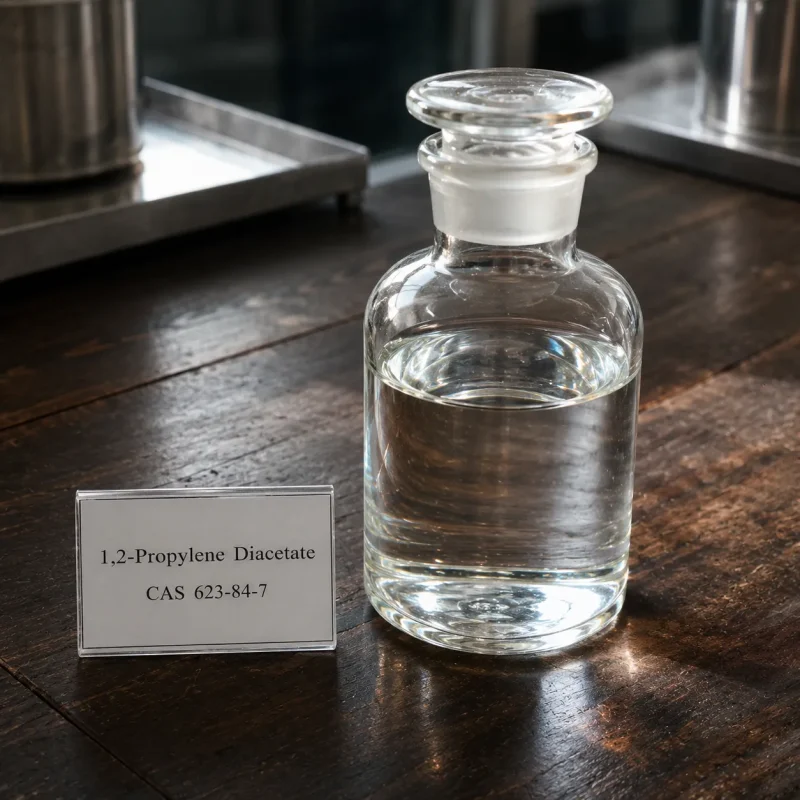
- Appearance: Colorless transparent liquid
- Purity: 99.0% min (GC)
- Acid Value: 0.1 mg KOH/g max
- Water Content: 0.1% max
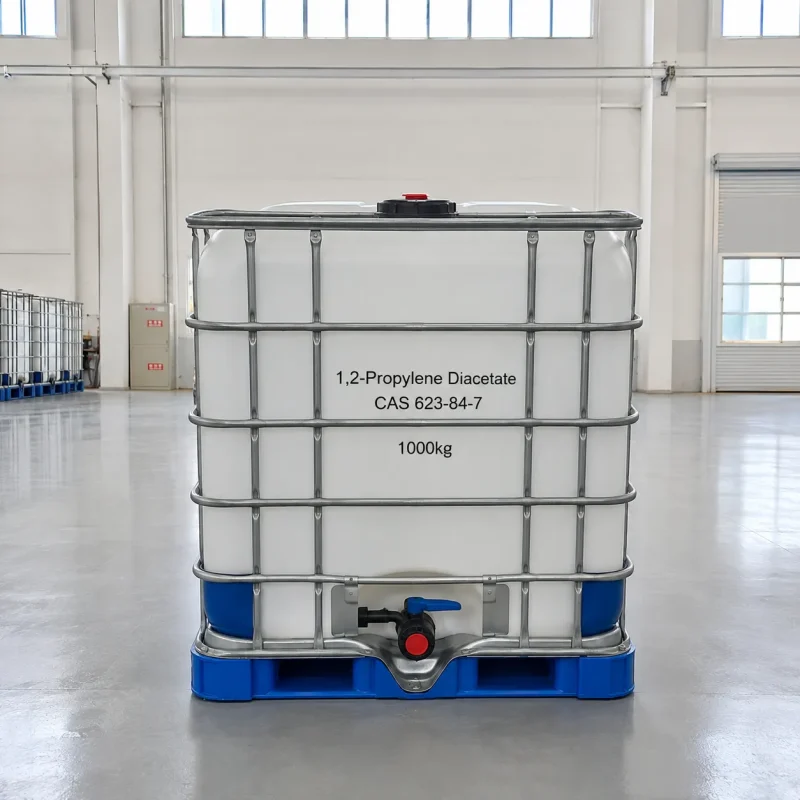
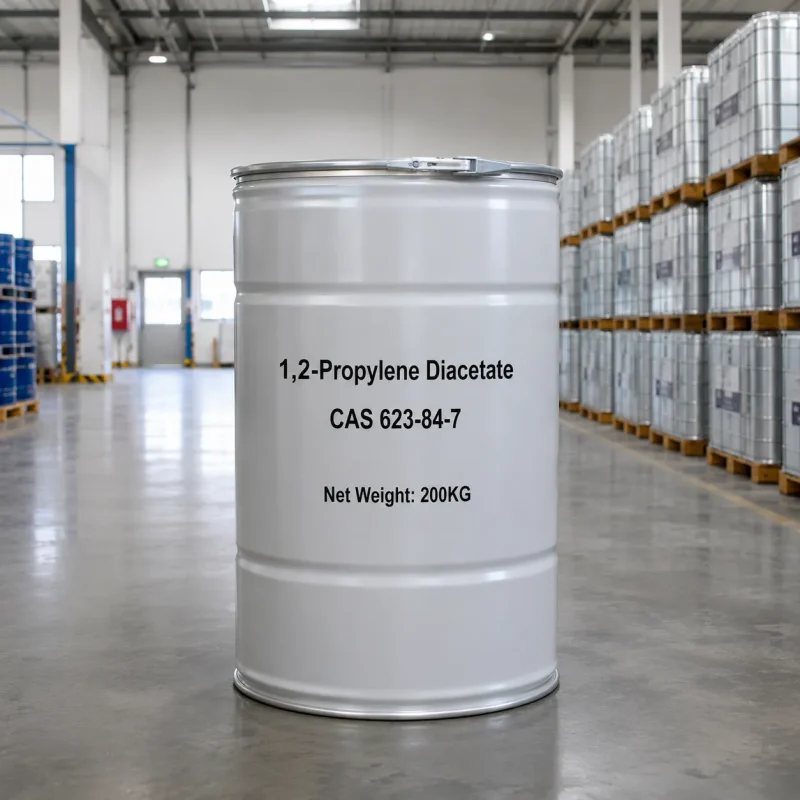
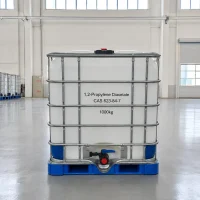
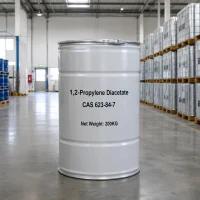
- Packaging: 200 kg (441 lb) HDPE drum, 1000 kg (2205 lb) IBC. Custom packaging available upon request.
- Main Applications: Coating solvents, printing inks, chemical synthesis, industrial degreasers
Introduction to 1,2-Propylene Diacetate
1,2-Propylene Diacetate is an organic ester synthesized by the esterification of propylene glycol with acetic acid. The molecular structure contains a three-carbon propylene backbone where both hydroxyl groups are capped with acetate esters. This dual-ester configuration yields a liquid with moderate polarity and a relatively high boiling point.
The compound exists as a colorless, transparent liquid with a faint, sweet, fruity odor at room temperature. It remains insoluble in water but mixes completely with a wide range of organic solvents, mineral oils, and synthetic resins. Industrial facilities consume this solvent to modify evaporation gradients in coating systems and to serve as a building block in organic synthesis pathways.
Key Features of 1,2-Propylene Diacetate
- Dual acetate groups: The ester linkages provide strong dipole interactions, enabling the dissolution of polar resins like cellulose acetate and acrylic polymers.
- Controlled evaporation: Boils at approximately 190 °C (374 °F), keeping the coating film open longer to facilitate solvent release and surface leveling.
- Hydrolytic stability: The steric hindrance around the ester bonds offers resistance to premature hydrolysis compared to simple aliphatic esters, maintaining a stable acid value in storage.
1,2-Propylene Diacetate Chemical & Physical Properties
| Property | Value |
|---|---|
| Molecular Formula | C7H12O4 |
| Molecular Weight | 160.17 g/mol (160.17 lb/lbmol) |
| Boiling Point | ~190 °C (374 °F) |
| Density | 1.06 g/cm³ (8.84 lb/gal) at 20 °C (68 °F) |
| Flash Point | 85 °C (185 °F) closed cup |
| Refractive Index | 1.410 – 1.415 at 20 °C |
| Solubility | Slightly soluble in water; miscible with organic solvents |
Applications of 1,2-Propylene Diacetate
Coating and ink solvents: Dosed at 5-15% in solvent-borne formulations to regulate the evaporation rate. It prevents rapid surface drying, which eliminates orange peel defects and improves gloss. Formulators frequently blend it with faster-evaporating solvents like Ethyl Acetate to create a precise solvent release profile for screen printing inks and wood finishes.
Resin dissolution and thinning: Acts as a primary solvent for cellulose esters and specific acrylic resins. In high-solids coatings, it lowers the overall viscosity without requiring excessive heat. Chemists often cross-reference Butyl Glycol Acetate when adjusting the solvency power for complex multi-resin systems.
Chemical intermediates: Utilized in organic synthesis to protect diol groups or as a specialized solvent in pharmaceutical manufacturing and agricultural formulations.
Storage & Safety Precautions for 1,2-Propylene Diacetate
- Moisture control: Store in tightly sealed HDPE or stainless steel drums below 30 °C (86 °F). Although relatively stable, prolonged exposure to high humidity and heat can trigger slow hydrolysis, releasing acetic acid. Facilities often run Calcium Chloride Anhydrous in warehouse dehumidifiers to maintain a dry environment.
- Handling and PPE: The liquid is a combustible liquid (Flash point 85 °C) and a mild irritant. Wear chemical splash goggles and nitrile gloves during transfer. Ensure adequate ventilation in the mixing area to prevent vapor accumulation.
- Field note: When formulating waterborne or moisture-cured systems, verify the water content specification on the COA. Trace water in the solvent drum can react with isocyanates or catalysts, causing premature gelling or CO2 gas generation in the mixing tank.
1,2-Propylene Diacetate FAQ
Q: How does 1,2-Propylene Diacetate function as a solvent in coatings?
A: 1,2-Propylene Diacetate provides an optimal evaporation rate and polarity balance for dissolving acrylic and cellulosic resins. It extends the open time of the coating film, promoting excellent leveling and preventing surface defects like orange peel.
Q: Is 1,2-Propylene Diacetate miscible with water?
A: 1,2-Propylene Diacetate is only slightly soluble in water at room temperature but fully miscible with most organic solvents and oils. Formulators primarily use it in solvent-borne systems. Keep drums tightly sealed to prevent hydrolysis from ambient moisture.
Q: What causes 1,2-Propylene Diacetate to degrade during storage?
A: Prolonged exposure to moisture and extreme heat causes 1,2-Propylene Diacetate to undergo hydrolysis, forming acetic acid and propylene glycol. This increases the acid value and introduces an off-odor. Store it in sealed drums below 30 °C in a dry warehouse.
Related products
Manufacturer & Exporter Since 2006
Get Tailored Chemical Raw Material Solutions — Reply Within 1 Hour
Factory-direct pricing, stable high-purity supply and complete compliance documentation for your industrial formulations.
- 1000+Products
- 200+QC Protocols
- 7–15Days Delivery
- Factory-Direct Pricing
- COA / TDS / SDS Included
- Free Samples for Testing
- 40+ Export Countries
Request a Free Quote
Our engineers reply within 1 hour during GMT+8 business hours.
Please include in your inquiry:
- Product name or CAS number
- Required quantity
- Destination country or port
- Preferred packaging