
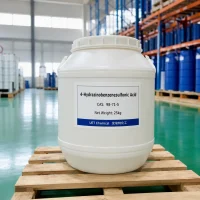
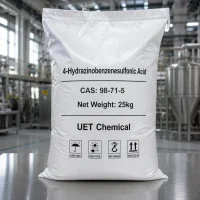
4-Hydrazinobenzenesulfonic Acid CAS 98-71-5
4-Hydrazinobenzenesulfonic Acid is a specialized aromatic hydrazine intermediate that solves low diazotization yields, coupling side reactions, and dull color shades in azo dye manufacturing. Dye and pharmaceutical chemists rely on it for pyrazolone dyes, acid dye synthesis, and heterocyclic compound building. UETChem supplies this product with strict control over moisture, isomeric impurities, and assay purity, ensuring maximum diazonium salt conversion and brilliant color stability. Each shipment includes COA, TDS, SDS.
- CAS No: 98-71-5
- Synonyms: HBSA; 4-Sulfophenylhydrazine; p-Hydrazinobenzenesulfonic acid
- EINECS: 202-694-2
- Molecular Formula: C6H8N2O3S
- Molecular Weight: 188.21 g/mol
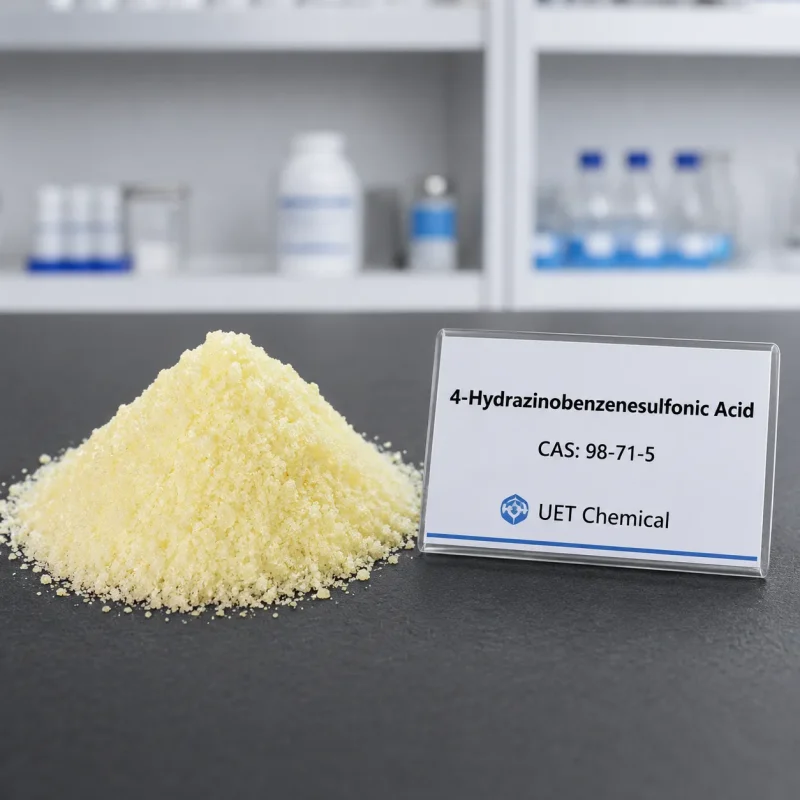
- Appearance: White to pale yellow crystalline powder
- Purity: 98.0% min
- Moisture: 1.0% max
- Insolubles: 0.1% max
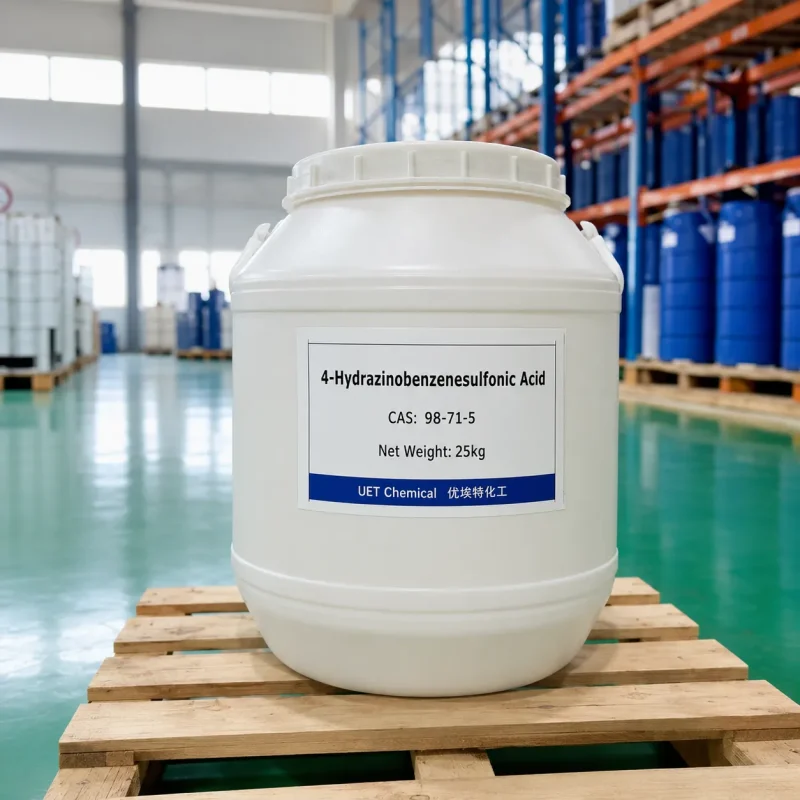
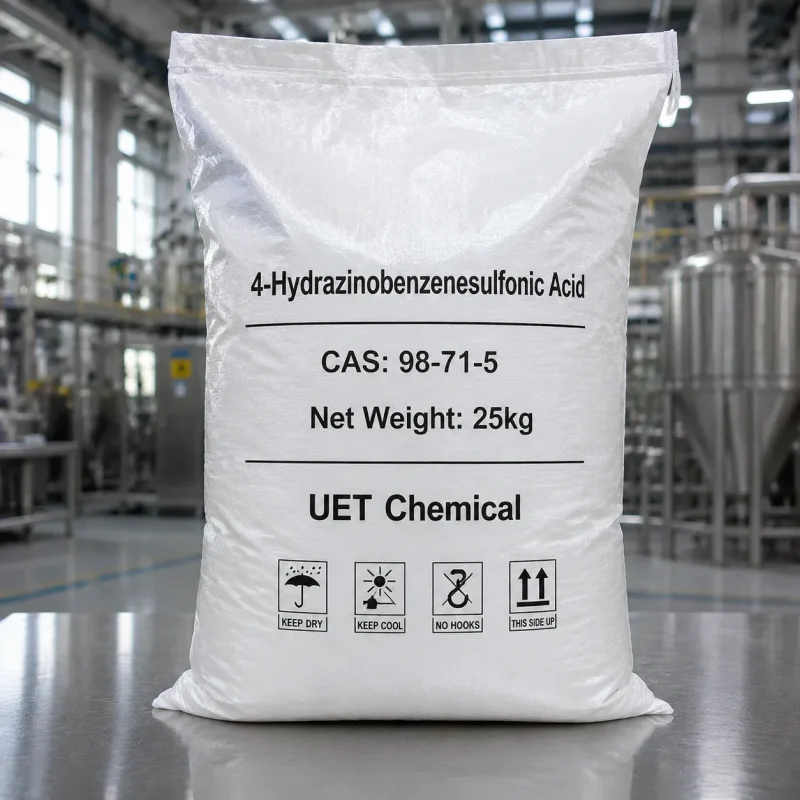
- Packaging: 25 kg (55 lb) fiber drum, 200 kg (441 lb) steel drum. Custom packaging available upon request.
- Main Applications: Azo dye intermediates, pyrazolone pigments, pharmaceutical synthesis, analytical reagents
Introduction to 4-Hydrazinobenzenesulfonic Acid
4-Hydrazinobenzenesulfonic Acid is an aromatic hydrazine compound featuring a benzene ring substituted with both a hydrazine group and a sulfonic acid group at the para positions. The molecular architecture combines the high nucleophilicity of the hydrazine moiety with the strong ionic character of the sulfonate group. At room temperature, the material presents as a white to pale yellow crystalline powder. It dissolves readily in aqueous alkaline solutions and polar organic solvents, forming stable intermediates for further synthetic transformations.
Key Features of 4-Hydrazinobenzenesulfonic Acid
- Highly reactive hydrazine group: Readily undergoes diazotization, oxidation, and cyclization to form complex heterocyclic rings like pyrazolones and indoles.
- Sulfonate-induced water solubility: The strong acidic sulfonic group imparts excellent aqueous solubility, facilitating smooth reactions in water-based dye manufacturing processes.
- Para-substitution symmetry: The 1,4-substitution pattern provides a linear molecular geometry, yielding highly ordered dye molecules with superior lightfastness and tinctorial strength.
4-Hydrazinobenzenesulfonic Acid Chemical & Physical Properties
| Property | Value |
|---|---|
| Molecular Formula | C6H8N2O3S |
| Molecular Weight | 188.21 g/mol |
| Appearance | White to pale yellow crystalline powder |
| Melting Point | Decomposes before melting |
| Solubility | Soluble in hot water and alkalis; slightly soluble in organic solvents |
| pH (1% aqueous) | 2.0 – 3.5 |
| Purity | 98.0% min |
Applications of 4-Hydrazinobenzenesulfonic Acid
Azo dye and pigment intermediates: Reacted with nitrous acid to form stable diazonium salts. These salts are subsequently coupled with coupling components like 2-Naphthol to synthesize vibrant, water-soluble dyes. The resulting azo compounds are widely utilized to manufacture products like Acid Orange for dyeing wool, silk, and leather substrates.
Heterocyclic compound synthesis: Serves as a foundational building block for constructing pyrazolone and indazole derivatives. Pharmaceutical and agrochemical researchers condense the hydrazine group with beta-keto esters or diketones to generate biologically active scaffolds.
Analytical reagents: Utilized in analytical chemistry for the derivatization and quantitative determination of aldehydes and ketones. The sulfonic acid group ensures the resulting hydrazones remain completely soluble in aqueous titration media.
Storage & Safety Precautions for 4-Hydrazinobenzenesulfonic Acid
- Oxidation and moisture control: Store in tightly sealed, opaque fiber drums or steel drums below 25 °C (77 °F). The hydrazine group is highly susceptible to oxidation and hydrolysis. Facilities run industrial dehumidifiers in the warehouse to maintain low ambient humidity, preventing the powder from degrading and losing its diazotization capacity.
- Handling and PPE: The fine powder is a respiratory and mucosal irritant. Wear N95 respirators, safety goggles, and nitrile gloves during weighing and dry blending operations.
- Field note: When preparing the diazonium salt, dissolve the powder in dilute hydrochloric acid and maintain the reaction temperature strictly between 0 °C and 5 °C (32 °F – 41 °F). Exceeding this temperature range causes rapid thermal decomposition of the diazonium intermediate, releasing nitrogen gas and ruining the batch yield.
4-Hydrazinobenzenesulfonic Acid FAQ
Q: How is 4-Hydrazinobenzenesulfonic Acid used in dye synthesis?
A: 4-Hydrazinobenzenesulfonic Acid acts as a crucial diazo component for synthesizing azo dyes. Formulators react its hydrazine group to form diazonium salts, which then couple with compounds like 2-Naphthol. This yields vibrant, water-soluble acid and direct dyes for textiles.
Q: What makes 4-Hydrazinobenzenesulfonic Acid highly water-soluble?
A: The sulfonic acid group attached to the benzene ring of 4-Hydrazinobenzenesulfonic Acid provides strong ionic character. This ensures excellent solubility in aqueous alkaline media, allowing smooth diazotization and coupling reactions without requiring harsh organic solvents.
Q: How should 4-Hydrazinobenzenesulfonic Acid be stored to prevent degradation?
A: 4-Hydrazinobenzenesulfonic Acid is sensitive to oxidation and moisture. Store the powder in tightly sealed, opaque drums in a cool, dry warehouse. Facilities often use desiccants to maintain low humidity, preventing the hydrazine group from degrading and preserving diazotization yield.
Related products
Manufacturer & Exporter Since 2006
Get Tailored Chemical Raw Material Solutions — Reply Within 1 Hour
Factory-direct pricing, stable high-purity supply and complete compliance documentation for your industrial formulations.
- 1000+Products
- 200+QC Protocols
- 7–15Days Delivery
- Factory-Direct Pricing
- COA / TDS / SDS Included
- Free Samples for Testing
- 40+ Export Countries
Request a Free Quote
Our engineers reply within 1 hour during GMT+8 business hours.
Please include in your inquiry:
- Product name or CAS number
- Required quantity
- Destination country or port
- Preferred packaging