
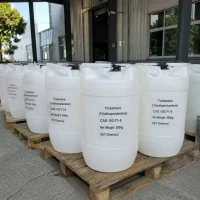
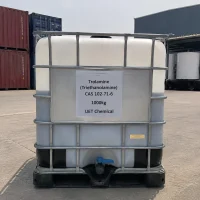
Trolamine (Triethanolamine) CAS 102-71-6
Trolamine (Triethanolamine) is a tertiary alkanolamine that solves poor carbomer thickening, emulsion phase separation, and metal corrosion challenges in cosmetic and industrial formulations. Personal care and metalworking manufacturers rely on it for vanishing creams, aqueous gels, and synthetic cutting fluids. UETChem supplies this product with strict control over color, moisture, and diethanolamine (DEA) impurities, ensuring maximum neutralization efficiency and low sensitization risk. Each shipment includes COA, TDS, SDS.
- CAS No: 102-71-6
- Synonyms: TEA; Triethanolamine; 2,2′,2”-Nitrilotriethanol
- EINECS: 203-049-8
- Molecular Formula: C₆H₁₅NO₃
- Molecular Weight: 149.19 g/mol
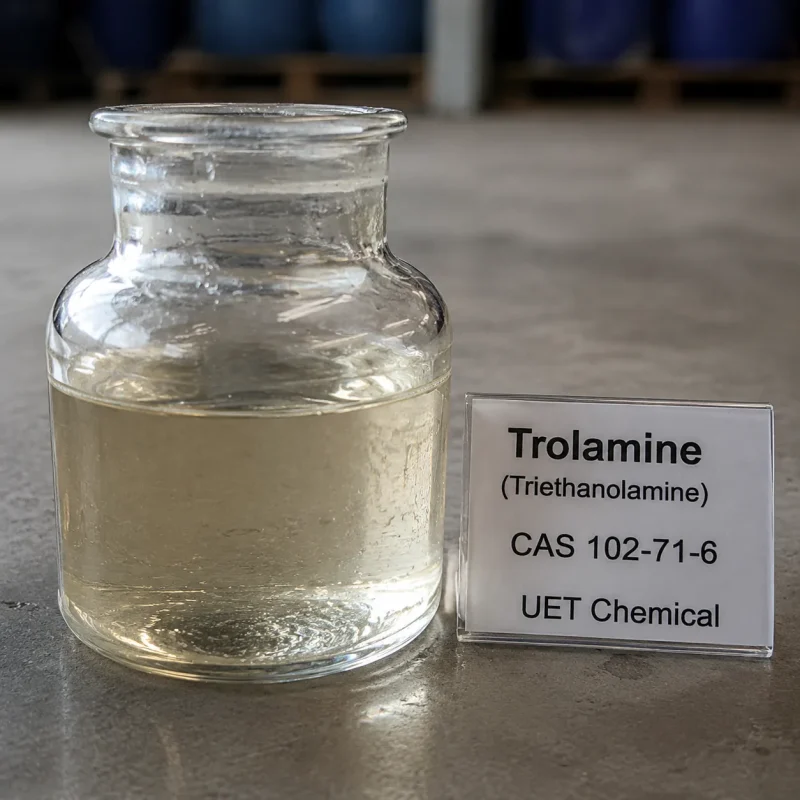
- Appearance: Colorless to pale yellow viscous liquid
- Purity: 99.0% min
- Moisture: 0.5% max
- Color (APHA): 30 max
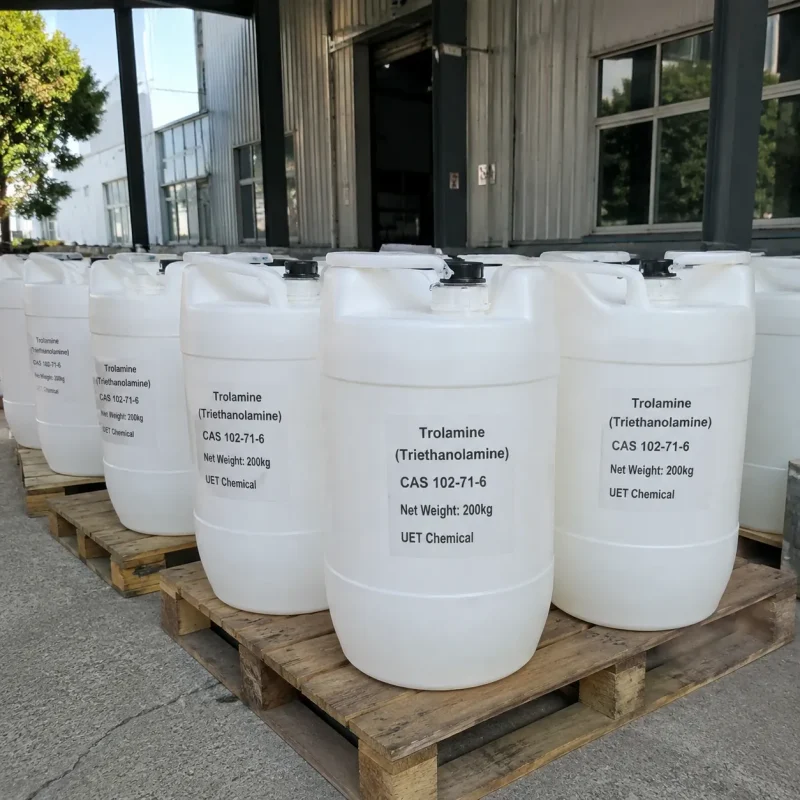
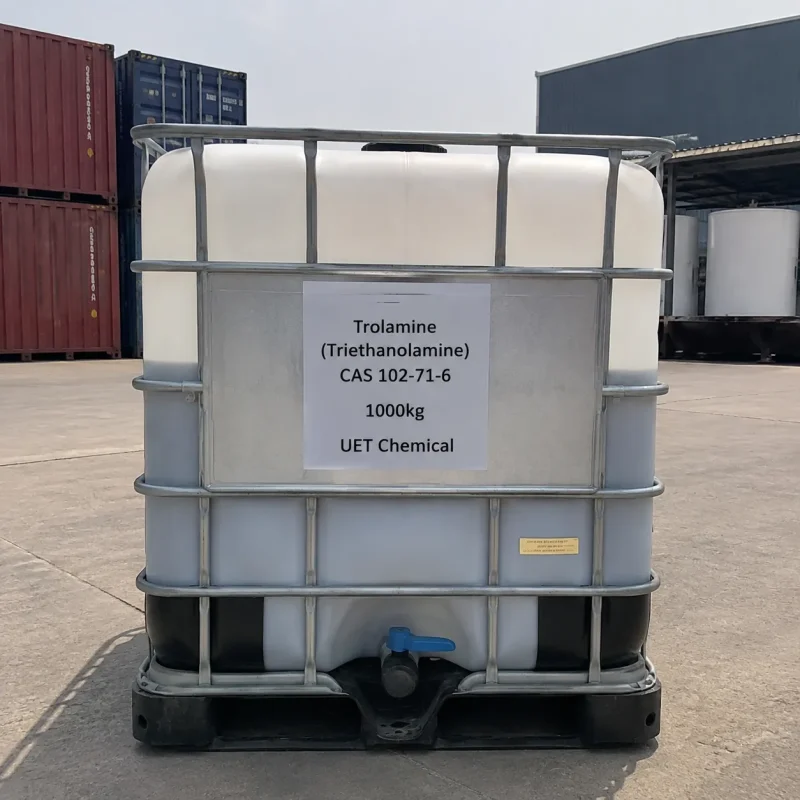
- Packaging: 200 kg HDPE drum, 1000 kg IBC. Custom packaging available upon request.
- Main Applications: Cosmetic emulsifiers, carbomer neutralizers, metalworking fluids, industrial cleaners, agrochemical adjuvants
Introduction to Trolamine
Trolamine is a tertiary alkanolamine consisting of a central nitrogen atom bonded to three hydroxyethyl groups. Its molecular architecture provides a strong basic nitrogen site alongside three polar hydroxyl groups, a unique combination that imparts high water solubility and excellent hydrogen-bonding capabilities. At room temperature, the compound appears as a colorless to pale yellow viscous liquid with a mild, characteristic ammonia-like odor. It is completely miscible with water and dissolves readily in lower alcohols.
Industrial facilities use this intermediate to neutralize acidic compounds, formulate stable oil-in-water emulsions, and build alkaline reserves in aqueous systems. The liquid slowly absorbs atmospheric carbon dioxide, forming carbonate salts over prolonged exposure, so sealed storage is required to maintain purity and performance.
Trolamine Chemical & Physical Properties
| Property | Value |
|---|---|
| Molecular Formula | C₆H₁₅NO₃ |
| Molecular Weight | 149.19 g/mol |
| Appearance | Colorless to pale yellow viscous liquid |
| Boiling Point | 335 °C (with decomposition) |
| Density (20 °C) | 1.12 g/cm³ |
| Flash Point (Closed Cup) | 193 °C |
| pH (10% Aqueous Solution) | 10.0 – 11.5 |
| Purity | 99.0% min |
Applications of Trolamine
Cosmetic emulsions and gels: Dosed at 1–3% to neutralize crosslinked polyacrylic acid polymers. The amine deprotonates carboxyl groups, forcing polymer chains to uncoil and swell to instantly thicken the water phase. It also reacts with fatty acids like stearic acid during hot emulsification to generate triethanolamine stearate, creating a smooth, pearlescent texture in vanishing creams and lotions.
Metalworking fluids and industrial cleaners: Blended into synthetic and semi-synthetic cutting fluids to provide an alkaline buffer. It neutralizes acidic byproducts generated during metal machining, preventing flash rust on ferrous surfaces. It is often combined with other surfactants to boost corrosion inhibition and lubricity of final coolant mixtures.
Agrochemical and chemical intermediates: Utilized to formulate amine salts of weak acid herbicides, improving their water solubility and foliar penetration. Formulators adjust final pH of agricultural adjuvants to optimize stability and efficacy of active ingredients.
Storage & Safety Precautions for Trolamine
- Store in tightly sealed HDPE or stainless steel drums below 30 °C. Prolonged exposure to air causes the liquid to absorb CO₂ and darken. Nitrogen padding on bulk storage tanks is recommended to exclude atmospheric oxygen and maintain water-white clarity.
- Avoid mixing the amine with nitrosating agents or nitrite-based corrosion inhibitors. Secondary amine impurities can react with nitrites to form carcinogenic nitrosamines.
- Wear chemical splash goggles, heavy-duty nitrile gloves and face shields during drum decanting. The concentrated liquid is highly alkaline and causes severe eye irritation and skin defatting.
- When thickening carbomer gels, pre-disperse the polymer powder in cold water and allow full hydration before adding the amine. Dumping amine into dry polymer slurry creates unhydrated agglomerates that require high-shear milling to break down.
Trolamine FAQ
Q: How does Trolamine function in cosmetic formulations?
A: It acts as a neutralizing agent and emulsifier in cosmetics. It reacts with fatty acids like stearic acid to form stable soap emulsifiers, and neutralizes acidic carbomer polymers to trigger swelling and thickening of water-based serums and creams.
Q: Why is Trolamine widely used in metalworking fluids?
A: It provides excellent alkaline reserve and rust inhibition in water-based metalworking fluids. It neutralizes acidic byproducts generated during machining, and can be blended with biocides and lubricants to protect ferrous metals from corrosion and extend sump life.
Q: Does Trolamine cause skin irritation in leave-on products?
A: High-purity trolamine is generally safe for rinse-off products, but prolonged exposure in leave-on cosmetics may cause sensitization. Formulators strictly control secondary amine impurities and balance pH to ensure high skin compatibility and minimize irritation risks.
Related products
Manufacturer & Exporter Since 2006
Get Tailored Chemical Raw Material Solutions — Reply Within 1 Hour
Factory-direct pricing, stable high-purity supply and complete compliance documentation for your industrial formulations.
- 1000+Products
- 200+QC Protocols
- 7–15Days Delivery
- Factory-Direct Pricing
- COA / TDS / SDS Included
- Free Samples for Testing
- 40+ Export Countries
Request a Free Quote
Our engineers reply within 1 hour during GMT+8 business hours.
Please include in your inquiry:
- Product name or CAS number
- Required quantity
- Destination country or port
- Preferred packaging