
N-Octyl-2-pyrrolidone (NOP) CAS 2687-94-7
N-Octyl-2-pyrrolidone (NOP) is a long-chain alkyl pyrrolidone non-ionic polar solvent with high lipophilicity and low volatility. It functions as a high-solvency carrier for agrochemical formulations, precision electronic cleaning, polymer processing aids and industrial extraction, delivering excellent solubilization for lipophilic actives and low residual performance. UETChem supplies high-purity NOP with tight moisture and impurity controls for consistent solubility and formulation stability. Each shipment includes COA, TDS, SDS.
- CAS No: 2687-94-7
- Synonyms: NOP; 1-Octyl-2-pyrrolidone; N-Octylpyrrolidone; 1-Octylpyrrolidin-2-one
- EINECS: 220-252-0
- Molecular Formula: C₁₂H₂₃NO
- Molecular Weight: 197.32 g/mol
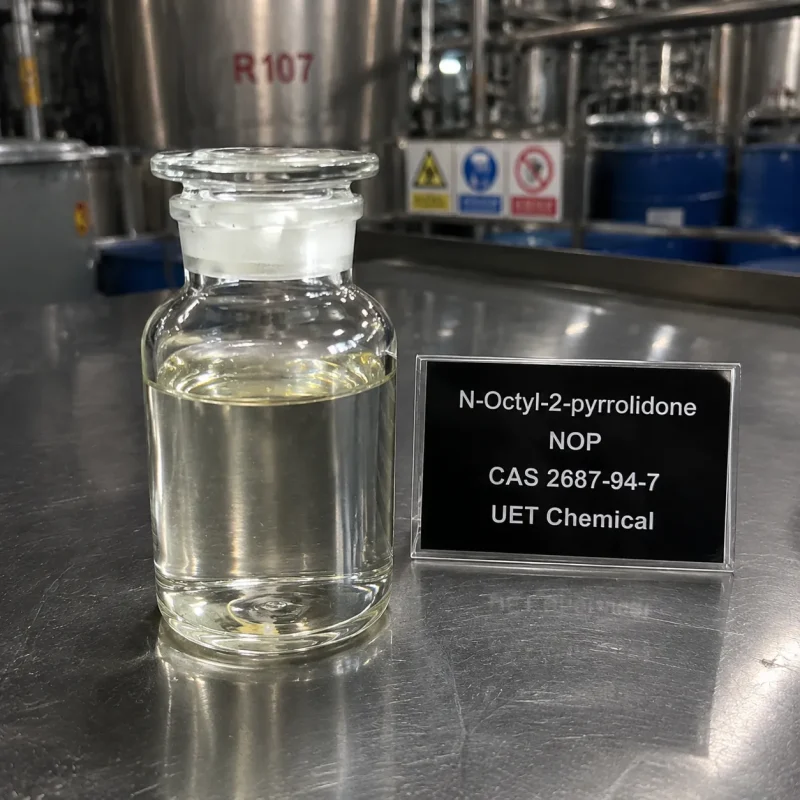
- Appearance: Colorless to pale yellow transparent liquid
- Purity: 99.0% min
- Water Content: 0.10% max (Karl Fischer)
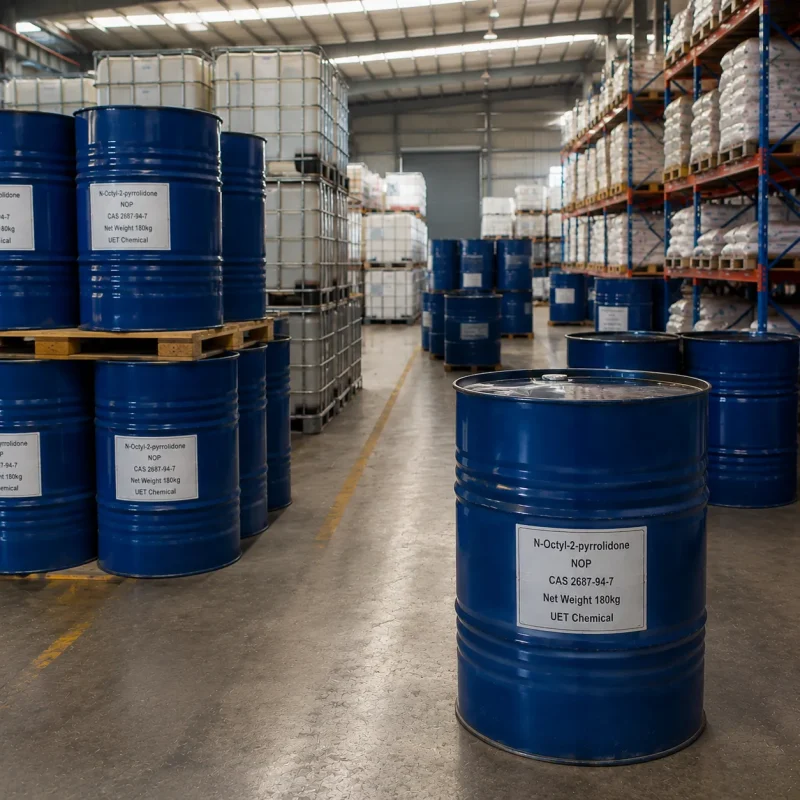
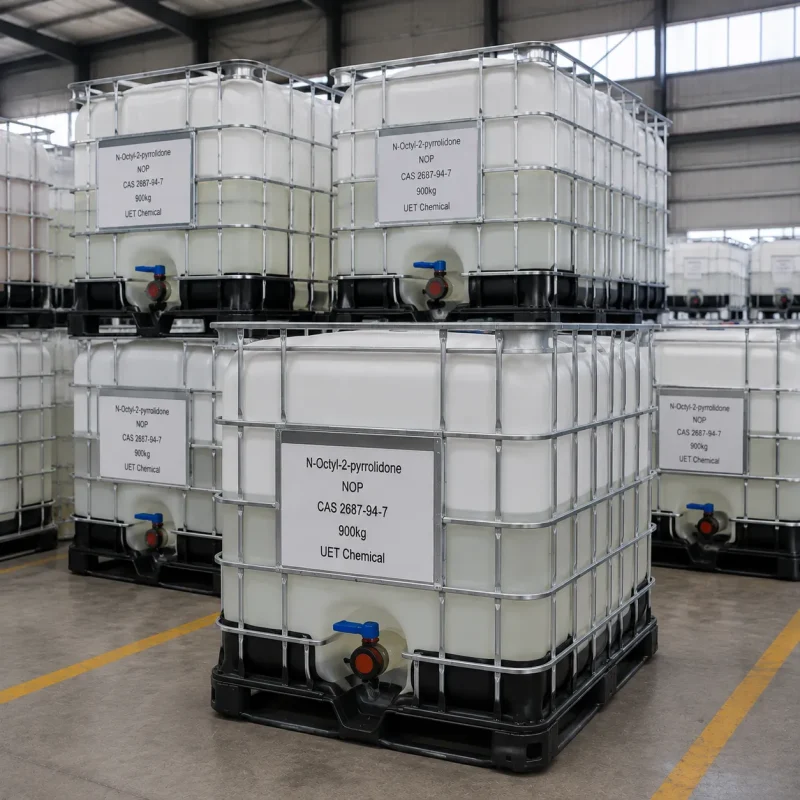
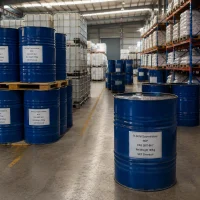
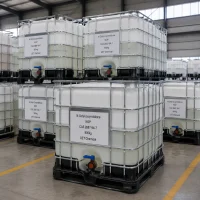
- Packaging: 200 kg HDPE drum, 1000 kg IBC. Custom packaging available upon request.
- Main Applications: Agrochemical solvents, electronic precision cleaning, polymer processing aids, industrial extraction
Introduction to NOP
N-Octyl-2-pyrrolidone is a cyclic amide solvent built on a five-membered lactam ring with an eight-carbon linear alkyl side chain. The long octyl chain imparts strong lipophilic character, while the polar lactam group maintains moderate polarity, creating a balanced solvency profile for both organic and partially polar compounds. It appears as a colorless to pale yellow transparent liquid at room temperature, miscible with most organic solvents and slightly soluble in water.
Industrial production follows controlled alkylation and distillation purification to achieve high purity and low residual monomer content. The compound exhibits excellent thermal stability and low vapor pressure, making it suitable for high-temperature processing and low-emission industrial environments. It also shows good compatibility with most polymer and resin systems.
NOP Chemical & Physical Properties
| Property | Value |
|---|---|
| Molecular Formula | C₁₂H₂₃NO |
| Molecular Weight | 197.32 g/mol |
| Boiling Point | 292 – 296 °C (ASTM D1078) |
| Density (20 °C) | 0.920 – 0.930 g/cm³ |
| Flash Point (Closed Cup) | ≥ 145 °C (ASTM D93) |
| Refractive Index (nD20) | 1.460 – 1.464 |
| Purity | 99.0% min |
| Water Content | 0.10% max |
Applications of NOP
Agrochemical formulations: Serves as a lipophilic co-solvent and penetration enhancer for emulsifiable concentrates, oil-based suspensions and ultra-low-volume formulations. It dissolves poorly soluble pesticide active ingredients, improves foliar penetration and increases biological efficacy of herbicides, insecticides and fungicides.
Electronic precision cleaning: Used as a low-volatility cleaning agent for semiconductor wafers, printed circuit boards and precision optical components. It removes flux residues, grease and particulate contaminants without leaving ionic residues, and is compatible with most plastic and metal materials.
Polymer processing aids: Incorporated into polymer compounding as a processing aid and internal lubricant. It reduces melt viscosity, improves flowability during extrusion and injection molding, and enhances release properties for complex part demolding.
Industrial extraction and separation: Applied in liquid-liquid extraction for natural products, fine chemicals and petrochemical fractions. Its balanced polarity enables selective extraction of lipophilic target compounds from aqueous or mixed phase systems.
Storage & Safety Precautions for NOP
- Store in tightly sealed HDPE or stainless steel containers in a cool, well-ventilated warehouse below 35 °C. Keep away from strong oxidizing agents and strong acids. Protect from moisture ingress to maintain product purity.
- Wear chemical splash goggles, nitrile gloves and chemical-resistant aprons during bulk transfer. Avoid direct contact with eyes and prolonged skin contact. Work in ventilated areas to avoid vapor inhalation.
- Pre-heat drums or IBC containers to 25–30 °C with band heaters before winter transfer. Low temperatures increase viscosity significantly, which may cause pump cavitation and inaccurate metering.
NOP FAQ
Q: How does NOP differ from shorter-chain pyrrolidones like NEP?
A: NOP has a longer octyl alkyl chain, giving it much higher lipophilicity and lower water solubility. It is better suited for oil-based formulations, lipophilic solubilization and low-emission industrial processes.
Q: What are the key applications of N-Octyl-2-pyrrolidone?
A: It is widely used in agrochemical formulations as a solvent and penetrant, electronic precision cleaning, polymer processing aids, and industrial liquid-liquid extraction.
Q: What handling precautions apply to NOP in cold weather?
A: Pre-warm containers to 25–30 °C before transfer. Low temperatures raise viscosity sharply, which can cause pump cavitation and inaccurate dosing.
Related products
Manufacturer & Exporter Since 2006
Get Tailored Chemical Raw Material Solutions — Reply Within 1 Hour
Factory-direct pricing, stable high-purity supply and complete compliance documentation for your industrial formulations.
- 1000+Products
- 200+QC Protocols
- 7–15Days Delivery
- Factory-Direct Pricing
- COA / TDS / SDS Included
- Free Samples for Testing
- 40+ Export Countries
Request a Free Quote
Our engineers reply within 1 hour during GMT+8 business hours.
Please include in your inquiry:
- Product name or CAS number
- Required quantity
- Destination country or port
- Preferred packaging