
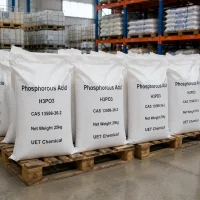
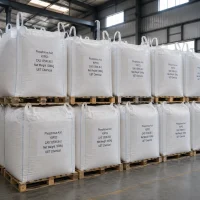
Phosphorous Acid (H3PO3) CAS 13598-36-2
Phosphorous Acid (H3PO3) is a dibasic inorganic acid with inherent reducing properties. It serves as a reducing agent, metal chelator, water treatment corrosion inhibitor and agrochemical intermediate, addressing oxidative discoloration, heavy metal scaling and surface corrosion in industrial systems. UETChem supplies high-purity phosphorous acid with tight impurity and moisture controls for consistent batch performance. Each shipment includes COA, TDS, SDS.
- CAS No: 13598-36-2
- Synonyms: Phosphonic acid; Orthophosphorous acid; H3PO3; Phosphorous acid solution
- EINECS: 237-066-9
- Molecular Formula: H3PO3
- Molecular Weight: 82.00 g/mol
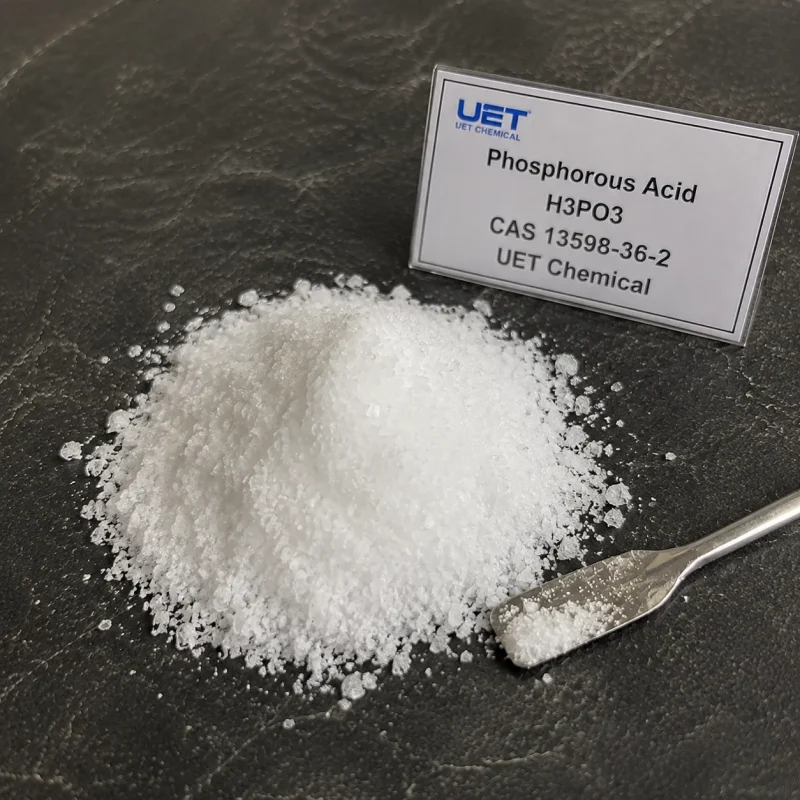
- Appearance: White crystalline solid or colorless to pale yellow liquid
- Purity: 98.0% min
- Water Content: 0.5% max (solid grade)
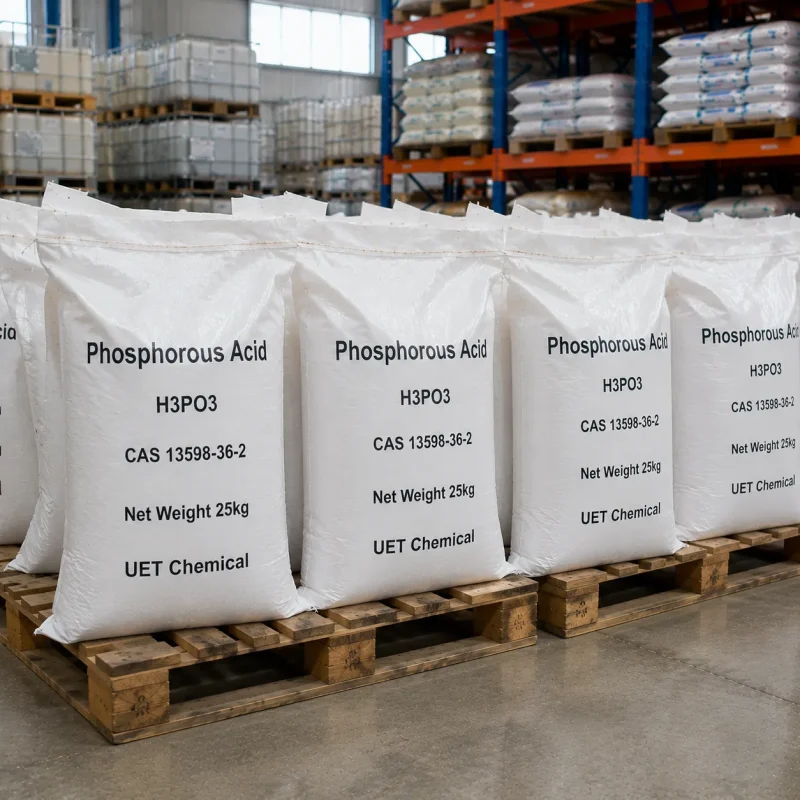
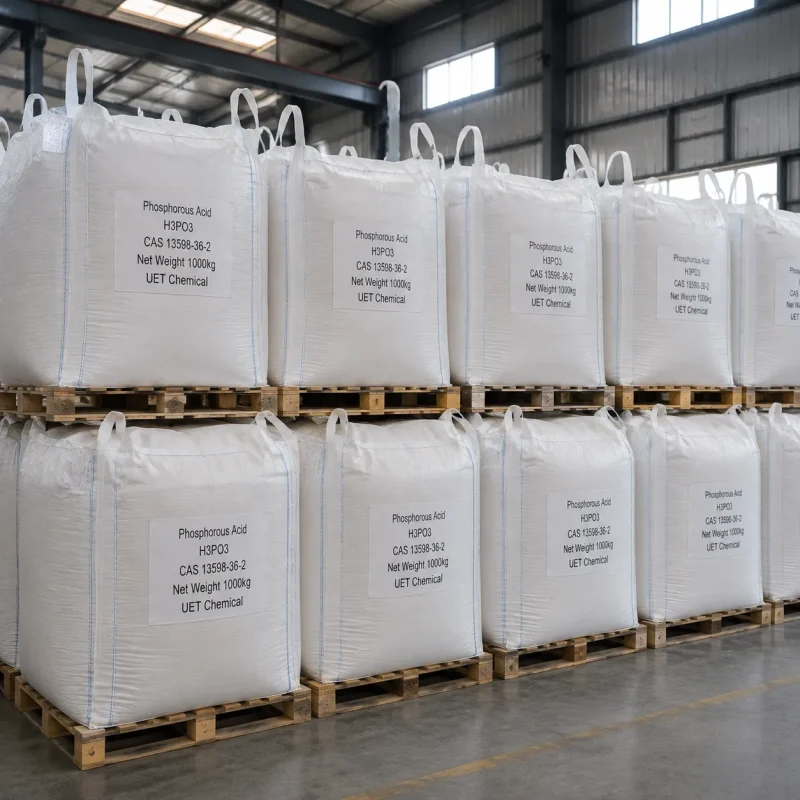
- Packaging: 25 kg kraft bag, 200 kg drum, 1000 kg IBC. Custom packaging available upon request.
- Main Applications: Reducing agent, metal chelator, water treatment, agrochemical intermediates, polymer stabilizer
Introduction to Phosphorous Acid
Phosphorous Acid is a dibasic inorganic acid with a P(III) central atom, carrying two ionizable hydroxyl groups and one directly bonded hydrogen atom. Its low oxidation state gives the compound strong reducing properties. It appears as white hygroscopic crystals or colorless aqueous solution at room temperature, and is highly soluble in water and lower alcohols.
Industrial production follows controlled hydrolysis of phosphorus trichloride, with final purification via crystallization or concentration. The compound readily absorbs atmospheric moisture and oxidizes slowly in air to form phosphoric acid.
Phosphorous Acid Chemical & Physical Properties
| Property | Value |
|---|---|
| Molecular Formula | H3PO3 |
| Molecular Weight | 82.00 g/mol |
| Melting Point (Anhydrous) | 73.6 °C |
| Density (Solid) | 1.65 g/cm³ |
| Solubility | Highly soluble in water; soluble in alcohols |
| Purity | 98.0% min |
| Acid Value | ~1360 mg KOH/g |
Applications of Phosphorous Acid
Chemical reducing agent: Used as a mild selective reducing agent in organic and inorganic synthesis. It reduces metal ions and prevents oxidative discoloration in dye, pigment and chemical manufacturing, and serves as a raw material for various phosphite salts.
Water treatment and metal surface treatment: Acts as a chelating agent and corrosion inhibitor in cooling water and boiler water systems. It sequesters iron, calcium and magnesium ions to inhibit scale formation and protect metal surfaces from corrosion.
Agrochemical and pharmaceutical intermediates: Serves as a key phosphorus building block for manufacturing organophosphorus herbicides, fungicides and pharmaceutical phosphite compounds.
Polymer processing stabilizer: Added to polymer formulations as an antioxidant and heat stabilizer, inhibiting thermal degradation and discoloration during plastic processing and molding.
Storage & Safety Precautions for Phosphorous Acid
- Store in tightly sealed moisture-proof containers in cool, dry warehouses. The solid form is highly hygroscopic and absorbs atmospheric moisture rapidly, causing caking and concentration shift.
- Handle as a corrosive acid material. Wear chemical splash goggles, nitrile gloves and acid-resistant clothing during bulk transfer. Flush skin and eye contact areas with plenty of water immediately after exposure.
- Keep separated from strong oxidizers and alkaline materials. Contact with strong oxidizing agents may trigger exothermic reactions; mixing with concentrated bases releases significant neutralization heat.
Phosphorous Acid FAQ
Q: What is Phosphorous Acid (H3PO3) mainly used for in industry?
A: It acts as a reducing agent, metal chelator and corrosion inhibitor for chemical synthesis, water treatment, agrochemical production and polymer stabilization.
Q: Does Phosphorous Acid require special storage conditions?
A: Yes. The solid form is highly hygroscopic. Store in sealed moisture-proof containers in cool dry areas to prevent caking and oxidation.
Q: Is Phosphorous Acid corrosive during handling?
A: Yes, it is corrosive to skin and eyes. Wear acid-resistant PPE and flush exposed areas with plenty of water immediately after contact.
Related products
Manufacturer & Exporter Since 2006
Get Tailored Chemical Raw Material Solutions — Reply Within 1 Hour
Factory-direct pricing, stable high-purity supply and complete compliance documentation for your industrial formulations.
- 1000+Products
- 200+QC Protocols
- 7–15Days Delivery
- Factory-Direct Pricing
- COA / TDS / SDS Included
- Free Samples for Testing
- 40+ Export Countries
Request a Free Quote
Our engineers reply within 1 hour during GMT+8 business hours.
Please include in your inquiry:
- Product name or CAS number
- Required quantity
- Destination country or port
- Preferred packaging