
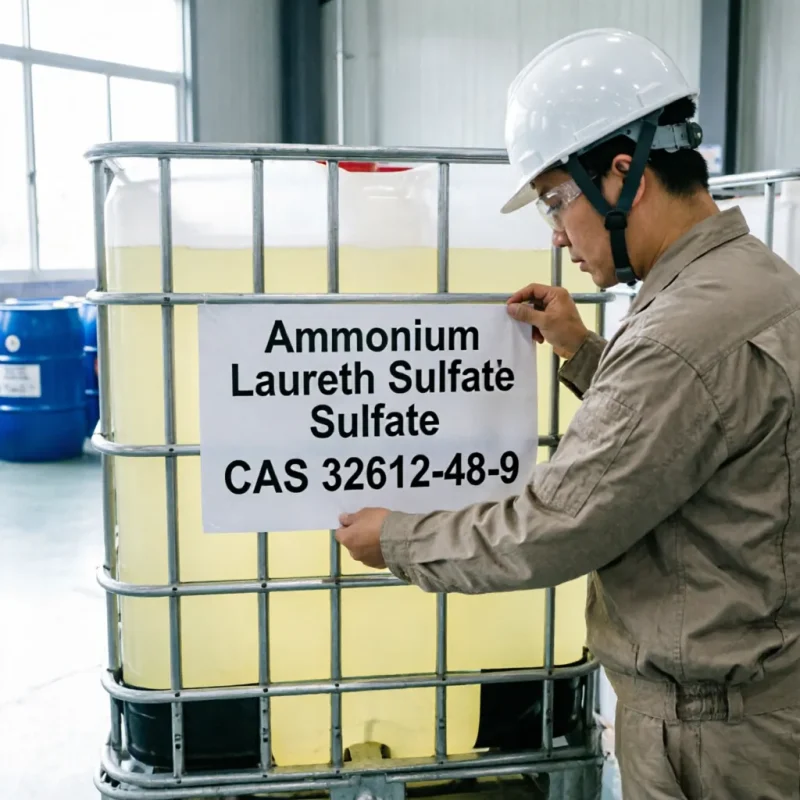
Ammonium Laureth Sulfate CAS 32612-48-9
Ammonium Laureth Sulfate (ALES) is a mild anionic surfactant supplied as a colorless to pale yellow viscous liquid or paste. Featuring ethoxylated chains, it offers superior foaming, excellent detergency, and significantly lower skin/eye irritation compared to non-ethoxylated sulfates. Core uses include shampoos, body washes, liquid soaps, and industrial cleaners. Each shipment includes COA, TDS, and SDS.
- CAS No: 32612-48-9
- Synonyms: ALES, Ammonium lauryl ether sulfate, Ammonium polyoxyethylene lauryl ether sulfate, AEOS
- EC Number: 251-130-1
- Molecular Formula: C12H25(OCH2CH2)nOSO3NH4 (typically n=2 or 3)
- Appearance: Colorless to pale yellow viscous liquid or paste
- Active Matter: 70% ± 2%
- Packaging: 160 kg (352 lb) HDPE drum; 220 kg (485 lb) HDPE drum; 1000 kg (2204 lb) IBC tote. Custom packaging available upon request.
- Main Applications: Hair care (shampoos), body washes, facial cleansers, dishwashing liquids, textile scouring agents
Introduction to Ammonium Laureth Sulfate
Ammonium Laureth Sulfate (ALES) is a high-performance anionic surfactant produced by the sulfation of ethoxylated lauryl alcohol, followed by neutralization with ammonium hydroxide. The insertion of polyoxyethylene (EO) groups between the hydrophobic tail and the sulfate head dramatically reduces skin and eye irritation while maintaining high surface activity. It is widely favored in premium personal care formulations for its rich, creamy lather, excellent hard-water tolerance, and easy rinse-off feel.
The primary handling consideration is temperature sensitivity. As a 70% active paste or viscous liquid, it may crystallize or become too thick to pump below 5 °C (41 °F), and prolonged exposure above 40 °C (104 °F) can trigger slight hydrolysis, releasing a faint ammonia odor. Store in a climate-controlled warehouse and use drum heaters or warm water baths (not exceeding 50 °C / 122 °F) for safe decanting during winter months.
Key Features of Ammonium Laureth Sulfate
- Exceptional mildness profile. The ethoxylation and ammonium counter-ion reduce protein denaturation, making it significantly milder than Sodium Lauryl Sulfate (SLS) and ideal for baby care, facial cleansers, and sensitive skin formulations.
- Rich, stable lather in hard water. Generates dense, creamy foam that remains stable even in high-mineral water conditions, enhancing the sensory experience in shower gels and shampoos.
- Excellent thickening response. Works synergistically with nonionic surfactants (like CDEA/CMEA) and inorganic salts (NaCl) to easily build high, luxurious viscosity in liquid formulations without requiring excessive polymer thickeners.
- Naturally lower formulation pH. ALES solutions naturally trend toward a slightly acidic pH (5.5–6.5), which perfectly aligns with the skin’s acid mantle, reducing the need for aggressive pH adjusters like citric acid.
- Rapid biodegradation. Fully compliant with OECD 301 environmental standards, ensuring minimal ecological impact in wastewater treatment systems.
Ammonium Laureth Sulfate Chemical & Physical Properties
| Property | Value |
|---|---|
| Molecular Formula | C12H25(OCH2CH2)nOSO3NH4 (n=2~3) |
| Active Matter | 70.0% ± 2.0% |
| Unsulfated Matter | ≤ 2.0% |
| Inorganic Salts (as Na2SO4/NH4) | ≤ 1.5% |
| pH (1% aqueous solution) | 5.5 – 7.0 |
| Color (Klett, 5% aq.) | ≤ 30 |
| EO Value (Average) | 2.0 – 3.0 |
| Freezing / Cloud Point | Approx. 5 °C (41 °F); requires gentle heating to restore flowability. |
Applications of Ammonium Laureth Sulfate
Hair care and body wash formulations: Use as the primary surfactant at 10–25% (active basis) in shampoos and shower gels. Provides excellent soil removal and sebum dispersion while leaving hair and skin feeling soft, not stripped. Combine with Cocamidopropyl Betaine (CAPB) to boost foam density and further reduce irritation potential.
Premium facial cleansers and baby care: Incorporate at 5–15% in low-irritation cleansing systems. Its mild interaction with skin lipids makes it a preferred alternative to traditional sodium sulfates in amino-acid-based or sulfate-free hybrid cleansers.
Home care and dishwashing liquids: Use at 5–20% in manual dishwashing detergents and hard-surface cleaners. Provides rapid grease emulsification and high-foaming action, allowing consumers to perceive high cleaning power while maintaining hand-skin compatibility.
Textile and leather auxiliaries: Employed as a highly effective scouring and wetting agent in textile pretreatment. Its stability in alkaline baths and hard water ensures uniform penetration of dyes and finishing chemicals.
Storage & Safety Precautions for Ammonium Laureth Sulfate
- Storage: Store in tightly sealed original HDPE drums or IBC totes at 10–35 °C (50–95 °F). Protect from freezing and direct sunlight. If the material solidifies in cold weather, gently warm the exterior of the drum with warm air or water (max 50 °C / 122 °F) until fluid. Do not use open flames or high-pressure steam directly on the drum.
- Safety: Not classified as a hazardous substance under GHS transport regulations. However, the 70% concentrate is a severe eye irritant. Wear chemical splash goggles, PVC gloves, and an apron during bulk transfer and formulation. In case of eye contact, flush immediately with copious amounts of water for at least 15 minutes and seek medical attention.
- Transport: Ammonium Laureth Sulfate is Non-DG under IATA/IMDG/ADR. No UN number, no packing group. Ship in standard dry containers. Ensure container doors are sealed to prevent contamination.
- QC note: Verify lot identity on receipt by checking Active Matter (via two-phase titration with Hyamine 1622) and pH (5.5–7.0). A strong ammonia odor upon opening indicates thermal degradation during transit—reject the lot if pH has dropped significantly below 5.0.
Ammonium Laureth Sulfate FAQ
Q: How does Ammonium Laureth Sulfate (ALES) compare to Sodium Laureth Sulfate (SLES)?
A: Both are ethoxylated anionic surfactants with similar cleaning and foaming power. However, ALES is inherently milder to the skin and eyes, making it preferred for premium or sensitive-skin products. ALES also naturally yields a slightly lower, skin-friendly pH in water compared to SLES, and often exhibits different, sometimes more favorable, viscosity curves when thickened with specific salt or amphoteric systems.
Q: The ALES drum arrived as a solid block due to winter transit. Is the product ruined?
A: No, this is a normal physical phase change for 70% active pastes. Slowly warm the drum in a heated warehouse (25–30 °C / 77–86 °F) or use a certified drum band heater set below 50 °C (122 °F). Once melted and gently homogenized, the surfactant retains 100% of its chemical performance.
Q: Can I use ALES in “sulfate-free” marketing claims?
A: No. Despite its mildness and ammonium counter-ion, ALES is chemically a sulfate (an alkyl ether sulfate). It cannot be used in products marketed strictly as “sulfate-free.” It is, however, highly suitable for “mild sulfate” or “gentle cleansing” claims.
Related products
Manufacturer & Exporter Since 2006
Get Tailored Chemical Raw Material Solutions — Reply Within 1 Hour
Factory-direct pricing, stable high-purity supply and complete compliance documentation for your industrial formulations.
- 1000+Products
- 200+QC Protocols
- 7–15Days Delivery
- Factory-Direct Pricing
- COA / TDS / SDS Included
- Free Samples for Testing
- 40+ Export Countries
Request a Free Quote
Our engineers reply within 1 hour during GMT+8 business hours.
Please include in your inquiry:
- Product name or CAS number
- Required quantity
- Destination country or port
- Preferred packaging