
Dodecyltrimethylammonium Chloride (DTAC) CAS 112-00-5
Dodecyltrimethylammonium Chloride (DTAC) is a single-chain C12 quaternary ammonium surfactant—one dodecyl chain plus three methyls on a cationic nitrogen. White powder (≥98% active) or 30% aqueous solution; conditions hair and fabric, boosts biocide systems, and emulsifies cationic latexes. The permanent positive charge binds strongly to keratin, cellulose, and mineral surfaces. Each shipment includes COA, TDS, and SDS.
- CAS No.: 112-00-5
- Synonyms: DTAC; Lauryltrimethylammonium chloride; C12 quat
- EINECS: 203-927-0
- Molecular Formula: C₁₅H₃₄ClN
- Molecular Weight: 263.90 g/mol
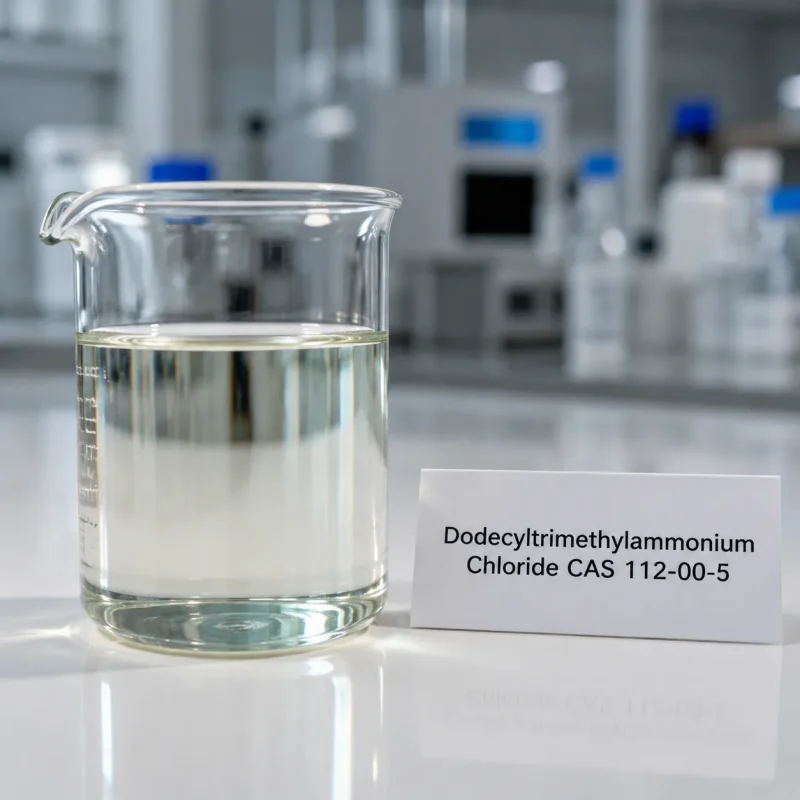
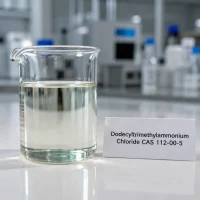
- Appearance: White to off-white powder (≥98%) or colorless to pale-yellow 30% solution
- pH (1% aq.): 5.5–7.5
- CMC (25 °C): ~15 mM (~4 g/L)
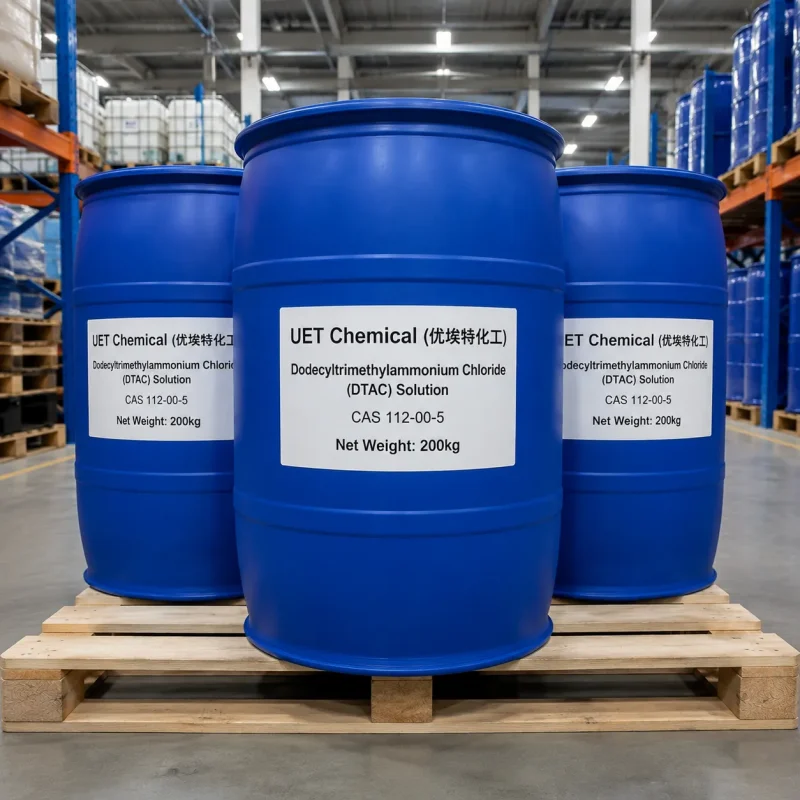
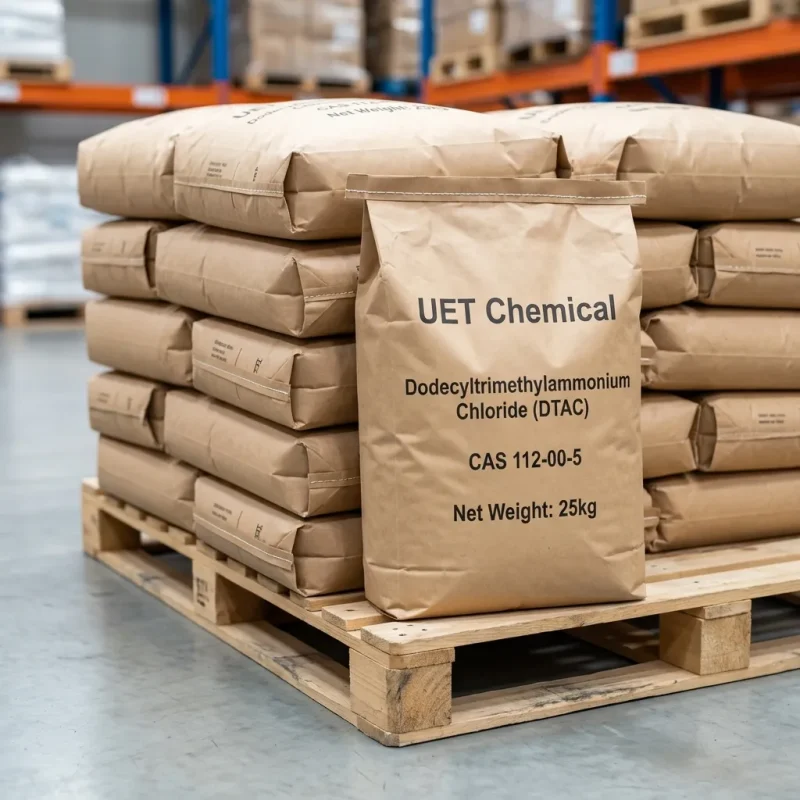
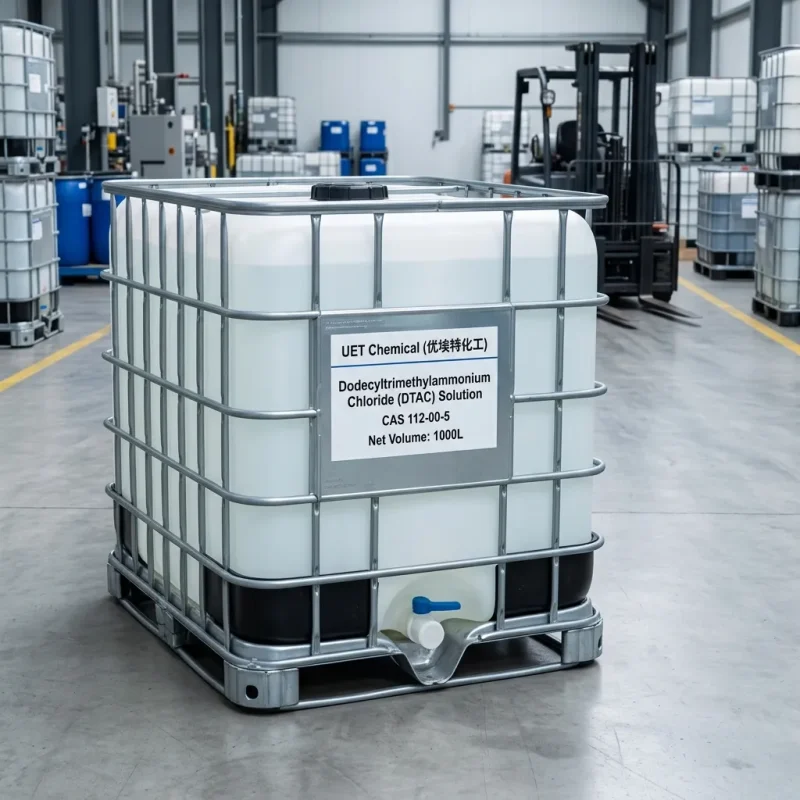
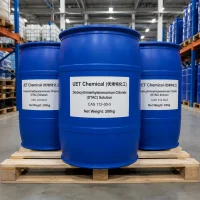
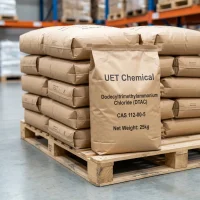
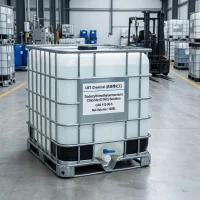
- Packaging: 25 kg kraft bag (powder) / 200 kg drum / 1000 L IBC (solution). Custom packaging available upon request.
- Main Applications: Hair conditioning; fabric softening; cationic emulsifier; biocide booster
Introduction to Dodecyltrimethylammonium Chloride
Dodecyltrimethylammonium Chloride is a white to off-white crystalline powder or a colorless 30% aqueous solution, a single-chain C12 quaternary ammonium salt carrying a permanent positive charge on nitrogen. The cationic head adsorbs electrostatically onto negatively charged keratin, cellulose, and silica surfaces while the dodecyl tail orients outward into a hydrophobic monolayer. Formulators use it as the conditioning and antistatic active in hair rinses and fabric softeners, and as a cationic emulsifier or template in latex polymerisation and mesoporous silica synthesis.
The C12 chain hits the substantivity sweet spot of the straight-chain quat family—C8–C10 quats rinse off too fast, C16–C18 quats deposit unevenly. One practical caution: DTAC precipitates instantly on contact with anionic surfactants, soaps, or anionic thickeners; a shared dosing line or residual SLES in the reactor produces an insoluble quat–anionic complex that appears as white curds and deactivates both actives. Dedicated cationic lines are mandatory.
Key Features of Dodecyltrimethylammonium Chloride
- Permanent cationic charge. Unlike amine salts that deprotonate above pH 9, the quaternary nitrogen stays fully ionised from pH 2 to 12, so conditioning performance holds across the entire formulation window.
- C12 substantivity sweet spot. The dodecyl chain packs a dense monolayer onto keratin and cellulose, shifting the zeta potential of treated hair from −25 mV toward zero and cutting wet-combing force by 30–50%.
- Membrane-disrupting biocide boost. The cationic head inserts into bacterial membranes; at 50–200 ppm it potentiates disinfectants against Gram-positive bacteria and enveloped organisms.
- Structure-directing template. A CMC near 15 mM and cylindrical micelle geometry template 2.5–3.5 nm mesopores in silica synthesis and stabilise cationic latexes during emulsion polymerisation.
- Antistatic action on synthetics. The hydrophobic monolayer on polyester and acrylic fibres carries a mobile chloride counter-ion that dissipates static charge, dropping surface resistivity by 3–4 orders of magnitude.
Dodecyltrimethylammonium Chloride Chemical & Physical Properties
| Property | Value |
|---|---|
| Molecular Formula | C₁₅H₃₄ClN |
| Molecular Weight | 263.90 g/mol |
| Appearance | White to off-white powder; colorless to pale-yellow 30% solution |
| Active Content | ≥98% (powder); 30% (solution) |
| pH (1% aq. solution) | 5.5–7.5 |
| CMC (25 °C) | ~15 mM (~4 g/L) |
| Surface Tension at CMC | ~38–40 mN/m |
| Solubility | Freely soluble in water and ethanol; insoluble in aliphatic hydrocarbons |
| Free Amine | ≤0.5% |
| Loss on Drying (powder) | ≤2.0% |
Applications of Dodecyltrimethylammonium Chloride
Hair conditioners and cream rinses: Used at 0.5–2% active. The cationic head neutralises the negative charge of damaged keratin while the C12 tail lubricates the cuticle, cutting wet-combing force and flyaway static. Never combine with anionic surfactants in the same phase.
Fabric softeners: Dosed at 2–5% on a solution basis. The quat monolayer on cellulose lowers fibre-to-fibre friction and static build-up in the dryer, and imparts a smooth hand feel at rinse temperatures of 20–40 °C.
Cationic emulsifier for latex and asphalt emulsions: Added at 0.5–2% on monomer or bitumen. The positive head group stabilises droplets against coalescence in acidic emulsion systems used for paper sizing, tackifiers, and cationic asphalt tack coats.
Biocide booster and disinfectant systems: Used at 50–500 ppm. Membrane disruption potentiates non-oxidising biocides in cooling-water and hard-surface systems, with strongest activity against Gram-positive bacteria.
Template for mesoporous silica and nanomaterials: Charged at Si:DTAC molar ratios of 1:0.1–0.3. Cylindrical micelles direct condensation of silicate into MCM-41-type pores of 2.5–3.5 nm; calcination at 550 °C removes the template.
Storage & Safety Precautions for Dodecyltrimethylammonium Chloride
Storage conditions. Store sealed at 5–30 °C, dry for the powder grade. The powder is hygroscopic and cakes above 70% RH. The 30% solution gels below ~5 °C; warm drums to 25–30 °C and recirculate before dosing—gelling is reversible and does not reduce activity. Keep strictly separated from anionic surfactants, soaps, hypochlorite, and strong alkalis.
Safety and PPE. GHS: Acute Tox. 4 (H302); Skin Irrit. 2 (H315); Eye Dam. 1 (H318); Aquatic Acute/Chronic 1 (H400, H410). Wear chemical-splash goggles, nitrile gloves, and an N95 mask during powder emptying. Spills are extremely slippery; contain with sand and wash with copious water. Do not discharge to surface water.
Transport classification. UN 3077 (solid) / UN 3082 (solution), Class 9, Packing Group III, marine pollutant. Verify the exact assignment with your carrier before booking; DG declaration applies where classified.
Practitioner note: For incoming QC, assay active content by two-phase titration against a standardised sodium dodecyl sulfate solution (anionic titrant, chloroform/mixed-indicator endpoint), and cross-check chloride by potentiometric AgNO₃ titration. A cationic/anionic ratio outside 0.95–1.05 flags free-amine or salt contamination. Avoid glass pH electrodes in concentrated quat solutions—the membrane fouls within minutes.
Dodecyltrimethylammonium Chloride FAQ
Q: How do I assay the active content of Dodecyltrimethylammonium Chloride (CAS 112-00-5)?
A: Run a two-phase titration with standardised sodium dodecyl sulfate and a chloroform/mixed-indicator endpoint; 1 mL of 0.004 M SDS equals 1.056 mg DTAC. Cross-check chloride by potentiometric AgNO₃ titration and free amine by acid-base titration (≤0.5%). For the 30% solution, weigh the sample quickly—water evaporation skews the result high.
Q: Why did my conditioner batch turn into white curds after adding DTAC?
A: Anionic contamination. DTAC forms an insoluble complex with SLES, soaps, and anionic thickeners the moment they meet. Check for a shared dosing line, residual anionic in the reactor, or an anionic ingredient added before full dilution. Flush the line with water, dedicate cationic equipment, and verify the INCI list contains no anionic species. The curds cannot be redissolved; the batch is a write-off.
Q: My 30% DTAC solution gelled in winter transit. Is it still usable?
A: Yes. The 30% solution forms a reversible gel below ~5 °C. Warm the drum to 25–30 °C in a water bath or warm room and recirculate until homogeneous—24–48 h for a 200 kg drum. Active content and cationic performance are unchanged. If your market runs cold chains, specify the powder grade (≥98%) instead; it has no cold-gel issue, only a dry-storage requirement.
Related products
Manufacturer & Exporter Since 2006
Get Tailored Chemical Raw Material Solutions — Reply Within 1 Hour
Factory-direct pricing, stable high-purity supply and complete compliance documentation for your industrial formulations.
- 1000+Products
- 200+QC Protocols
- 7–15Days Delivery
- Factory-Direct Pricing
- COA / TDS / SDS Included
- Free Samples for Testing
- 40+ Export Countries
Request a Free Quote
Our engineers reply within 1 hour during GMT+8 business hours.
Please include in your inquiry:
- Product name or CAS number
- Required quantity
- Destination country or port
- Preferred packaging