
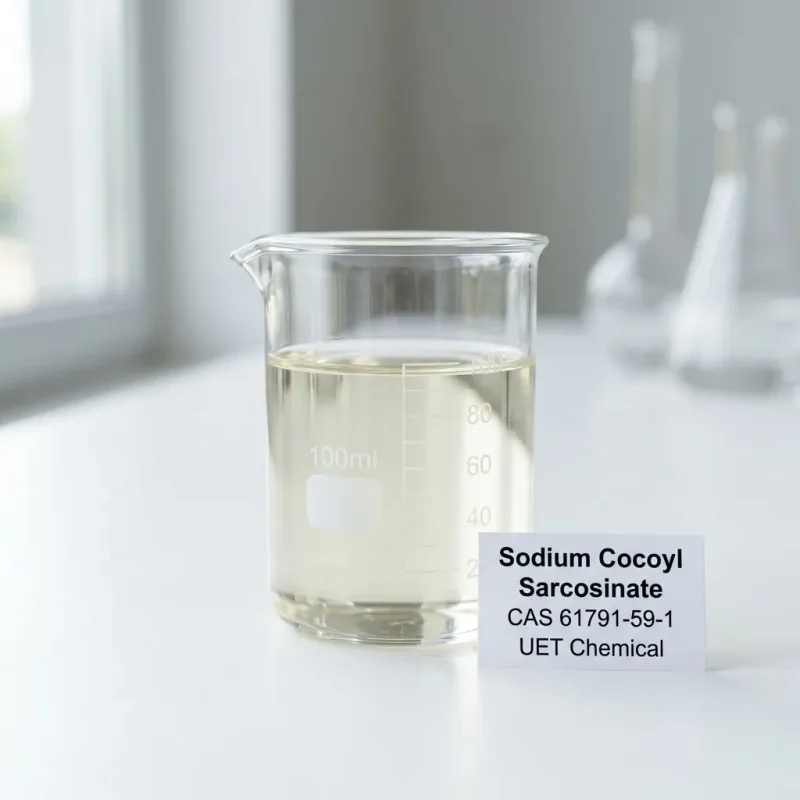
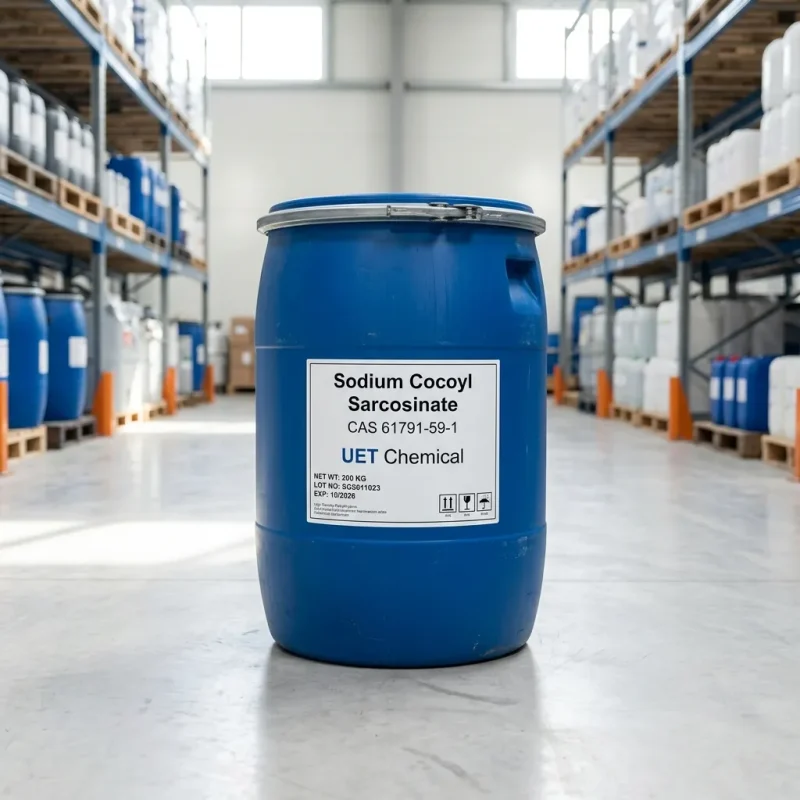
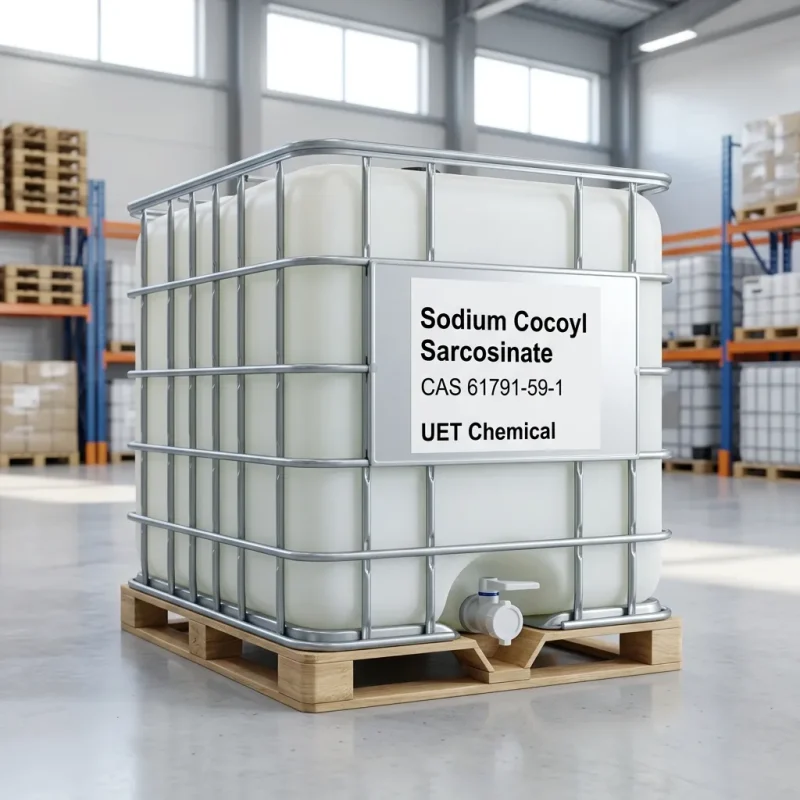
Sodium Cocoyl Sarcosinate Liquid CAS 61791-59-1
Sodium Cocoyl Sarcosinate is a mild, amino acid-derived anionic surfactant featuring a coconut fatty acid chain linked to a sarcosine (N-methylglycine) headgroup. Supplied as a clear to pale-yellow liquid at ~30% active matter, it delivers rich, creamy lather and excellent hard-water tolerance in personal care wash-off products and toothpastes. Unlike glutamate-based surfactants, it remains fully soluble and highly foaming even in slightly acidic formulations (pH 4.5–5.5). We supply high-purity, low-odor liquid grades with full batch traceability; each shipment includes COA, TDS, and SDS.
- CAS No.: 61791-59-1
- Synonyms: Sarcosine, N-coco acyl derivatives, sodium salts; Sodium N-lauroylsarcinate (main component)
- EINECS: 263-014-8
- Molecular Formula: R-CO-N(CH₃)-CH₂-COONa (R = C8–C18 coco alkyl)
- Appearance: Clear to pale-yellow transparent liquid
- Active Matter: 28–32% (typically 30%)
- pH (10% aq.): 7.5–9.5
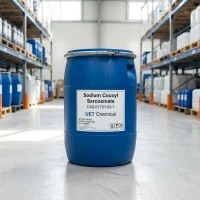
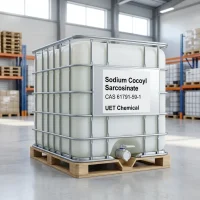
- Packaging: 200 kg HDPE drum / 1000 kg IBC tote. Custom packaging available upon request.
- Main Applications: Sulfate-free shampoos; facial cleansers; body washes; toothpastes; baby care
Introduction to Sodium Cocoyl Sarcosinate Liquid
Sodium Cocoyl Sarcosinate Liquid is a clear to pale-yellow aqueous solution, an amino acid-based anionic surfactant synthesized from coconut fatty acids and sarcosine (N-methylglycine). It is widely formulated as the primary or secondary foaming agent in sulfate-free shampoos, facial cleansers, and toothpastes. Formulators value it for its ability to generate a dense, creamy lather that does not strip the skin’s natural lipid barrier.
The defining advantage of the sarcosinate headgroup is its acid stability. While sodium cocoyl glutamate precipitates and loses foam below pH 5.5, sodium cocoyl sarcosinate remains fully soluble and retains excellent foaming power down to pH 4.5. One practical caution: the 30% liquid contains roughly 5–7% sodium chloride as a byproduct of the Schotten-Baumann reaction. When formulating high-foaming systems, account for this salt content to avoid over-thickening when combined with betaines or PEG-150 distearate.
Key Features of Sodium Cocoyl Sarcosinate
- Acid-tolerant foaming. Maintains solubility and rich lather in the pH 4.5–5.5 window, making it ideal for skin-friendly, slightly acidic facial cleansers and intimate washes where glutamates fail.
- Dense, creamy lather. The N-methyl group on the glycine backbone disrupts tight micelle packing, yielding a luxurious, shaving-cream-like foam rather than the large, airy bubbles typical of sulfates.
- Hard-water and sebum tolerance. The sarcosinate headgroup resists calcium and magnesium binding, allowing the surfactant to lather effectively in hard water and maintain cleansing power in the presence of skin sebum or hair oils.
- Mildness and low irritation. The large micelle size and amino acid structure prevent deep penetration into the stratum corneum, resulting in extremely low eye and skin irritation scores (HET-CAM and patch tests).
- Substantivity to hair and skin. Leaves a conditioned, non-stripped after-feel, reducing the need for high loads of cationic polymers or silicone in sulfate-free shampoo formulas.
Sodium Cocoyl Sarcosinate Chemical & Physical Properties
| Property | Value |
|---|---|
| Molecular Structure | R-CO-N(CH₃)-CH₂-COONa (R = Coco alkyl) |
| Active Matter | 28.0–32.0% |
| Sodium Chloride (NaCl) | ≤7.0% |
| pH (10% aq. solution) | 7.5–9.5 |
| Appearance (25 °C) | Clear to pale-yellow liquid |
| Free Sarcosine | ≤1.0% |
| Heavy Metals (as Pb) | ≤10 ppm |
| Color (APHA) | ≤100 |
Applications of Sodium Cocoyl Sarcosinate
Sulfate-free shampoos and conditioners: Used at 10–20% (as active matter) alongside amphoteric co-surfactants like Cocamidopropyl Betaine. Provides the primary flash-foam and creamy texture without the harsh stripping associated with SLES, preserving hair color and keratin treatments.
Facial cleansers and body washes: Formulated at 15–30% in low-pH (5.0–5.5) gel or cream cleansers. The acid stability allows formulators to match the skin’s natural acid mantle without sacrificing foam volume or viscosity.
Toothpastes and mouthwashes: Dosed at 1–3%. It serves as a mild, non-irritating foaming agent that does not interfere with flavor profiles or cause the bitter aftertaste and mucosal peeling associated with Sodium Lauryl Sulfate (SLS).
Baby care and intimate hygiene: Chosen for its ultra-low irritation profile. The mild micelle structure cleanses effectively without disrupting the delicate lipid barrier of infant skin or mucosal tissues.
Storage & Safety Precautions for Sodium Cocoyl Sarcosinate
Storage conditions. Store in sealed HDPE drums or IBC totes at 10–35 °C. Below 10 °C, the 30% liquid may become cloudy or partially gel due to the crystallization of higher-melting coconut fatty acid fractions (e.g., C12/C14). Gently warm to 25–30 °C and agitate to restore clarity; this phase change does not affect performance. Keep away from strong acids, which will protonate the carboxylate and precipitate the free fatty acid.
Safety and PPE. GHS: Not classified as hazardous. Mild eye irritant in concentrated form. Wear standard nitrile gloves and safety glasses during drum transfers. Spills are extremely slippery; contain with absorbent and wash with copious water.
Transport classification. Non-DG. Not regulated under IMDG, IATA, or ADR. Ship as standard general cargo. Ensure bungs are tight to prevent leakage during transit.
Practitioner note: For incoming QC, verify active matter by two-phase titration (Epton method) using Hyamine 1622 and mixed indicator. Check pH and color. If the liquid arrives hazy or solidified in winter, do not reject it—warm the drum in a hot room (max 40 °C) and recirculate. Never use direct steam lances, as localized overheating can darken the color (APHA > 150) and increase free amine odors.
Sodium Cocoyl Sarcosinate FAQ
Q: How does Sodium Cocoyl Sarcosinate (CAS 61791-59-1) compare to Sodium Cocoyl Glutamate in acidic cleansers?
A: Glutamates have two carboxyl groups; at pH < 5.5, the second group protonates, causing the surfactant to precipitate as a waxy solid and lose all foaming power. Sarcosinate has only one carboxyl group and an N-methyl shield, keeping it fully soluble and highly foaming down to pH 4.5. Choose sarcosinate for low-pH gel cleansers; choose glutamate for high-pH cream cleansers where you need higher viscosity.
Q: Why does my shampoo formula thin out when I add Sodium Cocoyl Sarcosinate?
A: Sarcosinates have a high tolerance for electrolytes but do not build viscosity easily with standard salt (NaCl) curves like SLES does. Furthermore, the 30% liquid already contains ~6% NaCl. To thicken a sarcosinate-based system, rely on PEG-150 distearate, Crothix liquid, or associative thickeners (like Acrylates Copolymer) rather than trying to salt it out.
Q: My drum arrived with white solid chunks at the bottom. Is the batch degraded?
A: No, this is cold-temperature fractionation. Coconut oil contains C12 (lauric) and C14 (myristic) chains, which have higher melting points. In winter transit, these fractions crystallize out of the 30% aqueous solution. Move the drum to a 30 °C room for 48 hours and mix thoroughly. The active matter and foaming performance remain 100% intact.
Related products
Manufacturer & Exporter Since 2006
Get Tailored Chemical Raw Material Solutions — Reply Within 1 Hour
Factory-direct pricing, stable high-purity supply and complete compliance documentation for your industrial formulations.
- 1000+Products
- 200+QC Protocols
- 7–15Days Delivery
- Factory-Direct Pricing
- COA / TDS / SDS Included
- Free Samples for Testing
- 40+ Export Countries
Request a Free Quote
Our engineers reply within 1 hour during GMT+8 business hours.
Please include in your inquiry:
- Product name or CAS number
- Required quantity
- Destination country or port
- Preferred packaging