
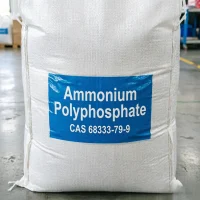
Ammonium Polyphosphate (APP) CAS 68333-79-9
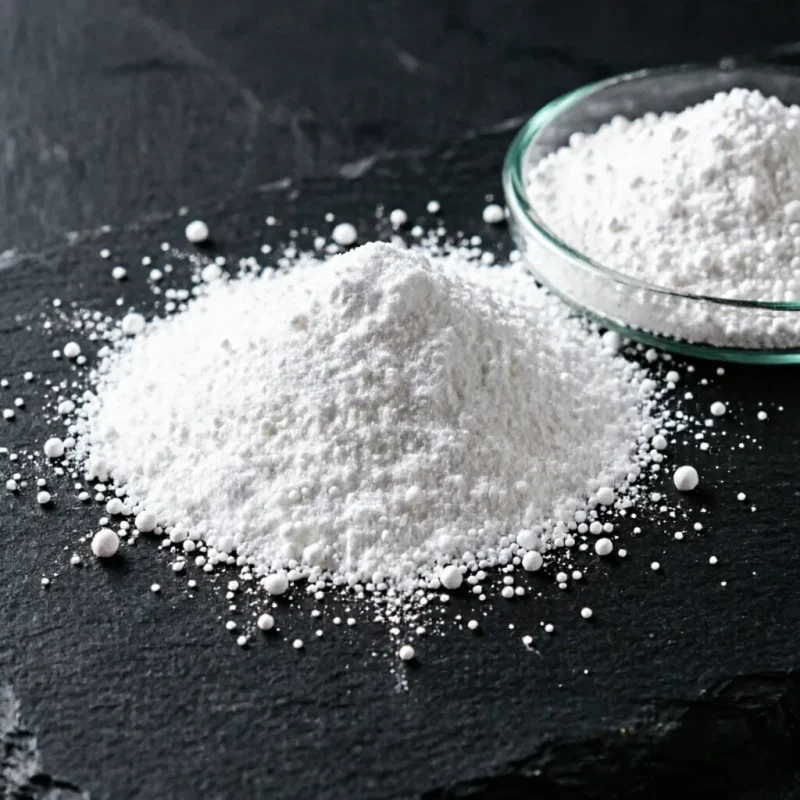
Ammonium Polyphosphate (APP) is a white, high-polymer phosphorus-nitrogen flame retardant powder with linear (NH4PO3)n chains, typically n >1000. On heating it forms polyphosphoric acid that catalyzes char and releases ammonia, so it is used in intumescent fireproof coatings and halogen-free PP/PE cable compounds. Each lot is supplied with COA, TDS, SDS.
- CAS No: 68333-79-9
- Synonyms: Polyphosphoric acid ammonium salt; APP; polyammonium phosphate
- EINECS: 269-789-9
- Molecular Formula: (NH4PO3)n, n >1000
- Molecular Weight: 97.01 × n per repeat unit
- Appearance: White free-flowing powder
- Purity: P 31.0-32.5%, N 13.5-15.0%, moisture ≤0.5%
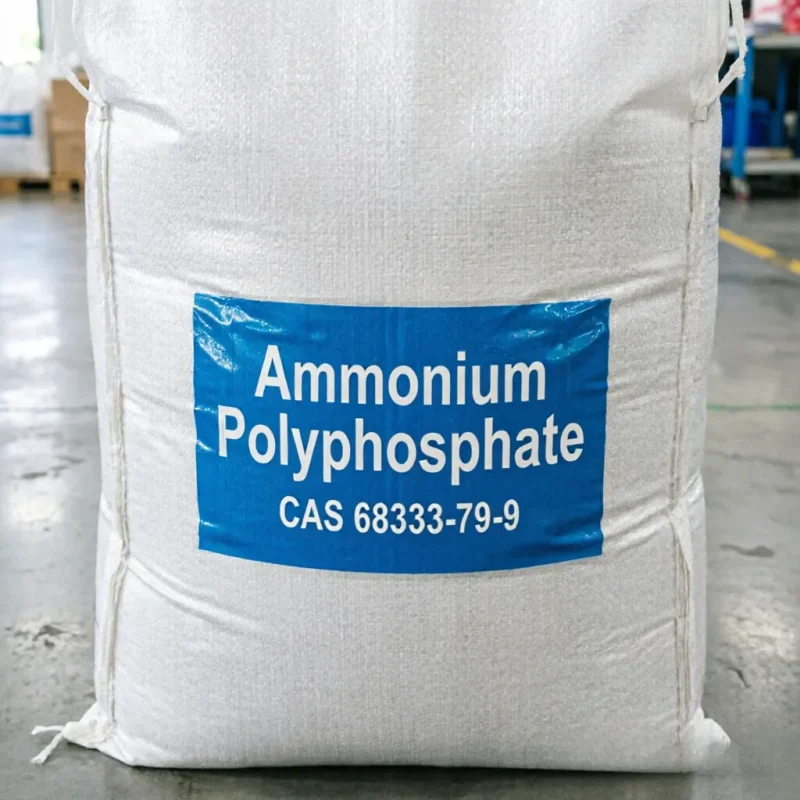
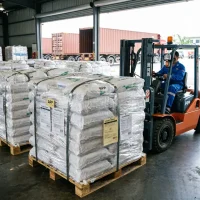
- Packaging: 25 kg / 55 lb woven bag with PE liner; Custom packaging available upon request.
- Main Applications: Intumescent coatings; PP/PE flame retardant compounds; wood/paper treatment
- Water Solubility: ≤0.5 g/L at 25°C / 77°F
- Decomposition Onset: ≥270°C / 518°F
- pH: 5.5-7.5 in 10% aqueous suspension at 20-25°C / 68-77°F
Introduction to Ammonium Polyphosphate (APP)
Ammonium Polyphosphate (APP) is a white, non-fibrous inorganic flame retardant powder built from linear (NH4PO3)n chains, usually with degree of polymerization above 1000. In fire, the backbone forms polyphosphoric acid that dehydrates binders or polymers into carbonaceous char, while ammonia dilutes combustible volatiles. This dual action is used in intumescent steel coatings and halogen-free PP/PE cable compounds.
High-DP APP keeps water solubility near ≤0.5 g/L at 25°C / 77°F and shows TGA onset above 270°C / 518°F, helping it remain stable during polyolefin compounding. The main handling risk is hydrolysis in wet acidic systems; prolonged water contact shortens chains, raises soluble phosphate and can drop coating pH during storage. Incoming QC should verify pH, water solubility and D50 before use.
Key Features of Ammonium Polyphosphate (APP)
- High degree of polymerization: (NH4PO3)n chains, commonly n >1000, reduce water extraction and keep flame-retardant loading in the cured film or compound.
- Acid-source char catalysis: heating generates polyphosphoric acid that esterifies or dehydrates pentaerythritol, cellulose or polymer phases into a protective carbon layer.
- Nitrogen co-release: ammonium counterions release ammonia during decomposition, diluting oxygen and combustible pyrolysis gases without adding halogen.
- Extrusion-compatible onset: decomposition typically starts above 270°C / 518°F, permitting PP/PE compounding at 190-230°C / 374-446°F with minimal premature foaming.
- Low electrical impact: low water-soluble phosphate reduces ionic migration, which matters for cable insulation and electronic potting formulations.
Ammonium Polyphosphate (APP) Chemical & Physical Properties
| Property | Value |
|---|---|
| Molecular Formula | (NH4PO3)n, linear polyphosphate chain |
| Molecular Weight | 97.01 × n; high-polymer grades commonly n >1000 |
| Thermal Decomposition | No boiling point; TGA onset ≥270°C / ≥518°F under nitrogen |
| Density | Bulk density 0.55-0.80 g/cm³ / 34-50 lb/ft³; true density about 2.0 g/cm³ / 125 lb/ft³ |
| Combustibility | Non-flammable powder; closed-cup flash point not applicable |
| Solubility | Water ≤0.5 g/L at 25°C / 77°F for high-DP grade; hydrolyzes in strong acid or alkali |
| P Content | 31.0-32.5% |
| N Content | 13.5-15.0% |
| pH | 5.5-7.5, 10% aqueous suspension at 20-25°C / 68-77°F |
| Moisture | ≤0.5% typical |
| Particle Size | D50 10-25 µm by ISO 13320 laser diffraction, grade-dependent |
Applications of Ammonium Polyphosphate (APP)
Intumescent steel coatings: APP serves as the acid source. At 250-300°C / 482-572°F it converts to polyphosphoric acid, esterifying pentaerythritol and driving char expansion with melamine. Typical loading is 15-35% of total coating solids, with APP:PER:melamine often near 2:1:1 by weight.
Halogen-free PP/PE cable compounds: APP helps build a phosphocarbonaceous char layer and works with PER or melamine to reduce heat release. Use 20-40 phr, often with 5-15 phr PER; compounding commonly runs at 190-230°C / 374-446°F. Target LOI ≥28% and UL 94 V-0 at 1.6-3.2 mm, depending on resin and filler package.
Wood and paper treatment: APP catalyzes cellulose dehydration toward carbonaceous char instead of flammable volatiles. For binder-based wood coatings or size systems, add 10-25% dry weight; for paper, apply as a dispersion with acrylic or starch binder to limit washout.
Polyurethane and rubber sealants: APP supplies condensed-phase phosphorus while released ammonia dilutes flame-zone gases. In PU or EPDM formulations, common loading is 10-30 phr; fine grades disperse better in high-viscosity sealants but may increase viscosity after prolonged high-shear mixing.
Storage & Safety Precautions for Ammonium Polyphosphate (APP)
Storage: Keep APP in sealed bags below 35°C / 95°F and 70% RH, off wet floors. Re-seal opened bags to prevent moisture uptake, which lowers DP and raises soluble phosphate over time. Do not store near strong acids, oxidizers or hot water sources. Because batch fineness and absorbed moisture can drift, incoming QC should verify pH, water solubility and D50 before release.
Safety & Spill: APP is a non-DG, non-flammable powder, but fine dust irritates eyes and airways. Use local exhaust, safety glasses and a dust mask. Sweep or vacuum spills without generating dust and bag the material. Do not wash into drains, as phosphate promotes eutrophication.
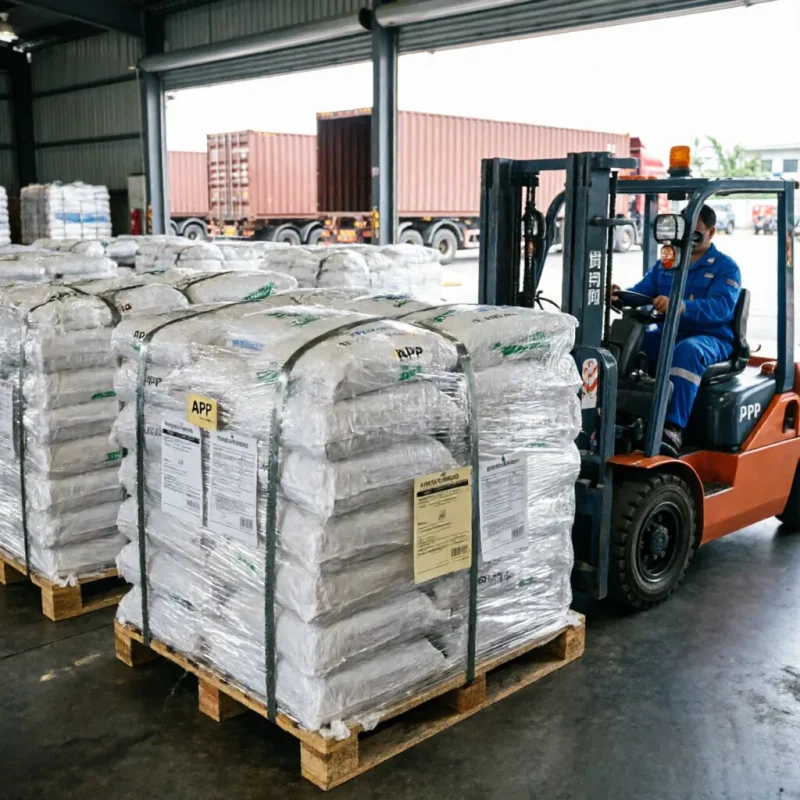
Transport: Shipped as Non-DG for road, sea and air. Before loading, check containers for caking or acid odor, which indicates moisture damage and partial hydrolysis.
Ammonium Polyphosphate (APP) FAQ
Q: Is Ammonium Polyphosphate CAS 68333-79-9 the same as monoammonium phosphate or diammonium phosphate?
A: No. CAS 68333-79-9 is polymeric (NH4PO3)n, not crystalline MAP or DAP. It decomposes above 270°C / 518°F and has low water solubility near ≤0.5 g/L at 25°C / 77°F. It acts as a delayed acid source in intumescent systems and remains in cable compounds during melt mixing. Check DP, water solubility, TGA onset, pH and COA data before use.
Q: Why does APP sometimes increase viscosity or gel a waterborne intumescent coating during storage?
A: Moisture, heat, low pH or long high-shear mixing can hydrolyze APP surfaces into shorter acids. This lowers pH and destabilizes acrylic or PVA binders. Check pH first; below 5.5, suspect hydrolysis. Shorten mixing, avoid hot-water predispersion, store below 30°C / 86°F and retest soluble phosphate and D50 if viscosity rises. Verify incoming water solubility by gravimetric or conductivity testing.
Q: How should I choose APP grade for PP/PE halogen-free cable insulation?
A: Choose low-solubility, high-DP APP: ≤0.5 g/L at 25°C / 77°F and TGA onset above 270°C / 518°F. D50 about 10-20 µm balances dispersion and strength. Use 25-40 phr, often with PER or melamine. Verify LOI by ASTM D2863, cone by ISO 5660 and insulation resistance after 70°C / 158°F humid aging. For bare copper conductors, check interface compatibility.
Related products
Manufacturer & Exporter Since 2006
Get Tailored Chemical Raw Material Solutions — Reply Within 1 Hour
Factory-direct pricing, stable high-purity supply and complete compliance documentation for your industrial formulations.
- 1000+Products
- 200+QC Protocols
- 7–15Days Delivery
- Factory-Direct Pricing
- COA / TDS / SDS Included
- Free Samples for Testing
- 40+ Export Countries
Request a Free Quote
Our engineers reply within 1 hour during GMT+8 business hours.
Please include in your inquiry:
- Product name or CAS number
- Required quantity
- Destination country or port
- Preferred packaging