
Zinc Borate CAS 12767-90-7
Zinc Borate is an anhydrous inorganic borate flame retardant synergist and smoke suppressant supplied as a fine white powder. Its Zn–O–B network forms a glassy protective layer on char surfaces, reducing soot release and enhancing flame resistance in halogenated and intumescent systems. UETChem supplies consistent-grade zinc borate with controlled oxide ratios and particle size for reliable formulation performance. Each shipment includes COA, TDS, SDS.
- CAS No: 12767-90-7
- Synonyms: Zinc diborate; Zinc metaborate; Anhydrous zinc borate; ZB
- EINECS: 235-558-6
- Molecular Formula: ZnB₂O₄
- Molecular Weight: 151.01 g/mol
- Appearance: White crystalline powder
- Purity: ≥ 95% (ZnB₂O₄ basis)
- B₂O₃ Content: 58 – 61%
- ZnO Content: 36 – 39%
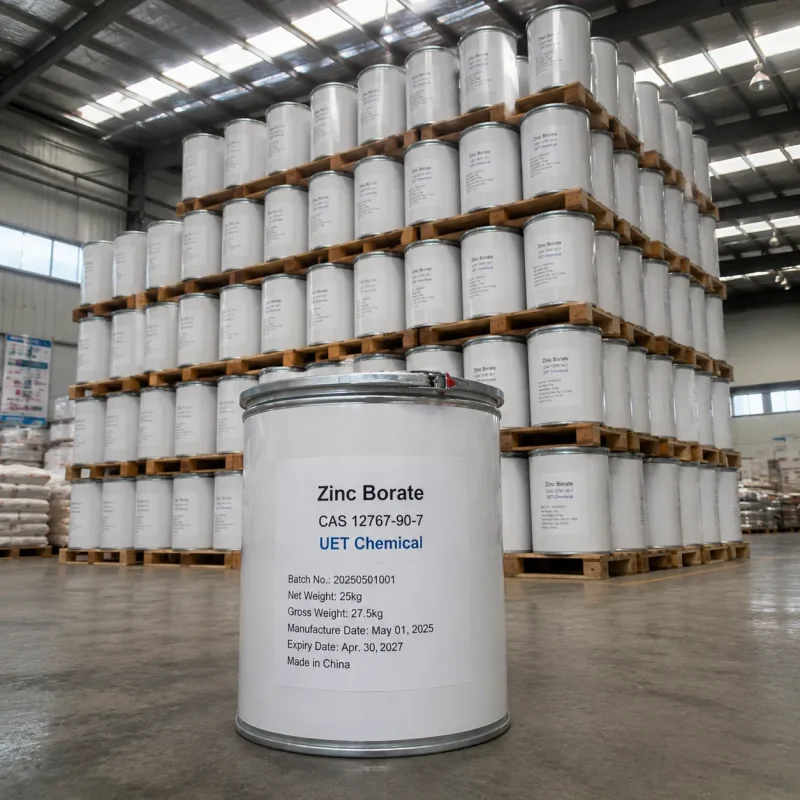
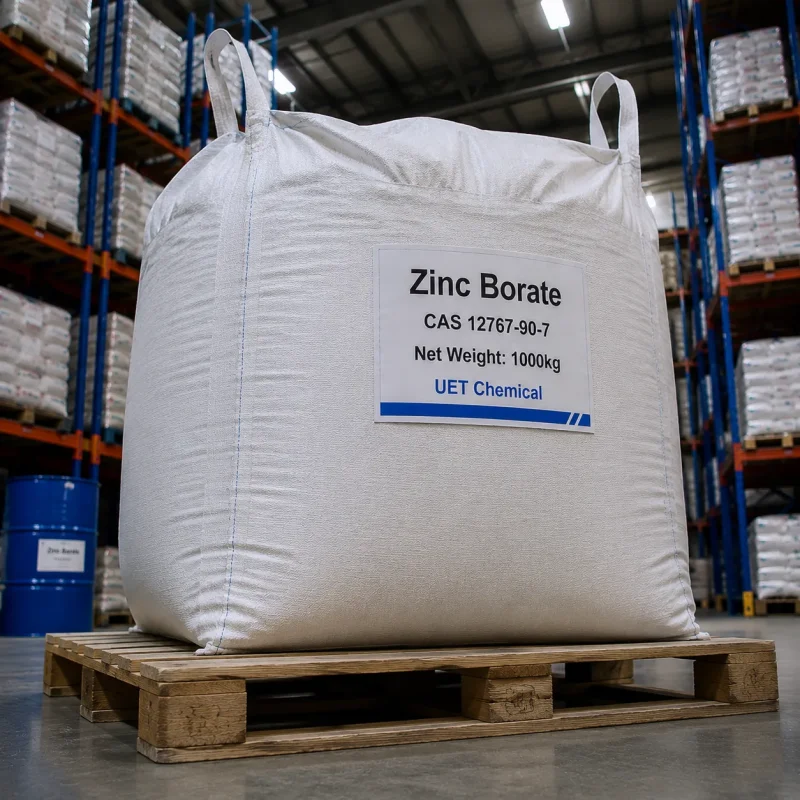
- Packaging: 25 kg bag; 1000 kg FIBC. Custom packaging available.
- Main Applications: PVC smoke suppression, polyolefin flame retardancy, intumescent coatings, WPC & rubber
Introduction to Zinc Borate
Zinc Borate is an anhydrous inorganic borate powder with a Zn–O–B structural framework, most commonly expressed as ZnB₂O₄. It acts as a flame retardant synergist and smoke suppressant by forming a viscous glassy borate layer during combustion, which seals char pores, slows oxygen and volatile transport, and reduces soot emission. It is widely used in PVC compounds, polyolefins, intumescent coatings and wood-plastic composites.
The anhydrous grade remains thermally stable through typical 180–260 °C polymer processing, minimizing water release and bubble formation in thick sections. Fine particle size can lead to agglomeration and viscosity rise in plastisols if not properly dispersed. Pre-wetting into plasticizer or masterbatch is recommended before full compounding.
Zinc Borate Chemical & Physical Properties
| Property | Value |
|---|---|
| Molecular Formula | ZnB₂O₄ |
| Molecular Weight | 151.01 g/mol |
| Melting Point | ~ 986 °C (reference value) |
| Density | 2.8 – 3.1 g/cm³ |
| Solubility | Insoluble in water; soluble in strong mineral acids |
| Thermal Stability | Stable below 260–300 °C in polymer processing |
| Loss on Drying | ≤ 0.5% |
| Particle Size (D50) | ~ 2–10 µm |
Applications of Zinc Borate
PVC wire, cable & profiles
Interacts with dehydrochlorinated PVC char and chloride residues to form a glassy surface layer. This reduces soot and aromatic smoke release, and improves char integrity in flexible and rigid PVC compounds.
Polyolefin flame retardant compounds
Used as a synergist with ATH or MDH in PE and PP formulations. It helps bind oxide residues into a coherent ceramic-like layer under heat, improving LOI and flame test performance.
Intumescent coatings
Reinforces char structure and contributes a borate glass phase to the expanded intumescent layer. It enhances barrier performance in APP/pentaerythritol based coating systems.
Wood-plastic composites & rubber
Reduces smoke emission and improves char integrity in WPC decking, conveyor belts and profiled rubber products. It supports consistent flame performance across extruded profiles.
Storage & Safety Precautions for Zinc Borate
- Store in original sealed bags in a dry warehouse below 35 °C and 70% RH. Keep away from strong acids and food-grade materials. Follow FIFO inventory practices and inspect for caking before use.
- Dust is irritating to eyes and respiratory tract. Use local exhaust ventilation and wear FFP2/N95 respirators, safety goggles and nitrile gloves during handling. Avoid breathing dust and wash hands before meals.
- Sweep spills with HEPA vacuum or damp method to prevent airborne dust. Keep material out of drains. Generally classified as Non-DG for standard transport.
- Verify loss on drying and sieve residue upon receipt. Sieve or mill caked lumps before use to avoid dispersion issues in finished compounds.
Zinc Borate FAQ
Q: Is CAS 12767-90-7 the hydrated or anhydrous grade of Zinc Borate?
A: CAS 12767-90-7 corresponds to anhydrous ZnB₂O₄. It remains dry through typical polymer processing temperatures, reducing bubble risk in thick sections. Confirm grade details via batch COA.
Q: How does Zinc Borate reduce smoke in PVC compounds?
A: It acts on dehydrochlorinated PVC char, forming a glassy surface layer with zinc and borate components. This traps soot and aromatic compounds, lowering visible smoke emission during combustion.
Q: Why does Zinc Borate increase viscosity in plastisol systems?
A: The insoluble fine particles can adsorb plasticizer or disrupt dispersants, causing viscosity rise over time. Pre-disperse into plasticizer first and sieve agglomerates before dosing to minimize this effect.
Related products
Manufacturer & Exporter Since 2006
Get Tailored Chemical Raw Material Solutions — Reply Within 1 Hour
Factory-direct pricing, stable high-purity supply and complete compliance documentation for your industrial formulations.
- 1000+Products
- 200+QC Protocols
- 7–15Days Delivery
- Factory-Direct Pricing
- COA / TDS / SDS Included
- Free Samples for Testing
- 40+ Export Countries
Request a Free Quote
Our engineers reply within 1 hour during GMT+8 business hours.
Please include in your inquiry:
- Product name or CAS number
- Required quantity
- Destination country or port
- Preferred packaging