
Disperse Yellow 114 (6GSL) CAS 61968-66-9
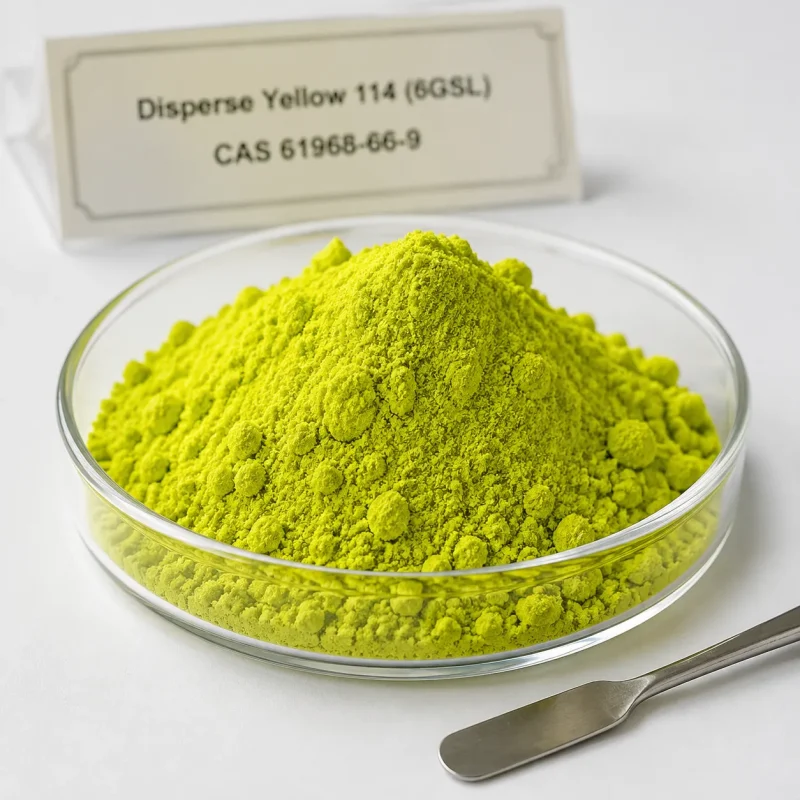
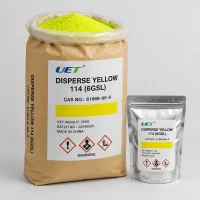
Disperse Yellow 114 (6GSL), CAS 61968-66-9, is a non-ionic monoazo disperse dye supplied as a fine yellow to greenish-yellow powder. Its low-polarity azo chromophore diffuses into hydrophobic polyester during HT exhaust dyeing and thermosol padding, giving bright yellow shades. We supply COA, TDS, SDS with each shipment.
- CAS No.: 61968-66-9
- Synonyms: C.I. Disperse Yellow 114; Disperse Yellow 6GSL; Yellow 6GSL
- EINECS: 263-056-7
- Molecular Formula: C16H12N4O4
- Molecular Weight: 324.29 g/mol
- Appearance: yellow to greenish-yellow powder
- Purity/Strength: 100 ±3% vs standard
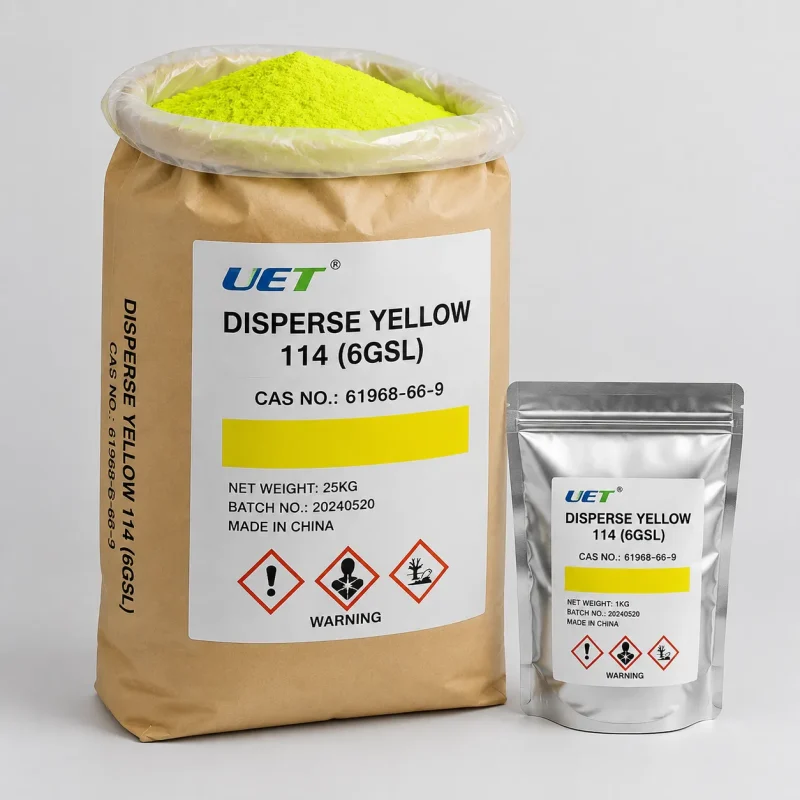
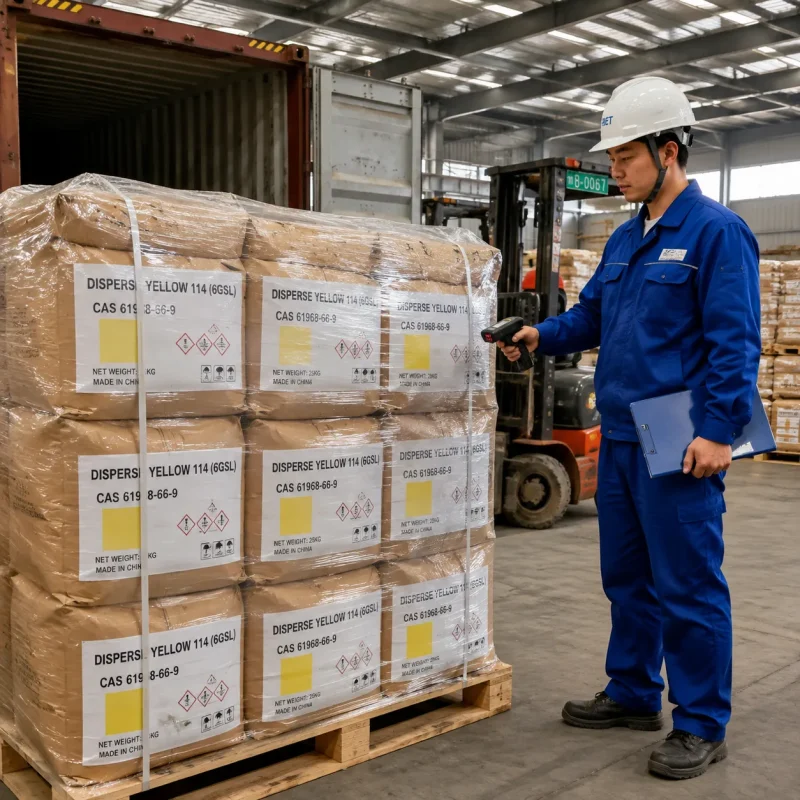
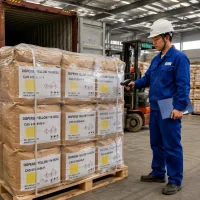
- Packaging: 25 kg (55.1 lbs) fibre drum/carton with PE liner. Custom packaging available upon request.
- Main Applications: polyester dyeing, thermosol padding, polyester printing
- Shade: greenish yellow (6GSL)
- Water solubility: practically insoluble at 25 °C (77 °F)
Introduction to Disperse Yellow 114
Disperse Yellow 114 is a yellow to greenish-yellow, non-ionic monoazo disperse dye supplied as a milled powder. Its low-polarity azo chromophore and fine particle size let it diffuse into hydrophobic PET above the fibre glass-transition temperature, building bright greenish-yellow shades in polyester fabric dyeing and polyester printing. It colours the polyester fraction of blends, not the cotton fraction.
Compared with unstandardized Disperse Yellow 6GSL lots, a strength-controlled 100 ±3% material reduces recipe correction; lots outside that range usually need a 2–4% dosing adjustment. The practical pitfall is moisture: damp powder cakes, disperses slowly and may give specks on PET or block filter screens, so keep the PE liner closed, use an anionic dispersant and set pH 4.5–5.5 before bath dosing.
Key Features of Disperse Yellow 114
- Greenish-yellow azo shade: The monoazo chromophore gives a greenish yellow 6GSL tone on PET, useful for bright yellow and greenish shade trims.
- PET-selective diffusion: The non-ionic, low-polarity molecule has little water solubility, so it leaves the dispersed particle and enters PET during HT dyeing at 125–135 °C (257–275 °F).
- Thermosol build: In pad-dry-cure work, the dye migrates into polyester at 190–210 °C (374–410 °F), supporting 10–50 g/L (1.3–6.7 oz/gal) pad recipes without soluble salts.
- Dispersant-dependent bath stability: Fine dye particles need an anionic or non-ionic dispersant at about 1–2 g/L (0.13–0.27 oz/gal); cationic additives can flocculate the dispersion and cause spots.
- Fastness after clearing: Unfixed surface dye is removed by reduction clearing, typically lifting ISO 105-X12 rub fastness by 0.5–1 grade on deep shades.
Disperse Yellow 114 Chemical & Physical Properties
| Property | Value |
|---|---|
| Color Index | C.I. Disperse Yellow 114 |
| Molecular Formula | C16H12N4O4 (public reference) |
| Molecular Weight | 324.29 g/mol |
| Appearance | Yellow to greenish-yellow powder |
| Shade | Greenish yellow (6GSL) |
| Boiling Point | Decomposes before boiling; not determined |
| Density | 0.35–0.55 g/mL (2.9–4.6 lb/gal, bulk, as supplied) |
| Flash Point | Not applicable; solid dye powder, no closed-cup flash point |
| Solubility | Practically insoluble in water at 25 °C (77 °F); soluble in DMF/DMSO |
| pH of 10 g/L dispersion | 4.0–7.0 (typical export spec) |
| Moisture | ≤1.0% (typical export spec) |
| Strength | 100 ±3% vs internal standard |
Applications of Disperse Yellow 114
Polyester HT exhaust dyeing: Use 0.1–3.0% owf depending on depth. Disperse the powder with 1–2 g/L (0.13–0.27 oz/gal) anionic dispersant, set pH 4.5–5.5 with acetic acid, and run 125–135 °C (257–275 °F). The dye dissolves from particles and diffuses into PET; reduction clearing removes surface dye.
Thermosol dyeing of polyester and blends: Pad 10–50 g/L (1.3–6.7 oz/gal), dry at 100–120 °C (212–248 °F), then cure at 190–210 °C (374–410 °F) for 30–60 s. Heat causes dye migration into the polyester fraction; cellulose is not dyed unless a separate cellulose dye is added.
Polyester disperse printing: Incorporate 5–30 g/kg (0.5–3% by weight) into thickened print paste. After printing, fix by steaming or dry heat; the azo dye diffuses into PET fibres. Wash or reduce-clear printed goods before heat setting to limit staining.
Acetate and triacetate dyeing: Dye at 80–95 °C (176–203 °F) with non-ionic dispersant. The dye enters acetate fibres at lower temperature than PET; confirm fastness because acetate has lower heat resistance.
Storage & Safety Precautions for Disperse Yellow 114
Store in a dry, ventilated warehouse below 35 °C (95 °F). Keep the PE liner closed and avoid direct sun. Moisture causes caking, slow dispersion and shade specks. Keep away from strong oxidizers, strong reducing agents, concentrated acids and alkalis; azo dyes can be reduced or decomposed under uncontrolled redox conditions. Fine organic powder can form combustible dust clouds, so keep away from ignition sources.
GHS: many commercial dye SDSs do not classify this material as hazardous for supply, but dust can irritate eyes and airways. Use a dust mask or respirator, chemical goggles and gloves. Avoid generating dust. For spills, damp-scoop or vacuum into a closed container; do not wash dye dust into drains.
Transport: typically Non-DG by sea/air unless the lot-specific SDS Section 14 says otherwise.
Practical note: before palletizing drums, check the inner liner for pinholes. Yellow dye dust migrates through small tears and stains cartons, making QA reject otherwise good goods.
Disperse Yellow 114 FAQ
Q: Is Disperse Yellow 114 CAS 61968-66-9 suitable for cotton-rich blends?
A: It dyes PET, not cotton. The non-ionic azo dye enters polyester only above Tg. On blends, shade follows PET ratio; use reactive/direct dyes for cotton and reduce-clear PET.
Q: Why does Disperse Yellow 114 need reduction clearing after HT dyeing?
A: Clear unfixed surface dye. Water rinse is weak because the dye is non-ionic and insoluble. Use hydrosulfite/caustic clearing, then neutralize; it improves rubbing and reduces staining.
Q: How should we match shade if a new lot of Disperse Yellow 6GSL differs from the previous lot?
A: Match strength and hue, not weight. Run a 0.5% owf lab dip on same PET with same dispersant and clearing. Correct 2–3% strength changes; quarantine if hue drifts.
Related products
Manufacturer & Exporter Since 2006
Get Tailored Chemical Raw Material Solutions — Reply Within 1 Hour
Factory-direct pricing, stable high-purity supply and complete compliance documentation for your industrial formulations.
- 1000+Products
- 200+QC Protocols
- 7–15Days Delivery
- Factory-Direct Pricing
- COA / TDS / SDS Included
- Free Samples for Testing
- 40+ Export Countries
Request a Free Quote
Our engineers reply within 1 hour during GMT+8 business hours.
Please include in your inquiry:
- Product name or CAS number
- Required quantity
- Destination country or port
- Preferred packaging