
Vat Blue 18 (Navy Blue BR) CAS 1324-54-5
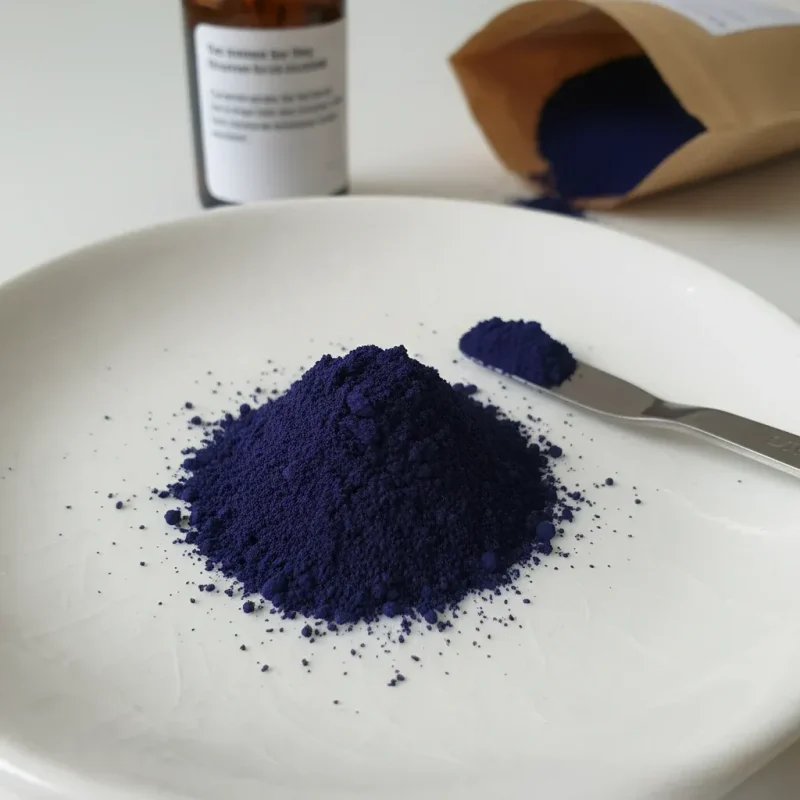
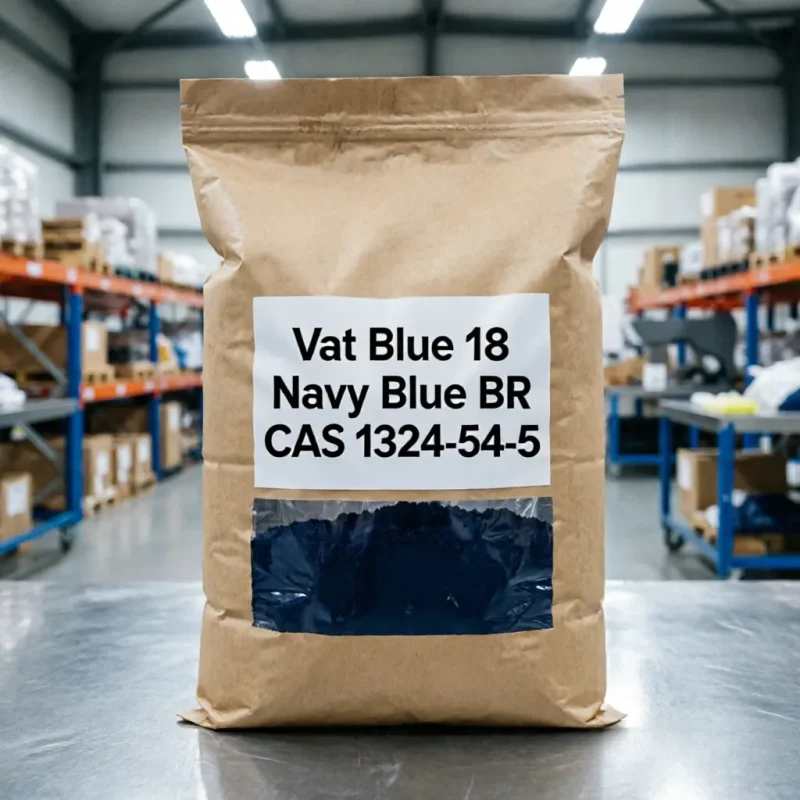
Vat Blue 18 (Navy Blue BR) is an anthraquinone vat dye supplied as a dark navy powder, used mainly for dyeing cotton and viscose and for navy textile printing pastes. Reduced by alkaline sodium dithionite, it forms a soluble leuco salt that exhausts onto cellulose and re-oxidizes to an insoluble, washfast navy pigment. Each batch ships with COA, TDS and SDS.
- CAS No.: 1324-54-5
- Synonyms: Navy Blue BR; C.I. Vat Blue 18; C.I. 73015; Vat Navy Blue BR
- EINECS: 215-372-7
- Molecular Formula: C30H14N2O4
- Molecular Weight: 466.44 g/mol
- Appearance: Dark navy-blue powder
- Purity: ≥95% dye content (HPLC area, typical)
- Packaging: 25 kg fibre drum with PE inner bag. Custom packaging available upon request.
- Main Applications: Cotton/viscose exhaust dyeing, navy printing pastes, workwear shade matching
- C.I. No.: 73015
- Shade: Navy blue with red cast
Introduction to Vat Blue 18
Vat Blue 18 is a dark navy, anthraquinone vat dye supplied as a fine powder. Its oxidized form is an insoluble pigment; after reduction with sodium hydroxide/sodium dithionite it becomes a leuco salt that exhausts onto cotton and viscose, then re-oxidizes to the fixed navy chromophore. The main markets are exhaust dyeing of cellulosic textiles and navy printing pastes.
For wet-fast navy workwear, Vat Blue 18 normally reaches ISO 105-C06 washing fastness 4–5, while unfixed Direct Blue 15 often stops at 2–3 under the same test. The practical pitfall is redox control: if the leuco bath is exposed to air or oxidation is incomplete, surface pigment causes bronzing, specks and poor crocking. Keep reduced vats covered, use fresh hydrosulfite and soap after full oxidation.
Key Features of Vat Blue 18
- Leuco chemistry: Sodium dithionite/NaOH reduces the anthraquinone carbonyls to a water-soluble sodium leuco salt, allowing the dye to penetrate cotton before oxidation.
- Fixed navy pigment: Oxidation regenerates the insoluble Vat Blue 18 chromophore inside cellulose, which is the reason for high wash fastness after proper soaping.
- Reddish navy tone: Navy Blue BR gives a deep navy with a slight red undertone, useful for correcting dull blue shades in workwear and printing pastes.
- Low water solubility in final state: Once oxidized, the dye is no longer water-soluble, so it resists ISO 105-C06 washing and ISO 105-X12 rubbing better than unfixed direct dyes.
- Process-dependent strength: Color strength depends on reduction level, pH and oxidation, so QC should judge lots against a reduced-and-oxidized standard, not powder appearance.
Vat Blue 18 Chemical & Physical Properties
| Property | Value |
|---|---|
| Molecular Formula | C30H14N2O4 |
| Molecular Weight | 466.44 g/mol |
| Appearance | Dark navy-blue powder |
| Boiling Point | No distinct boiling point; decomposes before boiling, typically >300 °C |
| Density | 1.50–1.60 g/cm³ (20 °C, typical) |
| Flash Point | No closed-cup flash point for solid; dust cloud ignition possible |
| Solubility | Water: insoluble. Alkaline sodium dithionite: soluble as leuco salt. Hot concentrated sulfuric acid: soluble |
| Colour Index | C.I. 73015 |
| Reduction System | NaOH + Na2S2O4; leuco bath usually yellow-green |
| Washing Fastness | ISO 105-C06, 4–5 typical after full oxidation and soaping |
Applications of Vat Blue 18
Exhaust dyeing of cotton and viscose: The reduced leuco salt exhausts onto cellulose, then air or hydrogen peroxide oxidation regenerates the insoluble navy pigment inside the fibre. Typical dyeings use 0.5–4% owf Vat Blue 18, 4–12 g/L caustic soda and 3–10 g/L sodium dithionite at 30–60 °C, followed by oxidation and soaping.
Continuous pad dyeing of cellulosic web: In a reduced pad liquor, the leuco form penetrates yarns during nip dwell; subsequent air oxidation or a peroxide box restores the insoluble anthraquinone pigment. Dye concentration commonly runs 20–60 g/L, with dithionite and caustic controlled to keep redox stable.
Textile printing pastes: Vat Blue 18 is dispersed in alginate or synthetic thickener, printed, dried, then reduced during steaming or ageing. The leuco dye diffuses into fibre and is re-oxidized after washing. Print recipes often use 5–40 g/kg paste, plus sodium dithionite and alkali according to paste stability.
Shade correction and deep navy blends: In polyester-cotton or workwear fabrics, Vat Blue 18 colours the cellulosic fraction only; polyester remains undyed unless a disperse navy is also used. For shade correction, use 0.1–1% owf on the cotton component and verify final shade after oxidation, because leuco colour is not the final navy.
Storage & Safety Precautions for Vat Blue 18
Storage: Store Vat Blue 18 in tightly closed, dry containers at 5–35 °C, away from direct sunlight. Keep powder separate from strong oxidizers such as hypochlorite and peroxides; contact can alter shade or create hot spots. Do not store reduced leuco solutions: they oxidize in air, precipitate insoluble pigment and can cause specks in later dyeings. If a drum has been opened, reseal the PE liner and use desiccant in humid climates.
Safety: Commercial Vat Blue 18 powder is generally not classified as hazardous under GHS, but dye dust can irritate eyes and lungs and stains skin. Use local exhaust, P2/N95 respirator, sealed goggles and nitrile gloves during weighing. For spills, stop dust generation, collect with a vacuum or dampened sweep, and keep material out of drains. If dust is aerosolized, treat the area as a combustible organic dust and eliminate ignition sources.
Transport: Non-DG for road, sea and air in normal commercial quantities, subject to local powder handling rules.
Field note: When QC opens a new drum, check powder for hard lumps and foreign colour flecks. Hard lumps usually mean moisture uptake; if the lot still passes reduction and shade testing, sieve before making the stock paste, but reject if blue specks remain after reduction.
Vat Blue 18 FAQ
Q: Can Vat Blue 18 (CAS 1324-54-5) be added directly to a neutral water bath?
A: No. Vat Blue 18 is water-insoluble in its oxidized anthraquinone form. You must first reduce it with NaOH and sodium dithionite to form a soluble yellow-green leuco salt. This leuco form exhausts onto cotton or viscose. After dyeing, oxidize with air or H2O2 to regenerate the fixed navy pigment inside the fibre.
Q: Why does my Vat Blue 18 navy look bronze or dull after soaping?
A: Bronze or dull shade usually points to incomplete oxidation or unfixed surface dye. Make sure oxidation fully converts leuco yellow-green to deep navy before soaping. Check for overdosed dithionite, hard-water calcium deposits or residual alkali. Soap at 95 °C with 1–2 g/L detergent, then dry and compare under D65.
Q: How do I match repeat lots of Navy Blue BR without shade drift?
A: Match shade only after locking your reduction-oxidation routine. Vat dye colour develops inside the fibre, not in the powder. Keep dithionite, caustic soda, liquor ratio, temperature and soap-off identical for every lab dip. Measure dried fabric under D65/10 using ASTM D2244; keep ΔE under 0.8–1.0.
Related products
Manufacturer & Exporter Since 2006
Get Tailored Chemical Raw Material Solutions — Reply Within 1 Hour
Factory-direct pricing, stable high-purity supply and complete compliance documentation for your industrial formulations.
- 1000+Products
- 200+QC Protocols
- 7–15Days Delivery
- Factory-Direct Pricing
- COA / TDS / SDS Included
- Free Samples for Testing
- 40+ Export Countries
Request a Free Quote
Our engineers reply within 1 hour during GMT+8 business hours.
Please include in your inquiry:
- Product name or CAS number
- Required quantity
- Destination country or port
- Preferred packaging