
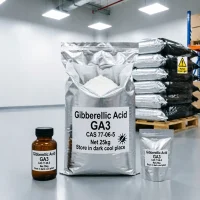
Gibberellic Acid CAS 77-06-5
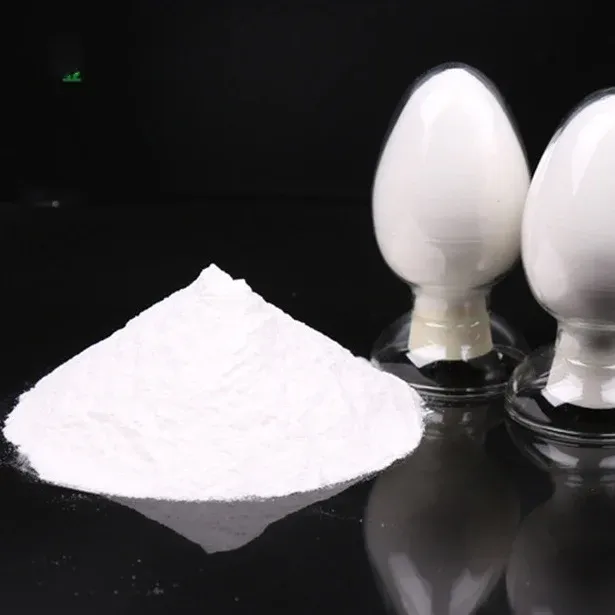
Gibberellic Acid (GA3) is a white to pale yellow crystalline powder. The molecule is a tetracyclic diterpenoid containing a reactive carboxyl group and a lactone ring. It acts as a plant growth regulator to break seed dormancy and stretch grape clusters in commercial agriculture. Every shipment includes COA, TDS, SDS.
- CAS No: 77-06-5
- Synonyms: GA3; Gibberellin A3; Gib-Tabs
- EINECS: 201-001-0
- Molecular Formula: C19H22O6
- Molecular Weight: 346.37 g/mol
- Appearance: White to off-white crystalline powder
- Purity: ≥90.0% by HPLC (FAO specification)
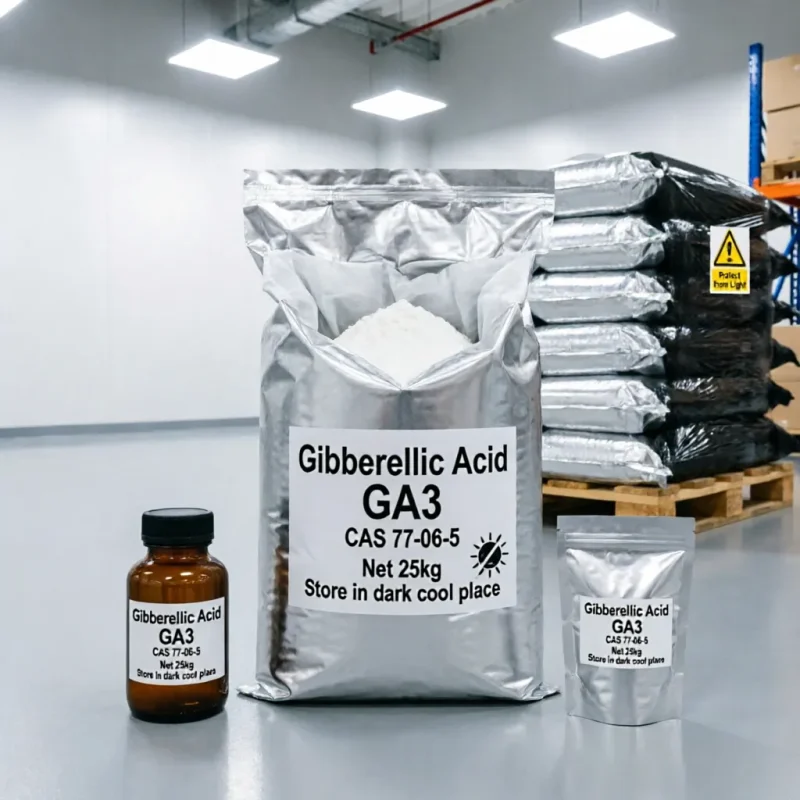
- Packaging: 25 kg / 55 lb fiber drum with double PE liner; Custom packaging available upon request.
- Main Applications: Seedless grape cluster elongation; citrus fruit retention; malting barley treatment
- Solubility: ~5 g/L in water at 20°C / 68°F; highly soluble in ethanol and acetone
- Specific Rotation: [α]D20 +75° to +85° (in anhydrous ethanol)
- Loss on Drying: ≤1.0%
Introduction to Gibberellic Acid (GA3)
Gibberellic Acid (GA3) is a white to pale yellow crystalline solid. The chemical structure is a tetracyclic gibberellane diterpenoid carrying a free carboxyl group (pKa ~4.0) and an internal lactone ring. It triggers stem elongation and seed germination by stimulating cell division. Growers rely on GA3 for seedless grape vineyard management and malting barley processing.
Formulators must watch the lactone ring stability. Aqueous solutions hydrolyze and lose bioactivity fast when pH goes above 7.0. Dissolve the GA3 powder in ethanol completely before adding slightly acidic water (pH 3.0-4.0) to the tank. QC labs need to verify HPLC purity and specific rotation. Fermentation byproducts drift between batches and can mess up adjuvant compatibility.
Key Features of Gibberellic Acid (GA3)
- Lactone ring sensitivity: The internal ester bond hydrolyzes fast in alkaline conditions (pH > 7). Acidic buffers keep bioactivity intact in tank mixes.
- Free carboxyl reactivity: The C-10 carboxyl group lets chemists convert GA3 into water-soluble potassium or sodium salts for liquid SL formulations. The core diterpenoid skeleton stays unchanged.
- Targeted cell elongation: GA3 upregulates amylase synthesis in cereal aleurone layers and stretches grape pedicels. Synthetic auxins trigger rooting instead.
- High chromatographic purity: Premium grades hit ≥90% GA3 by HPLC (CIPAC method). This cuts down inactive fermentation impurities that interfere with adjuvants.
Gibberellic Acid (GA3) Chemical & Physical Properties
| Property | Value |
|---|---|
| Molecular Formula | C19H22O6 |
| Molecular Weight | 346.37 g/mol |
| Melting Point | 233-235°C / 451-455°F (with decomposition) |
| Density | ~1.35 g/cm³ / 84 lb/ft³ (crystalline solid) |
| Combustibility | Non-flammable solid; flash point not applicable |
| Solubility | Water ~5 g/L at 20°C / 68°F; soluble in methanol, ethanol, acetone |
| Specific Rotation | [α]D20 +75° to +85° |
| Loss on Drying | ≤1.0% |
| pH (1% solution) | 3.0 – 4.0 |
Applications of Gibberellic Acid (GA3)
Seedless grape cluster elongation: GA3 stretches the rachis and pedicels before bloom to prevent cluster tightness and reduce rot. Apply 20-40 mg/L as a foliar spray or dip during the pre-bloom stage. Buffer the tank water to pH 4.0 to stop alkaline hydrolysis.
Malting barley processing: GA3 diffuses into the aleurone layer to trigger alpha-amylase synthesis and accelerate starch breakdown. Breweries add 1.0-2.0 mg/kg (ppm) directly to the steeping water. This cuts malting time by 1-2 days and ensures uniform germination.
Citrus fruit retention and sizing: Spraying GA3 delays rind senescence and reduces pre-harvest fruit drop in oranges and lemons. Use 10-20 mg/L during the physiological drop stage. Keep GA3 away from alkaline copper fungicides in the tank to protect the lactone ring.
Seed dormancy breaking: GA3 substitutes for cold stratification by inducing embryo expansion in dormant tree seeds or hard-to-germinate flowers. Soak seeds in 250-1000 mg/L solutions for 12-24 hours before sowing in controlled greenhouse environments.
Storage & Safety Precautions for Gibberellic Acid (GA3)
Storage: Keep fiber drums tightly sealed below 25°C / 77°F in a dry, dark warehouse. UV light and high heat degrade GA3. Keep drums away from alkaline materials like lime sulfur or copper hydroxide. Alkaline dust cross-contamination deactivates the lactone ring. Biological potency drifts slightly between fermentation batches. Run a small-scale bioassay or HPLC check before scaling up greenhouse treatments.
Safety & Spill: GA3 is a low-toxicity biochemical, but fine powder irritates mucous membranes. Wear nitrile gloves, safety goggles, and an N95 mask during weighing. Sweep up spills dry. Do not wash powder into soil or drains to avoid unintended plant growth anomalies.
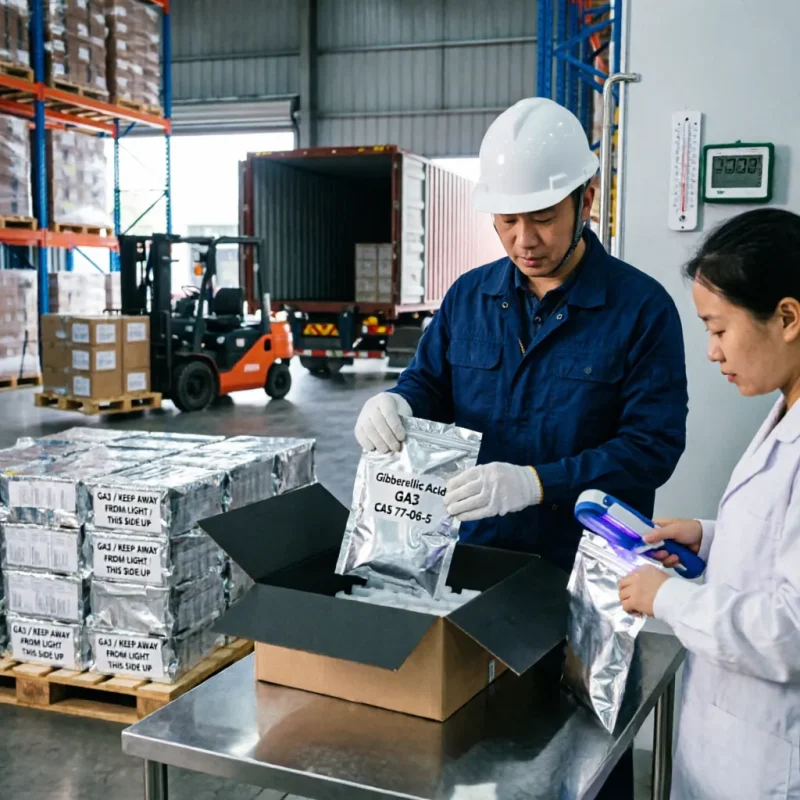
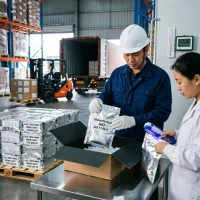
Transport: Ship as Non-DG for air, sea, and road freight. Check container walls for dryness before loading to prevent moisture ingress into the fiber drums.
Gibberellic Acid (GA3) FAQ
Q: Does Gibberellic Acid CAS 77-06-5 dissolve directly in alkaline well water for field spraying?
A: No. GA3 (CAS 77-06-5) contains a carboxyl group, but the lactone ring hydrolyzes fast above pH 7.0 and destroys bioactivity. Pre-dissolve the powder in ethanol. Dilute the mixture into the tank and buffer the water to pH 3.5-4.5 with citric acid. Alkaline well water precipitates and degrades GA3, ruining grape elongation results.
Q: How do I test if an older drum of GA3 lost biological efficacy?
A: Degraded GA3 still looks white. The lactone ring breaks down into inactive gibberellenic acid under heat. Request an HPLC purity test (CIPAC method). A main peak dropping below 85% means degradation. Run a dwarf corn seedling bioassay at 10 mg/L for a quick field check to confirm elongation potency against a fresh control.
Q: What is the difference between technical GA3 and formulated SL products?
A: Technical GA3 (≥90% TC) is raw powder requiring solvent pre-dissolution and lasts over 3 years when stored dry. Formulated SL products contain GA3 pre-dissolved in buffered aqueous systems with surfactants for immediate water dilution. SL liquids have a shorter shelf life (1-2 years) because the active ingredient slowly hydrolyzes in liquid form.
Related products
Manufacturer & Exporter Since 2006
Get Tailored Chemical Raw Material Solutions — Reply Within 1 Hour
Factory-direct pricing, stable high-purity supply and complete compliance documentation for your industrial formulations.
- 1000+Products
- 200+QC Protocols
- 7–15Days Delivery
- Factory-Direct Pricing
- COA / TDS / SDS Included
- Free Samples for Testing
- 40+ Export Countries
Request a Free Quote
Our engineers reply within 1 hour during GMT+8 business hours.
Please include in your inquiry:
- Product name or CAS number
- Required quantity
- Destination country or port
- Preferred packaging