
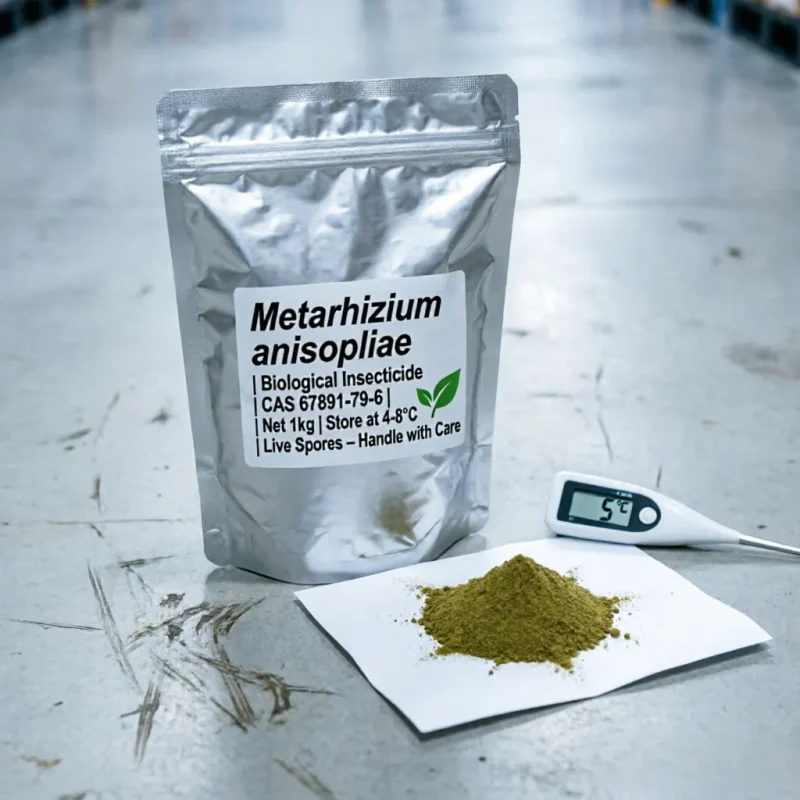

Metarhizium Anisopliae Powder (Entomopathogenic Fungus) CAS 67891-79-6
Metarhizium Anisopliae Powder is a potent entomopathogenic fungus bio-insecticide supplied as a concentrated technical mother powder. It controls a wide range of agricultural and forestry pests through cuticular infection and secondary sporulation. Core uses include organic farming pest management, soil-dwelling insect control (grubs/wireworms), and termite/locust bio-control. Each shipment includes COA, TDS, and SDS.
- CAS No: 67891-79-6
- Synonyms: Green muscardine fungus, Metarhizium bio-pesticide, Entomopathogenic fungal spores, Metarhizium anisopliae technical grade
- Active Ingredient: Metarhizium anisopliae spores
- Appearance: Off-white to pale greenish fine powder
- Spore Count: ≥ 1.0 × 10¹⁰ spores/g (Customizable up to 2.0 × 10¹¹ spores/g)
- Germination Rate: ≥ 90%
- Packaging: 1 kg (2.2 lb) aluminum foil bag; 5 kg (11 lb) fiber drum with PE liner; 25 kg (55 lb) fiber drum with PE liner. Custom packaging available upon request.
- Main Applications: Bio-control of soil pests (grubs), termites, locusts, thrips, and greenhouse whiteflies
Introduction to Metarhizium Anisopliae Powder
Metarhizium anisopliae is a naturally occurring entomopathogenic fungus that acts as a highly effective biological insecticide. Unlike chemical neurotoxins, it operates via a parasitic infection cycle: spores attach to the insect’s cuticle, germinate under favorable humidity, and penetrate the exoskeleton using mechanical pressure and enzymatic degradation. Once inside the hemocoel, the fungus proliferates rapidly, secreting destruxins (cyclic peptides) that paralyze the host’s immune system and cause death within 3 to 7 days. Post-mortem, the fungus erupts through the cadaver, producing millions of new spores that spread to adjacent pests, creating a self-sustaining “epizootic” cascade in the field.
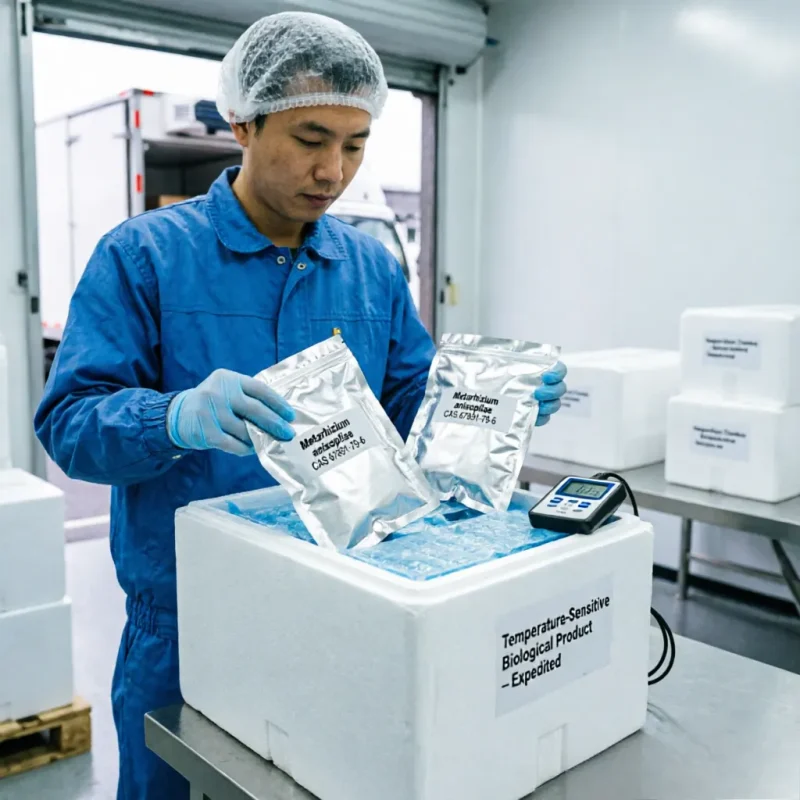
Storage and viability are the primary handling concerns. As a living biological agent, the spores are sensitive to UV radiation and extreme heat. Store the mother powder in a cool, dark warehouse (ideally 2–8 °C / 36–46 °F, or strictly below 25 °C / 77 °F). Prolonged exposure to temperatures above 35 °C (95 °F) or direct sunlight will rapidly decline spore germination rates.
Key Features of Metarhizium Anisopliae
- Broad-spectrum contact infection. Effective against over 200 species of insects including Coleoptera (grubs, wireworms), Hemiptera, and Orthoptera (locusts), bypassing the need for the pest to ingest the toxin.
- Secondary horizontal transmission. The “zombie insect” effect ensures that dead cadavers become new sources of inoculum, spreading the fungus through the pest population via physical contact and grooming.
- Zero chemical residue and resistance-free. Leaves no harmful synthetic residues on crops, making it ideal for organic certification and export-grade produce. Pests cannot develop genetic resistance to the physical and enzymatic penetration mechanism.
- High environmental safety. Naturally occurring and highly specific to arthropods; non-toxic to mammals, birds, earthworms, and most beneficial pollinators when applied correctly.
- Excellent IPM compatibility. Integrates seamlessly into Integrated Pest Management programs to reduce reliance on harsh chemical pesticides and manage resistance rotation.
Metarhizium Anisopliae Biological & Physical Properties
| Property | Value |
|---|---|
| Active Ingredient | Metarhizium anisopliae spores |
| Spore Concentration | ≥ 1.0 × 10¹⁰ CFU/g (spores/g) |
| Germination Rate | ≥ 90% (within 24 hours at 25 °C / 77 °F) |
| Moisture Content | ≤ 8.0% |
| pH (10% aqueous suspension) | 6.0 – 7.5 |
| Thermal Tolerance | Stable below 30 °C (86 °F); rapid viability loss above 40 °C (104 °F). |
| UV Sensitivity | Highly sensitive; requires UV-protectant packaging or tank-mix adjuvants for foliar application. |
| Shelf Life | 12–18 months at 2–8 °C (36–46 °F); 6 months at 20–25 °C (68–77 °F). |
Applications of Metarhizium Anisopliae Powder
Soil-dwelling pest control (Grubs & Wireworms): Apply as a soil drench, root-zone injection, or incorporate into potting media at 2–5 kg per hectare (depending on spore count). Ideal for turfgrass, nurseries, and root-zone protection in organic agriculture. The spores persist in the soil matrix for extended periods.
Termite and forestry pest management: Inject into soil barriers or apply as a bait matrix. The secondary sporulation ensures the fungal pathogen spreads through the termite colony via grooming and trophallaxis (food sharing), eventually collapsing the entire nest.
Foliar pests (Thrips, Whiteflies, Aphids): Formulate into Wettable Powders (WP) or Oil Dispersions (OD) with UV protectants. Spray during late afternoon or early evening when relative humidity exceeds 80% to maximize spore germination on the insect cuticle.
Locust and grasshopper bio-control: Used in ultra-low volume (ULV) oil-based formulations for rangeland and desert locust swarm management, providing sustainable control without harming livestock, wildlife, or fragile grassland ecosystems.
Storage & Safety Precautions for Metarhizium Anisopliae
- Storage: Keep tightly sealed in original foil bags or fiber drums at 2–8 °C (36–46 °
Related products
Manufacturer & Exporter Since 2006
Get Tailored Chemical Raw Material Solutions — Reply Within 1 Hour
Factory-direct pricing, stable high-purity supply and complete compliance documentation for your industrial formulations.
- 1000+Products
- 200+QC Protocols
- 7–15Days Delivery
- Factory-Direct Pricing
- COA / TDS / SDS Included
- Free Samples for Testing
- 40+ Export Countries
Request a Free Quote
Our engineers reply within 1 hour during GMT+8 business hours.
Please include in your inquiry:
- Product name or CAS number
- Required quantity
- Destination country or port
- Preferred packaging