
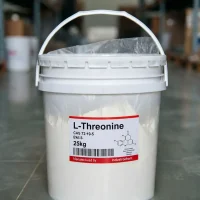
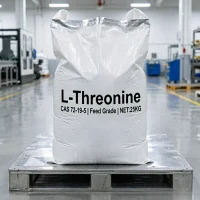
L-Threonine CAS 72-19-5
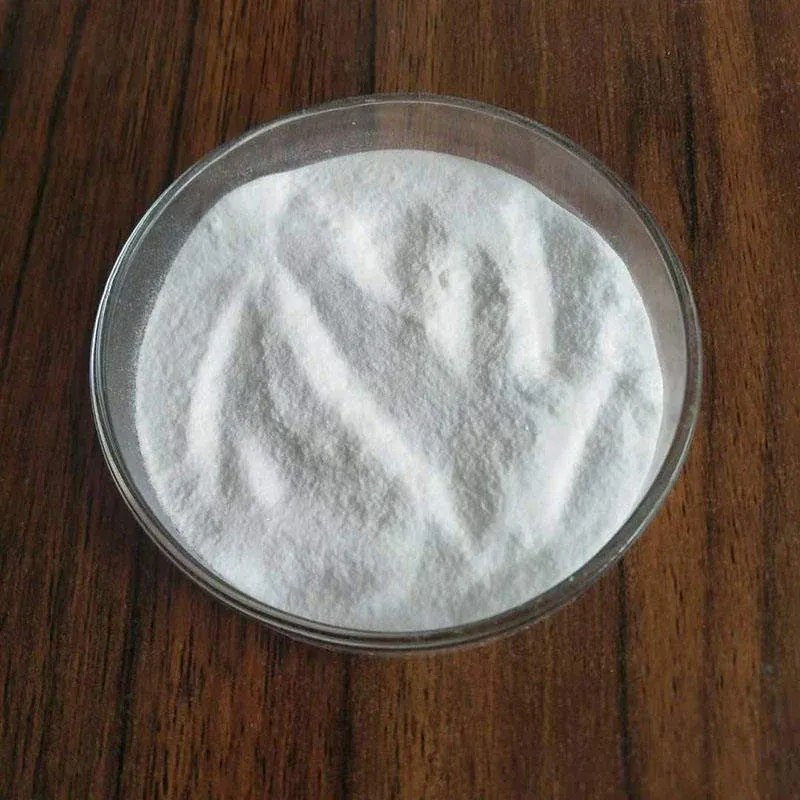
L-Threonine is an essential amino acid for protein synthesis supplied as white crystalline powder. It cannot be synthesized in vivo and must be obtained through diet or supplementation. Core uses include animal feed formulation, food fortification, pharmaceutical-grade infusion, and sports nutrition. Each shipment includes COA, TDS, and SDS.
- CAS No: 72-19-5
- Synonyms: (2S,3R)-2-Amino-3-hydroxybutanoic acid, L-2-Amino-3-hydroxybutyric acid, Thr
- EC Number: 200-774-1
- Molecular Formula: C4H9NO3
- Molecular Weight: 119.12 g/mol
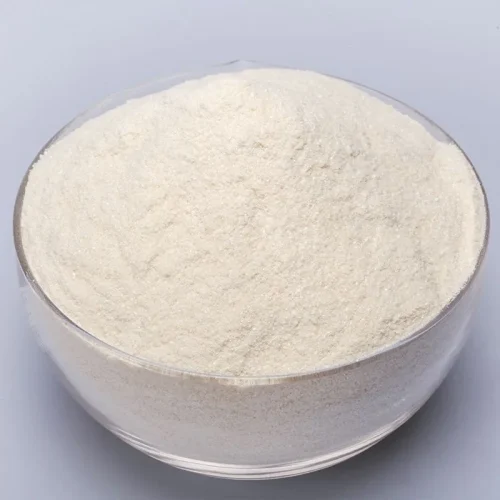
- Appearance: White crystalline powder
- Purity (HPLC): ≥ 99.0%
- Specific Rotation: [α]D²⁰ = −28.0° to −29.5° (c = 6, H₂O)
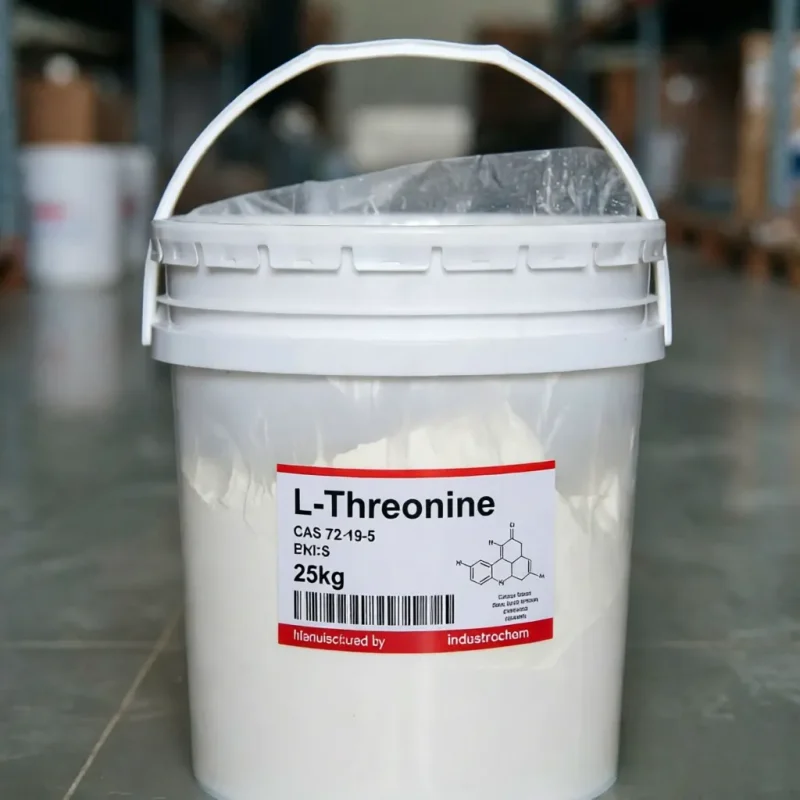
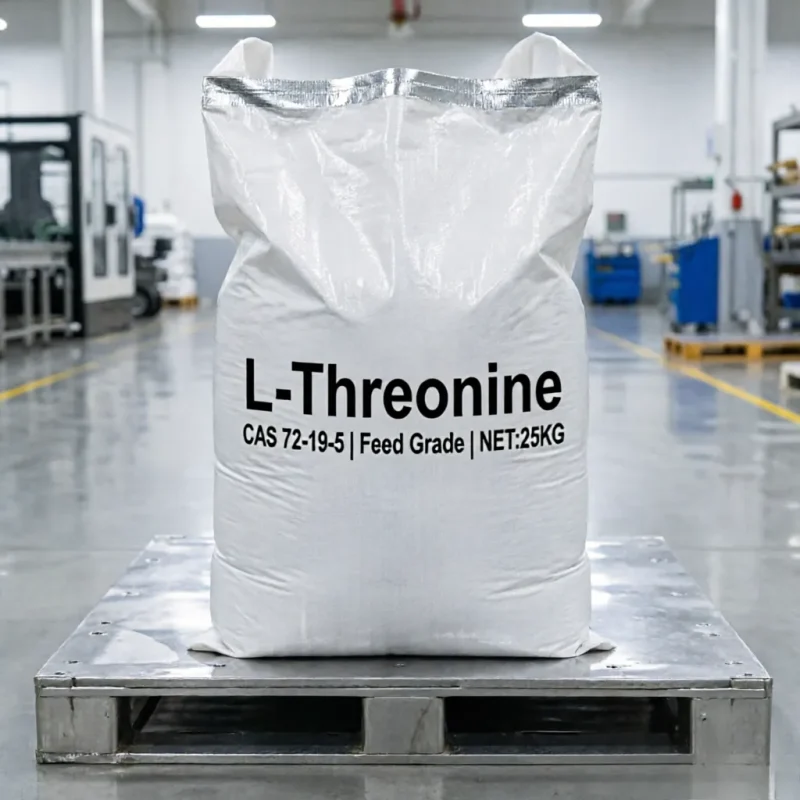
- Packaging: 1 kg (2.2 lb) aluminum foil bag; 5 kg (11 lb) aluminum foil bag; 25 kg (55 lb) fiber drum with PE liner. Custom packaging available upon request.
- Main Applications: Animal feed additive, food fortification, pharmaceutical amino acid infusion, sports nutrition supplement
Introduction to L-Threonine
L-Threonine is a white, water-soluble essential amino acid containing one hydroxyl group and one amino group on a four-carbon backbone with two chiral centers (2S, 3R configuration). As one of the nine amino acids the human and animal body cannot synthesize, it must be supplied externally. In livestock nutrition, L-Threonine is the third limiting amino acid after lysine and methionine for poultry, and the second limiting amino acid for swine. Supplementing feed-grade L-Threonine at 0.1–0.3% inclusion rate reduces crude protein requirement by 1–2 percentage points while maintaining growth performance.
Pharmaceutical-grade L-Threonine serves as a key component in amino acid injection formulations for parenteral nutrition. Food-grade material is used as a fortification agent in cereals, infant formula, and functional beverages. The hydroxyl side chain participates in O-glycosylation and phosphorylation post-translational modifications, making it critical for mucin synthesis and immune function.
Key Features of L-Threonine
- High purity, consistent optical rotation. HPLC purity ≥ 99.0% with specific rotation [α]D²⁰ = −28.0° to −29.5°, confirming single L-enantiomer without D-form contamination.
- Excellent water solubility. Dissolves readily at ≥ 160 g/L in water at 20 °C (68 °F), enabling direct incorporation into liquid feed premixes and aqueous pharmaceutical formulations without heating.
- Thermal stability during feed pelleting. Retains ≥ 97% integrity at 85 °C (185 °F) for 30 min, compatible with standard steam-pelleting processes without significant degradation.
- Reduces feed crude protein requirement. Supplementing 1 kg of L-Threonine per ton of swine feed allows reduction of soybean meal inclusion by 8–12 kg, lowering nitrogen excretion and feed cost simultaneously.
- Multi-grade availability. Offered in feed grade (≥ 98.5%), food grade (≥ 99.0%), and pharmaceutical grade (≥ 99.5%, endotoxin-controlled) to match end-use regulatory requirements.
L-Threonine Chemical & Physical Properties
| Property | Value |
|---|---|
| Molecular Formula | C4H9NO3 |
| Molecular Weight | 119.12 g/mol |
| Melting Point | 256 °C (493 °F), with decomposition |
| Density | 1.425 g/cm³ (89.0 lb/ft³) crystal density; bulk powder density 0.50–0.65 g/cm³ (31.2–40.6 lb/ft³). |
| Solubility in Water | ≥ 160 g/L at 20 °C (68 °F); soluble in formic acid; slightly soluble in ethanol; insoluble in diethyl ether and chloroform. |
| pH (1% aqueous solution) | 5.0 – 7.0 |
| Specific Rotation | [α]D²⁰ = −28.0° to −29.5° (c = 6, H₂O) |
| Isoelectric Point (pI) | 5.60 |
| Loss on Drying | ≤ 0.5% |
| Ash Content | ≤ 0.2% (USP method) |
| Heavy Metals | ≤ 10 ppm (Pb ≤ 2 ppm) |
Applications of L-Threonine
Animal feed formulation (swine and poultry): Add L-Threonine at 0.10–0.35% to corn-soybean meal based diets to balance amino acid profile against NRC (2012) and breed-specific requirements. For growing-finishing pigs (20–50 kg BW), target standardized ileal digestible threonine at 0.55–0.65% of diet. Reduces crude protein by 1–2 percentage points, cutting nitrogen excretion by 8–15% and lowering soybean meal cost.
Food fortification and infant formula: Add at 50–200 mg/L in liquid beverages or 0.1–0.5 g/100 g in solid food matrices to restore amino acid balance lost during thermal processing. In infant formula, supplement to match human milk threonine level of approximately 45 mg/100 mL per WHO/FAO guidelines. Use food-grade material meeting FCC (Food Chemicals Codex) specification.
Pharmaceutical amino acid injection: Pharmaceutical-grade L-Threonine (≥ 99.5%, endotoxin ≤ 0.25 EU/mg) is compounded into multi-amino acid parenteral nutrition solutions. Typical concentration 2–5 g/L in compound amino acid injection (18AA). Must meet CP (Chinese Pharmacopoeia), USP-NF, or Ph. Eur. monograph depending on target market.
Sports nutrition and dietary supplements: Incorporated into BCAA-plus blends and recovery formulas at 500–2000 mg per serving. Supports mucin production, gut barrier integrity, and immune globulin synthesis during intense training periods.
Storage & Safety Precautions for L-Threonine
- Storage: Keep sealed in original aluminum foil bags or fiber drums at 2–25 °C (36–77 °F), in a dry environment with relative humidity below 60%. L-Threonine is non-hygroscopic under normal conditions but prolonged exposure to high humidity may cause caking. Once opened, reseal immediately and use within 12 months.
- Safety: Not classified as hazardous under GHS. Non-toxic, non-irritating. Avoid inhalation of fine dust during bulk handling; wear N95 mask and nitrile gloves when transferring powder in quantities above 5 kg. In case of eye contact, flush with water for 10 min.
- Transport: L-Threonine is Non-DG under IATA/IMDG/ADR. No UN number, no packing group. Standard dry cargo transport acceptable. Avoid stacking above 3 layers for 25 kg drums to prevent liner rupture. Ambient temperature shipping acceptable for all transit durations.
- QC note: Verify identity on receipt by specific rotation test ([α]D²⁰ = −28.0° to −29.5°) and HPLC assay (≥ 99.0%). Check loss on drying ≤ 0.5% and confirm absence of D-threonine by chiral HPLC if pharmaceutical-grade material is received.
L-Threonine FAQ
Q: What is the difference between feed-grade and pharmaceutical-grade L-Threonine (CAS 72-19-5)?
A: Feed grade requires ≥ 98.5% purity with standard heavy metal limits. Pharmaceutical grade requires ≥ 99.5% purity, endotoxin control (≤ 0.25 EU/mg), and must pass USP/Ph. Eur./CP monograph tests including sterility-related parameters. Food grade falls between the two, meeting FCC or GB 2760 specifications.
Q: Can L-Threonine be added to feed before steam pelleting at 85–90 °C (185–194 °F)?
A: Yes. L-Threonine retains ≥ 97% integrity at 85 °C (185 °F) for 30 min. Maillard reaction loss is minimal unless reducing sugars exceed 5% in the premix. For 90 °C (194 °F) conditioning, expect ≤ 3% degradation, which is within standard formulation safety margins.
Q: How do I distinguish L-Threonine from DL-Threonine in incoming QC?
A: Measure specific rotation. Pure L-Threonine gives [α]D²⁰ = −28.0° to −29.5°. DL-Threonine gives a rotation near 0°. Alternatively, use chiral HPLC with a crown-ether or teicoplanin column to separate enantiomers.
Related products
Manufacturer & Exporter Since 2006
Get Tailored Chemical Raw Material Solutions — Reply Within 1 Hour
Factory-direct pricing, stable high-purity supply and complete compliance documentation for your industrial formulations.
- 1000+Products
- 200+QC Protocols
- 7–15Days Delivery
- Factory-Direct Pricing
- COA / TDS / SDS Included
- Free Samples for Testing
- 40+ Export Countries
Request a Free Quote
Our engineers reply within 1 hour during GMT+8 business hours.
Please include in your inquiry:
- Product name or CAS number
- Required quantity
- Destination country or port
- Preferred packaging