


Thiamine Hydrochloride Powder CAS 67-03-8
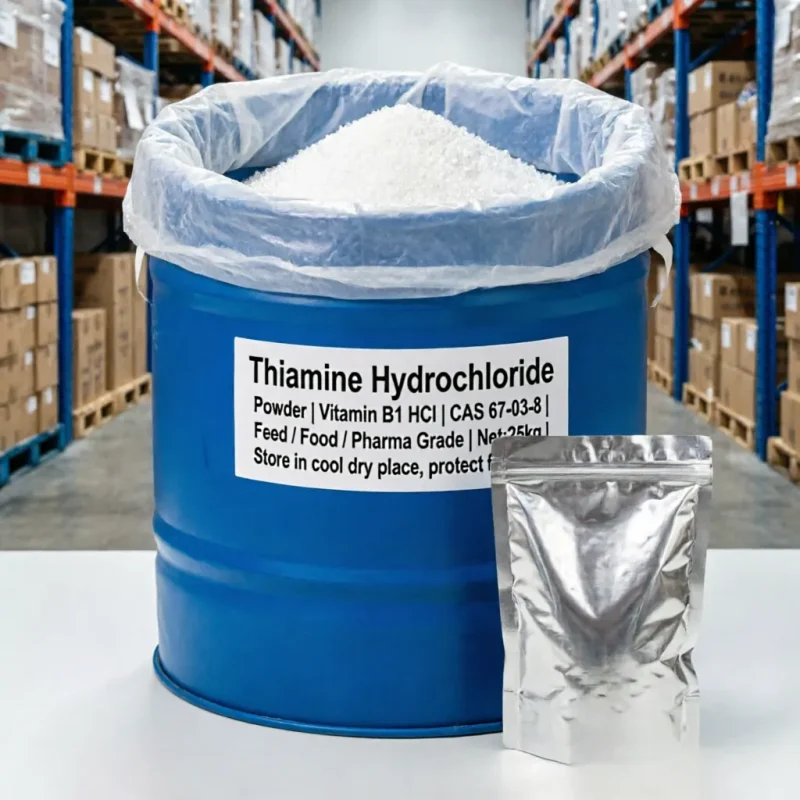
Thiamine Hydrochloride is a white crystalline powder of Vitamin B1 supplied for food fortification, pharmaceutical formulation, and animal feed supplementation. The hydrochloride salt form ensures excellent water solubility and acidic-pH stability, serving as the coenzyme precursor (TPP) in carbohydrate metabolism. Core uses include cereal and dairy fortification, injectable and oral pharma dosage forms, and premix feed additives. Each shipment includes COA, TDS, and SDS.
- CAS No: 67-03-8
- Synonyms: Vitamin B1 hydrochloride, Thiamin HCl, Aneurine hydrochloride, Thiamine chloride hydrochloride
- EC Number: 200-641-8
- Molecular Formula: C₁₂H₁₇ClN₄OS·HCl
- Molecular Weight: 337.27 g/mol
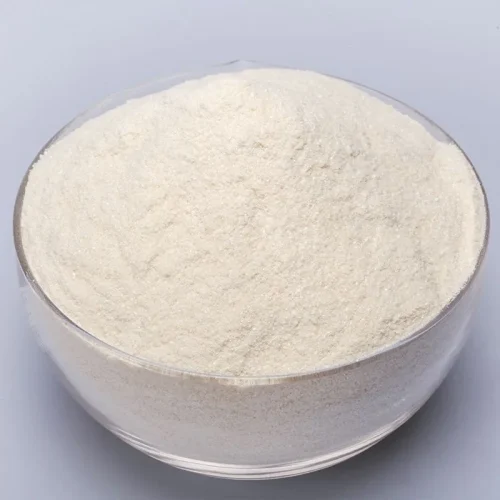
- Appearance: White to slightly off-white crystalline powder
- Purity (titration): ≥ 98.0%
- Packaging: 1 kg (2.2 lb) aluminum foil bag; 5 kg (11 lb) aluminum foil bag; 25 kg (55 lb) fiber drum with PE liner. Custom packaging available upon request.
- Main Applications: Food and beverage fortification, pharmaceutical API and injection, animal feed premix, dietary supplement manufacturing
Introduction to Thiamine Hydrochloride
Thiamine Hydrochloride is the hydrochloride salt of thiamine (Vitamin B1), presenting as a white crystalline powder with a faint characteristic odor. In biological systems, it is phosphorylated to thiamine pyrophosphate (TPP), the essential coenzyme for pyruvate dehydrogenase, α-ketoglutarate dehydrogenase, and transketolase in carbohydrate metabolism. Food manufacturers, pharmaceutical formulators, and feed premixers use it as the primary bioavailable source of Vitamin B1 in fortified products and therapeutic preparations.
The hydrochloride salt form provides superior aqueous solubility compared to the free base, dissolving readily at concentrations above 100 g/L at 20 °C (68 °F). Stability is pH-dependent: the compound remains intact below pH 5 but undergoes thiazolium ring opening above pH 7, especially under heat. Store in sealed, light-protected containers below 25 °C (77 °F). Discoloration from white to yellow-brown indicates oxidative degradation and loss of potency.
Key Features of Thiamine Hydrochloride
- High aqueous solubility without co-solvent. Dissolves freely in water at ≥ 100 g/L at 20 °C (68 °F), enabling direct incorporation into aqueous formulations, liquid feeds, and injectable solutions without organic carriers.
- Acidic-pH stability for processing. Retains full potency in formulations at pH 2–5, tolerating pasteurization (72 °C / 162 °F, 15 s) and spray-drying inlet temperatures up to 180 °C (356 °F) in dry-powder blends.
- Pharmacopoeia-compliant purity. Meets USP, EP, and Chinese Pharmacopoeia (ChP) monograph specifications; assay ≥ 98.0% by non-aqueous titration; heavy metals ≤ 10 ppm.
- Feed-grade and food-grade versatility. Suitable for both human nutrition (GRAS, FCC) and animal feed (FAMI-QS compliant) with a single raw material stream, simplifying procurement for multi-product manufacturers.
- Low hygroscopicity in sealed packaging. Moisture uptake remains below 1% at 60% RH when stored in sealed foil bags, preventing caking in automated dosing and blending lines.
Thiamine Hydrochloride Chemical & Physical Properties
| Property | Value |
|---|---|
| Molecular Formula | C₁₂H₁₇ClN₄OS·HCl |
| Molecular Weight | 337.27 g/mol |
| Melting Point | 248–250 °C (478–482 °F) with decomposition |
| Density | Approx. 1.40 g/cm³ (87.4 lb/ft³) crystal density; bulk powder density 0.45–0.60 g/cm³ (28.1–37.5 lb/ft³) |
| Solubility in Water | Freely soluble, ≥ 100 g/L at 20 °C (68 °F); slightly soluble in ethanol; practically insoluble in ether and chloroform |
| pH (5% aqueous solution) | 2.7 – 3.3 |
| Specific Optical Rotation | [α]²⁰/D = −17.5° to −18.5° (c = 10, H₂O) |
| Absorption Maximum | 246 nm (pH 2); 235 nm and 267 nm (pH 7) |
| Loss on Drying | ≤ 5.0% (USP <731>) |
| Sulfated Ash | ≤ 0.1% (USP <281>) |
Applications of Thiamine Hydrochloride
Food and beverage fortification: Add at 2–10 mg/kg to wheat flour, rice, breakfast cereals, and UHT milk per Codex Alimentarius and national fortification regulations. Dissolve directly into aqueous premix at pH ≤ 5 before blending into dry matrices. Stability loss in baked goods is typically 15–30% after baking at 180 °C (356 °F) for 20 min; overage accordingly.
Pharmaceutical API and injectable formulations: Used as the active ingredient in oral tablets (10–100 mg) and parenteral solutions (25–100 mg/mL) for beriberi treatment and Wernicke’s encephalopathy prophylaxis. Formulate at pH 2.5–4.0 with nitrogen headspace to prevent oxidation. Meets USP/EP/ChP monograph; endotoxin-free grades available for parenteral use.
Animal feed premix: Supplement poultry and swine diets at 1–3 mg/kg complete feed (equivalent to 100–300 g per tonne of premix). Blend into vitamin-mineral premix in sealed mixer; avoid simultaneous addition of alkaline minerals (CaCO₃) in the same micro-ingredient batch to prevent pH-driven degradation.
Dietary supplement and nutraceutical manufacturing: Incorporate into multivitamin tablets, capsules, and effervescent formulations. Typical dosage 1.1–1.4 mg per serving (adult RDA). Compatible with ascorbic acid, riboflavin, and pyridoxine in dry blends; isolate from copper and iron salts to minimize catalytic oxidation.
Storage & Safety Precautions for Thiamine Hydrochloride
- Storage: Keep sealed in original aluminum foil bags or fiber drums at 2–25 °C (36–77 °F), away from direct sunlight and alkaline substances. The thiazolium ring is susceptible to oxidative ring-opening above pH 7 and under prolonged UV exposure. Shelf life is 36 months unopened; once opened, use within 12 months and reseal tightly after each withdrawal.
- Safety: Not classified as hazardous under GHS. Mild irritation possible with prolonged skin contact; wear nitrile gloves and dust mask during bulk weighing. In case of eye contact, flush with water for 15 min. No specific antidote required; the compound is a water-soluble vitamin with wide safety margin.
- Transport: Thiamine Hydrochloride is Non-DG under IATA/IMDG/ADR. No UN number, no packing group. Ship in standard dry-goods containers; avoid co-loading with strong oxidizers or alkaline chemicals. Ambient temperature transport acceptable; avoid container temperatures exceeding 50 °C (122 °F) for prolonged periods.
- QC note: Verify identity and assay on receipt. Confirm UV absorption maximum at 246 nm (pH 2) matches reference standard; assay by non-aqueous titration (0.1 mol/L perchloric acid in glacial acetic acid) must fall within 98.0–102.0%. A yellow or brown tint in the powder indicates oxidation—reject the lot. Retain sealed samples for 24-month audit traceability.
Thiamine Hydrochloride FAQ
Q: How does Thiamine Hydrochloride (CAS 67-03-8) differ from Thiamine Mononitrate in food fortification?
A: The hydrochloride form is more water-soluble (≥ 100 g/L vs ~27 g/L for mononitrate) and preferred for liquid and injectable applications. Mononitrate is less hygroscopic and favored in dry-blend cereal fortification. Both deliver identical thiamine bioavailability after oral ingestion. Choose HCl for aqueous systems; mononitrate for low-moisture dry mixes.
Q: My Thiamine HCl powder has turned slightly yellow. Is it still usable?
A: A faint yellow tint indicates early-stage oxidation of the thiazolium ring. Run a UV assay at 246 nm (pH 2); if absorbance-based assay drops below 96.0%, reject the material. Prevent recurrence by storing below 25 °C (77 °F), sealed, away from fluorescent light and alkaline contamination.
Q: Can Thiamine Hydrochloride be autoclaved for sterile injectable preparation?
A: Autoclaving at 121 °C (250 °F) for 15 min causes 10–20% degradation in neutral or alkaline solution. For parenteral formulations, sterilize by 0.22 µm membrane filtration at pH 2.5–4.0. If terminal sterilization is mandatory, validate overage and confirm assay remains ≥ 90% post-autoclave.
Related products
Manufacturer & Exporter Since 2006
Get Tailored Chemical Raw Material Solutions — Reply Within 1 Hour
Factory-direct pricing, stable high-purity supply and complete compliance documentation for your industrial formulations.
- 1000+Products
- 200+QC Protocols
- 7–15Days Delivery
- Factory-Direct Pricing
- COA / TDS / SDS Included
- Free Samples for Testing
- 40+ Export Countries
Request a Free Quote
Our engineers reply within 1 hour during GMT+8 business hours.
Please include in your inquiry:
- Product name or CAS number
- Required quantity
- Destination country or port
- Preferred packaging