
Sodium Carboxymethyl Cellulose (CMC) CAS 9004-32-4
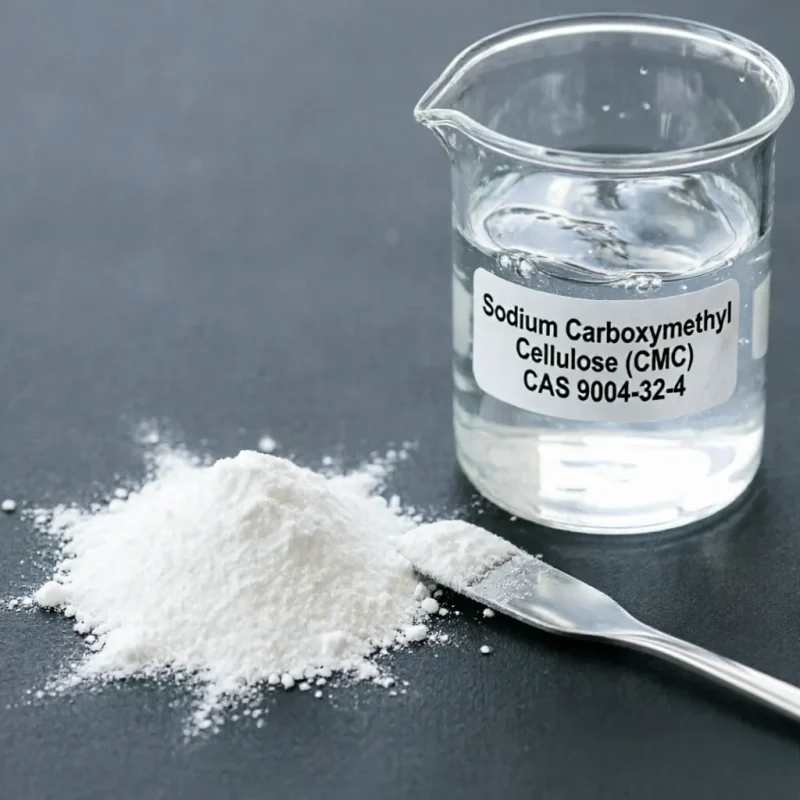
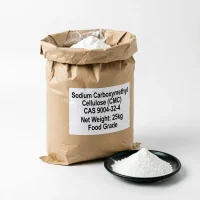
Sodium Carboxymethyl Cellulose (CMC) is an anionic, water-soluble cellulose ether supplied as white to off-white free-flowing powder. Its high Degree of Substitution (D.S.) and long polymer chains deliver exceptional thickening, water retention, and protective colloid properties. Core uses include detergents, construction chemicals, oil drilling fluids, and ceramic binders. Each shipment includes COA, TDS, and SDS.
- CAS No: 9004-32-4
- Synonyms: Cellulose gum, Carboxymethylcellulose sodium, Tylose, CMC Na
- EC Number: 232-734-4
- Molecular Formula: [C6H7O2(OH)2CH2COONa]n (Polymer)
- Molecular Weight: Varies by viscosity grade (Polymeric)
- Appearance: White to off-white, odorless powder or granules
- Degree of Substitution (D.S.): 0.60 – 0.95
- Viscosity (2% aq. sol., 25°C): 5 – 10,000 mPa·s (Brookfield, customizable)
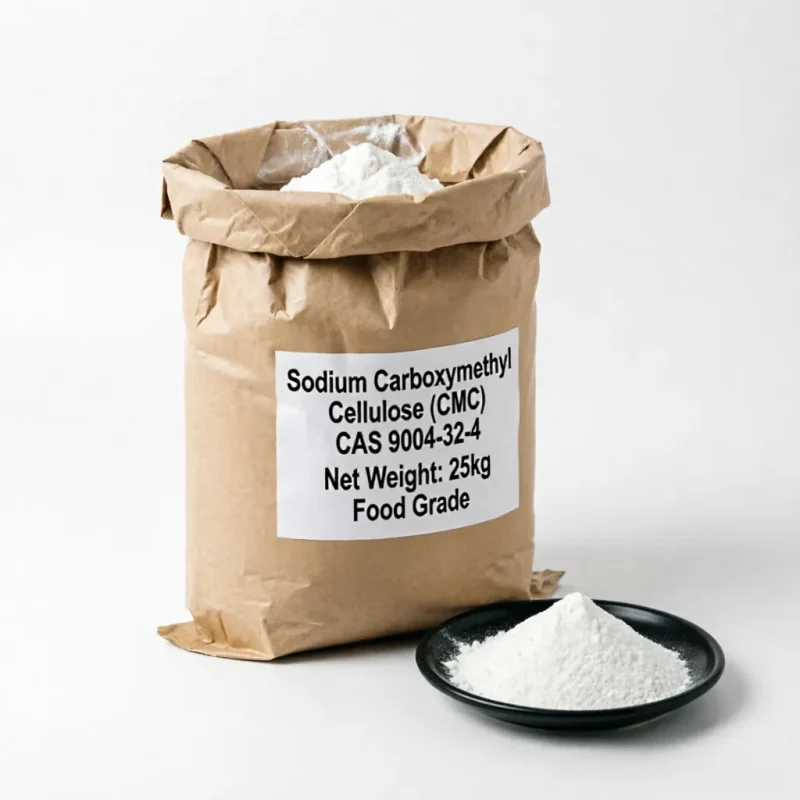
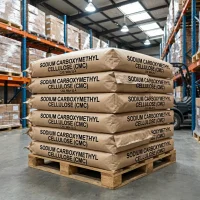
- Packaging: 25 kg (55 lb) multi-wall paper bag with PE liner; 1000 kg (2200 lb) FIBC jumbo bag. Custom packaging available upon request.
- Main Applications: Detergents, tile adhesives, oil drilling muds, paper coating, ceramic binders
Introduction to Sodium Carboxymethyl Cellulose (CMC)
Sodium Carboxymethyl Cellulose is an anionic, water-soluble polymer derived from the etherification of natural cellulose (wood pulp or cotton linters) with chloroacetic acid. The substitution of hydroxyl groups with carboxymethyl groups disrupts the rigid hydrogen bonding of native cellulose, rendering it highly soluble in water. Formulators across the construction, cleaning, and petroleum industries consume the bulk of global output, utilizing it to control rheology, retain water, and stabilize emulsions.
The primary processing advantage is its pseudo-plastic (shear-thinning) behavior, which provides high viscosity at rest for suspension and low viscosity under shear for easy pumping and spreading. The critical storage risk is moisture absorption. CMC is highly hygroscopic; exposure to humid air causes severe lumping (“fish-eyes”) upon dissolution and promotes microbial degradation in prepared aqueous solutions. Store bags in a dry, climate-controlled warehouse below 25 °C (77 °F) and reseal the PE liner immediately after use.
Key Features of CMC
- Superior water retention. Forms a robust hydration shell around polymer chains, preventing rapid moisture loss into porous substrates like concrete and gypsum, which is critical for cement hydration and open-time extension.
- Pseudo-plastic thickening. Exhibits shear-thinning behavior, allowing formulations (like paints and drilling muds) to flow easily under mechanical stress but gel instantly when at rest to prevent sagging or particle settling.
- Protective colloid and anti-redeposition. Adsorbs onto dirt particles and fabric surfaces in laundry detergents, providing an electrostatic repulsive barrier that prevents soil from redepositing onto washed textiles.
- Excellent film-forming and binding. Creates strong, flexible organic films upon drying, making it an indispensable binder for ceramic glazes, welding electrodes, and battery anode slurries.
CMC Chemical & Physical Properties
| Property | Value |
|---|---|
| Chemical Family | Anionic cellulose ether |
| Thermal Behaviour | Decomposes above 270 °C (518 °F); no true melting point. Charring occurs above 300 °C (572 °F). |
| Bulk Density | 0.40 – 0.80 g/cm³ (25 – 50 lb/ft³), depending on granulation and powder fineness. |
| Solubility | Readily soluble in cold and hot water; insoluble in ethanol, acetone, and hydrocarbons. |
| pH (1% aqueous solution) | 6.5 – 8.5 |
| Degree of Substitution (D.S.) | 0.60 – 0.95 (Determines solubility and salt tolerance) |
| Loss on Drying | ≤ 10.0% |
| Chloride (as NaCl) | ≤ 1.2% (Industrial Grade); ≤ 0.5% (PAC Grade) |
Applications of CMC
Construction Chemicals (Tile Adhesives & EIFS): Dosed at 0.2–0.5% by weight in dry-mix mortars. It drastically improves water retention, preventing the substrate from sucking water out of the adhesive too quickly, and provides essential anti-slip properties for heavy tiles.
Oil & Gas Drilling Fluids: Used as a viscosifier and fluid loss control agent in water-based drilling muds. It forms a low-permeability filter cake on the wellbore wall, preventing drilling fluid from invading the formation and stabilizing the well.
Laundry Detergents: Added at 1–2% in liquid and powder detergents. It acts as a primary anti-redeposition agent, keeping suspended dirt particles from settling back onto clothes during the wash cycle.
Ceramics and Paper Coating: Serves as a green-strength binder in ceramic tile bodies and glazes, improving slurry rheology and preventing cracking during the drying phase before firing.
Storage & Safety Precautions for CMC
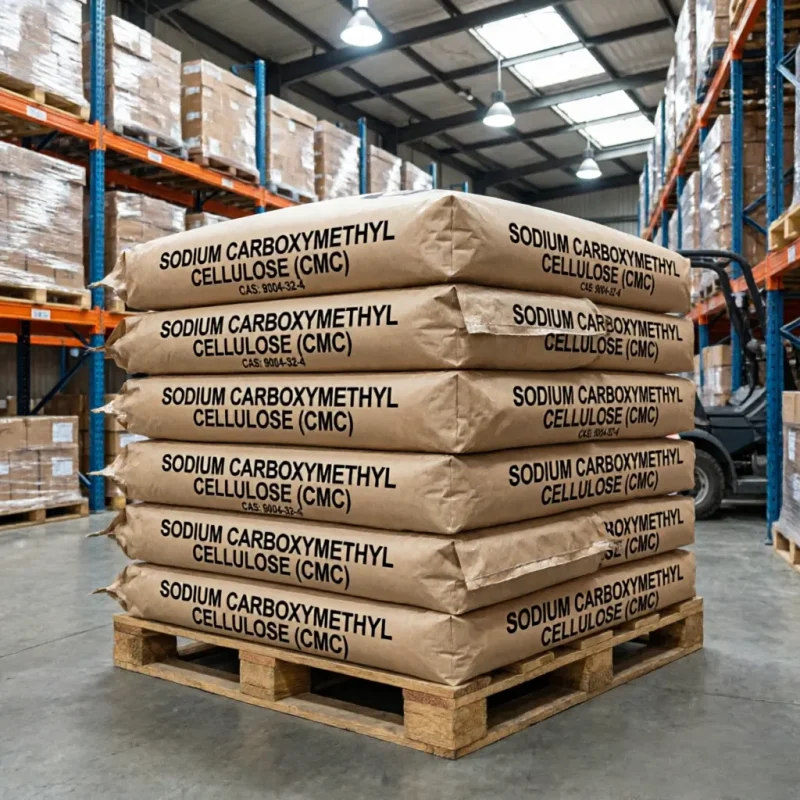
- Storage: Keep tightly sealed in a cool, dry warehouse below 25 °C (77 °F). CMC is highly hygroscopic; an opened bag left in humid conditions will absorb moisture, leading to irreversible clumping and bacterial rot in subsequent aqueous solutions. Stack pallets away from exterior walls.
- Safety: Classified as non-hazardous. However, as a fine organic powder, it poses a standard dust explosion risk. Ensure silos and mixing areas are properly grounded and ventilated. Wear dust masks and safety goggles during manual bag emptying.
- Transport: CMC is Non-DG under IATA/IMDG/ADR. Not a marine pollutant. Standard 25 kg bags or 1000 kg jumbo bags ship in standard dry containers. Ensure container doors are sealed to prevent ocean moisture ingress during transit.
- QC note: Upon receipt, verify the 2% aqueous solution viscosity (Brookfield) and D.S. via acid-base titration. If the powder exhibits hard lumps or fails to dissolve cleanly within 45 minutes of stirring, it has suffered moisture ingress—reject the lot.
CMC FAQ
Q: How do I prevent “fish-eyes” (lumps) when dissolving CMC in water?
A: CMC hydrates rapidly on the outside, forming a gel barrier that traps dry powder inside. To prevent this, disperse the CMC powder into hot water (above 80 °C / 176 °F) under high shear mixing, or pre-mix it with other dry ingredients (like sand or cement) before adding water. Alternatively, use surface-crosslinked “delayed-hydration” grades.
Q: What is the difference between standard CMC and PAC (Polyanionic Cellulose)?
A: PAC is a highly purified, higher-D.S. grade of CMC with very low chloride content. It offers superior salt tolerance and thermal stability, making it mandatory for sensitive oil drilling muds and certain food/pharma applications. Standard technical CMC is used for detergents, ceramics, and basic construction.
Q: Does high salt concentration affect CMC viscosity?
A: Yes. As an anionic polymer, CMC chains are extended by electrostatic repulsion in pure water. Adding multivalent salts (like Ca²⁺ or Al³⁺) compresses the electrical double layer, causing the polymer chains to coil and drastically drop the viscosity. Use PAC grades or non-ionic cellulose ethers for high-salt environments.
Related products
Manufacturer & Exporter Since 2006
Get Tailored Chemical Raw Material Solutions — Reply Within 1 Hour
Factory-direct pricing, stable high-purity supply and complete compliance documentation for your industrial formulations.
- 1000+Products
- 200+QC Protocols
- 7–15Days Delivery
- Factory-Direct Pricing
- COA / TDS / SDS Included
- Free Samples for Testing
- 40+ Export Countries
Request a Free Quote
Our engineers reply within 1 hour during GMT+8 business hours.
Please include in your inquiry:
- Product name or CAS number
- Required quantity
- Destination country or port
- Preferred packaging