
4A Zeolite Powder CAS 69912-79-4
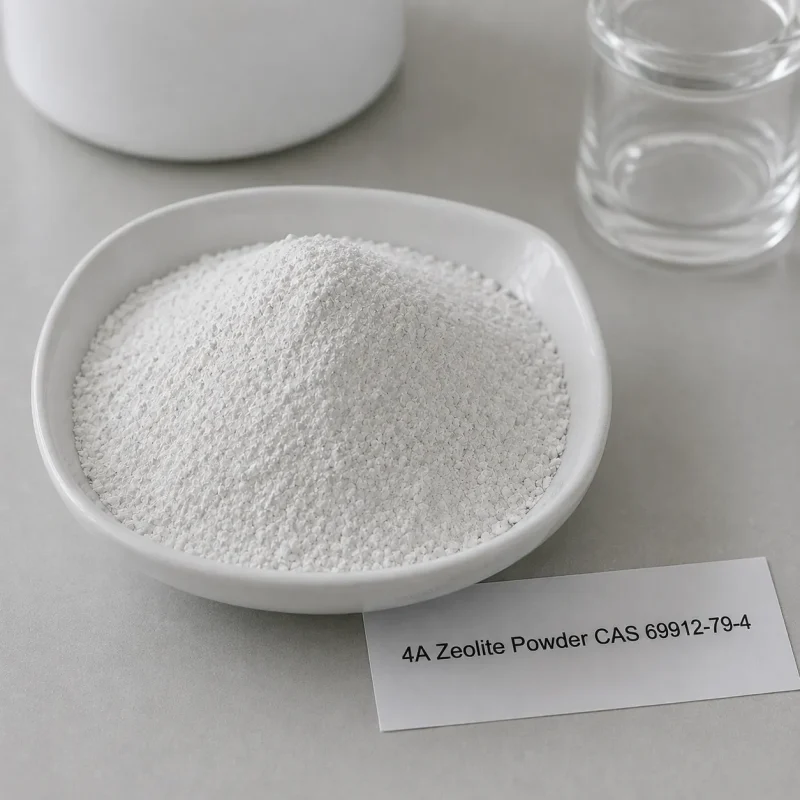
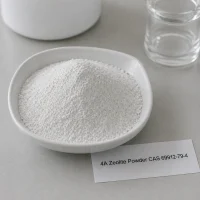
4A Zeolite Powder is a synthetic sodium aluminosilicate with an LTA framework and uniform 4 Å pore openings. Supplied as a white fine powder, it acts as a phosphate-free builder in detergent formulations, a water softener, and a heavy-metal scavenger in wastewater treatment. Na⁺ cations exchange rapidly with Ca²⁺ and Mg²⁺, delivering a calcium exchange capacity of ≥280 mg CaCO₃/g. Each shipment includes COA, TDS, and SDS.
- CAS No.: 69912-79-4
- Synonyms: Zeolite 4A; Sodium aluminosilicate; LTA zeolite; 4A molecular sieve powder
- EINECS: 215-684-8
- Molecular Formula: Na₂O·Al₂O₃·2SiO₂·4.5H₂O
- Molecular Weight: ~365 g/mol (oxide formula basis)
- Appearance: White fine powder
- Calcium Exchange Capacity: ≥280 mg CaCO₃/g (dry basis)
- Whiteness: ≥94%
- Particle Size (D50): 3–5 µm
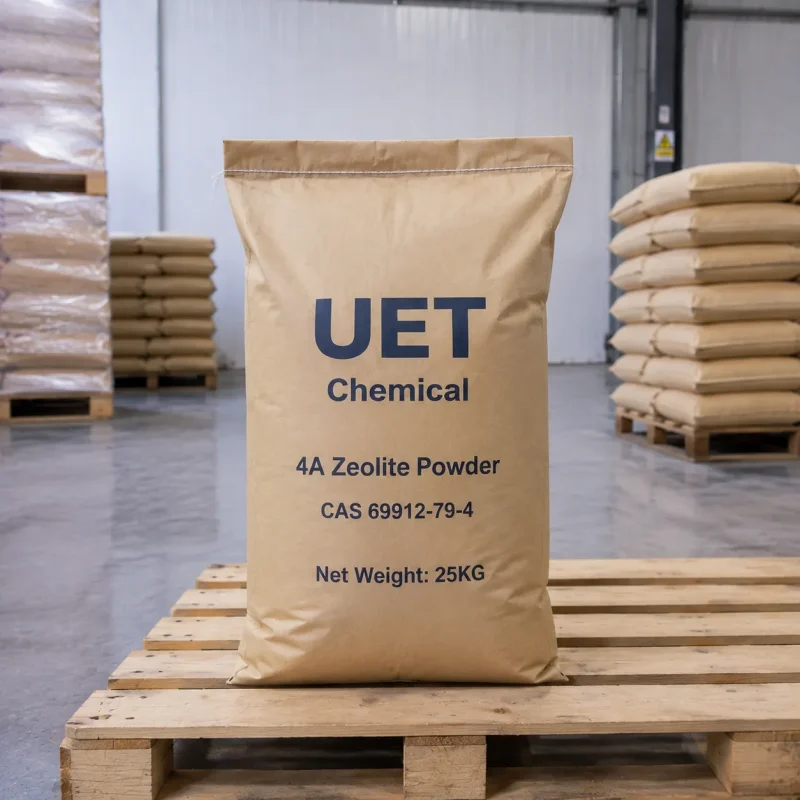
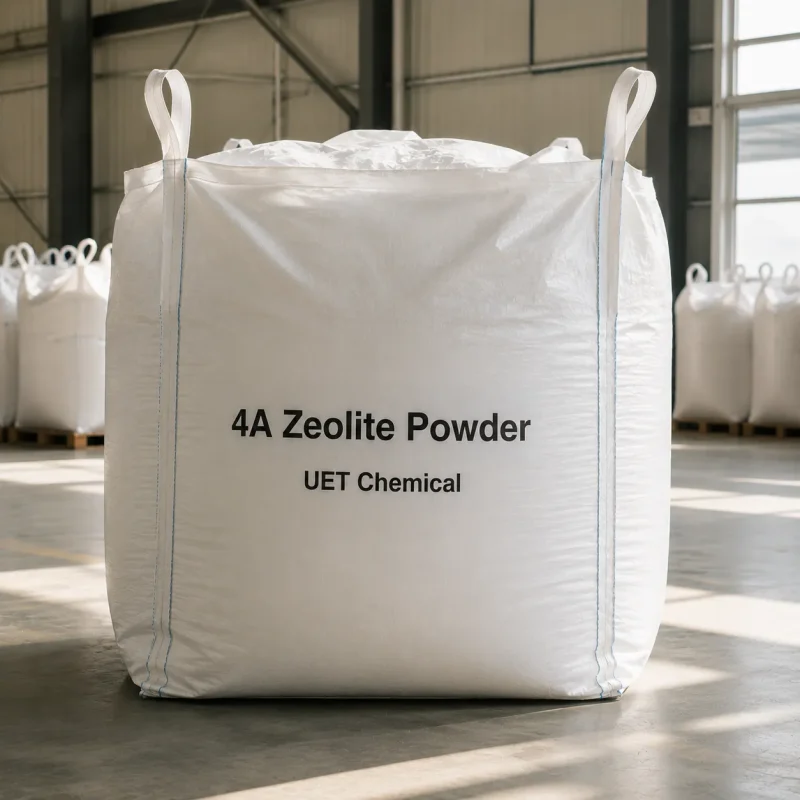
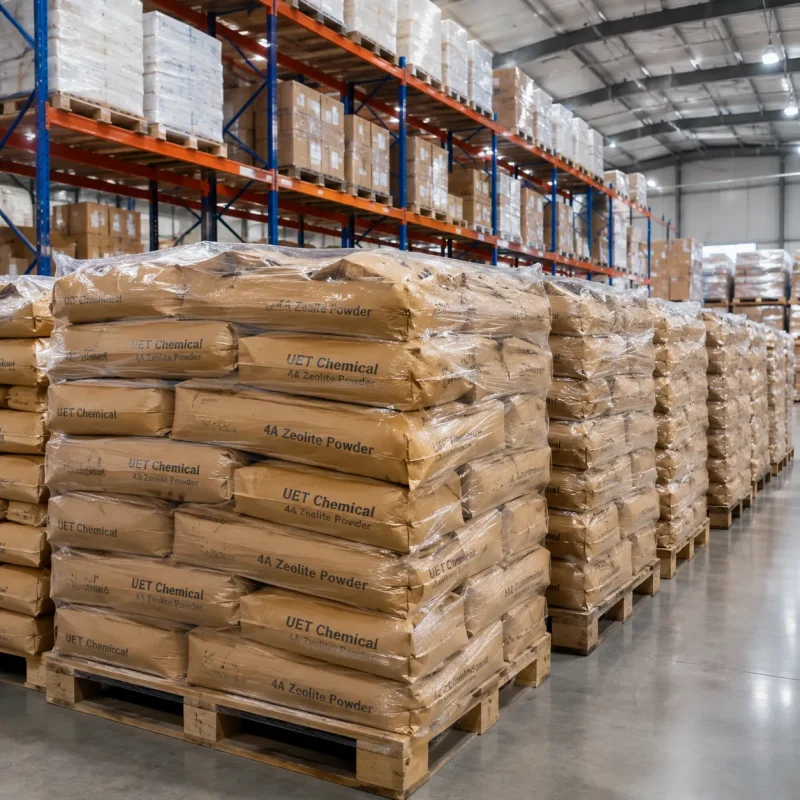
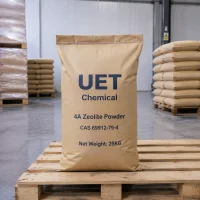
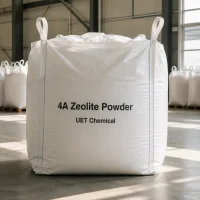
- Packaging: 25 kg kraft bag with PE liner / 1000 kg FIBC bulk bag. Custom packaging available upon request.
- Main Applications: Phosphate-free detergent builders; wastewater treatment; gas & solvent drying; soil amendment
Introduction to 4A Zeolite Powder
4A Zeolite Powder is a white fine powder, a synthetic LTA-type sodium aluminosilicate with a SiO₂:Al₂O₃ molar ratio of 2 and uniform 4 Å pore openings. The Na⁺ cations housed in the cages exchange stoichiometrically with Ca²⁺ and Mg²⁺, making this powder the core phosphate-free builder in powder detergents and a water-softening and heavy-metal scavenging agent in industrial wastewater treatment.
The exchange reaction completes within minutes at 20–60 °C, locking hardness ions permanently into the cage as insoluble exchange products with no re-deposition onto fabrics or equipment. One practical caution: the powder adsorbs atmospheric moisture aggressively. If a bag stays open longer than 48 h in a humid warehouse (>70% RH), pore-water saturation cuts calcium exchange capacity by 5–8%. Reseal immediately after sampling.
Key Features of 4A Zeolite Powder
- Uniform 4 Å molecular gate. The 0.4 nm aperture admits water (2.6 Å), CO₂ (3.3 Å), and methanol (3.6 Å) while excluding larger hydrocarbons, giving true size-selective adsorption.
- High, fast calcium exchange. ≥280 mg CaCO₃/g on a dry basis, with most capacity delivered in the first minutes of the wash cycle, matching short modern wash programs.
- Phosphate-free and eutrophication-inert. The water-insoluble aluminosilicate feeds no algae growth, supporting phosphate-ban-compliant detergent formulas without losing cleaning power in hard water.
- Alkaline framework stability. The LTA lattice stays intact in detergent slurries and bleach-containing systems at pH 9–12; only strong acids below pH 5 dissolve the framework.
- Fine, narrow particle distribution. D50 at 3–5 µm (laser diffraction, ISO 13320) keeps the powder suspended in spray-dry slurries and prevents grit and settling in liquid blends.
4A Zeolite Powder Chemical & Physical Properties
| Property | Value |
|---|---|
| Molecular Formula | Na₂O·Al₂O₃·2SiO₂·4.5H₂O |
| Molecular Weight | ~365 g/mol (oxide formula basis) |
| Framework SiO₂:Al₂O₃ | 2:1 |
| Pore Aperture | 4 Å (0.4 nm) |
| Bulk Density | 0.40–0.50 g/cm³ |
| Whiteness | ≥94% |
| Calcium Exchange Capacity | ≥280 mg CaCO₃/g (dry basis) |
| pH (5% slurry) | 9.5–11.0 |
| Sieve Residue (45 µm) | ≤0.5% |
| Moisture (as packed) | ≤22.0% (hydrated form); activated ≤2.0% on request |
| Thermal Stability | Framework intact to ~700 °C; collapses to amorphous above 800 °C |
Applications of 4A Zeolite Powder
Phosphate-free powder detergents and dishwash powders: Dosed at 10–35% of the formulation. Exchanges Ca²⁺ and Mg²⁺ to soften wash water, and pairs with 2–5% polycarboxylate co-builder to keep the insoluble exchange product dispersed so it rinses away instead of depositing on fabric. Fully stable in spray-dry tower conditions at pH 9–12.
Industrial and municipal wastewater treatment: Dosed at 0.5–2.0 g/L. The cage cations exchange with heavy metals (Pb²⁺, Cd²⁺, Cu²⁺) and NH₄⁺, trapping them in the lattice. A zeolite polishing stage typically cuts ammonia nitrogen by 40–60% after biological treatment.
Drying and purification of gases and liquids: Adsorbs water, H₂S, and CO₂ from natural gas, LPG, and refrigerant streams while excluding hydrocarbons larger than 4 Å. Also serves in static dehydration of closed solvent systems where the powder is filled into cartridges or cavities.
Agricultural soil amendment and slow-release carrier: Applied at 200–500 kg per hectare. The exchange sites hold K⁺ and NH₄⁺ against leaching and release them gradually to roots, raising the cation exchange capacity of sandy soils. The same mechanism makes it a carrier for pesticides and slow-release fertilizers.
Storage & Safety Precautions for 4A Zeolite Powder
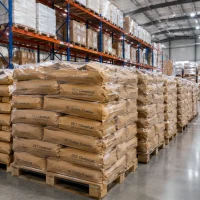
Storage conditions. Store in sealed, PE-lined kraft bags or FIBC on pallets at 5–30 °C, in a dry warehouse. The open cages pull water vapour straight from the air; once the pores saturate, exchange capacity and drying performance drop and do not recover without thermal activation. Keep away from strong acids and liquid water—below pH 5 the framework dissolves. Stack FIBC a maximum of two high to avoid crushing the liner.
Safety and PPE. GHS: Not classified as hazardous. Nuisance dust only. Wear an N95/P2 dust mask and safety glasses during bag emptying to prevent inhalation of fine aluminosilicate dust. Spills are non-toxic; sweep up dry to avoid dusting, then wet-mop the floor.
Transport classification. Non-DG. Not regulated under IMDG, IATA, or ADR. Ship as standard general cargo. Ensure container liners are intact to prevent ocean moisture ingress.
Practitioner note: When verifying incoming QC, activate the sample at 250–300 °C for 2 h before running the calcium exchange capacity titration. An unactivated sample that has sat in a humid warehouse reads 5–8% low because pore water blocks the exchange sites. Whiteness may drift ±1% between lots due to natural raw-material variation; this does not affect exchange capacity.
4A Zeolite Powder FAQ
Q: How do I check whether stored 4A Zeolite Powder (CAS 69912-79-4) has lost exchange capacity?
A: Check moisture first. Above 3%, the pores are pre-saturated with atmospheric water. Activate a 2 g sample at 250–300 °C for 2 h, cool in a desiccator, then run the calcium exchange titration. A result ≥280 mg CaCO₃/g passes. Bags left open >48 h in >70% RH warehouses read 5–8% low unactivated—always activate before judging a lot.
Q: Why does 4A Zeolite Powder fail in acidic wastewater?
A: The LTA framework dissolves below pH 5, releasing Al³⁺ and destroying exchange capacity permanently. 4A works only in neutral-to-alkaline systems (pH 7–12), which is why it suits detergent slurries and alkaline effluents. For acidic streams, neutralise above pH 7 before the zeolite stage or choose an acid-resistant adsorbent instead.
Q: How does 4A differ from 3A and 13X zeolites?
A: The numbers are pore apertures: 3A = 3 Å (potassium form), 4A = 4 Å (sodium form), 13X = 10 Å. 4A admits water, CO₂, H₂S, and methanol while excluding larger hydrocarbons; 3A excludes CO₂ and serves ethanol drying; 13X takes bigger molecules for general drying. For ion-exchange water softening and detergent building, only the sodium LTA form (4A) supplies the required Ca²⁺/Mg²⁺ capacity.
Related products
Manufacturer & Exporter Since 2006
Get Tailored Chemical Raw Material Solutions — Reply Within 1 Hour
Factory-direct pricing, stable high-purity supply and complete compliance documentation for your industrial formulations.
- 1000+Products
- 200+QC Protocols
- 7–15Days Delivery
- Factory-Direct Pricing
- COA / TDS / SDS Included
- Free Samples for Testing
- 40+ Export Countries
Request a Free Quote
Our engineers reply within 1 hour during GMT+8 business hours.
Please include in your inquiry:
- Product name or CAS number
- Required quantity
- Destination country or port
- Preferred packaging