
Hydrogen Peroxide CAS 7722-84-1
Hydrogen Peroxide is a clear, colorless aqueous oxidizer with a reactive peroxide bond that releases active oxygen and decomposes cleanly to water and oxygen. It serves as a core bleaching and oxidation agent for textile processing, pulp production, wastewater treatment and chemical manufacturing. UETChem supplies acid-stabilized grades with consistent assay to deliver predictable process results. Each shipment includes COA, TDS, SDS.
- CAS No: 7722-84-1
- Synonyms: Hydrogen dioxide; Peroxide; Dihydrogen dioxide
- EINECS: 231-765-0
- Molecular Formula: H₂O₂
- Molecular Weight: 34.01 g/mol
- Appearance: Colorless transparent liquid
- Available Concentrations: 27.5%, 35%, 50% w/w
- pH: 3.5 – 5.5 (acid-stabilized)
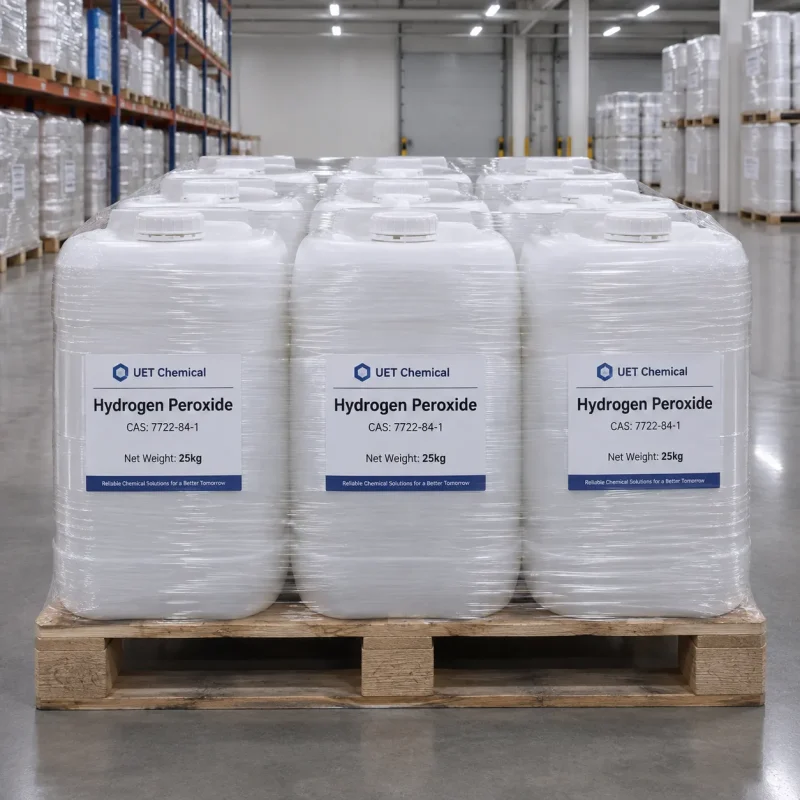
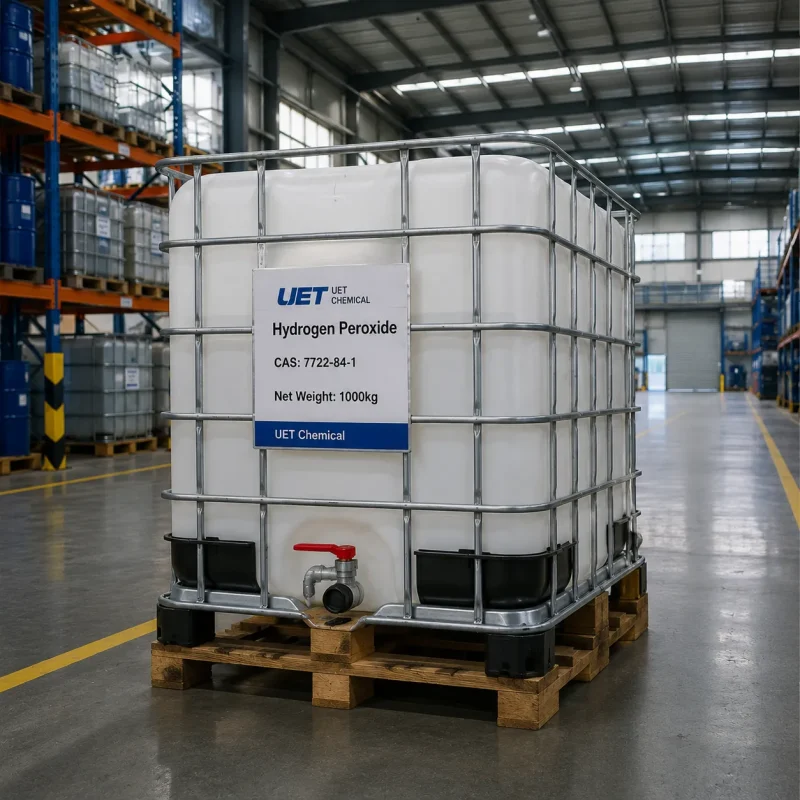
- Packaging: 30 kg / 250 kg HDPE drum; 1100 kg IBC. Custom packaging available.
- Main Applications: Textile/pulp bleaching, wastewater oxidation, chemical synthesis, electronics cleaning
Introduction to Hydrogen Peroxide
Hydrogen Peroxide is a versatile industrial oxidizer built around a weak O–O peroxide bond. It breaks down colored chromophores in fibers and pulp, oxidizes organic contaminants in wastewater, and acts as an oxygen transfer agent in fine chemical synthesis. Acid stabilizers hold pH between 3.5 and 5.5 during storage and transport to slow premature decomposition.
Unlike hypochlorite bleaching agents, it leaves no chlorinated organic byproducts, decomposing only into water and oxygen. Contact with transition metals, dust, alkali or heat triggers catalytic decomposition, releasing oxygen and building internal pressure. Store in cool, ventilated conditions and avoid contact with incompatible materials.
Hydrogen Peroxide Chemical & Physical Properties
| Property | Value |
|---|---|
| Molecular Formula | H₂O₂ |
| Molecular Weight | 34.01 g/mol |
| Boiling Point | ~150 °C (pure); aqueous solutions boil near water temperature |
| Density (20 °C) | 1.10 g/cm³ (27.5%); 1.13 g/cm³ (35%); 1.19 g/cm³ (50%) |
| Appearance | Colorless transparent liquid |
| pH | 3.5 – 5.5 (acid-stabilized) |
| Solubility | Miscible with water |
| Flash Point | Not applicable; non-flammable strong oxidizer |
Applications of Hydrogen Peroxide
Textile bleaching
Oxidizes natural pigments and sizing residues in cotton and blended fabrics. It delivers bright, even whiteness without residual chlorinated byproducts on finished goods.
Pulp bleaching
Targets lignin chromophores to boost pulp brightness. It preserves cellulose strength and avoids the chlorinated waste streams associated with traditional bleaching methods.
Wastewater treatment
Powers Fenton oxidation systems to degrade organic contaminants, phenols and sulfides. It reduces chemical oxygen demand and eliminates odor-causing compounds from industrial effluent.
Electronics & chemical synthesis
Removes organic residues from silicon wafers in semiconductor cleaning processes. It also serves as a selective oxygen donor for epoxidation, sulfoxide and peracid production reactions.
Storage & Safety Precautions for Hydrogen Peroxide
- Store below 30 °C in ventilated, shaded areas away from sunlight, heat and combustible materials. Keep drums fitted with pressure-relief caps; never seal tightly. Avoid contact with iron, copper, brass, alkalis and reducing agents.
- Classified as an oxidizing liquid that can cause skin and eye damage. Wear chemical goggles, face shield, acid-resistant gloves and protective apron during handling. Dilute spills with large volumes of water.
- Classified as UN 2014, Class 5.1 for transport. Do not ship with flammables, reducing agents or metal powders. Use HDPE or passivated stainless steel equipment for transfer.
- Retest assay after prolonged hot storage, as concentration decreases with gradual decomposition. Check drum pressure before opening, especially after warm transit periods.
Hydrogen Peroxide FAQ
Q: Why does hydrogen peroxide lose strength during storage?
A: Heat, metal contaminants, dust or alkali catalyze peroxide bond breakdown into water and oxygen. Store cool, keep vents open and retest assay after hot transit.
Q: Why do higher concentration drums swell more often?
A: Higher concentrations release more oxygen when contaminated. Rust, dust or pH rise accelerate pressure buildup. Use vented HDPE drums and inspect before handling.
Q: What QC checks matter before bleaching use?
A: Verify assay, pH range, stabilizer type and metal content. Low acidity or high iron speed decomposition and cause foaming. Confirm with titration if visual changes appear.
Related products
Manufacturer & Exporter Since 2006
Get Tailored Chemical Raw Material Solutions — Reply Within 1 Hour
Factory-direct pricing, stable high-purity supply and complete compliance documentation for your industrial formulations.
- 1000+Products
- 200+QC Protocols
- 7–15Days Delivery
- Factory-Direct Pricing
- COA / TDS / SDS Included
- Free Samples for Testing
- 40+ Export Countries
Request a Free Quote
Our engineers reply within 1 hour during GMT+8 business hours.
Please include in your inquiry:
- Product name or CAS number
- Required quantity
- Destination country or port
- Preferred packaging