
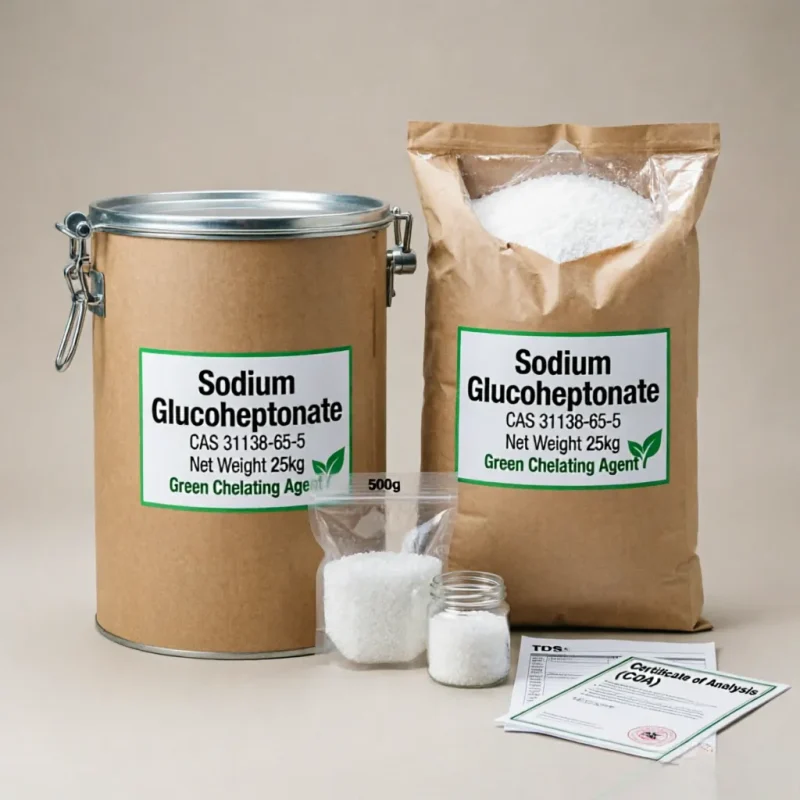
Sodium Glucoheptonate CAS 31138-65-5
Sodium Glucoheptonate is a high-performance chelating agent supplied as a white to off-white crystalline powder. It excels in highly alkaline environments where traditional chelators like EDTA or sodium gluconate lose efficacy or precipitate. Core uses include concrete retardation, alkaline metal cleaning, electroplating baths, and industrial water treatment. Each shipment includes COA, TDS, and SDS.
- CAS No: 31138-65-5
- Synonyms: Glucoheptonate sodium, D-glycero-D-gulo-heptonic acid sodium salt, Sodium α-glucoheptonate
- EC Number: 250-504-1
- Molecular Formula: C7H13NaO8
- Molecular Weight: 250.16 g/mol
- Appearance: White to off-white crystalline powder or granules
- Purity: ≥ 98.0%
- Packaging: 25 kg (55 lb) multi-wall paper bag with PE liner; 1000 kg (2200 lb) jumbo bag (ton bag). Custom packaging available upon request.
- Main Applications: Concrete retarders, alkaline metal cleaners, electroplating additives, water treatment scale inhibitors, cosmetic stabilizers
Introduction to Sodium Glucoheptonate
Sodium Glucoheptonate is the sodium salt of glucoheptonic acid, a seven-carbon sugar acid derivative. Its primary commercial advantage lies in its exceptional stability and metal-sequestering power in high-pH (alkaline) environments. While standard sodium gluconate tends to lose chelating efficiency and precipitate at pH levels above 11, Sodium Glucoheptonate maintains robust performance up to pH 14. This makes it an indispensable, biodegradable alternative to phosphates, NTA, and EDTA in heavy-duty alkaline formulations.
In the construction industry, it acts as a premium retarder for concrete and gypsum, extending working times without compromising final compressive strength. In metal finishing, it prevents the formation of insoluble metal hydroxides in alkaline cleaning baths and electroplating solutions, ensuring uniform surface finishing. The material is highly water-soluble, non-hygroscopic under normal conditions, and exhibits low toxicity, aligning with modern environmental and safety regulations.
Key Features of Sodium Glucoheptonate
- Superior alkaline stability. Retains high chelating values for calcium, magnesium, iron, and copper ions in environments with pH 11–14, outperforming sodium gluconate and citrates.
- Effective concrete retarder. Extends the setting time and workability of concrete and cement slurries at low dosage rates (0.05–0.2% by weight of cement) without reducing long-term structural integrity.
- Biodegradable and eco-friendly. Serves as a sustainable, phosphate-free builder in industrial detergents and water treatment chemicals, complying with stringent environmental discharge regulations.
- Prevents smut and staining in metal cleaning. Keeps dissolved metal ions in solution during alkaline derusting and degreasing processes, preventing redeposition on the metal surface.
- High solubility and flowability. Dissolves rapidly in water to form clear solutions and maintains excellent powder flowability, facilitating automated dosing in continuous manufacturing lines.
Sodium Glucoheptonate Chemical & Physical Properties
| Property | Value |
|---|---|
| Molecular Formula | C7H13NaO8 |
| Molecular Weight | 250.16 g/mol |
| Thermal Behaviour | Decomposes above 200 °C (392 °F); no sharp melting point. |
| Bulk Density | 0.70 – 0.90 g/cm³ (43.7 – 56.2 lb/ft³) |
| Solubility in Water | Highly soluble, ≥ 500 g/L at 20 °C (68 °F); practically insoluble in ethanol and organic solvents. |
| pH (10% aqueous solution) | 7.0 – 9.0 |
| Chelating Value | High affinity for Ca²⁺, Mg²⁺, Fe³⁺, Cu²⁺; stable up to pH 14. |
| Loss on Drying | ≤ 2.0% |
| Heavy Metals (as Pb) | ≤ 10 ppm |
Applications of Sodium Glucoheptonate
Construction and Concrete Admixtures: Used as a set retarder in ready-mix concrete, especially in hot weather concreting (ambient temperatures above 30 °C / 86 °F). Dosed at 0.05–0.2% by weight of cementitious material, it delays the initial hydration reaction, extending slump retention and workability by 2–4 hours without bleeding or strength loss.
Alkaline Metal Cleaning and Surface Treatment: Formulated into heavy-duty industrial degreasers, rust removers, and CIP (Clean-In-Place) cleaners. It chelates iron, calcium, and magnesium soils in high-pH environments (pH 12–14), preventing scale buildup and surface smut on aluminum, steel, and brass components.
Electroplating and Metal Finishing: Acts as a complexing agent in alkaline zinc, copper, and cadmium plating baths. It stabilizes the metal ions, ensuring smooth, fine-grained, and uniform electrodeposition while preventing the precipitation of metal hydroxides in the bath.
Water Treatment and Detergent Builders: Utilized as a scale inhibitor in cooling water systems, oilfield water injection, and boiler feed water. In liquid and powder detergents, it replaces phosphates (STPP) and NTA to boost cleaning power by sequestering hard water ions.
Storage & Safety Precautions for Sodium Glucoheptonate
- Storage: Store in original multi-wall paper bags or jumbo bags in a cool, dry, and well-ventilated warehouse below 35 °C (95 °F). Protect from moisture and direct sunlight. Although it has low hygroscopicity, prolonged exposure to high humidity (>80% RH) may cause caking. Reseal opened bags tightly.
- Safety: Not classified as hazardous under GHS. Mildly irritating to eyes and respiratory tract in dust form. Wear standard dust masks (N95), safety goggles, and gloves during bulk handling and bag dumping. In case of eye contact, flush with water for 15 minutes.
- Transport: Sodium Glucoheptonate is Non-DG under IATA/IMDG/ADR. No UN number, no packing group. Standard dry cargo transport is acceptable. Avoid stacking jumbo bags more than two high to prevent compaction and liner rupture.
- QC note: Verify active content and chelating performance on receipt. Test the pH of a 10% aqueous solution (should be 7.0–9.0) and perform a standard calcium carbonate titration to confirm sequestering capacity against your baseline specification before approving the lot for production.
Sodium Glucoheptonate FAQ
Q: What is the main difference between Sodium Glucoheptonate and Sodium Gluconate?
A: Sodium Gluconate is a 6-carbon sugar acid salt, while Sodium Glucoheptonate is a 7-carbon sugar acid salt. The critical difference is alkaline stability: Sodium Gluconate loses chelating efficiency and may precipitate at pH levels above 11, whereas Sodium Glucoheptonate remains highly effective and stable in extreme alkaline conditions up to pH 14.
Q: Can Sodium Glucoheptonate completely replace EDTA in my formulations?
A: Yes, particularly in alkaline formulations (pH > 10). It serves as an excellent, readily biodegradable, and eco-friendly alternative to EDTA and NTA, which face increasing regulatory restrictions in household and industrial cleaning products due to environmental persistence.
Q: Will using it in concrete reduce the final compressive strength?
A: No. When dosed correctly (typically 0.05–0.2%), it acts purely as a retarder to delay the initial set and improve workability. It does not entrain air or interfere with the long-term hydration process, meaning the 7-day and 28-day compressive strengths remain fully intact or even improve due to better initial workability and compaction.
Related products

Manufacturer & Exporter Since 2006
Get Tailored Chemical Raw Material Solutions — Reply Within 1 Hour
Factory-direct pricing, stable high-purity supply and complete compliance documentation for your industrial formulations.
- 1000+Products
- 200+QC Protocols
- 7–15Days Delivery
- Factory-Direct Pricing
- COA / TDS / SDS Included
- Free Samples for Testing
- 40+ Export Countries
Request a Free Quote
Our engineers reply within 1 hour during GMT+8 business hours.
Please include in your inquiry:
- Product name or CAS number
- Required quantity
- Destination country or port
- Preferred packaging