
Aluminium Sulfate (Aluminum Sulfate / Alum) CAS 10043-01-3
Aluminium Sulfate (commonly known as Alum) is a highly effective inorganic coagulant and flocculant supplied as white crystalline granules, powder, or lumps. Its rapid hydrolysis forms dense aluminum hydroxide flocs, making it the industry standard for water treatment, paper sizing, and soil pH adjustment. Each shipment includes COA, TDS, and SDS.
- CAS No: 10043-01-3
- Synonyms: Aluminum sulfate, Alum, Cake alum, Papermaker’s alum, Dialuminum trisulfate
- EC Number: 233-135-0
- Molecular Formula: Al2(SO4)3 (Anhydrous basis) / Al2(SO4)3·nH2O (Hydrated)
- Molecular Weight: 342.15 g/mol (Anhydrous basis)
- Appearance: White crystalline granules, powder, or lumps
- Spec (Al2O3 Content): ≥ 15.8% (Industrial Grade) / ≥ 17.0% (Low Iron Grade)
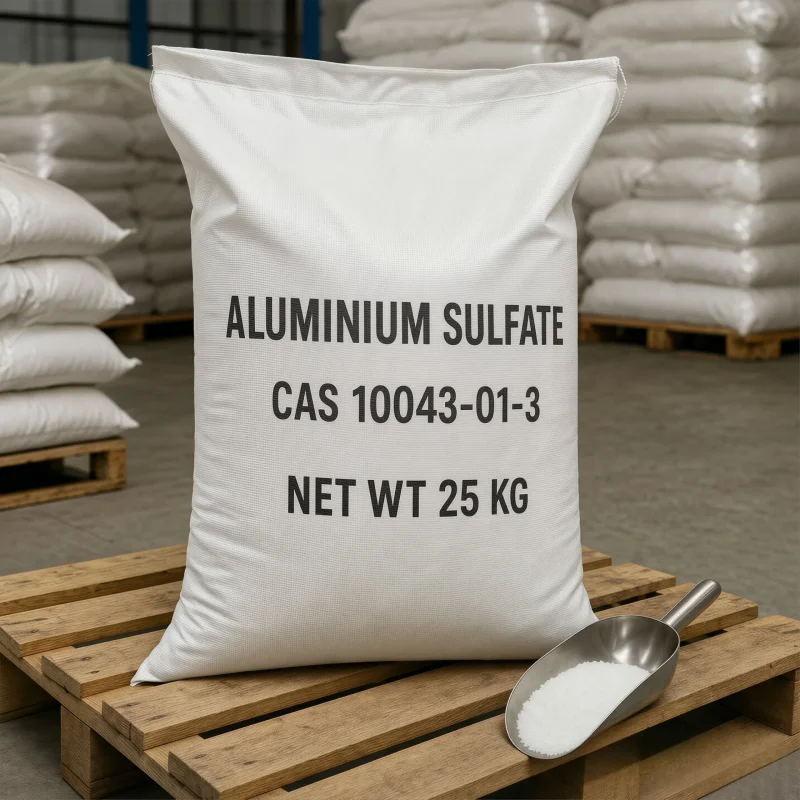
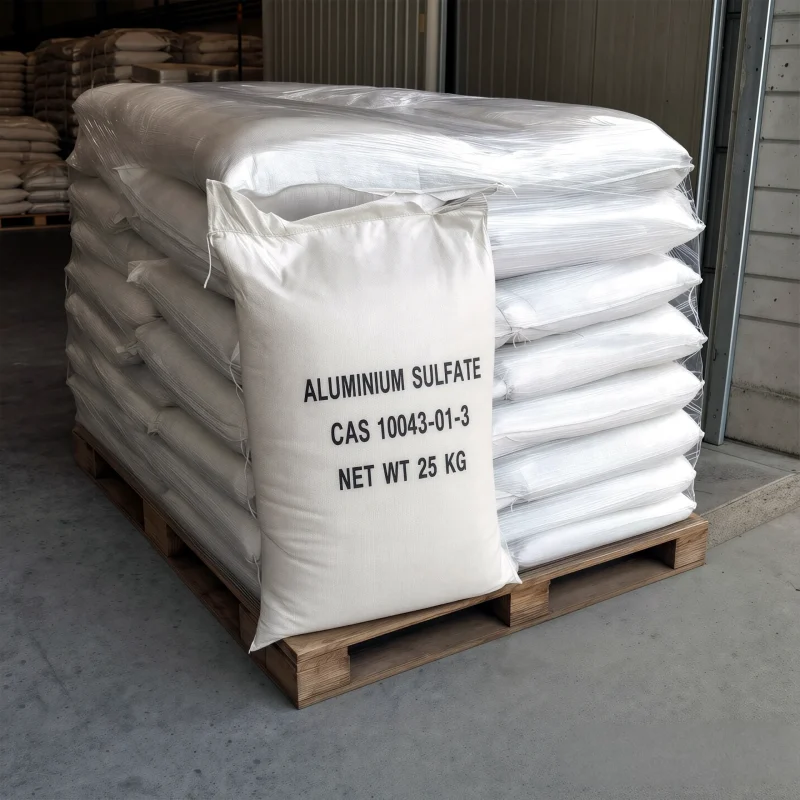
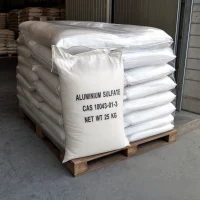
- Packaging: 25 kg (55 lb) woven PP bag with PE liner; 50 kg (110 lb) woven PP bag; 1000 kg (2200 lb) FIBC jumbo bag with PE liner. Custom packaging available upon request.
- Main Applications: Municipal/industrial water treatment, paper sizing precipitant, soil acidifier, textile mordant
Introduction to Aluminium Sulfate
Aluminium Sulfate is a strongly acidic inorganic salt that dissociates in water to release Al³⁺ ions, which subsequently hydrolyze to form positively charged polymeric species and insoluble aluminum hydroxide precipitates. Municipal water plants and paper mills rely on its charge neutralization and sweep flocculation mechanisms to remove suspended solids, colloidal silica, and dissolved organic phosphorus.
The primary processing advantage is its cost-effectiveness and the formation of heavy, fast-settling flocs compared to some organic polymers. The critical handling risk is its severe moisture affinity and corrosive nature in aqueous form. Hydrated granules will absorb atmospheric humidity, dissolve, and re-crystallize into rock-hard lumps if the PE liner is left unsealed. Furthermore, its dissolution is highly endothermic; bulk mixing tanks require mechanical agitation and may need heating in cold climates to prevent crystallization in feed lines.
Key Features of Aluminium Sulfate
- Superior sweep flocculation. Hydrolyzes to form dense, heavy aluminum hydroxide flocs that rapidly enmesh and drag down fine colloidal particles, turbidity, and bacteria during sedimentation.
- Paper sizing retention. Acts as a precipitant for rosin size and a retention aid for fillers. It neutralizes the negative charge of cellulose fibers, ensuring sizing agents bond securely to the paper matrix.
- Cost-effective phosphorus removal. Reacts with orthophosphates in wastewater to form insoluble aluminum phosphate precipitates, providing a highly economical solution for meeting strict discharge limits.
- Soil pH buffering. Safely lowers the pH of alkaline soils without introducing toxic chloride ions, making it ideal for agricultural pH adjustment and altering hydrangea bloom colors.
Aluminium Sulfate Chemical & Physical Properties
| Property | Value |
|---|---|
| Molecular Formula | Al2(SO4)3 (Anhydrous) / Al2(SO4)3·14-18H2O (Hydrated) |
| Molecular Weight | 342.15 g/mol (Anhydrous basis) |
| Thermal Behaviour | Hydrates lose water starting at 86 °C (187 °F); anhydrous form decomposes above 770 °C (1418 °F). |
| Density | Bulk density approx. 1.10–1.30 g/cm³ (68–81 lb/ft³) for granules. |
| Solubility in Water | Highly soluble, approx. 36 g / 100 mL at 20 °C (68 °F); insoluble in ethanol. |
| pH (1% aqueous solution) | 2.5 – 4.0 (Strongly acidic) |
| Al2O3 Content | ≥ 15.8% (Standard) / ≥ 17.0% (Low Iron) |
| Iron (Fe) Content | ≤ 0.50% (Standard) / ≤ 0.01% (Low Iron) |
| Water Insolubles | ≤ 0.10% |
Applications of Aluminium Sulfate
Municipal and industrial water treatment: Dosed at 10–100 mg/L as a primary coagulant. It neutralizes the zeta potential of suspended clays and organics, forming heavy flocs that settle rapidly in clarifiers. Highly effective for chemical phosphorus removal in wastewater plants.
Papermaking and sizing: Added to the wet end of paper machines (typically 1–5% based on pulp weight). It precipitates rosin size onto cellulose fibers, controls system pH to the acidic range (4.5–5.5), and improves the retention of fine fillers like clay and titanium dioxide.
Agriculture and horticulture: Broadcast or drenched onto alkaline soils to lower pH and release locked-up micronutrients (like iron and manganese). Widely used by commercial growers to turn hydrangea flowers blue by increasing aluminum availability in the root zone.
Textile dyeing and printing: Used as a mordant to fix natural and synthetic dyes onto cotton and wool fibers. The aluminum ions form coordination complexes with both the dye molecule and the fiber, drastically improving wash fastness.
Storage & Safety Precautions for Aluminium Sulfate
- Storage: Store in a dry, well-ventilated warehouse. The material is highly hygroscopic; exposure to humid air will cause granules to absorb moisture, dissolve, and re-crystallize into rock-hard lumps. Keep PP bags and FIBC liners tightly sealed. Stack pallets away from exterior walls and avoid direct contact with concrete floors.
- Safety: Corrosive to eyes and irritating to skin in aqueous form. The dry dust is a respiratory irritant. Mandate the use of chemical splash goggles, PVC-coated gloves, and N95 dust masks during bag dumping. In case of eye contact, flush immediately with water for 15 minutes and seek medical attention.
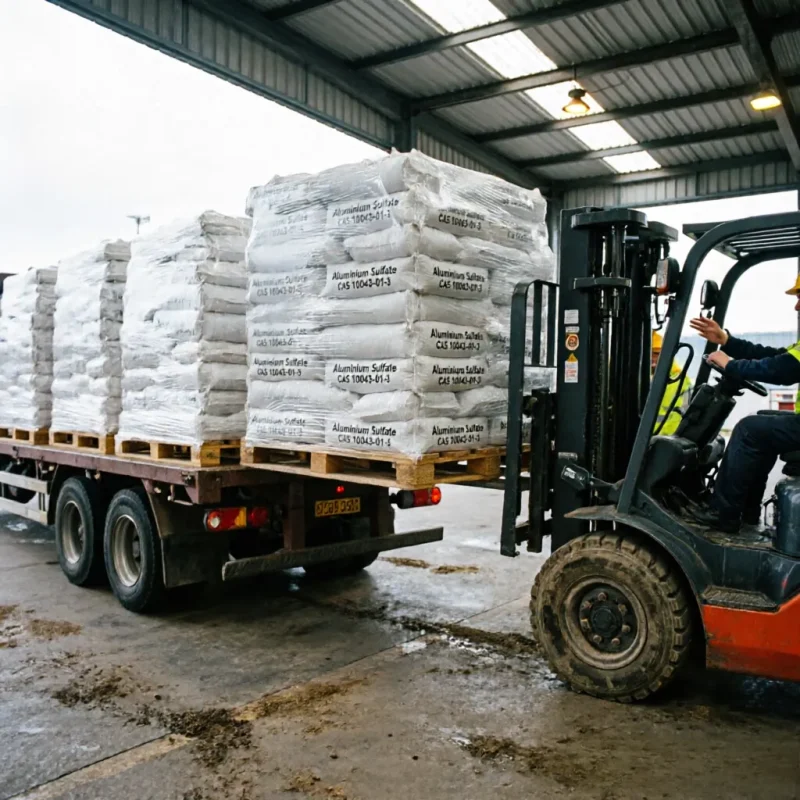
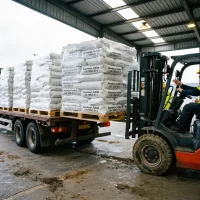
- Transport: Aluminium Sulfate is Non-DG under IATA/IMDG/ADR. Not a marine pollutant. Ships efficiently in 20ft standard dry containers. Ensure container doors are sealed to prevent ocean moisture ingress during transit.
- QC note: Verify Al2O3 content and Iron (Fe) levels upon receipt. For drinking water applications, ensure the Fe content is strictly ≤ 0.01% (Low Iron grade) to prevent yellowing of the treated water and fouling of downstream ion-exchange resins.
Aluminium Sulfate FAQ
Q: How does Alum (CAS 10043-01-3) differ from PAC (Polyaluminium Chloride) in wastewater treatment?
A: Alum is cheaper and forms very dense, fast-settling flocs, but it consumes water alkalinity and significantly lowers pH, making it ideal for high-alkalinity sources or paper white water. PAC is less sensitive to pH drops, forms larger flocs faster, and performs better in cold, low-turbidity water with low alkalinity.
Q: Why did my granular Aluminium Sulfate turn into a solid, rock-hard block?
A: This is caused by moisture ingress. Hydrated alum absorbs atmospheric humidity, partially dissolves, and re-crystallizes into a solid mass. While this does not destroy its chemical coagulating power, it makes dissolution and dosing extremely difficult. Always reseal the PE liner immediately after use and store in low-humidity conditions.
Q: Is Low Iron grade mandatory for drinking water treatment?
A: Yes. Standard industrial grade (Fe ≤ 0.50%) will impart a yellow/brown tint to treated drinking water and can foul downstream activated carbon or ion-exchange systems. Municipal drinking water and high-grade white paper manufacturing must exclusively use Low Iron grade (Fe ≤ 0.01%).
Related products
Manufacturer & Exporter Since 2006
Get Tailored Chemical Raw Material Solutions — Reply Within 1 Hour
Factory-direct pricing, stable high-purity supply and complete compliance documentation for your industrial formulations.
- 1000+Products
- 200+QC Protocols
- 7–15Days Delivery
- Factory-Direct Pricing
- COA / TDS / SDS Included
- Free Samples for Testing
- 40+ Export Countries
Request a Free Quote
Our engineers reply within 1 hour during GMT+8 business hours.
Please include in your inquiry:
- Product name or CAS number
- Required quantity
- Destination country or port
- Preferred packaging