
PolyDADMAC Powder (CAS 26590-05-6) | Water Treatment Coagulant
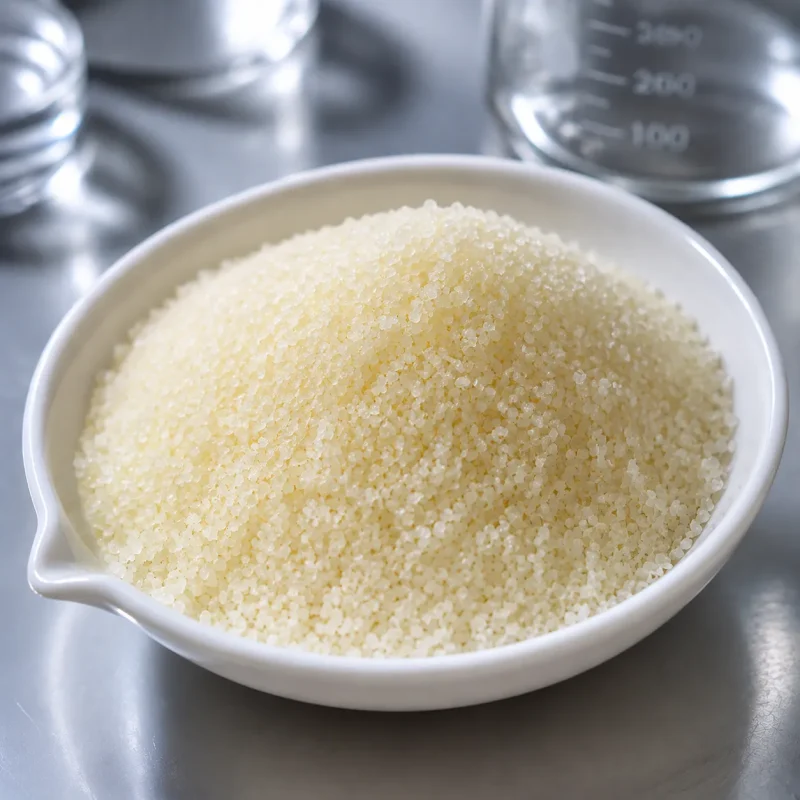
PolyDADMAC Powder is a white to off-white, water-soluble cationic polyquaternary ammonium coagulant built from diallyldimethylammonium chloride repeat units, used mainly as a primary coagulant and flocculant in water treatment. Its linear cationic chain and high positive charge density neutralize negatively charged colloids and strengthen flocs during settling, DAF and sludge dewatering. Each lot is supplied with COA, TDS and SDS.
- CAS No.: 26590-05-6
- Synonyms: Poly(diallyldimethylammonium chloride), PolyDADMAC, polyquaternium-6
- EINECS: 247-745-2
- Molecular Formula: (C8H16NCl)n
- Molecular Weight: 161.67 g/mol (repeat unit)
- Appearance: White to off-white powder
- Purity: Solid content 96–99% typical; batch COA reports actual value
- Ionicity: 100% cationic, pH-independent
- pH (1% aq.): 4.0–7.0
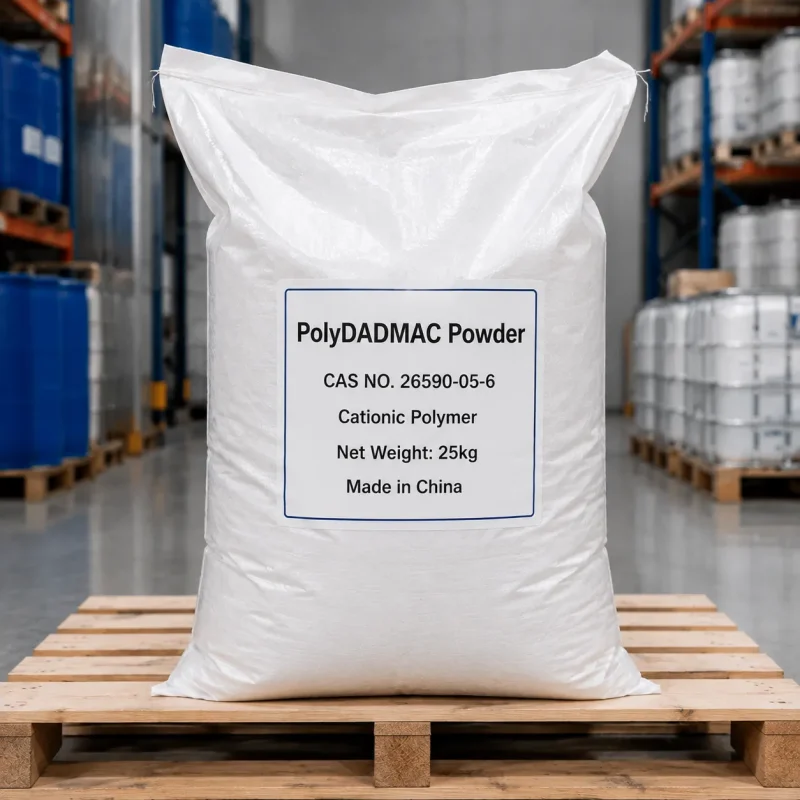
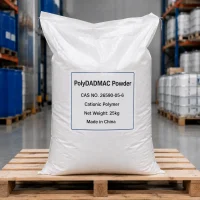
- Packaging: 25 kg (55 lb) woven bag with PE liner; jumbo bag optional. Custom packaging available upon request.
- Main Applications: Water treatment, sludge dewatering, paper retention, textile effluent
Introduction to PolyDADMAC Powder
PolyDADMAC Powder is a white to off-white, water-soluble cationic polyelectrolyte made from diallyldimethylammonium chloride repeat units, giving a linear chain with permanent quaternary ammonium charge. It neutralizes negatively charged clay, organic colloids and biomass, so it is used mainly in municipal and industrial water treatment and pulp-and-paper process water. The dry powder suits plants that need compact storage and frequent on-site make-down.
Compared with ferric chloride, PolyDADMAC usually needs only 0.2–2 mg/L active polymer versus typical 10–100 mg/L metal salt at similar turbidity removal, leaving less inorganic sludge. The practical risk is hygroscopic caking and overdosing: open bags absorb moisture, form lumps, dissolve slowly, and excess cationic polymer can restabilize fine particles during jar tests unless sealed storage and 0.1–0.5% dilute dosing are used.
Key Features of PolyDADMAC
- Permanent quaternary charge: The diallyldimethylammonium repeat unit keeps positive charge across acidic to alkaline pH, so dosing does not rely on pH adjustment.
- High charge density: Cationic sites neutralize negative clay and organic colloids at 0.1–5 mg/L, reducing turbidity before floc bridging starts.
- Low metal sludge: The polymer does not add iron or aluminum hydroxide mass, lowering sludge volume when replacing part of a metal coagulant.
- High-solid powder dosing: 96–99% solid content reduces storage volume, but make-down must stay at 0.1–0.5% to avoid gel lumps.
- Linear floc bridging: The dissolved chain connects microflocs into larger, shear-resistant aggregates for settlers, DAF units and filters.
PolyDADMAC Powder Chemical & Physical Properties
| Property | Value |
|---|---|
| Molecular Formula | (C8H16NCl)n |
| Molecular Weight | 161.67 g/mol (repeat unit); commercial molecular weight varies by grade |
| Appearance | White to off-white powder |
| Solid Content | 96–99% typical |
| Ionicity | 100% cationic, pH-independent |
| pH | 4.0–7.0 (1% aqueous solution) |
| Boiling Point | Not applicable; solid polymer decomposes on strong heating |
| Density | Bulk density about 0.5–0.8 g/cm³ (31–50 lb/ft³), packing dependent |
| Flash Point | Not applicable; avoid airborne dust near ignition sources |
| Solubility | Soluble in water; insoluble in most organic solvents |
| Charge Character | Quaternary ammonium cationic polymer |
Applications of PolyDADMAC Powder
Municipal and industrial clarification/DAF: Quaternary ammonium sites neutralize negatively charged clay and organic colloids, forming microflocs. Typical dose is 0.1–5 mg/L (0.1–5 ppm) active polymer, adjusted by jar test and cationic demand.
Sludge dewatering: Cationic chains bind biosolids and release bound water, improving belt press, centrifuge or filter press capture. Typical dose is 1–5 kg/t DS (2–10 lb/ton DS).
Paper retention and drainage: PolyDADMAC neutralizes anionic trash, retains fillers and fines, and improves white-water closure. Typical dose is 50–300 g/t (0.11–0.66 lb/ton) active polymer.
Textile dye effluent: Positive sites complex anionic dye groups and suspended fibers, helping color and solids removal. Typical dose is 5–30 mg/L (5–30 ppm), depending on color and COD load.
Storage & Safety Precautions for PolyDADMAC Powder
Storage: Keep bags sealed on dry pallets at 5–35 °C (41–95 °F). PolyDADMAC Powder is hygroscopic; moisture turns free-flowing powder into lumps and slows dissolution. Store away from strong oxidizers and concentrated anionic polymers; contact can form rubbery insoluble complexes. Do not place torn bags on damp concrete because wet powder creates a slippery film.
Safety: Typical GHS handling classification for polymer dust is Eye Irrit. 2; confirm destination-country SDS. Wear goggles, nitrile gloves and a P2/N95 respirator when handling open bags. For spills, suppress dust, collect into a labeled drum, then wash residue with water; warn crews about wet, slippery surfaces.
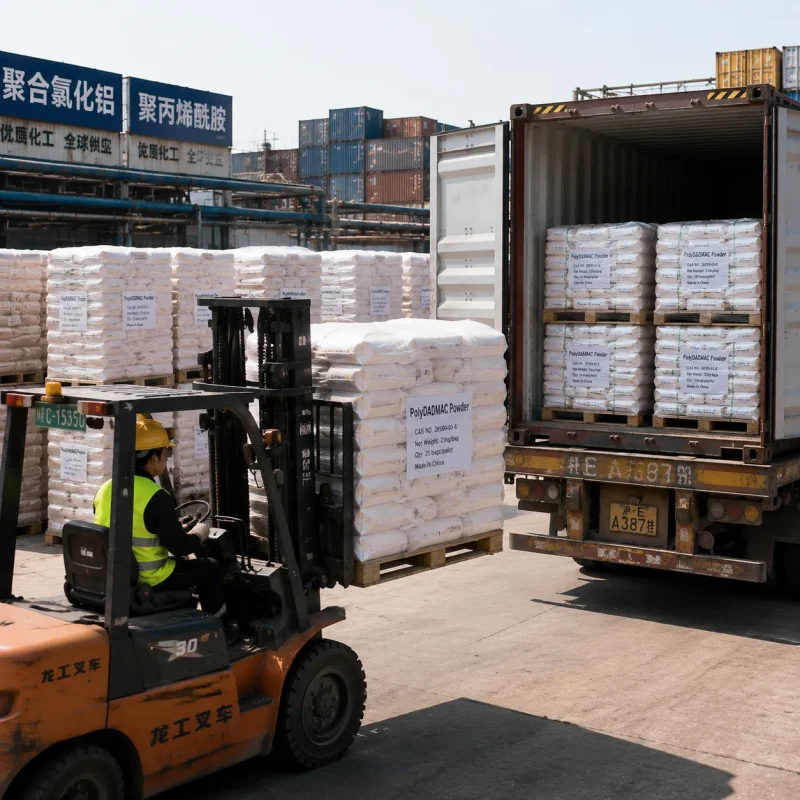
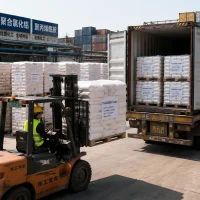
Transport: Non-DG for dry powder in sealed packaging. Verify local polymer or water-treatment chemical rules before export.
QC practice: Before loading, check solid content by oven drying per ISO 3251, then prepare a 0.5% solution to check fish-eyes and pH 4.0–7.0 per ISO 10523. Slow dissolution usually points to moisture uptake during storage.
PolyDADMAC Powder FAQ
Q: Is CAS 26590-05-6 PolyDADMAC Powder effective for high-color low-turbidity water?
A: Yes, if color comes from anionic organics. Its quaternary charge neutralizes humic-type colloids. Start jar tests at 0.2–1 mg/L and check cationic demand before increasing dose.
Q: Why does PolyDADMAC Powder form lumps when made down?
A: It hydrates fast on the surface. If powder is dumped into water without agitation, outer gel blocks wetting. Add slowly to a vortex and target a 0.1–0.5% solution.
Q: Can PolyDADMAC Powder replace PAC directly?
A: Not always. It removes charge and builds floc, but high turbidity may need PAC weight. Use jar tests; typical polymer dose is 0.1–2 mg/L, PAC 10–50 mg/L.
Related products
Manufacturer & Exporter Since 2006
Get Tailored Chemical Raw Material Solutions — Reply Within 1 Hour
Factory-direct pricing, stable high-purity supply and complete compliance documentation for your industrial formulations.
- 1000+Products
- 200+QC Protocols
- 7–15Days Delivery
- Factory-Direct Pricing
- COA / TDS / SDS Included
- Free Samples for Testing
- 40+ Export Countries
Request a Free Quote
Our engineers reply within 1 hour during GMT+8 business hours.
Please include in your inquiry:
- Product name or CAS number
- Required quantity
- Destination country or port
- Preferred packaging