
Alpha-Terpineol (CAS 98-55-5)
Alpha-Terpineol is a monocyclic monoterpene alcohol supplied as a colorless to pale yellow viscous liquid (may crystallize at room temperature). Renowned for its lilac and pine-like floral odor, it serves as a versatile fragrance ingredient, cosmetic active, and industrial solvent. Each shipment includes COA, TDS, and SDS.
- CAS No: 98-55-5
- Synonyms: α-Terpineol, 2-(4-Methylcyclohex-3-en-1-yl)propan-2-ol, Terpineol
- EC Number: 202-680-6
- Molecular Formula: C10H18O
- Molecular Weight: 154.25 g/mol
- Appearance: Colorless to pale yellow viscous liquid or semi-solid crystals
- Purity (GC): ≥ 98.0%
- Specific Gravity (25 °C / 77 °F): 0.930 – 0.938
- Refractive Index (20 °C / 68 °F): 1.481 – 1.485
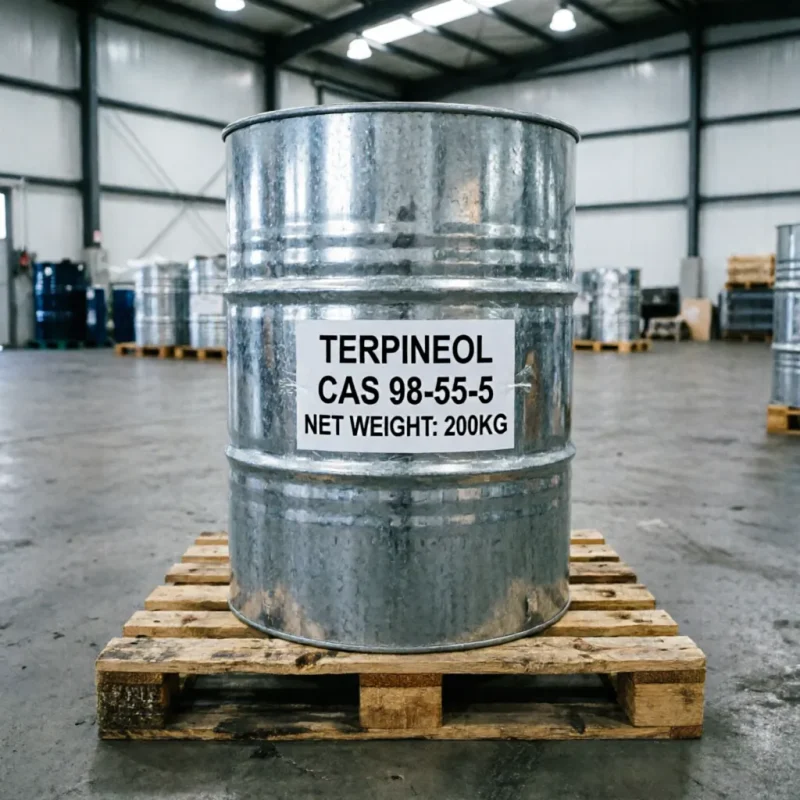
- Packaging: 25 kg (55 lb) HDPE drum; 190 kg (418 lb) HDPE drum; 900 kg (1984 lb) IBC tote. Custom packaging available upon request.
- Main Applications: Fine fragrances, household cleaners, cosmetic actives, frothing agent in mineral flotation
Introduction to Alpha-Terpineol
Alpha-Terpineol is a naturally occurring monocyclic monoterpene alcohol, typically derived from the hydration of alpha-pinene or extracted from essential oils like pine and cajuput. It features a warm, floral odor reminiscent of lilac and pine needles, making it a cornerstone ingredient in the fragrance and flavor industries. Perfumers and cosmetic formulators consume the bulk of global output, utilizing it to impart floral notes to soaps and detergents, or leveraging its mild antimicrobial and soothing properties in skincare formulations.
The primary processing advantage is its excellent stability in highly alkaline environments, making it irreplaceable for perfuming bar soaps and heavy-duty household cleaners without degrading or discoloring. The critical storage risk is oxidation and autoxidation. If exposed to air, light, or heat over prolonged periods, the terpene backbone can oxidize, altering the odor profile and forming peroxides. Store drums tightly sealed in a cool, dark warehouse below 25 °C (77 °F) and consider nitrogen blanketing for long-term bulk storage.
Key Features of Alpha-Terpineol
- Exceptional alkaline stability. Retains its delicate lilac-pine odor profile and structural integrity in high-pH formulations like bar soaps and industrial detergents, unlike many ester-based fragrance alternatives that hydrolyze.
- Versatile fragrance building block. Acts as a primary floral heart note in perfumery and a highly effective masking agent to neutralize harsh chemical odors in household and industrial cleaning products.
- Natural origin and cosmetic efficacy. Serves as a soothing, mild antimicrobial, and penetration-enhancing active ingredient in lotions, acne treatments, and dermatological ointments.
- High-purity distillation. Supplied at ≥ 98% purity via precision fractional distillation, ensuring low odor thresholds and preventing off-notes caused by lower-grade terpene impurities.
Alpha-Terpineol Chemical & Physical Properties
| Property | Value |
|---|---|
| Molecular Formula | C10H18O |
| Molecular Weight | 154.25 g/mol |
| Thermal Behaviour | Boiling point approx. 219 °C (426 °F). Flash point approx. 90 °C (194 °F) closed cup. |
| Density / Specific Gravity | 0.930 – 0.938 at 25 °C (77 °F). |
| Solubility | Insoluble in water; highly soluble in ethanol, propylene glycol, and fixed oils. |
| Refractive Index | 1.481 – 1.485 at 20 °C (68 °F). |
| Odor | Floral, lilac, pine, citrus. |
| Heavy Metals (as Pb) | ≤ 10 ppm |
Applications of Alpha-Terpineol
Fine Fragrances and Soaps: Dosed at 1–10% in perfume concentrates and up to 2% in soap noodles. Provides a long-lasting, warm floral heart note that survives the harsh saponification process without turning rancid.
Household and Industrial Cleaners: Used at 0.5–2.0% in liquid detergents, surface sprays, and air fresheners. Acts as a powerful odor masker and provides a natural “clean pine” scent while offering mild surface sanitization.
Cosmetics and Skincare: Formulated at 0.1–1.0% in acne creams, astringents, and soothing lotions. Functions as a natural antimicrobial preservative booster and skin-conditioning agent.
Mineral Flotation and Industrial Solvents: Utilized as a highly effective frothing agent in the froth flotation process for separating sulfide ores, and as a specialized solvent for resins, waxes, and cellulose esters.
Storage & Safety Precautions for Alpha-Terpineol
- Storage: Keep tightly sealed in original HDPE drums or IBC totes in a cool, dark, and well-ventilated warehouse below 25 °C (77 °F). Prevent exposure to direct sunlight and air to avoid autoxidation. Note on Crystallization: High-purity Alpha-Terpineol naturally crystallizes into a white solid at temperatures below 34 °C (93 °F). Gently warm the drum to 40–45 °C (104–113 °F) and homogenize before dispensing. This phase change is entirely reversible and does not affect product quality.
- Safety: Classified as GHS07 (Irritant). May cause skin sensitization or eye irritation upon prolonged contact. Wear chemical-resistant gloves and splash goggles during drum decanting. In case of skin contact, wash with soap and water.
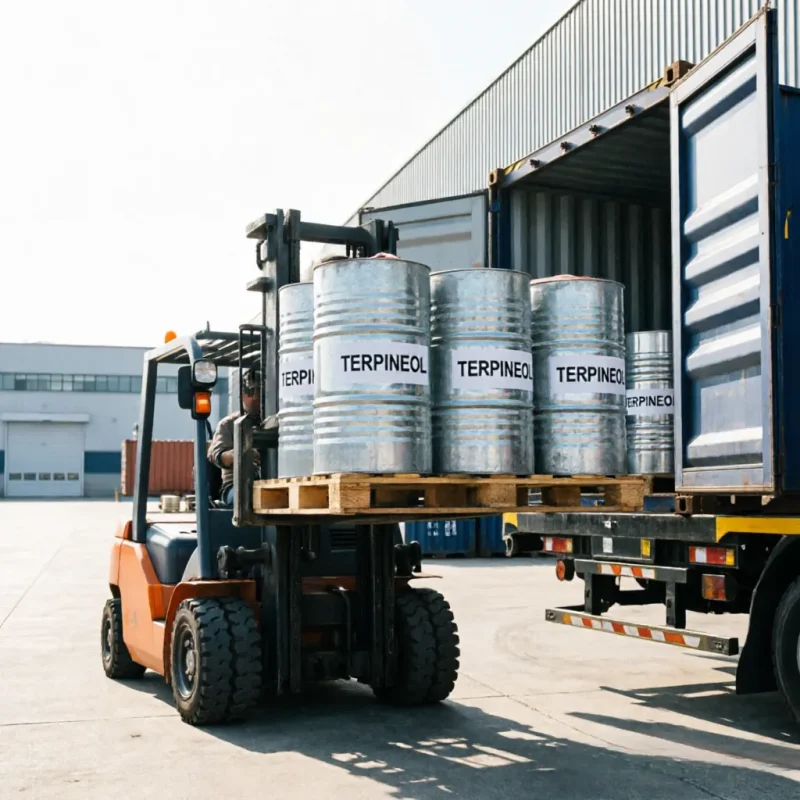
- Transport: Classified as Non-DG for most transport modes due to its high flash point (approx. 90 °C / 194 °F). Not a marine pollutant. Ship in standard dry containers, avoiding extreme heat during ocean transit.
- QC note: Verify Specific Gravity and Refractive Index upon receipt. Perform an olfactory evaluation and GC assay to ensure ≥ 98% purity. A sour, turpentine-like off-odor indicates severe oxidation during transit—reject the lot.
Alpha-Terpineol FAQ
Q: How does Alpha-Terpineol differ from Terpineol Hydrate?
A: Alpha-Terpineol is the pure, dehydrated alcohol used for high-end fragrances and cosmetics. Terpineol Hydrate is the intermediate triol form, primarily used in industrial solvent applications and as a chemical precursor, lacking the refined olfactory profile required for perfumery.
Q: The liquid arrived with solid white crystals inside the drum. Is it ruined?
A: No. Pure Alpha-Terpineol has a melting point around 34 °C (93 °F). During cold ocean transit or winter storage, it naturally crystallizes. Gently warm the drum in a heating room to 40–45 °C (104–113 °F) and agitate to restore it to a clear liquid without affecting its chemical properties.
Q: Can it be used directly in water-based air fresheners?
A: Alpha-Terpineol is practically insoluble in water. For aqueous formulations, it must be pre-solubilized using non-ionic surfactants (like polysorbates) or co-solvents (like ethanol or dipropylene glycol) to prevent phase separation and cloudiness.
Related products
Manufacturer & Exporter Since 2006
Get Tailored Chemical Raw Material Solutions — Reply Within 1 Hour
Factory-direct pricing, stable high-purity supply and complete compliance documentation for your industrial formulations.
- 1000+Products
- 200+QC Protocols
- 7–15Days Delivery
- Factory-Direct Pricing
- COA / TDS / SDS Included
- Free Samples for Testing
- 40+ Export Countries
Request a Free Quote
Our engineers reply within 1 hour during GMT+8 business hours.
Please include in your inquiry:
- Product name or CAS number
- Required quantity
- Destination country or port
- Preferred packaging