
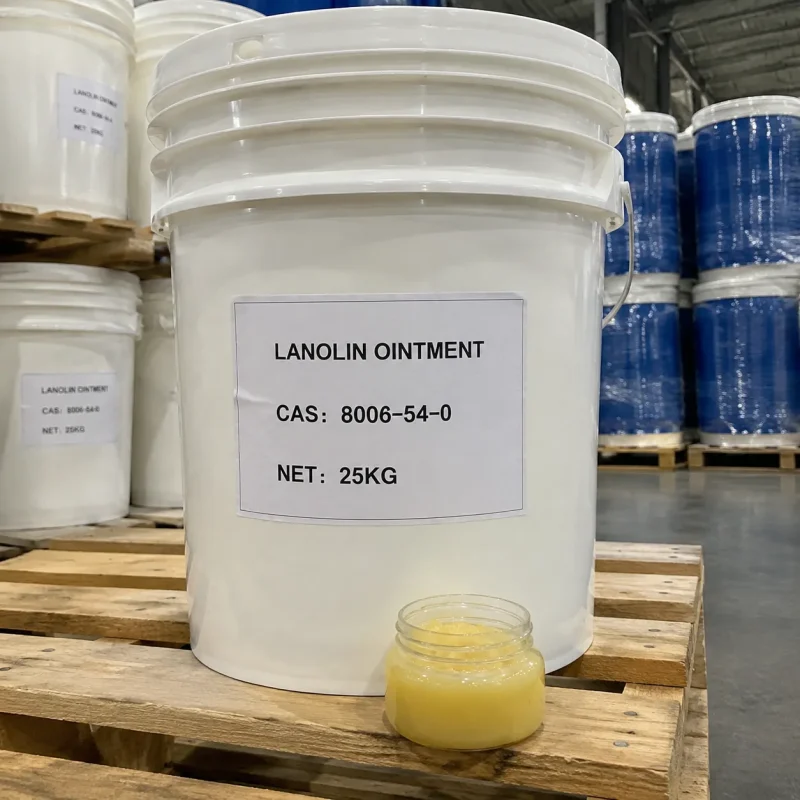
Anhydrous Lanolin (Wool Fat) CAS 8006-54-0
Anhydrous Lanolin (Wool Fat) is a highly purified, natural wax-like ester mixture derived from sheep wool sebum. Renowned for its exceptional emollient, water-absorbing, and emulsifying properties, it serves as a premium base for personal care, pharmaceutical, and industrial formulations. Core uses include skincare creams, medicated ointments, lip balms, and industrial rust preventatives. Each shipment includes COA, TDS, and SDS.
- CAS No: 8006-54-0
- Synonyms: Wool fat, Wool wax, Purified lanolin, Adeps lanae anhydrosus
- EC Number: 232-349-1
- Appearance: Pale yellow to yellow, translucent, unctuous semi-solid paste
- Grade: Cosmetic / Pharmaceutical / Industrial (Low odor, low pesticide residue)
- Drop Point / Melting Range: 38 °C – 44 °C (100 °F – 111 °F)
- Packaging: 25 kg (55 lb) carton with PE liner; 50 kg (110 lb) HDPE drum; 200 kg (440 lb) HDPE drum. Custom packaging available upon request.
- Main Applications: Skincare and color cosmetics, pharmaceutical ointment bases, baby care products, industrial lubricants and anti-corrosion coatings
Introduction to Anhydrous Lanolin
Anhydrous Lanolin, commonly known as purified wool fat, is a complex mixture of naturally occurring esters, polyesters, and high-molecular-weight alcohols secreted by the sebaceous glands of sheep. Unlike standard lanolin, the anhydrous grade has been rigorously refined, deodorized, and decolorized to remove moisture, free lanolin alcohols, and environmental impurities (such as pesticide residues). This results in a pale yellow, highly stable semi-solid with a characteristic mild odor and superior oxidative stability.
In B2B manufacturing, Anhydrous Lanolin is highly valued for its unique ability to absorb over twice its own weight in water, forming stable water-in-oil (W/O) emulsions without the need for synthetic co-emulsifiers. It creates a breathable, semi-occlusive lipid barrier on the skin that mimics the natural stratum corneum, making it an indispensable ingredient in premium dermatological and cosmetic formulations. Store in tightly sealed drums or cartons in a cool, dry warehouse below 30 °C (86 °F) to prevent oxidation and preserve its delicate color and odor profile.
Key Features of Anhydrous Lanolin
- Superior water-in-oil (W/O) emulsification. Naturally stabilizes W/O creams and ointments by absorbing up to 200% of its weight in water, yielding rich, non-greasy textures ideal for barrier creams and baby diaper rash treatments.
- Exceptional skin affinity and barrier function. Rich in cholesterol and lanosterol, it integrates seamlessly with human skin lipids, reducing transepidermal water loss (TEWL) while allowing the skin to breathe and naturally regenerate.
- High-purity and low-sensitization profile. Advanced refining processes reduce free lanolin alcohols (the primary allergens) and pesticide traces to ultra-low levels, meeting strict USP/EP pharmacopoeia and global cosmetic regulatory standards.
- Excellent plasticity and adhesion. Provides outstanding spreadability, gloss, and pigment dispersion in color cosmetics like lipsticks, lip balms, and makeup sticks, preventing cracking or syneresis (sweating).
- Versatile industrial performance. Acts as a highly effective, biodegradable base for rust-preventative greases, leather fatliquoring agents, and specialized metalworking lubricants due to its strong metal-adhesion properties.
Anhydrous Lanolin Chemical & Physical Properties
| Property | Value |
|---|---|
| Composition | Complex mixture of esters, diesters, and hydroxyesters of high-molecular-weight aliphatic acids and alcohols |
| Drop Point / Melting Range | 38 °C – 44 °C (100 °F – 111 °F) |
| Acid Value | ≤ 1.0 mg KOH/g |
| Saponification Value | 90 – 110 mg KOH/g |
| Water Content | ≤ 0.2% (Anhydrous specification) |
| Peroxide Value | ≤ 15 mEq O₂/kg (indicating high oxidative stability) |
| Color (Gardner) | ≤ 9 (Pale yellow) |
| Solubility | Insoluble in water; soluble in hot ethanol, diethyl ether, chloroform, and mineral/vegetable oils. |
| Ash Content | ≤ 0.15% |
Applications of Anhydrous Lanolin
Skincare and baby care formulations: Incorporate at 2–15% in the oil phase of W/O emulsions, barrier creams, and lotions. Heat to 60–70 °C (140–158 °F) to melt and blend with other lipids. It provides deep moisturization, soothes cracked skin, and is the active base for zinc oxide diaper rash creams.
Color cosmetics and lip care: Used at 10–40% in lipsticks, lip balms, and solid makeup sticks. It acts as a plasticizer and pigment wetting agent, ensuring smooth application, high gloss, and structural stability without the need for synthetic waxes.
Pharmaceutical ointment bases: Serves as the primary excipient in topical medicated ointments, wound-healing salves, and transdermal delivery systems. Its high biocompatibility and occlusive nature enhance the penetration and efficacy of active pharmaceutical ingredients (APIs).
Industrial rust preventatives and leather treatment: Blended with mineral oils or solvents at 5–20% to formulate heavy-duty, water-displacing anti-corrosion coatings for marine and automotive parts. Also used in leather fatliquoring to impart softness and water resistance to hides.
Storage & Safety Precautions for Anhydrous Lanolin
- Storage: Store in original sealed HDPE drums or lined cartons in a cool, dry warehouse between 10–30 °C (50–86 °F). Protect from direct sunlight and strong oxidizing agents. Prolonged exposure to heat or air will increase the peroxide value and cause darkening or off-odors. Shelf life is typically 24–36 months when stored properly.
- Safety: Not classified as hazardous under GHS. Non-toxic and widely approved for leave-on cosmetic and pharmaceutical use. Prolonged skin contact is safe, though individuals with rare wool allergies should avoid it. Wear standard thermal gloves when handling molten lanolin above 60 °C (140 °F) to prevent thermal burns.
- Transport: Anhydrous Lanolin is Non-DG under IATA/IMDG/ADR. No UN number, no packing group. Ship in standard dry containers. During winter transit, the product will solidify; this is normal and does not affect quality. Gently warm the drums in a controlled heating room before pumping or dispensing.
- QC note: Verify Drop Point (38–44 °C), Acid Value (≤ 1.0), and Peroxide Value upon receipt. A high peroxide value or rancid odor indicates improper storage or oxidation—reject the lot. Ensure the material is free from particulate matter and meets the specified Gardner color limit.
Anhydrous Lanolin FAQ
Q: What is the difference between Anhydrous Lanolin and Hydrous Lanolin?
A: Hydrous lanolin is simply anhydrous lanolin blended with 20–30% purified water and an antioxidant (like BHT). Anhydrous lanolin contains ≤ 0.2% water, making it mandatory for water-free formulations (like lipsticks and anhydrous balms) and industrial applications where moisture would cause corrosion or microbial growth.
Q: My Anhydrous Lanolin has a strong, unpleasant odor. Is it normal?
A: Crude or poorly refined lanolin has a distinct “sheep-like” odor. However, cosmetic and pharmaceutical grades undergo rigorous deodorization and should have only a very faint, characteristic, and mild scent. A strong, rancid, or sour odor indicates oxidative degradation or poor refining—this material should not be used in personal care products.
Q: How can I prevent grainy textures in my lip balm formulations containing Lanolin?
A: Graininess occurs when the high-melting-point sterol esters in lanolin crystallize slowly during cooling. To prevent this, ensure the oil phase is heated uniformly to 75–80 °C (167–176 °F), and employ rapid, controlled cooling (quenching) while stirring the batch to ensure a fine, uniform crystal network and a smooth, glossy finish.
Related products
Manufacturer & Exporter Since 2006
Get Tailored Chemical Raw Material Solutions — Reply Within 1 Hour
Factory-direct pricing, stable high-purity supply and complete compliance documentation for your industrial formulations.
- 1000+Products
- 200+QC Protocols
- 7–15Days Delivery
- Factory-Direct Pricing
- COA / TDS / SDS Included
- Free Samples for Testing
- 40+ Export Countries
Request a Free Quote
Our engineers reply within 1 hour during GMT+8 business hours.
Please include in your inquiry:
- Product name or CAS number
- Required quantity
- Destination country or port
- Preferred packaging