
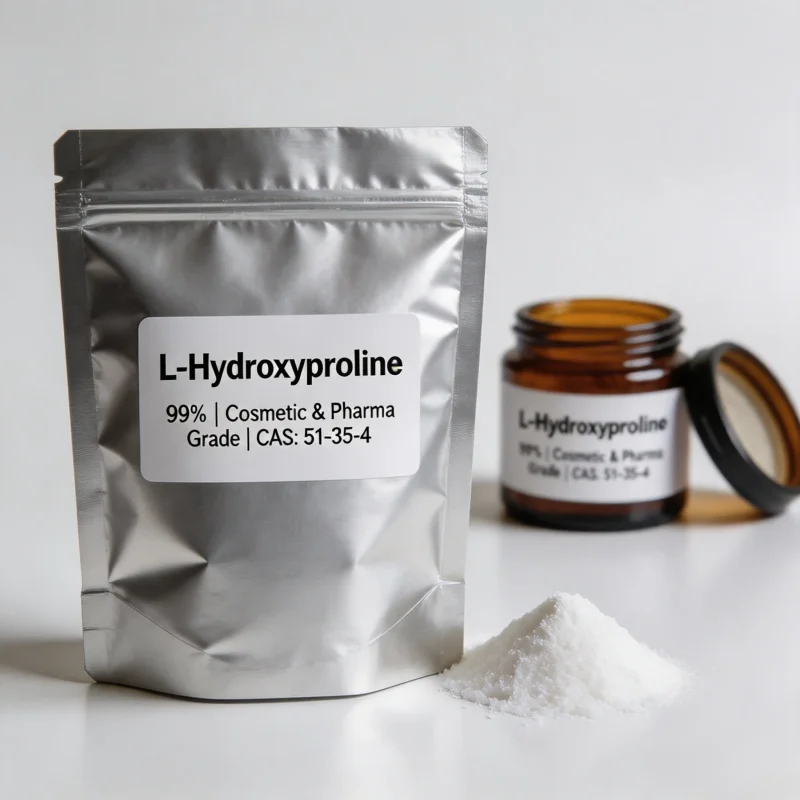
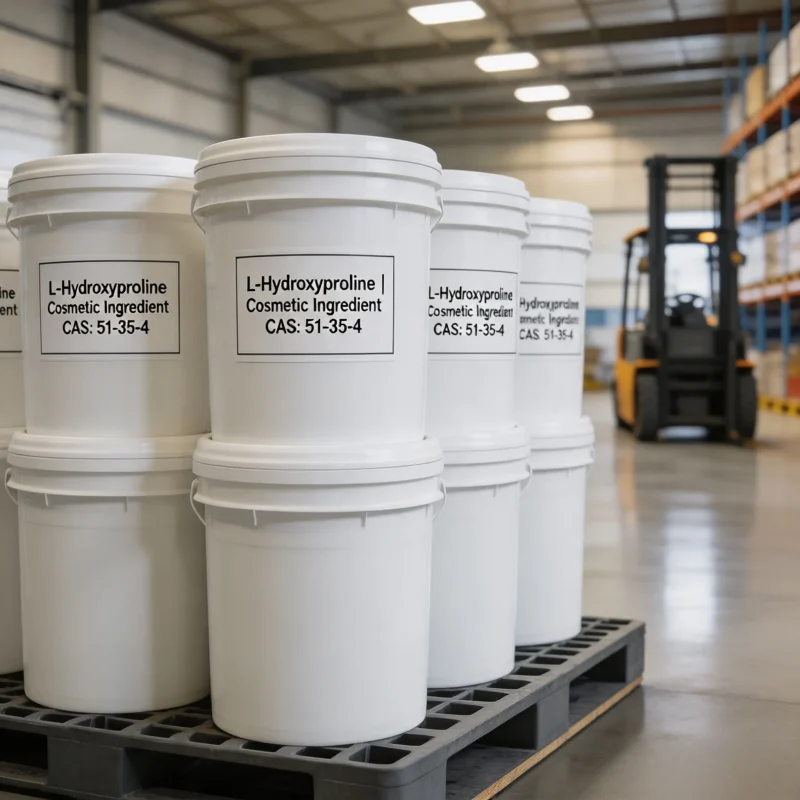
High Purity L-Hydroxyproline Powder (CAS 51-35-4)
High Purity L-Hydroxyproline is a non-standard amino acid and primary structural component of collagen supplied as white crystalline powder. The hydroxyl group on the pyrrolidine ring enables critical hydrogen bonding to stabilize triple-helix structures, making it an essential active for anti-aging cosmetics, joint health nutraceuticals, and recombinant collagen bioprocessing. Each shipment includes COA, TDS, and SDS.
- CAS No: 51-35-4
- Synonyms: trans-4-Hydroxy-L-proline, (2S, 4R)-4-Hydroxypyrrolidine-2-carboxylic acid
- EC Number: 200-091-9
- Molecular Formula: C5H9NO3
- Molecular Weight: 131.13 g/mol
- Appearance: White crystalline powder
- Purity (HPLC): ≥ 99.0%
- Specific Rotation: -83.0° to -88.0°
- Packaging: 25 kg (55 lb) fiber drum with double PE liner; 25 kg (55 lb) woven PP bag with PE liner. Custom packaging available upon request.
- Main Applications: Cosmetic anti-aging actives, joint health supplements, cell culture media, pharmaceutical intermediates
Introduction to L-Hydroxyproline
L-Hydroxyproline is a cyclic, non-standard amino acid formed by the post-translational hydroxylation of L-proline. It accounts for roughly 14% of the amino acid sequence in mammalian collagen. The hydroxyl group at the 4-position is sterically crucial for forming inter-chain hydrogen bonds that stabilize the collagen triple helix at body temperature. In the B2B sector, it is sourced via advanced enzymatic biocatalysis or extraction, yielding high-purity material for dermatological, nutritional, and biopharmaceutical applications.
The primary formulation advantage is its exceptional water solubility and thermal stability in acidic to neutral aqueous systems. The critical storage risk is strong hygroscopicity. Exposure to high humidity causes rapid moisture absorption, leading to severe caking that disrupts automated blending and tablet compression processes. Store drums in a climate-controlled warehouse below 25 °C (77 °F) and 60% relative humidity, and reseal the PE liner immediately after each withdrawal.
Key Features of L-Hydroxyproline
- Collagen triple-helix stabilization. The 4-hydroxyl group acts as a hydrogen bond donor and acceptor, a structural feature entirely absent in standard L-proline, making it indispensable for recombinant collagen production and tissue engineering scaffolds.
- High-purity biocatalytic grade. Manufactured to strict AJI/USP specifications with heavy metals strictly controlled (≤ 10 ppm) and extremely low endotoxin levels, ensuring safety for parenteral nutrition and injectable cosmetic formulations.
- Excellent aqueous solubility. Freely dissolves in water (approx. 350 g/L at 25 °C / 77 °F), allowing high-concentration dosing in liquid serums, oral syrups, and cell culture media without the need for harsh co-solvents.
- Biomarker and therapeutic utility. Serves as a reliable biochemical marker for bone resorption and collagen turnover in clinical diagnostics, while also acting as an active signaling molecule to stimulate endogenous fibroblast proliferation in wound healing.
L-Hydroxyproline Chemical & Physical Properties
| Property | Value |
|---|---|
| Molecular Formula | C5H9NO3 |
| Molecular Weight | 131.13 g/mol |
| Thermal Behaviour | Decomposes above 270 °C (518 °F) without melting. Highly stable in solid form. |
| Density | Bulk powder density approx. 0.55–0.65 g/cm³ (34–40 lb/ft³). |
| Solubility in Water | Freely soluble, ≥ 350 g/L at 25 °C (77 °F); slightly soluble in ethanol; insoluble in diethyl ether. |
| pH (5% aqueous solution) | 4.0 – 5.5 |
| Specific Rotation | -83.0° to -88.0° (c=10, H2O) |
| Loss on Drying | ≤ 0.5% |
| Heavy Metals (as Pb) | ≤ 10 ppm |
Applications of L-Hydroxyproline
Cosmetics and dermatological serums: Formulated at 1–5% in aqueous anti-aging serums and post-procedure recovery creams. It penetrates the stratum corneum to signal fibroblasts, boosting endogenous collagen synthesis and improving skin elasticity without the irritation associated with retinoids.
Nutraceuticals and joint health supplements: Blended with Vitamin C, glucosamine, and standard collagen peptides in oral capsules and functional beverages. Provides the direct structural precursor required for cartilage matrix repair and osteoarthritis symptom management.
Biopharma and cell culture media: Supplemented at 50–200 mg/L in specialized mammalian cell culture media. Essential for the in-vitro cultivation of fibroblasts and the bioprocessing of recombinant humanized collagen, where standard proline cannot substitute for the hydroxylated form.
Storage & Safety Precautions for L-Hydroxyproline
- Storage: Keep tightly sealed in original fiber drums or PP bags in a dry, climate-controlled warehouse below 25 °C (77 °F) and 60% RH. The powder is highly hygroscopic; an opened drum left in humid conditions will absorb moisture and form rock-hard clumps within 24 hours, ruining its flowability for tablet presses.
- Safety: Classified as non-hazardous. Generally Recognized As Safe (GRAS) for nutritional use. Operators handling bulk powder should wear standard N95 dust masks and safety goggles to prevent mild mechanical irritation to the eyes and respiratory tract.
- Transport: L-Hydroxyproline is Non-DG under IATA/IMDG/ADR. Not a marine pollutant. Standard 25 kg (55 lb) drums ship in dry containers. Avoid extreme heat and high-humidity ocean transit routes if container desiccants are not used.
- QC note: Verify specific rotation (-83.0° to -88.0°) and assay via HPLC upon receipt. Perform a visual inspection for caking or yellowing. Severe caking indicates moisture ingress; while the chemical structure may remain intact, the physical loss of flowability often necessitates rejecting the lot for direct-compression manufacturing.
L-Hydroxyproline FAQ
Q: How does L-Hydroxyproline differ from standard L-Proline in supplement formulations?
A: Standard L-proline cannot form the inter-chain hydrogen bonds required to stabilize the collagen triple helix at human body temperature. L-Hydroxyproline provides the essential hydroxyl group for this structural locking mechanism. For joint and skin supplements, hydroxyproline is the direct, bioactive precursor for matrix stabilization.
Q: Can it be formulated into clear, water-based cosmetic serums?
A: Yes. It is highly water-soluble (approx. 350 g/L) and forms clear, colorless solutions at typical cosmetic use levels (1–5%). It does not require organic solvents or extreme pH adjustments, making it ideal for elegant, non-sticky aqueous serums and hydrogels.
Q: The powder arrived with hard lumps. Is it chemically degraded?
A: Not necessarily chemically degraded, but physically compromised. L-Hydroxyproline is extremely hygroscopic. Moisture absorption causes severe caking. While HPLC assay might still show >99% purity, the loss of powder flowability will cause severe dosing errors in automated capsule fillers or tablet presses. Reject the lot if it cannot be easily milled back to a free-flowing state.
Related products
Manufacturer & Exporter Since 2006
Get Tailored Chemical Raw Material Solutions — Reply Within 1 Hour
Factory-direct pricing, stable high-purity supply and complete compliance documentation for your industrial formulations.
- 1000+Products
- 200+QC Protocols
- 7–15Days Delivery
- Factory-Direct Pricing
- COA / TDS / SDS Included
- Free Samples for Testing
- 40+ Export Countries
Request a Free Quote
Our engineers reply within 1 hour during GMT+8 business hours.
Please include in your inquiry:
- Product name or CAS number
- Required quantity
- Destination country or port
- Preferred packaging