
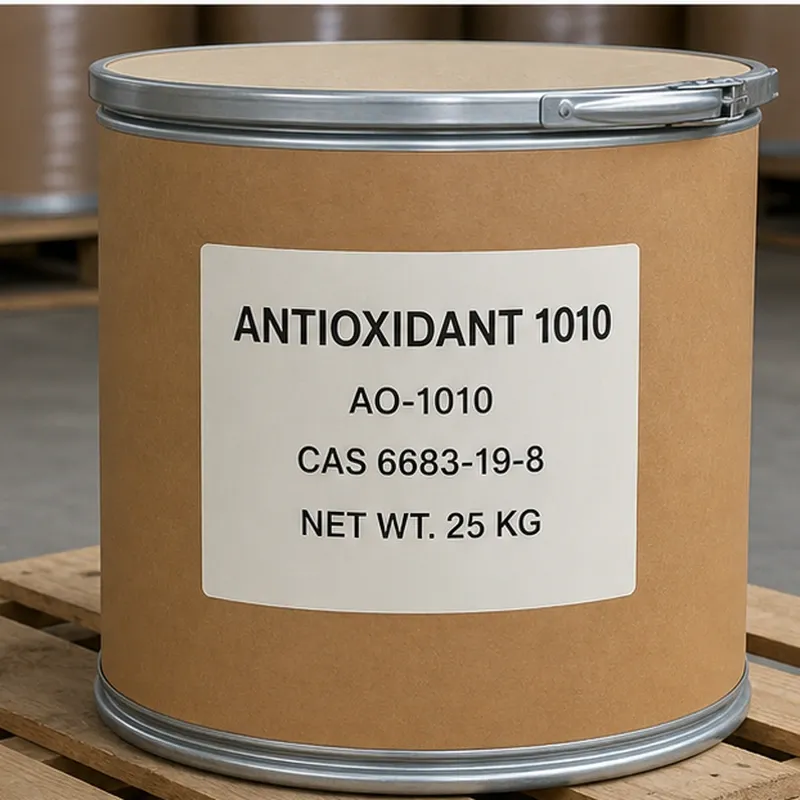
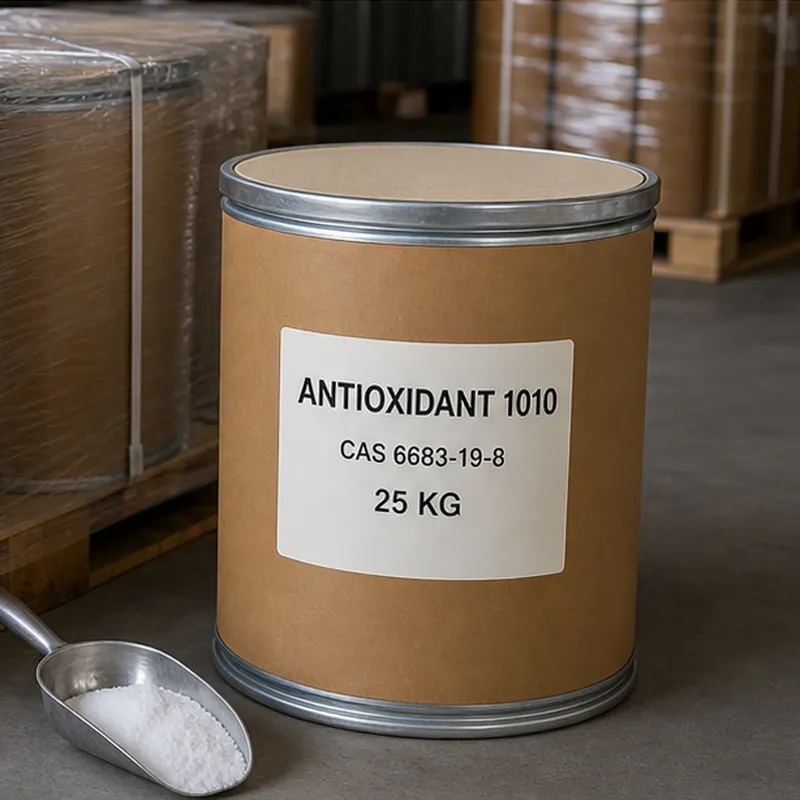
Antioxidant 1010 (AO-1010) CAS 6683-19-8
Antioxidant 1010 (AO-1010) is a high-molecular-weight hindered phenolic primary antioxidant supplied as white to off-white crystalline powder. Four 3,5-di-tert-butyl-4-hydroxyphenyl propionate groups anchored on a pentaerythritol core deliver exceptional thermal-oxidative stability with minimal volatility, making it the industry standard for polyolefins, engineering plastics, rubber, and adhesives. Each shipment includes COA, TDS, and SDS.
- CAS No: 6683-19-8
- Synonyms: Pentaerythritol tetrakis(3-(3,5-di-tert-butyl-4-hydroxyphenyl)propionate), Irganox 1010, Tetrakis[methylene-3-(3,5-di-tert-butyl-4-hydroxyphenyl)propionate]methane
- EC Number: 229-725-2
- Molecular Formula: C73H108O12
- Molecular Weight: 1177.65 g/mol
- Appearance: White to off-white crystalline powder or granules
- Purity (HPLC): ≥ 98.0%
- Melting Point: 110–125 °C (230–257 °F)
- Packaging: 25 kg (55 lb) fiber drum with PE liner; 25 kg (55 lb) woven PP bag with PE liner; 500 kg (1100 lb) bulk bag. Custom packaging available upon request.
- Main Applications: Polyolefin stabilization (PE, PP), engineering plastics, rubber anti-aging, adhesives and coatings
Introduction to Antioxidant 1010
Antioxidant 1010 is a tetra-functional hindered phenolic antioxidant built on a pentaerythritol backbone, carrying four 3-(3,5-di-tert-butyl-4-hydroxyphenyl)propionate arms. This high molecular weight (1177.65 g/mol) architecture ensures negligible volatility during high-temperature polymer processing while maintaining excellent compatibility with polyolefin matrices. The four phenolic hydroxyl groups act as radical scavengers, terminating oxidative chain reactions that cause polymer discoloration, embrittlement, and molecular weight degradation.
The primary processing advantage is its low volatility and high thermal stability compared to single-phenol antioxidants like BHT (Antioxidant 264). At typical processing temperatures of 200–300 °C (392–572 °F), AO-1010 remains locked in the polymer matrix without sublimation loss, providing long-term heat aging protection throughout the product lifecycle. The critical handling characteristic is its sensitivity to strong oxidizing agents and direct UV exposure, which can prematurely consume the phenolic groups. Store in sealed, light-proof containers below 40 °C (104 °F).
Key Features of Antioxidant 1010
- Exceptional thermal stability at high processing temperatures. Molecular weight of 1177.65 g/mol prevents sublimation during extrusion and molding at 200–300 °C (392–572 °F), ensuring consistent protection without volatilization loss or plate-out on molds.
- Non-staining and non-discoloring. The hindered phenolic structure does not generate chromophoric by-products, making it ideal for white, transparent, and light-colored polymer products where visual appearance is critical.
- Excellent extraction and migration resistance. High molecular weight and low solubility in water and polar solvents prevent washout in food-contact packaging, automotive under-hood parts, and outdoor applications exposed to rain or cleaning agents.
- Synergistic compatibility with phosphite antioxidants. Combines effectively with secondary antioxidants like Antioxidant 168 (CAS 15474-33-2) in a 1:1 or 2:1 ratio to provide comprehensive hydroperoxide decomposition and radical scavenging, extending polymer service life by 3–5×.
Antioxidant 1010 Chemical & Physical Properties
| Property | Value |
|---|---|
| Molecular Formula | C73H108O12 |
| Molecular Weight | 1177.65 g/mol |
| Melting Point | 110–125 °C (230–257 °F) |
| Thermal Behaviour | Stable up to 300 °C (572 °F); decomposition onset > 350 °C (> 662 °F). Avoid prolonged heating above 350 °C. |
| Bulk Density | Approx. 0.50–0.65 g/cm³ (31–40 lb/ft³) |
| Solubility | Soluble in acetone, chloroform, toluene, and methanol; insoluble in water (< 1 mg/L at 20 °C / 68 °F). |
| Flash Point | > 250 °C (> 482 °F) |
| Ash Content | ≤ 0.10% |
| Transmittance (425 nm) | ≥ 95% (indicates low color contribution) |
Applications of Antioxidant 1010
Polyolefin stabilization (PE and PP): Dosed at 0.05–0.5% (500–5000 ppm) in polyethylene and polypropylene during extrusion or injection molding. The four phenolic groups terminate peroxy radicals formed during melt processing, preventing yellowing and maintaining melt flow index stability. For food-contact PP packaging, typical dosage is 0.05–0.1% to comply with FDA 21 CFR 178.2010 and EU 10/2011 specific migration limits.
Engineering plastics and high-temperature polymers: Added at 0.1–1.0% in PA (nylon), PBT, PET, and ABS to protect against thermal oxidation during high-temperature molding (260–320 °C / 500–608 °F). Prevents surface chalking, gloss loss, and tensile strength degradation in automotive under-hood components and electrical connectors.
Rubber and elastomer anti-aging: Used at 0.5–2.0 phr in natural rubber, SBR, and EPDM compounds to complement amine-based antiozonants. Provides non-staining protection for light-colored rubber goods, shoe soles, and conveyor belts where discoloration is unacceptable.
Adhesives, sealants, and coatings: Incorporated at 0.1–0.5% in hot-melt adhesives, silicone sealants, and powder coatings to prevent oxidative crosslinking and viscosity drift during storage and application, extending shelf life and maintaining open time.
Storage & Safety Precautions for Antioxidant 1010
- Storage: Keep tightly sealed in original fiber drums or woven PP bags with PE liners in a cool, dry warehouse below 40 °C (104 °F). Protect from direct sunlight, strong oxidizing agents, and moisture. The hindered phenolic groups are stable under normal conditions but prolonged UV exposure can prematurely consume active sites, reducing antioxidant efficiency.
- Safety: Not classified as hazardous under GHS. Wear standard dust masks and safety goggles when handling dry powder to avoid respiratory and eye irritation. Avoid prolonged skin contact; wash with soap and water after handling. The product is non-toxic and approved for food-contact applications in many jurisdictions.
- Transport: Antioxidant 1010 is Non-DG under IATA/IMDG/ADR. No UN number, no packing group. Ship in standard dry containers. Avoid co-loading with strong oxidizers. Standard 25 kg (55 lb) drums or bags are palletized and stretch-wrapped for container loading.
- QC note: Verify purity (≥ 98.0%) by HPLC and melting point (110–125 °C / 230–257 °F) upon receipt. A yellow or brown tint indicates oxidative degradation during transit; reject such lots. Confirm transmittance at 425 nm is ≥ 95% to ensure low color contribution in final products.
Antioxidant 1010 FAQ
Q: How does Antioxidant 1010 differ from Antioxidant 168?
A: Antioxidant 1010 is a primary (radical scavenging) hindered phenolic antioxidant, while Antioxidant 168 is a secondary (hydroperoxide decomposing) phosphite antioxidant. They work synergistically: 1010 terminates chain-carrying peroxy radicals, while 168 decomposes hydroperoxides into non-radical products. Most polyolefin formulations use a 1:1 or 2:1 blend of 1010/168 for comprehensive protection.
Q: Can Antioxidant 1010 replace BHT (Antioxidant 264) in my formulation?
A: Yes, and with superior performance. BHT has a low molecular weight (220 g/mol) and sublimes during high-temperature processing, causing plate-out and loss of protection. Antioxidant 1010 (1177 g/mol) remains locked in the polymer matrix, providing long-term stability without volatilization. Typical dosage is 0.1–0.3% vs 0.5–1.0% for BHT.
Q: The powder arrived slightly yellow instead of white. Is it still usable?
A: Slight yellowing may indicate partial oxidation during transit. Verify purity by HPLC; if purity remains ≥ 98.0% and melting point is within 110–125 °C (230–257 °F), the material is still functional. However, for transparent or white products, reject lots with transmittance below 95% at 425 nm to avoid color contamination.
Related products
Manufacturer & Exporter Since 2006
Get Tailored Chemical Raw Material Solutions — Reply Within 1 Hour
Factory-direct pricing, stable high-purity supply and complete compliance documentation for your industrial formulations.
- 1000+Products
- 200+QC Protocols
- 7–15Days Delivery
- Factory-Direct Pricing
- COA / TDS / SDS Included
- Free Samples for Testing
- 40+ Export Countries
Request a Free Quote
Our engineers reply within 1 hour during GMT+8 business hours.
Please include in your inquiry:
- Product name or CAS number
- Required quantity
- Destination country or port
- Preferred packaging