
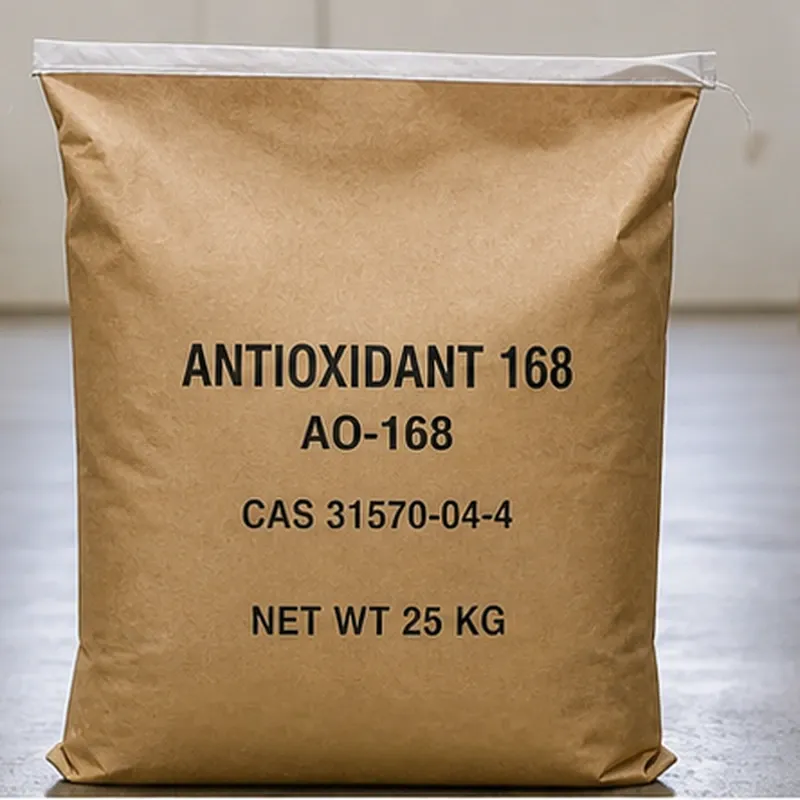
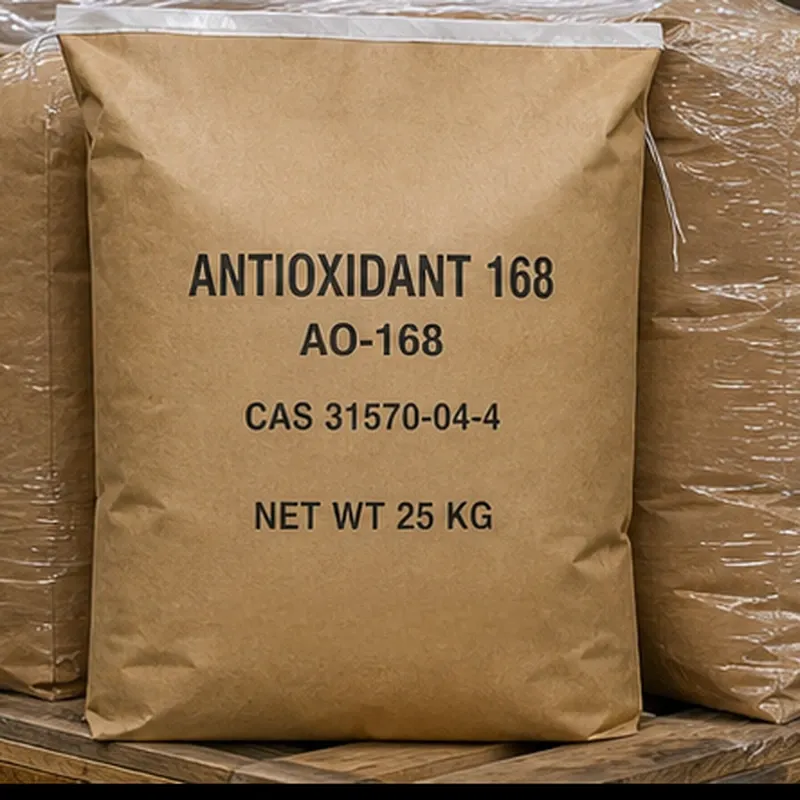
Antioxidant 168 (AO-168) CAS 31570-04-4
Antioxidant 168 (AO-168), CAS 31570-04-4, is a white to off-white triaryl phosphite powder used as a secondary antioxidant for polyolefin compounding and processing color control. Its trivalent phosphorus center decomposes hydroperoxides, while the 2,4-di-tert-butylphenyl groups support low volatility and hydrolytic stability. We supply COA, TDS, SDS with each shipment.
- CAS No.: 31570-04-4
- Synonyms: Tris(2,4-di-tert-butylphenyl) phosphite; Phosphite 168; AO-168
- EINECS: 250-702-8
- Molecular Formula: C42H63O3P
- Molecular Weight: 646.86 g/mol
- Appearance: white to off-white powder or granules
- Purity: ≥99.0% by GC/HPLC (typical export spec)
- Packaging: 25 kg (55 lb) carton/fibre drum with PE liner. Custom packaging available upon request.
- Main Applications: PP/PE extrusion, masterbatch, pipe and film stabilization
- Melting Point: 182–187 °C (360–369 °F)
- Phosphorus content: 4.7–4.9%
Introduction to Antioxidant 168
Antioxidant 168 is a white to off-white triaryl phosphite powder with three 2,4-di-tert-butylphenyl groups bonded to a trivalent phosphorus atom. It decomposes hydroperoxides formed during polyolefin melt processing, protecting melt flow and color in PP/PE compounding and pipe/film production.
Compared with triphenyl phosphite, AO-168 melts at 182–187 °C (360–369 °F) instead of about 24 °C (75 °F), giving lower volatility and less plate-out in extrusion. The main pitfall is moisture and acid contact: humid, acidic fillers or storage can hydrolyze phosphite to phosphate and reduce active phosphorus, so keep bags sealed and use dry blending. In QC, monitor melting range and volatile matter; lots stored above 40 °C (104 °F) in damp warehouses can cake and show lower assay before use.
Key Features of Antioxidant 168
- Hydroperoxide decomposer: Trivalent phosphorus converts melt-formed hydroperoxides into less reactive alcohols, slowing chain scission and yellowing during extrusion.
- High-melting process stability: A melting range of 182–187 °C (360–369 °F) keeps AO-168 solid during storage and reduces volatilization at common PP/PE melt temperatures.
- Phenolic synergy: Blends with 1010 or 1076 at about 1:1 to 2:1 AO-168:phenolic give better processing color and OIT retention than single-additive systems in many recipes.
- Hydrolytic protection design: The 2,4-di-tert-butylphenyl groups slow hydrolysis compared with less substituted aryl phosphites, but wet or acidic systems still consume active phosphite.
- Low-coloring secondary stabilization: AO-168 helps limit quinoid-type discoloration from oxidized phenolic antioxidants, supporting clearer or whiter polyolefin articles.
Antioxidant 168 Chemical & Physical Properties
| Property | Value |
|---|---|
| Molecular Formula | C42H63O3P |
| Molecular Weight | 646.86 g/mol |
| Boiling Point | Decomposes before boiling; no normal boiling point |
| Density | 0.35–0.55 g/mL (2.9–4.6 lb/gal), bulk powder |
| Flash Point | Not applicable; solid powder, combustible dust |
| Solubility | Insoluble in water; soluble in aromatic hydrocarbons and acetone-type solvents |
| Melting Point | 182–187 °C (360–369 °F) |
| Phosphorus Content | 4.7–4.9% |
| Volatile Matter | ≤0.5% (typical export spec) |
Applications of Antioxidant 168
PP/PE extrusion and pelletizing: Add 0.05–0.20% AO-168, usually with 1010 or 1076. The phosphite decomposes hydroperoxides formed in the extruder, limiting MFR drift, chain scission and yellowing during repeat processing.
HDPE/PP pipe and geomembrane: Use 0.05–0.15% in combination with hindered phenols. AO-168 supports OIT retention before and after thermal exposure; verify OIT by ASTM D3895 or ISO 11357-6 after formulation changes.
Film, fiber and nonwoven PP: Typical letdown is 0.02–0.10% in the final article. High melting point and low volatility reduce die deposit and plate-out, which is important for thin film and high-speed spunbond lines.
Additive masterbatch: Masterbatch loadings of 20–50% AO-168 are common, then let down to 0.05–0.20% in final resin. Dry blending and sealed feeding help prevent phosphite loss when fillers or carriers contain moisture.
Storage & Safety Precautions for Antioxidant 168
Storage: Store sealed at 5–30 °C (41–86 °F) in a dry area, away from strong oxidizers, acids and acidic fillers. Moisture or acid contact can hydrolyze phosphite to phosphate and lower active phosphorus; retest caked, yellowed or aged lots before critical extrusion.
Safety: Many SDSs list AO-168 as not classified or low-hazard, but dust may irritate eyes and airways and can form combustible dust clouds. Use a dust mask or respirator, goggles and gloves; collect spills with vacuum or damp sweep and avoid ignition sources.
Transport and handling: Typically Non-DG; confirm SDS Section 14. Before feeding, check for lumps because caked AO-168 can feed unevenly in loss-in-weight systems and cause dosing spikes.
Antioxidant 168 FAQ
Q: What does Antioxidant 168 CAS 31570-04-4 do in polyolefins?
A: It is a secondary phosphite antioxidant. AO-168 decomposes hydroperoxides during PP/PE extrusion, reducing melt-flow drift and yellowing. Use 0.05–0.20% with phenolic 1010/1076; wet or acidic fillers can hydrolyze it, so retest OIT and assay.
Q: Why blend AO-168 with 1010 or 1076 instead of using it alone?
A: Blend it, do not replace phenols. AO-168 decomposes hydroperoxides; 1010 terminates radicals. A 1:1–2:1 168:1010 system usually improves extrusion color and OIT. Start at 0.10% total in PP, then adjust by MFR, YI and OIT.
Q: How should we prevent AO-168 hydrolysis during storage and compounding?
A: Keep it dry and sealed. Water, humid fillers or acidic premixes hydrolyze AO-168 to phosphate, lowering active phosphorus. Store at 5–30 °C (41–86 °F), reseal partial bags, check lumps before use, and run a 230 °C (446 °F) lab extrusion if OIT drops.
Related products
Manufacturer & Exporter Since 2006
Get Tailored Chemical Raw Material Solutions — Reply Within 1 Hour
Factory-direct pricing, stable high-purity supply and complete compliance documentation for your industrial formulations.
- 1000+Products
- 200+QC Protocols
- 7–15Days Delivery
- Factory-Direct Pricing
- COA / TDS / SDS Included
- Free Samples for Testing
- 40+ Export Countries
Request a Free Quote
Our engineers reply within 1 hour during GMT+8 business hours.
Please include in your inquiry:
- Product name or CAS number
- Required quantity
- Destination country or port
- Preferred packaging