
Ethylene-vinyl acetate copolymer (EVA) CAS 24937-78-8
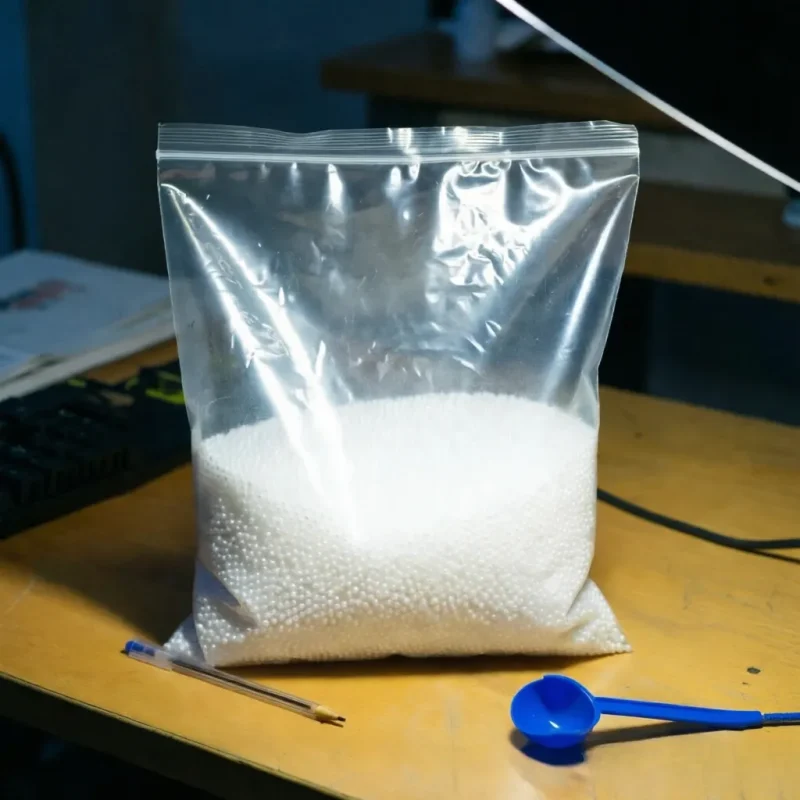
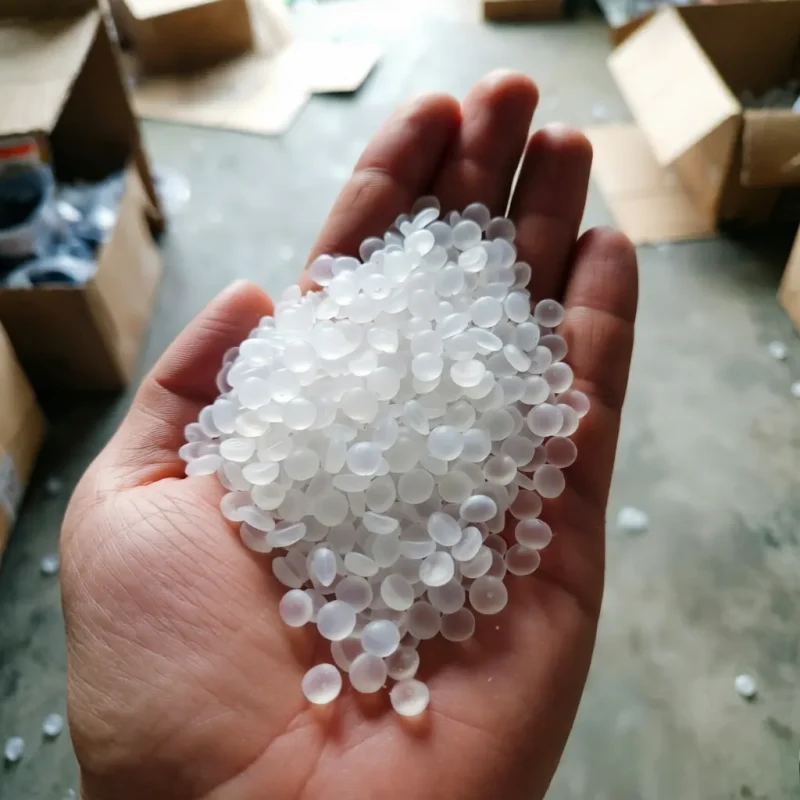
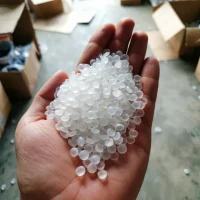
Ethylene-vinyl acetate copolymer (EVA) is an ethylene/vinyl acetate thermoplastic copolymer, usually supplied as translucent or white pellets. Its pendant acetate groups reduce crystallinity, giving flexibility and adhesion for hot-melt adhesives and EVA foam. We supply COA, TDS and SDS with each shipment.
- CAS No.: 24937-78-8
- Synonyms: Ethylene vinyl acetate copolymer, EVA resin, E/VAC copolymer
- EINECS: 210-676-5
- Molecular Formula: (C2H4)m(C4H6O2)n
- Molecular Weight: polymer; varies with VA content and MI
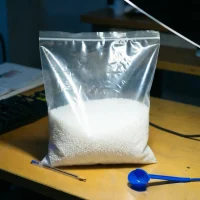
- Appearance: translucent/white pellets
- Purity: resin, volatile matter typically ≤0.5%
- Vinyl Acetate Content: 5–40% (typical)
- Melt Index: 2–400 g/10 min, 190°C/2.16 kg
- Density: 0.93–0.96 g/cm³
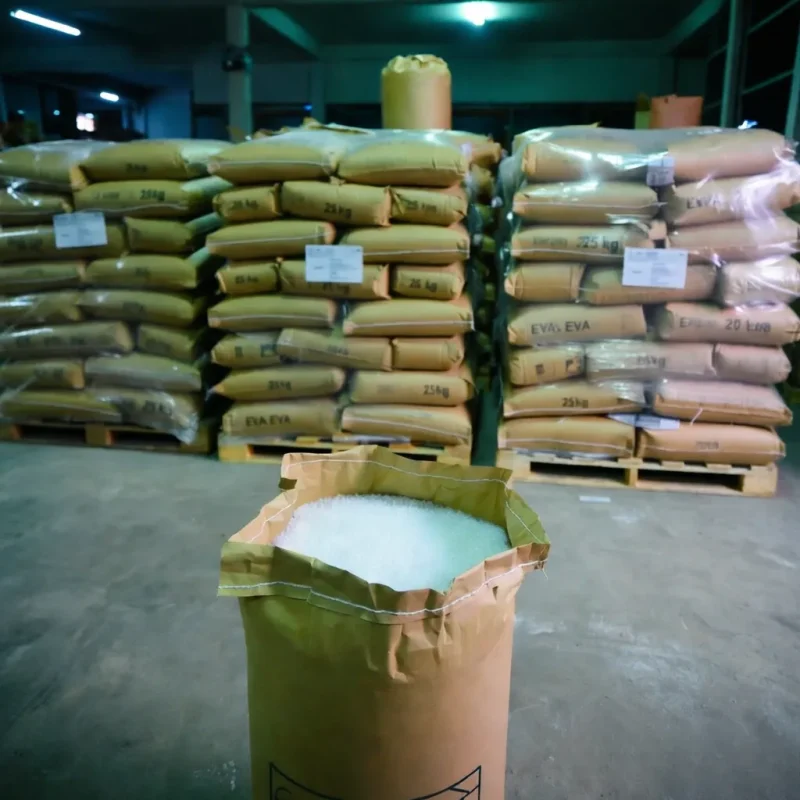
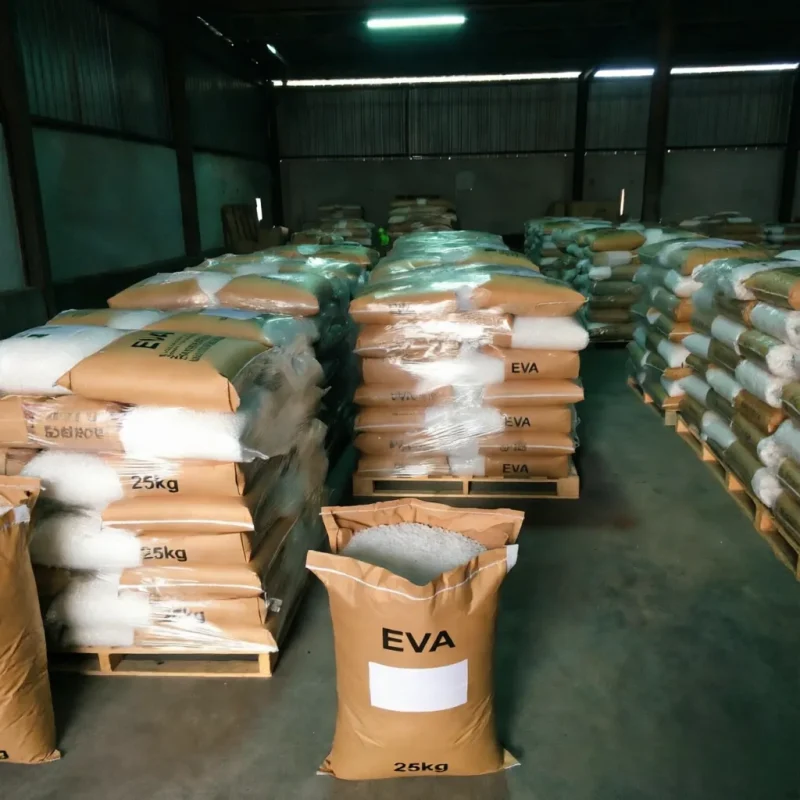
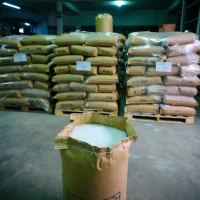
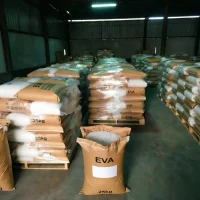
- Packaging: 25 kg PE bag, 500/1000 kg FIBC; Custom packaging available upon request.
- Main Applications: hot-melt adhesives, foam, solar encapsulant, wire & cable
Introduction to EVA
EVA is a translucent-to-white thermoplastic copolymer of ethylene and vinyl acetate, supplied as free-flowing pellets. Random acetate side groups interrupt polyethylene crystallinity, so the resin stays flexible at low temperature and adheres to polar surfaces. Melt index and VA content set flow, hardness and adhesive open time. Core demand comes from hot-melt adhesives and crosslinkable EVA foam or solar encapsulant.
Compared with LDPE, an 18% VA EVA grade usually melts 15–35°C lower and gives higher tack to PET, paper and aluminium foil. The main handling risk is thermal residence: prolonged melt exposure above 220°C can create acetic-acid odor, yellowing and lower melt strength. Keep bags sealed, store below 40°C, avoid direct sun and use opened inventory first in humid weather.
Key Features of EVA
- Acetate polarity for adhesion – Pendant vinyl acetate carbonyls interact with paper, PET, aluminium and wood, improving wetting where PE alone fails.
- VA content controls softness – Raising VA from 5% to 28% lowers crystallinity, reduces hardness and increases tack, so the same resin family covers films, foam and adhesives.
- Melt index sets line speed – Low-MI grades hold melt strength for foam and cable, while high-MI grades spray or coat in hot-melt lines.
- Peroxide crosslinkability – Radical curing creates C–C links in the ethylene backbone; VA level changes crosslink density, flexibility and peel strength.
- Low-temperature toughness – Interrupted crystallinity keeps EVA flexible below 0°C, useful for cold-chain film and outdoor cable jackets.
EVA Chemical & Physical Properties
| Property | Value |
|---|---|
| Molecular Formula | (C2H4)m(C4H6O2)n |
| Molecular Weight | Polymer; no single value, varies with VA content and melt index |
| Boiling Point | Not applicable; solid polymer decomposes before boiling |
| Density | 0.93–0.96 g/cm³, typical, ASTM D792 / ISO 1183 |
| Flash Point | Not determined for solid pellets; combustible when overheated or as dust |
| Solubility | Insoluble in water; swells/dissolves in hot toluene, xylene and chlorinated hydrocarbons |
| Vinyl Acetate Content | 5–40%, typical, grade dependent |
| Melt Flow Rate | 2–400 g/10 min, 190°C/2.16 kg, ASTM D1238 / ISO 1133 |
| Softening/Melting Range | About 60–95°C, depends on VA content |
| Processing Caution | Avoid long melt residence above 220°C |
Applications of EVA
Hot-Melt Adhesives: EVA acts as the flexible binder. Pendant acetate carbonyls wet paper, wood, PET and coated board, while ethylene crystallites set the bond. Formulators typically use EVA at 20–50% of the hot-melt blend, with tackifiers and waxes. Choose 18–28% VA and MI 50–400 for sprayable grades.
EVA Foam: In foam sheets, EVA provides melt strength before blowing and accepts peroxide crosslinks. The acetate units lower crystallinity, so the foam stays soft and elastic. Common shoe or mat formulations use EVA at 40–70% of the polymer blend, with LDPE, filler, peroxide and blowing agent.
Solar Encapsulant: EVA film crosslinks under lamination. Peroxide radicals form C–C links, turning the thermoplastic into an elastic network. Acetate groups help adhesion to glass and backsheets. Encapsulant film is commonly 0.30–0.60 mm thick; peroxide is often 0.1–1.5 phr, controlled by half-life temperature.
Wire & Cable: EVA is the flexible halogen-free matrix. Acetate polarity improves wetting of ATH, MDH and other flame-retardant fillers. In low-smoke compounds, EVA can be 30–70% of the resin phase, with filler loading above 100 phr in many recipes.
Storage & Safety Precautions for EVA
Storage conditions: Keep pellets in sealed original bags, indoors, below 40°C, dry and away from direct sunlight. Store away from strong oxidizers, organic peroxides and open flames. High-MI grades can soften and block in hot containers, so rotate stock and use opened bags first.
Specific risk: EVA is not water-reactive; however, prolonged melt exposure above 220°C can degrade acetate units, causing acetic-acid odor, yellowing and loss of mechanical strength. Opened bags may collect dust and surface moisture; if film bubbles appear, dry or purge before critical extrusion.
Safety: GHS: generally not classified as hazardous for supply; dust may ignite or cause mechanical irritation. Use goggles, gloves and a dust mask when handling dusty pellets or grindings. For spills, collect pellets with non-sparking tools, avoid dust clouds and keep away from ignition sources.
Transport: Non-DG for neat EVA resin. Check additive package if fire-retardant or peroxide masterbatch is included.
EVA FAQ
Q: How does VA content change EVA selection for hot-melt adhesives?
A: Higher VA (18-28%) improves tack and wetting on paper/PET; choose MI 20-400. Lower VA increases heat resistance. Always check ASTM D1238 MI and D792 density on the COA before blending.
Q: What does CAS 24937-78-8 EVA do during peroxide crosslinking?
A: Peroxide forms C-C crosslinks on the EVA backbone. Acetate groups aid adhesion to glass/PET. Control cure temp to avoid low gel content or die buildup. Track gel via Soxhlet, not just peel strength.
Q: How should EVA pellets be stored to prevent processing issues?
A: Store sealed below 40°C. Opened bags collect moisture causing film bubbles. High-MI grades block in summer heat; use FIFO. Check ASTM D1238 MI before extrusion.
Related products
Manufacturer & Exporter Since 2006
Get Tailored Chemical Raw Material Solutions — Reply Within 1 Hour
Factory-direct pricing, stable high-purity supply and complete compliance documentation for your industrial formulations.
- 1000+Products
- 200+QC Protocols
- 7–15Days Delivery
- Factory-Direct Pricing
- COA / TDS / SDS Included
- Free Samples for Testing
- 40+ Export Countries
Request a Free Quote
Our engineers reply within 1 hour during GMT+8 business hours.
Please include in your inquiry:
- Product name or CAS number
- Required quantity
- Destination country or port
- Preferred packaging