
Barium Sulfate (Barite Powder / Blanc Fixe) CAS 7727-43-7
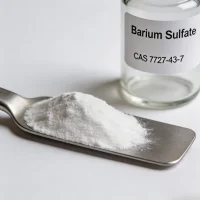
Barium Sulfate (available as natural Barite Powder or synthetic Blanc Fixe) is a high-density, chemically inert white filler supplied as a fine crystalline powder. Its exceptional chemical stability, high refractive index, and low oil absorption make it an indispensable functional filler and extender for powder coatings, engineering plastics, and friction materials. Each shipment includes COA, TDS, and SDS.
- CAS No: 7727-43-7
- Synonyms: Barium sulphate, Barite powder, Blanc Fixe, Precipitated barium sulfate
- EC Number: 231-784-4
- Molecular Formula: BaSO4
- Molecular Weight: 233.39 g/mol
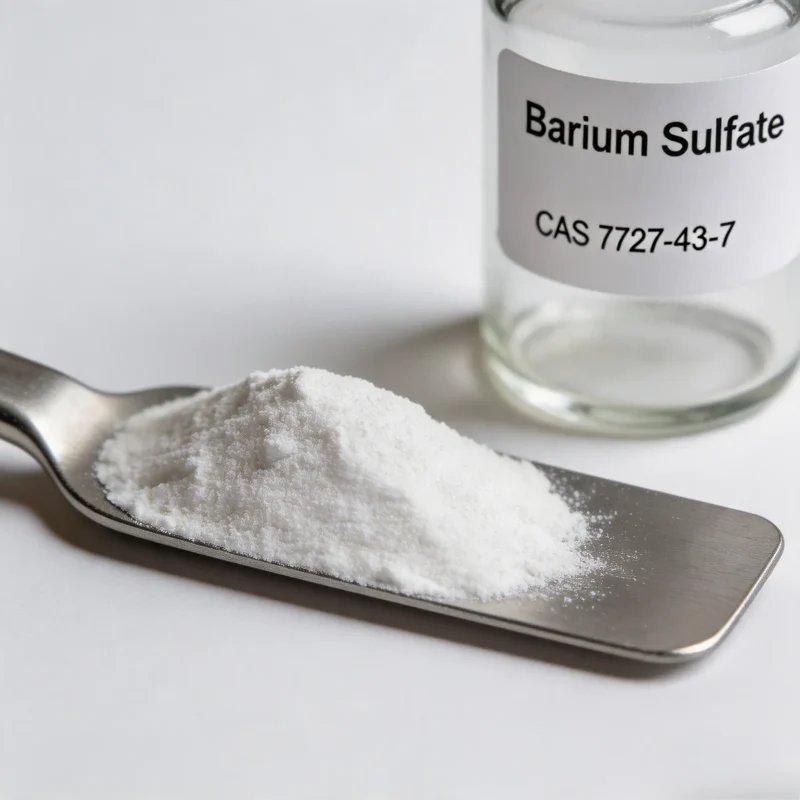
- Appearance: White, odorless crystalline powder
- Purity (BaSO4): ≥ 98.0% (Precipitated Blanc Fixe) / ≥ 92.0% (Natural Barite)
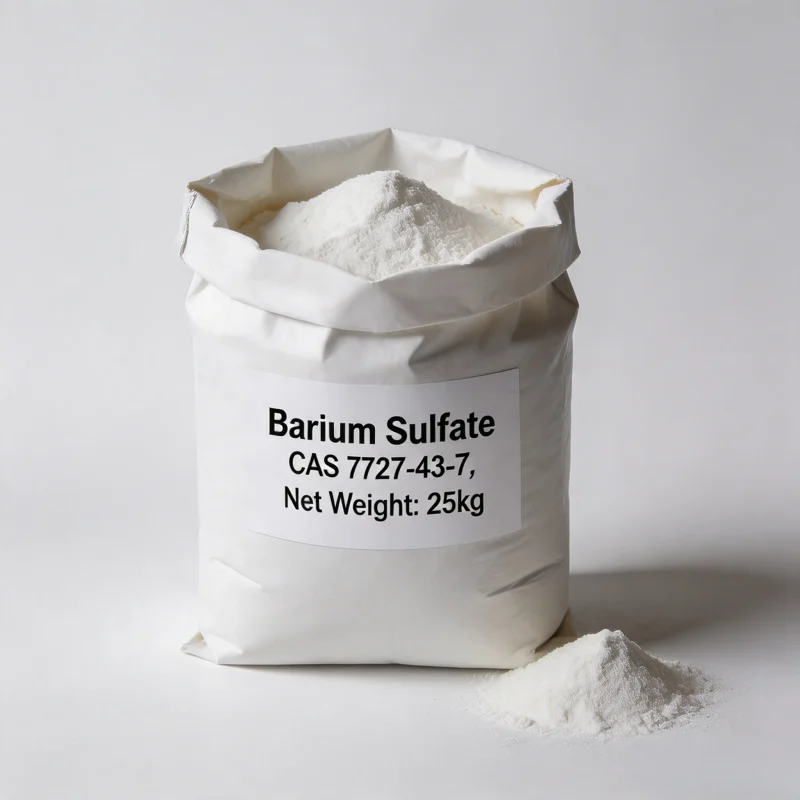
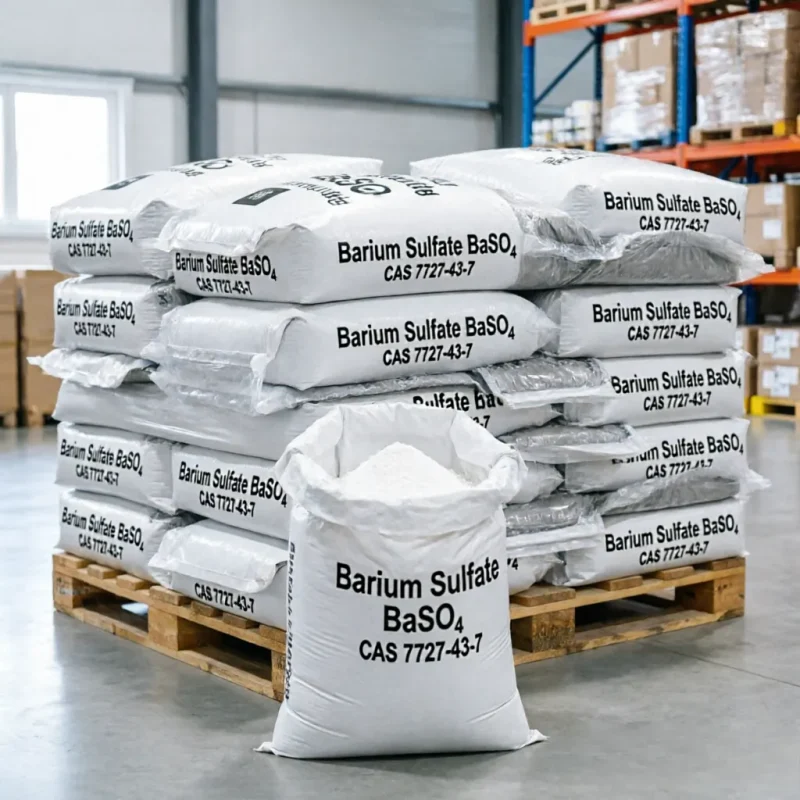
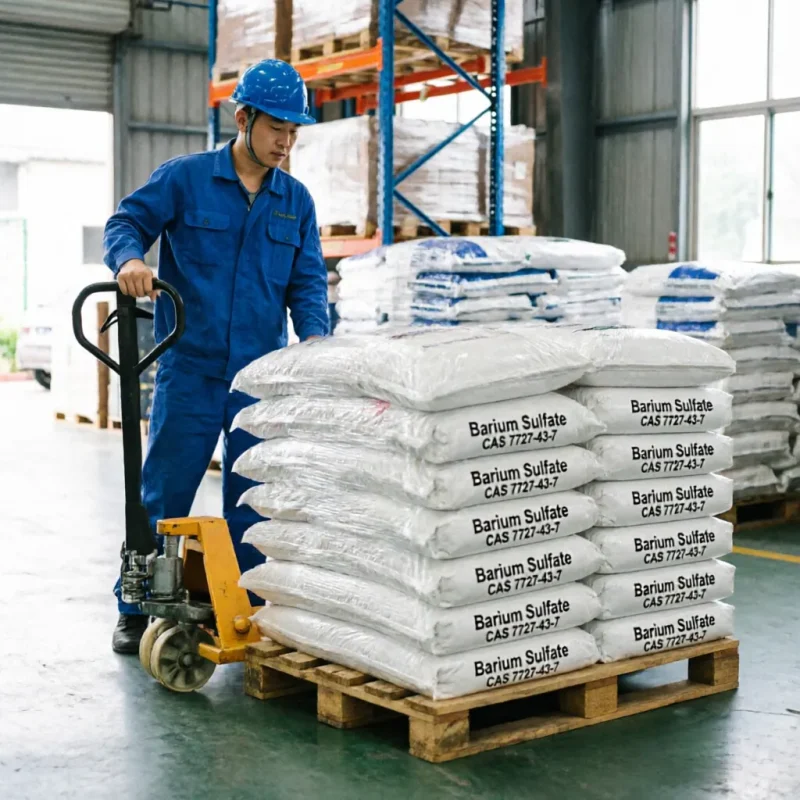
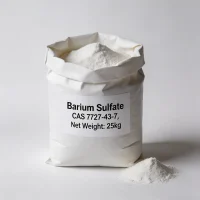
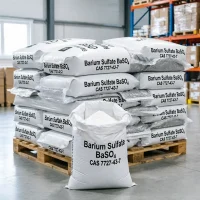
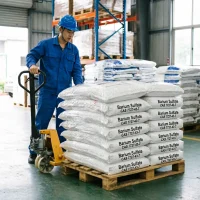
- Packaging: 25 kg (55 lb) PP/PE valve bag; 50 kg (110 lb) woven bag; 1000 kg (2200 lb) FIBC jumbo bag with PE liner. Custom packaging available upon request.
- Main Applications: Powder coatings, plastics compounding, brake linings, radiation-shielding concrete
Introduction to Barium Sulfate
Barium Sulfate is a highly stable, inorganic white pigment and functional filler characterized by its extreme insolubility in water, acids, and alkalis. Formulators in the coatings and plastics industries rely on precipitated Barium Sulfate (Blanc Fixe) for its narrow particle size distribution and high whiteness, while heavy industries utilize natural ground Barite for its exceptional specific gravity (4.5 g/cm³).
The primary processing advantage is its extremely low oil absorption and high chemical inertness, which allows for high loading ratios in polymer matrices without significantly increasing melt viscosity or degrading mechanical strength. The critical handling risk is dust generation during pneumatic conveying or manual bag slitting. Ensure silos and hoppers are equipped with adequate dust collection systems and that operators wear appropriate respiratory protection when handling dry powder.
Key Features of Barium Sulfate
- Exceptional chemical inertness. Completely insoluble in water, boiling acids, and alkalis, ensuring long-term weatherability and corrosion resistance in exterior coatings and chemical-resistant pipes.
- High specific gravity. With a density of 4.5 g/cm³ (280 lb/ft³), it provides excellent mass and vibration dampening in automotive friction materials (brake pads) and sound-deadening plastics.
- Low oil absorption & high dispersibility. Requires minimal binder/resin wetting compared to calcium carbonate or talc, enabling high filler loading in powder coatings while maintaining excellent gloss and flow.
- Optical brightness and UV transparency. Unlike titanium dioxide, it does not absorb UV light, making it an ideal spacer/extender that maintains the UV-curing efficiency of radiation-curable coatings and inks.
Barium Sulfate Chemical & Physical Properties
| Property | Value |
|---|---|
| Molecular Formula | BaSO4 |
| Molecular Weight | 233.39 g/mol |
| Thermal Behaviour | Highly stable up to 1,400 °C (2,552 °F); decomposes only at extreme temperatures. |
| Density | 4.45 – 4.50 g/cm³ (278 – 281 lb/ft³) |
| Whiteness | ≥ 95% (Blanc Fixe) / ≥ 90% (High-grade Barite) |
| Solubility | Practically insoluble in water, dilute acids, and organic solvents. |
| pH (10% aqueous suspension) | 6.5 – 9.0 |
| Oil Absorption | 10 – 15 g/100g (Precipitated) |
| Heavy Metals (as Pb) | ≤ 10 ppm (Industrial Grade) |
Applications of Barium Sulfate
Powder coatings and industrial paints: Used as a primary extender (up to 30% loading) to replace partial TiO2. Its low oil absorption improves powder flow, fluidization, and electrostatic transfer efficiency while maintaining high gloss and chemical resistance in appliance and architectural finishes.
Engineering plastics and masterbatches: Added at 10–40% in PP, PA, and ABS compounds. Increases specific gravity for vibration dampening in automotive parts, improves surface smoothness, and acts as a nucleating agent without degrading the polymer’s impact strength.
Friction materials (Brake pads and linings): Serves as a critical friction modifier and weighting agent (up to 30%). Its high density and thermal stability stabilize the friction coefficient at high operating temperatures and reduce brake squeal.
Radiation shielding and medical construction: Incorporated into specialized concrete and mortars for hospital X-ray rooms. The high atomic number of Barium effectively absorbs ionizing radiation, replacing toxic lead sheets in structural shielding.
Storage & Safety Precautions for Barium Sulfate
- Storage: Store in a dry, well-ventilated warehouse. Although chemically inert and non-hygroscopic, moisture can cause caking in fine powders. Keep FIBC jumbo bags and pallets off the ground and away from direct rain. Shelf life is virtually indefinite under dry conditions.
- Safety: Classified as a nuisance dust. Prolonged inhalation of high concentrations of respirable dust may cause benign pneumoconiosis (baritosis). Mandate the use of N95/P2 dust masks and local exhaust ventilation during bag dumping and silo loading.
- Transport: Barium Sulfate is Non-DG under IATA/IMDG/ADR. Not a marine pollutant. Ships efficiently in 20ft standard dry containers; a 20ft container can typically be loaded up to 25–27 MT (using 1 MT jumbo bags) due to the material’s high density.
- QC note: Verify BaSO4 content via gravimetric analysis (EDTA titration) and check particle size distribution (D50) upon receipt. For coatings, perform a Hegman gauge drawdown to ensure no coarse grits are present that could ruin surface finish.
Barium Sulfate FAQ
Q: What is the difference between natural Barite Powder and precipitated Blanc Fixe?
A: Natural Barite is mined, crushed, and ground, offering high density at a lower cost but containing trace silica and quartz. Blanc Fixe is synthetically precipitated, yielding >98% purity, higher whiteness, narrower particle size, and lower abrasion, making it mandatory for high-gloss coatings and thin plastic films.
Q: Will Barium Sulfate affect the UV-curing process of my coatings?
A: No. Unlike calcium carbonate or titanium dioxide, Barium Sulfate is highly transparent to UV radiation. It acts as an excellent spacer for TiO2 particles, preventing crowding and actually improving the overall UV light penetration and cure-through in thick film applications.
Q: Can I use this for injection molding of automotive parts?
A: Yes. Surface-treated (stearate-coated) Barium Sulfate is widely used in PP and nylon automotive compounds to increase mass for sound deadening and improve dimensional stability without significantly increasing melt viscosity.
Related products
Manufacturer & Exporter Since 2006
Get Tailored Chemical Raw Material Solutions — Reply Within 1 Hour
Factory-direct pricing, stable high-purity supply and complete compliance documentation for your industrial formulations.
- 1000+Products
- 200+QC Protocols
- 7–15Days Delivery
- Factory-Direct Pricing
- COA / TDS / SDS Included
- Free Samples for Testing
- 40+ Export Countries
Request a Free Quote
Our engineers reply within 1 hour during GMT+8 business hours.
Please include in your inquiry:
- Product name or CAS number
- Required quantity
- Destination country or port
- Preferred packaging