
Stearic Acid CAS 57-11-4
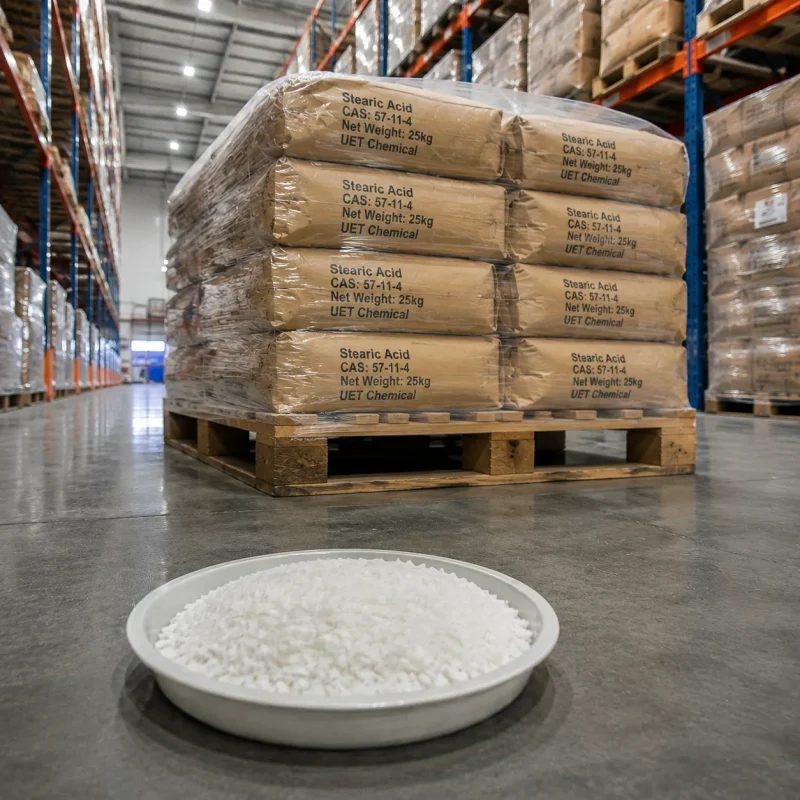
Stearic Acid is a naturally occurring long-chain saturated fatty acid supplied as white to pale yellow waxy flakes, beads or powder. Derived from fractionated natural fats and oils, it functions as a versatile lubricant, vulcanization activator and emulsifier base across rubber, plastics, cosmetics and industrial chemical sectors. UETChem supplies high-purity triple pressed stearic acid with consistent acid value and low iodine value for reliable processing performance. Each shipment includes COA, TDS, SDS.
- CAS No: 57-11-4
- Synonyms: n-Octadecanoic acid; Pearl stearic acid; Stearophanic acid
- EC Number: 200-313-4
- Molecular Formula: C₁₈H₃₆O₂
- Molecular Weight: 284.48 g/mol
- Appearance: White to pale yellow waxy solid
- Purity (Triple Pressed): ≥ 98.0% C₁₈ content
- Iodine Value: ≤ 1.0 g I₂/100g
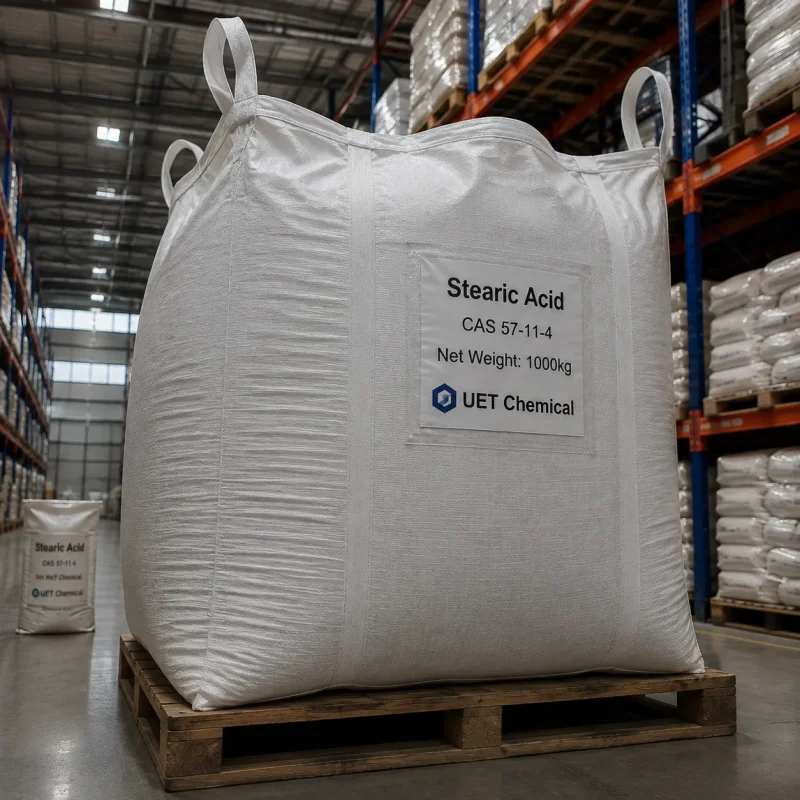
- Packaging: 25 kg PE-lined kraft bag; 500 kg flexible jumbo bag. Custom packaging available.
- Main Applications: Rubber vulcanization activator, plastics lubricant/release agent, cosmetics emulsifier, candle wax additive, metallic stearate precursor
Introduction to Stearic Acid
Stearic Acid (n-Octadecanoic Acid) is an 18-carbon saturated fatty acid widely used as a foundational building block in industrial manufacturing. Commercially produced via hydrolysis and fractionation of natural fats and oils, it presents as a waxy solid with a faint characteristic odor. Triple pressed grades are valued for high purity, sharp solidification point and low iodine value, which deliver strong oxidative stability and resistance to yellowing.
Its dual structure — a non-polar hydrocarbon chain paired with a polar carboxylic acid head — makes it an indispensable lubricant, release agent and chemical intermediate. Reaction with metal oxides or bases produces metallic stearates essential for PVC stabilization and waterproofing formulations. Store in a cool, dry warehouse below 40 °C, away from direct sunlight, strong oxidizers and alkaline materials to prevent rancidity and discoloration.
Stearic Acid Chemical & Physical Properties
| Property | Value |
|---|---|
| Molecular Formula | C₁₈H₃₆O₂ |
| Molecular Weight | 284.48 g/mol |
| Melting Point | 67 – 72 °C |
| Acid Value | 195 – 205 mg KOH/g |
| Saponification Value | 205 – 215 mg KOH/g |
| Iodine Value (Triple Pressed) | ≤ 1.0 g I₂/100g |
| Solubility | Insoluble in water; soluble in ethanol, ether, chloroform and hot oils |
Applications of Stearic Acid
Rubber & tire manufacturing
Acts as a vulcanization activator that reacts with zinc oxide to form zinc stearate in situ. This accelerates sulfur cross-linking, improves filler dispersion and enhances tensile strength and aging resistance of rubber compounds.
Plastics & polymer processing
Functions as an internal and external lubricant and release agent for PVC, PE and PP extrusion and injection molding. It reduces melt viscosity, prevents sticking to processing equipment and improves surface gloss of finished parts.
Cosmetics & personal care
Neutralized with alkalis to form stearate soaps that work as emulsifiers and structure builders. It creates stable oil-in-water emulsions and imparts a rich, non-greasy skin feel in creams, lotions and bar soaps.
Candle & wax blending
Blended with paraffin or vegetable waxes to raise melting point, increase opacity and prevent shrinkage and frosting in molded candles. It supports clean burning and consistent scent release.
Storage & Safety Precautions for Stearic Acid
- Store in original sealed packaging in a cool, dry, well-ventilated warehouse below 40 °C. Protect from direct sunlight and moisture. Keep away from strong oxidizers and strong alkalis to avoid degradation and premature soap formation. Typical shelf life is 24 months under proper conditions.
- Not classified as hazardous under GHS. Approved for food-contact and cosmetic applications. Fine dust from bulk handling may cause mild respiratory irritation; wear standard dust masks and safety glasses. Molten material above 75 °C can cause thermal burns — use heat-resistant PPE for melting operations.
- Non-DG for transport under standard regulations. Ship in standard dry containers. Avoid prolonged exposure to temperatures above 60 °C during transit to prevent melting and subsequent caking on cooling.
- Verify acid value, iodine value and melting point upon receipt. Elevated iodine value indicates excess unsaturated impurities, which will cause yellowing and rancidity in end products.
Stearic Acid FAQ
Q: What is the difference between plant-based and tallow-based Stearic Acid?
A: Chemically nearly identical with comparable performance in most applications. Plant-based grades suit vegan, Halal/Kosher and sustainability-focused uses. Tallow-based grades are typically more cost-effective and common in traditional rubber and candle production.
Q: What does “Triple Pressed” mean for Stearic Acid?
A: It refers to multi-stage purification that removes unsaturated fatty acids. The result is ≥98% C₁₈ content and ≤1.0 iodine value, delivering better color stability, oxidation resistance and longer shelf life in sensitive formulations.
Q: Why am I seeing plate-out or die build-up in my PVC extrusion?
A: Excessive stearic acid dosage causes surface migration and plate-out. Premature reaction with calcium/zinc stabilizers forming insoluble metal stearates is another common cause. Reduce stearic acid loading or add a higher-melting internal lubricant to resolve.
Related products
Manufacturer & Exporter Since 2006
Get Tailored Chemical Raw Material Solutions — Reply Within 1 Hour
Factory-direct pricing, stable high-purity supply and complete compliance documentation for your industrial formulations.
- 1000+Products
- 200+QC Protocols
- 7–15Days Delivery
- Factory-Direct Pricing
- COA / TDS / SDS Included
- Free Samples for Testing
- 40+ Export Countries
Request a Free Quote
Our engineers reply within 1 hour during GMT+8 business hours.
Please include in your inquiry:
- Product name or CAS number
- Required quantity
- Destination country or port
- Preferred packaging