
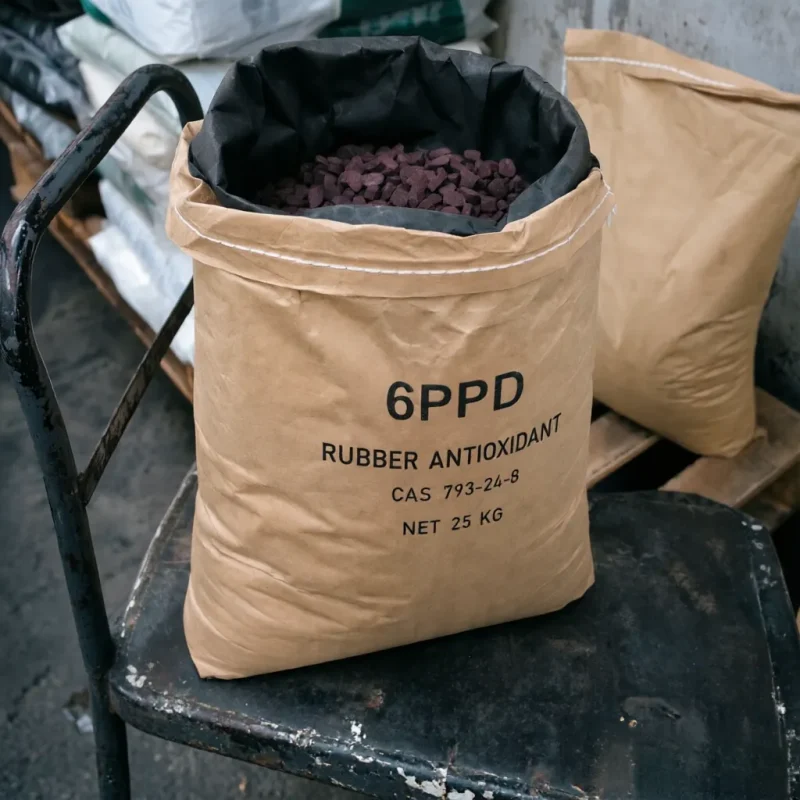
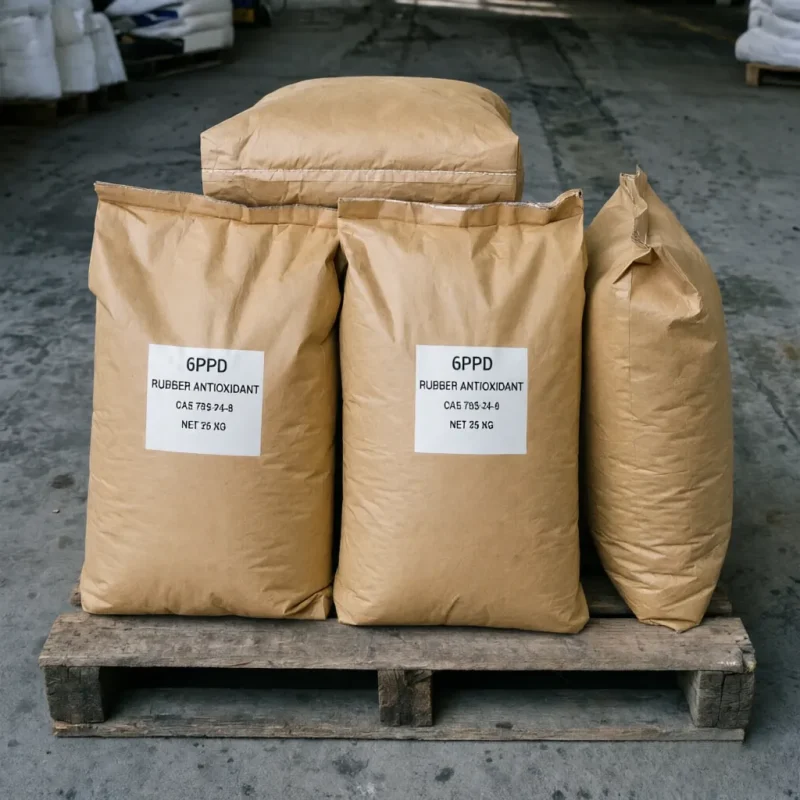
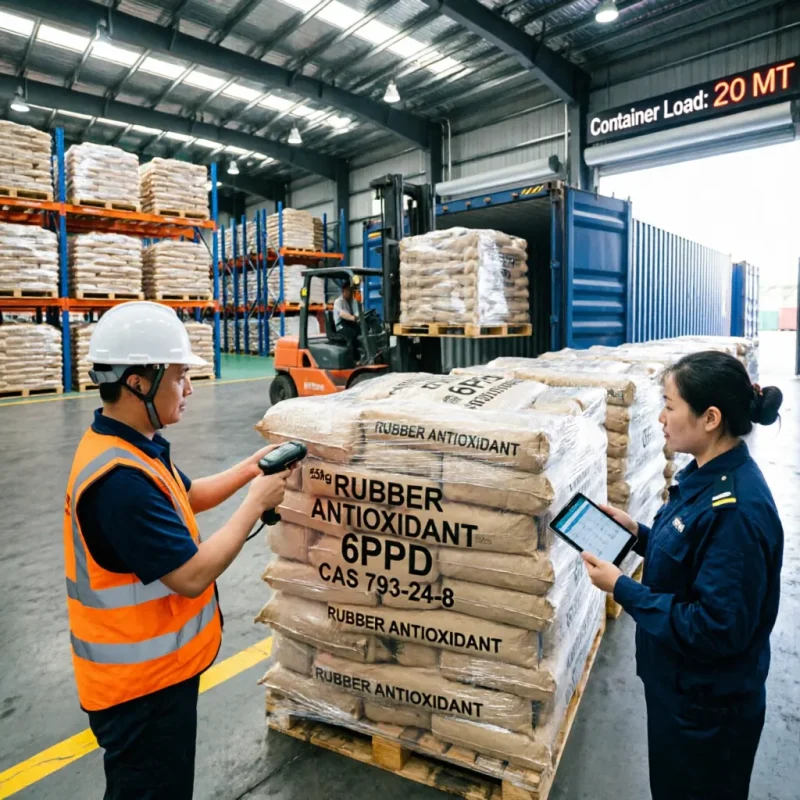
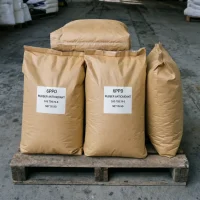

6PPD Rubber Antioxidant CAS 793-24-8
6PPD Rubber Antioxidant is a high-performance p-phenylenediamine (PPD) antiozonant supplied as a dark brown to reddish-brown liquid or solid. It delivers exceptional protection against dynamic fatigue, ozone cracking, and thermal degradation in natural and synthetic rubber compounds. Core uses include tire tread manufacturing, mechanical rubber goods, and heavy-duty conveyor belts. Each shipment includes COA, TDS, and SDS.
- CAS No: 793-24-8
- Synonyms: N-(1,3-Dimethylbutyl)-N’-phenyl-p-phenylenediamine, Antioxidant 4020, 6PPD
- EC Number: 212-351-0
- Molecular Formula: C18H24N2
- Molecular Weight: 268.40 g/mol
- Appearance: Dark brown to reddish-brown liquid or solid pellets
- Purity: ≥ 99.0%
- Packaging: 200 kg (440 lb) HDPE drum; 1000 kg (2200 lb) IBC tote. Custom packaging available upon request.
- Main Applications: Tire manufacturing, dynamic rubber parts, ozone resistance additives
Introduction to 6PPD Rubber Antioxidant
6PPD is the industry-standard p-phenylenediamine derivative used globally to protect unsaturated elastomers from oxidative and ozone-induced degradation. It acts by scavenging free radicals and migrating to the rubber surface to form a protective film that prevents ozone penetration. Tire manufacturers and industrial rubber compounders rely on it to extend the service life of dynamic components subjected to continuous flexing and outdoor weathering.
The primary processing advantage is its excellent solubility in standard rubber polymers (NR, SBR, BR) during Banbury mixing, ensuring uniform dispersion without premature blooming. The critical handling characteristic is its phase-change behavior: it solidifies below 40 °C (104 °F). Drums stored in cold warehouses must be gently warmed before pumping. Avoid direct high-heat sources that could trigger localized thermal degradation.
Key Features of 6PPD Rubber Antioxidant
- Superior ozone and flex-cracking resistance. Migrates optimally to the rubber surface to create a chemical barrier, preventing micro-cracks from propagating under dynamic flexing conditions.
- Excellent thermal stability. Protects polymer chains from thermal oxidation during high-temperature vulcanization cycles and long-term service in hot environments.
- Low volatility. Minimal evaporative loss during open-mill mixing and curing processes compared to older generation antioxidants like IPPD.
- Broad elastomer compatibility. Highly effective in natural rubber (NR), styrene-butadiene rubber (SBR), and polybutadiene rubber (BR) blends.
6PPD Chemical & Physical Properties
| Property | Value |
|---|---|
| Molecular Formula | C18H24N2 |
| Molecular Weight | 268.40 g/mol |
| Thermal Behaviour | Melting point 40–45 °C (104–113 °F). Liquid above 45 °C. Avoid heating above 80 °C (176 °F) during melting. |
| Density | Approx. 0.99 g/cm³ (61.8 lb/ft³) at 20 °C (68 °F). |
| Solubility | Soluble in alcohol, acetone, toluene, and rubber polymers; insoluble in water. |
| Ash Content | ≤ 0.10% |
| Free Amine | ≤ 0.10% |
| Viscosity (at 60 °C) | Approx. 15–20 mPa·s |
Applications of 6PPD Rubber Antioxidant
Tire treads and sidewalls: Dosed at 1.5–3.0 phr (parts per hundred rubber) in NR/SBR/BR blends. Prevents ozone-initiated groove cracking and tread chunking in passenger, truck, and off-the-road (OTR) tires exposed to continuous flexing and weathering.
Dynamic mechanical rubber goods: Used in conveyor belts, V-belts, and anti-vibration engine mounts. Maintains structural integrity and prevents surface degradation caused by cyclic stress and environmental ozone.
Seals, hoses, and gaskets: Added at 1.0–2.0 phr to protect automotive and industrial rubber profiles from heat and oxygen aging, extending the operational lifespan of under-hood components.
Storage & Safety Precautions for 6PPD
- Storage: Keep tightly sealed in original HDPE drums or IBC totes in a dry, well-ventilated warehouse. The material will solidify if ambient temperatures drop below 40 °C (104 °F). To liquefy for pumping, place drums in a warm room (max 60 °C / 140 °F). Do not use open flames or localized electric heaters directly on the drum.
- Safety: Classified as a skin sensitizer and aquatic toxin. Wear chemical-resistant gloves, long sleeves, and safety goggles during handling. Avoid prolonged skin contact and release into waterways. Wash thoroughly after handling.
- Transport: Generally classified as Non-DG under IATA/IMDG/ADR for standard transit, but may be subject to marine pollutant regulations depending on local environmental laws. Ship in secure, leak-proof containers.
- QC note: Verify purity (≥ 99.0%) and free amine content via GC/HPLC upon receipt. A distinct burnt odor or excessive solid particulates may indicate thermal degradation during transit; reject such lots.
6PPD FAQ
Q: How does 6PPD differ from IPPD (Antioxidant 4010NA)?
A: 6PPD offers superior long-term ozone protection and lower volatility during high-heat curing. IPPD blooms to the surface faster, providing quicker short-term protection, but 6PPD is the preferred choice for heavy-duty and long-lifecycle applications like truck tires.
Q: The product arrived completely solid in the drum. Is it ruined?
A: No. 6PPD naturally solidifies below 40 °C (104 °F). Move the drum to a hot room (50–60 °C / 122–140 °F) for 24–48 hours until it melts back into a homogenous liquid. Never use direct high heat, which can scorch the chemical.
Q: Can I use 6PPD in light-colored or white rubber compounds?
A: No. Like all PPD-class antioxidants, 6PPD causes severe contact staining and discoloration when exposed to light and air. Use non-staining hindered phenols or phosphites for white or pastel rubber products.
Related products
Manufacturer & Exporter Since 2006
Get Tailored Chemical Raw Material Solutions — Reply Within 1 Hour
Factory-direct pricing, stable high-purity supply and complete compliance documentation for your industrial formulations.
- 1000+Products
- 200+QC Protocols
- 7–15Days Delivery
- Factory-Direct Pricing
- COA / TDS / SDS Included
- Free Samples for Testing
- 40+ Export Countries
Request a Free Quote
Our engineers reply within 1 hour during GMT+8 business hours.
Please include in your inquiry:
- Product name or CAS number
- Required quantity
- Destination country or port
- Preferred packaging