
Ethylene Glycol Diacetate (EGDA) CAS 111-55-7
Ethylene Glycol Diacetate (EGDA) is a diacetate ester solvent with two acetate groups on an ethylene backbone, supplied as a colorless liquid with mild ester odor. Its high boiling point and slow evaporation make it useful in high-baking coatings, foundry binder systems, and resin solvent blends. Each shipment includes COA, TDS, SDS.
- CAS No: 111-55-7
- Synonyms: EGDA; Ethylene Diacetate; 1,2-Ethanediol diacetate; Glycol diacetate
- EINECS: 203-880-8
- Molecular Formula: C6H10O4
- Molecular Weight: 146.14 g/mol (146.14 lb/lbmol)
- Appearance: Colorless to pale yellow liquid
- Purity: 99.0% min (GC)
- Acid Value: 0.5 mg KOH/g max
- Saponification Value: 760-780 mg KOH/g
- Water Content: 0.3% max
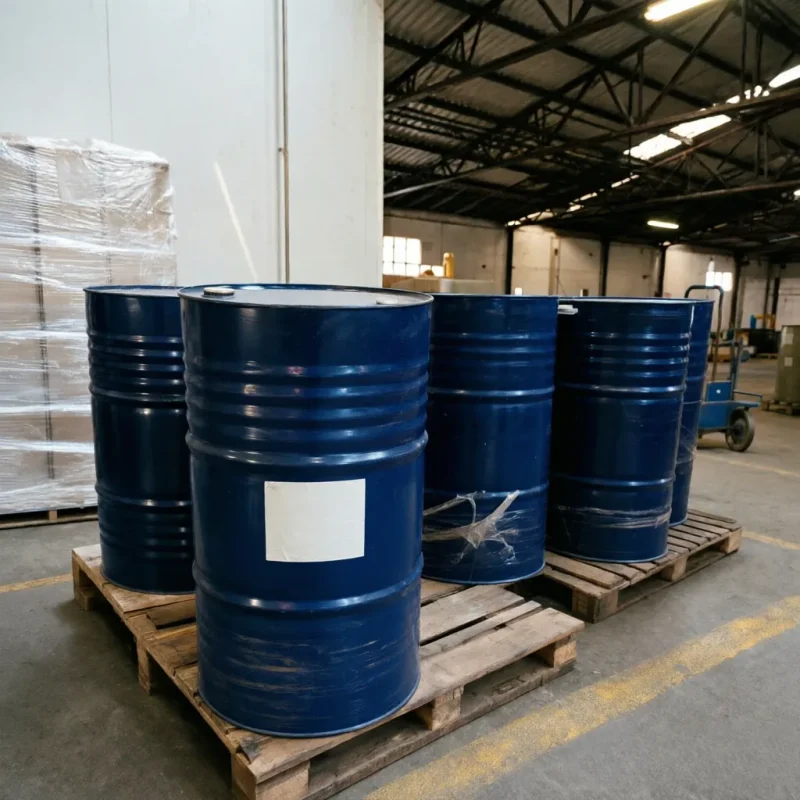
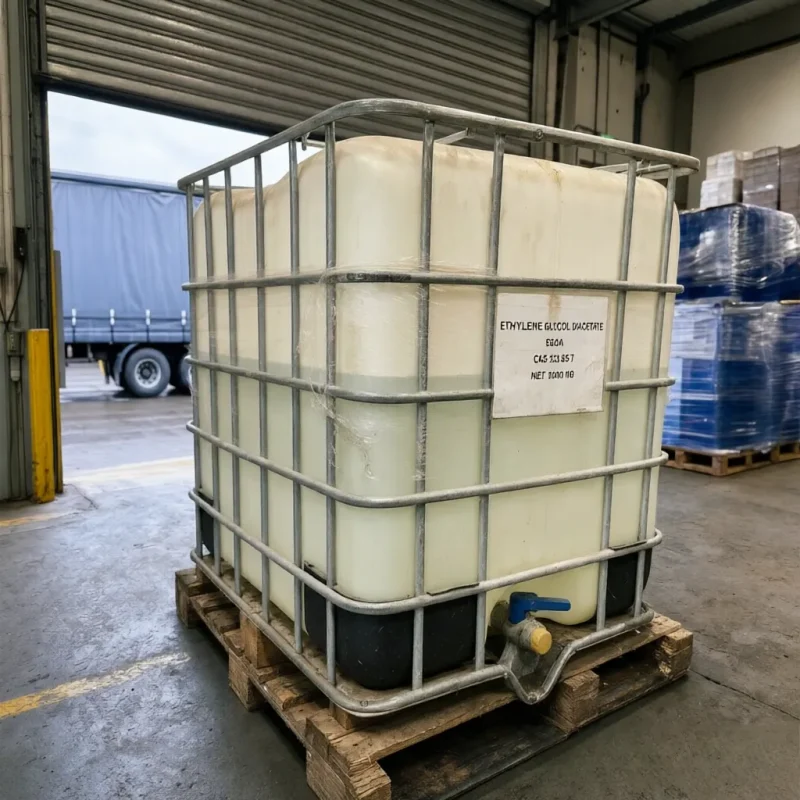
- Packaging: 200 kg (441 lb) drum, 1000 kg (2205 lb) IBC. Custom packaging available upon request.
- Main Applications: High-boiling solvent for coatings and lacquers, foundry binder solvent, coalescing aid, resin intermediate
Introduction to EGDA
EGDA is a colorless to pale yellow diacetate ester liquid containing two acetate groups on a two-carbon ethylene backbone. The ester structure gives moderate polarity and slow evaporation, so it acts as a high-boiling solvent and coalescing aid in baking coatings, lacquers, and foundry binder systems.
EGDA boils near 189–191 °C (372–376 °F), which helps film flow and reduces solvent popping in hot-cure films. The main handling issue is hydrolysis: moisture plus acid or base impurity can split acetate groups to acetic acid and ethylene glycol, raising acid value and changing odor. Keep drums sealed and dry. Release checks normally track acid value, water, and color; slight color drift may occur during warm storage, so batch trend records help during release.
Key Features of EGDA
- Two acetate ester groups: EGDA provides polar solvency for resins and a saponification window near 760–780 mg KOH/g for QC.
- High boiling range: 189–191 °C (372–376 °F) supports slow evaporation, better leveling, and fewer film defects in baked finishes.
- Low acid value specification: 0.5 mg KOH/g max helps protect acid-sensitive pigments and binder catalysts from unintended neutralization.
- Hydrolytic sensitivity: water plus heat can generate acetic acid, so acid value drift flags moisture ingress.
- QC checkpoints: density by ASTM D4052, viscosity by ASTM D445, flash point by ASTM D93, acid value by ASTM D974, and water by ASTM E203.
EGDA Chemical & Physical Properties
| Property | Value |
|---|---|
| Molecular Formula | C6H10O4 |
| Molecular Weight | 146.14 g/mol (146.14 lb/lbmol) |
| Boiling Point | 189–191 °C (372–376 °F) at 101.3 kPa |
| Density | 1.106 g/cm³ (9.23 lb/gal) at 20 °C (68 °F) |
| Flash Point | 85–92 °C (185–198 °F) closed cup |
| Solubility | Limited solubility in water; miscible with alcohols, esters, ketones, and aromatic hydrocarbons |
| Viscosity | 1.5–2.5 mPa·s (1.5–2.5 cP) at 25 °C (77 °F) |
| Acid Value | 0.5 mg KOH/g max |
| Saponification Value | 760–780 mg KOH/g |
| Water Content | 0.3% max |
Applications of EGDA
High-baking coating solvent: The acetate groups solvate polar acrylic, polyester, and amino-resin segments. Slow evaporation improves leveling and reduces pinholes in baked films. Typical use is 2–15% of the total solvent blend.
Foundry binder solvent: EGDA dissolves phenolic or polyurethane binder components and controls binder viscosity during core mixing. Typical addition is 0.2–1.0% on sand weight, depending on binder chemistry.
Coalescing aid for latex films: EGDA swells latex particles temporarily, helping particle deformation during film formation. Start trials at 1–8% on polymer solids and check haze, gloss, and early blocking.
Resin and ester intermediate: The two acetate sites can undergo hydrolysis or transesterification, giving formulators a route to modify polarity and volatility in downstream ester systems.
Storage & Safety Precautions for EGDA
Storage and hydrolysis control: Store sealed at 5–35 °C (41–95 °F), away from heat and open flame. Use stainless steel, HDPE, or lined carbon steel. Keep away from water, strong acids, strong bases, and oxidizers. Moisture plus acid/base contamination can hydrolyze acetate groups to acetic acid and ethylene glycol, raising acid value.
Safety, spill, and transport: Handle EGDA as a combustible industrial liquid. GHS classification varies by supplier SDS; many SDS list it as not hazardous or as a mild skin/eye irritant. Wear goggles and gloves. Absorb spills with inert material and collect before washing. Ship as Non-DG as supplied; verify SDS section 14.
Field note: Sample with a dry cup and close the bottle quickly. A wet sample can hydrolyze during hot storage and push acid value above release limits.
EGDA FAQ
Q: What does acid value tell me about EGDA (CAS 111-55-7)?
A: Acid value tracks acetic acid formed by ester hydrolysis. Fresh EGDA usually stays ≤0.5 mg KOH/g. A rising acid value indicates moisture, heat, or acid/base contamination. Retest before use in acid-sensitive amino-resin or metal-cure coatings.
Q: How should EGDA be stored to prevent hydrolysis?
A: Keep EGDA sealed and dry at 5–35 °C (41–95 °F). Avoid water, strong acids, strong bases, and oxidizers. Use nitrogen blanketing for bulk tanks. Moisture plus heat splits acetate groups into acetic acid and ethylene glycol, raising acid value; retest acid value, water, and color after long storage.
Q: Can EGDA be used in waterborne coatings?
A: Yes, but limited water solubility requires care. EGDA is usually blended with co-solvents or emulsifiers, then acts as a coalescing aid by swelling latex particles. Start at 1–8% on polymer solids and check compatibility, haze, foam, and storage viscosity.
Related products
Manufacturer & Exporter Since 2006
Get Tailored Chemical Raw Material Solutions — Reply Within 1 Hour
Factory-direct pricing, stable high-purity supply and complete compliance documentation for your industrial formulations.
- 1000+Products
- 200+QC Protocols
- 7–15Days Delivery
- Factory-Direct Pricing
- COA / TDS / SDS Included
- Free Samples for Testing
- 40+ Export Countries
Request a Free Quote
Our engineers reply within 1 hour during GMT+8 business hours.
Please include in your inquiry:
- Product name or CAS number
- Required quantity
- Destination country or port
- Preferred packaging