
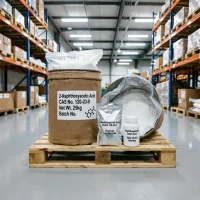
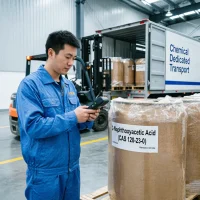
2-Naphthoxyacetic Acid CAS 120-23-0
2-Naphthoxyacetic Acid (BNOA), CAS 120-23-0, is a white crystalline aryloxyalkanoic acid containing a naphthalene ring, ether linkage and carboxyl group. It acts as a synthetic auxin for root initiation in cuttings and fruit-drop control in grapes and tomatoes. The ether bond improves oxidative stability and cuticle penetration. Each lot ships with COA, TDS and SDS.
- CAS No: 120-23-0
- Synonyms: BNOA, beta-naphthoxyacetic acid, 2-naphthalenyloxyacetic acid
- EINECS: 204-379-5
- Molecular Formula: C12H10O3
- Molecular Weight: 202.21 g/mol
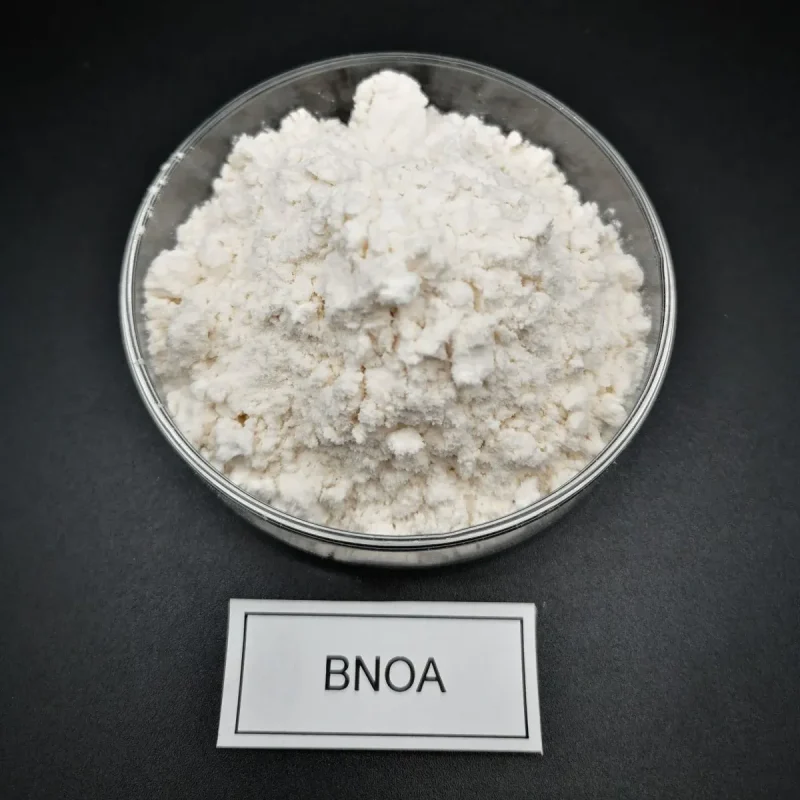
- Appearance: white to off-white crystalline powder
- Purity: 98.0% min by HPLC; exact assay on COA
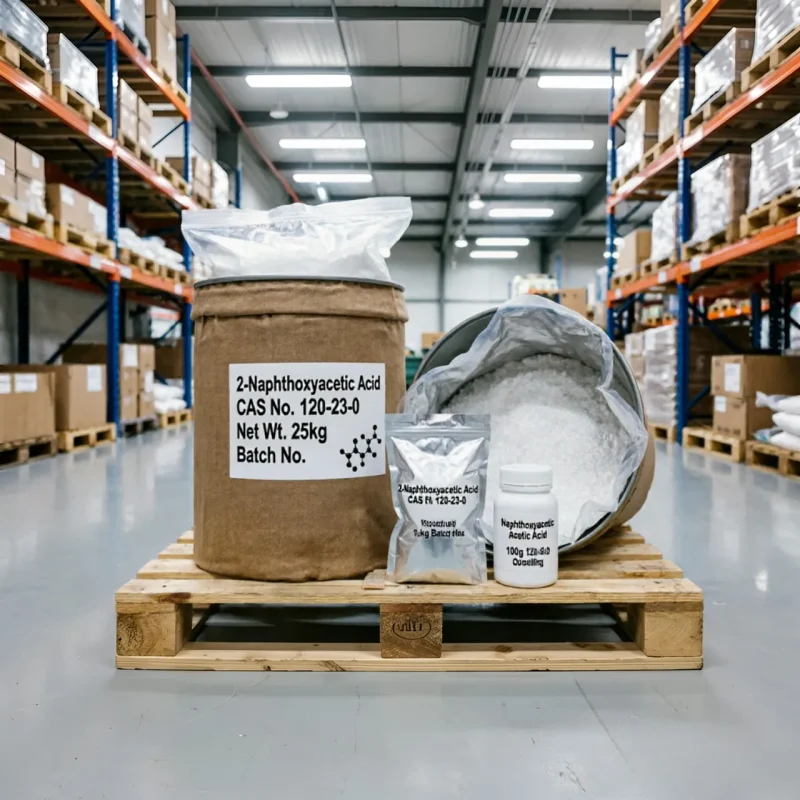
- Packaging: 25 kg (55 lb) fiber drum with PE liner; custom packaging available upon request.
- Main Applications: rooting agent; fruit-drop control; plant growth regulator
- Melting Point: 154–158 °C (309–316 °F)
- Solubility: soluble in ethanol and acetone; slightly soluble in cold water
- pH: saturated suspension 3.0–4.0
Introduction to 2-Naphthoxyacetic Acid
2-Naphthoxyacetic Acid is a white crystalline aryloxyalkanoic acid with a naphthalene ring, an ether bond and a terminal carboxyl group. It supplies auxin-like activity after uptake, stimulating cambium division for root initiation and suppressing abscission-layer formation at fruit pedicels. Main use is agricultural formulation: rooting powders, foliar sprays and flower-cluster treatments for grapes, tomatoes, citrus and ornamentals.
Formulation work starts with solubility. Free acid dissolves poorly in cold water, so aqueous SL batches need KOH or NaOH neutralization to potassium or sodium BNOA salt. Add alkali slowly while monitoring pH; target 7.0–8.0 for storage. If pH falls below 6 during tank mixing, crystals can appear and block nozzles. Store dry powder away from strong alkalis and oxidizers; humidity alone does not hydrolyze the ether bond, but caking can affect dosing accuracy.
Key Features of 2-Naphthoxyacetic Acid
- Ether-bond stability: The aryloxy ether linkage resists oxidative cleavage, helping active auxin remain available after field exposure.
- Root initiation: BNOA promotes cambium cell division and root primordia formation in cuttings; typical talc rates are 50–200 mg/kg.
- Fruit retention: BNOA suppresses abscission-zone enzymes at the pedicel, reducing pre-harvest drop when sprayed at 10–30 mg/L.
- Salt-forming carboxyl group: KOH or NaOH converts free acid into water-soluble potassium or sodium salts for SL formulations.
2-Naphthoxyacetic Acid Chemical & Physical Properties
| Property | Value |
|---|---|
| Molecular Formula | C12H10O3 |
| Molecular Weight | 202.21 g/mol |
| Appearance | White to off-white crystalline powder |
| Melting Point | 154–158 °C (309–316 °F) |
| Thermal Behavior | Decomposes above melting range; no normal boiling point |
| Density | 1.20–1.30 g/cm³ (solid reference value); specific gravity ~1.25 |
| Flash Point | Non-combustible solid; not applicable |
| Solubility | Soluble in ethanol, acetone and hot water; slightly soluble in cold water |
| pH of Saturated Suspension | 3.0–4.0 |
| UV Absorption | Strong UV-A/UV-B absorption from naphthalene chromophore |
Applications of 2-Naphthoxyacetic Acid
Rooting agent for cuttings: BNOA stimulates cambium cell differentiation into root primordia. For woody and semi-woody cuttings, quick-dip solutions use 500–2,000 mg/L in ethanol/water; rooting talc commonly uses 50–200 mg/kg.
Fruit-drop prevention: BNOA inhibits enzymatic pectin breakdown in the fruit abscission zone. For grapes and tomatoes, foliar sprays at 10–30 mg/L during flowering or early fruit set reduce physiological drop.
Parthenocarpy induction: Auxin activity expands the ovary without pollination. Greenhouse tomatoes and eggplants use 20–50 mg/L on flower clusters; overdose can produce misshapen fruit, so run small-area trials first.
Storage & Safety Precautions for 2-Naphthoxyacetic Acid
- Storage & Stability: Keep drums sealed at 5–30 °C (41–86 °F) in a dry, dark area. Store away from strong alkalis and oxidizers. UV exposure can slowly yellow the naphthalene ring; caking affects dosing accuracy. Use FIFO stock rotation.
- Safety & Spill Response: Check local GHS. BNOA dust irritates skin, eyes and airways. Wear nitrile gloves, goggles and a dust mask. Sweep or vacuum with HEPA equipment; wipe residues with an alcohol-dampened cloth and keep material out of drains.
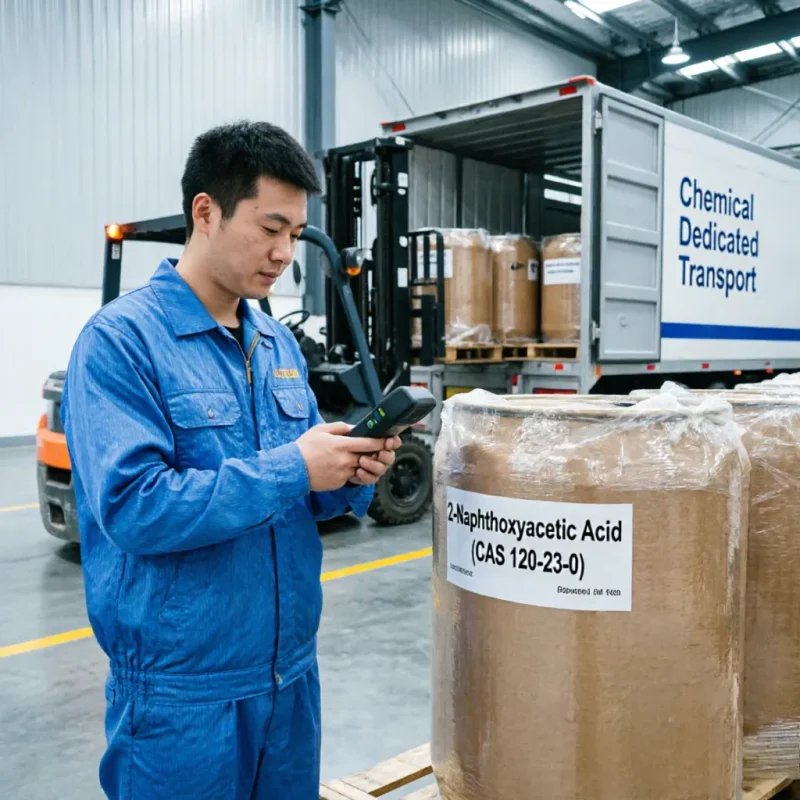
- Transport & Field Detail: Non-DG for most transport modes; confirm local regulations. Check drums for caking on receipt. Do not mill hard lumps blindly; verify melting range 154–158 °C (309–316 °F) or DSC behavior before feeding.
BNOA FAQ
Q: How do formulators dissolve 2-Naphthoxyacetic Acid for an SL formulation?
A: Free CAS 120-23-0 acid dissolves poorly in cold water. Pre-wet powder with ethanol or warm water, then add KOH or NaOH slowly under stirring to form the potassium or sodium salt. Hold pH 7.0–8.0. If pH drops below 6, crystals can return and block nozzles. Run a 24-hour cold storage test at 0 °C (32 °F) before releasing the batch, and use HPLC to confirm no precipitation after dilution.
Q: What impurity or parameter matters most for CAS 120-23-0 rooting formulations?
A: Watch related naphthoxyacetic impurities, residual solvent and salt conversion. Free acid works in talc, but SL batches need complete salt formation. HPLC at 220 nm should show main peak ≥98.0%. Check melting range 154–158 °C (309–316 °F); a depressed or broadened range signals impurities or polymorphic change. For rooting powders, particle size below 200 mesh gives better talc coating. Verify KOH titration for salt batches.
Q: Why does BNOA turn yellow during storage, and can it still be used?
A: Light yellowing usually comes from slow photo-oxidation of the naphthalene ring near the bag surface. It does not automatically mean failure. Store drums dark at 5–30 °C (41–86 °F), tie PE liner tight and rotate stock. If powder is dark brown, has phenolic odor or melting point falls below 152 °C (306 °F), reject. Otherwise run HPLC; use material if assay remains ≥98.0%.
Related products
Manufacturer & Exporter Since 2006
Get Tailored Chemical Raw Material Solutions — Reply Within 1 Hour
Factory-direct pricing, stable high-purity supply and complete compliance documentation for your industrial formulations.
- 1000+Products
- 200+QC Protocols
- 7–15Days Delivery
- Factory-Direct Pricing
- COA / TDS / SDS Included
- Free Samples for Testing
- 40+ Export Countries
Request a Free Quote
Our engineers reply within 1 hour during GMT+8 business hours.
Please include in your inquiry:
- Product name or CAS number
- Required quantity
- Destination country or port
- Preferred packaging