
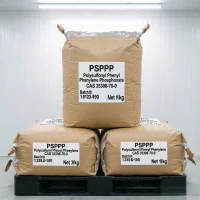
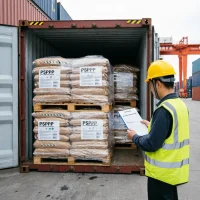
PSPPP Polysulfonyl Phenyl Phenylene Phosphonate CAS 35398-70-0
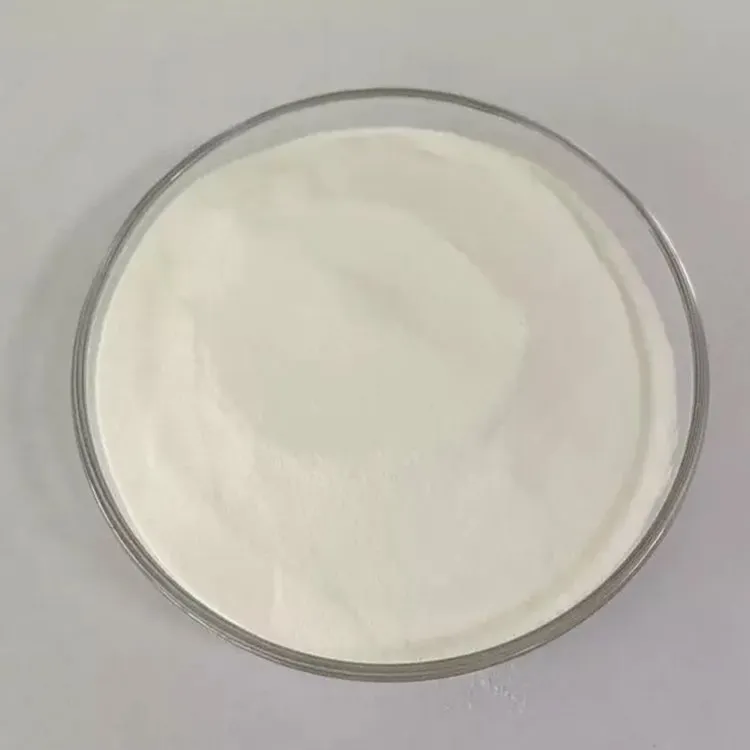
PSPPP Polysulfonyl Phenyl Phenylene Phosphonate is an aromatic P/S-containing polyphosphonate powder, used mainly as a halogen-free polymeric flame retardant in PC, PET/PBT, and polyamides. Its rigid phenylphosphonate and sulfone repeat units support stable char formation and low migration. COA, TDS, and SDS accompany each shipment.
- CAS No: 35398-70-0
- Synonyms: PSPPP; Polysulfonyldiphenylene phenylphosphonate
- EINECS: 1592732-453-0
- Molecular Formula: (C18H13O5PS)n
- Molecular Weight: repeat unit 372.33 g/mol
- Appearance: Off-white to pale yellow powder
- Purity: Non-volatile matter ≥99.0%
- Phosphorus Content: 8.0–8.5%
- Decomposition Temp: >350 °C (>662 °F)
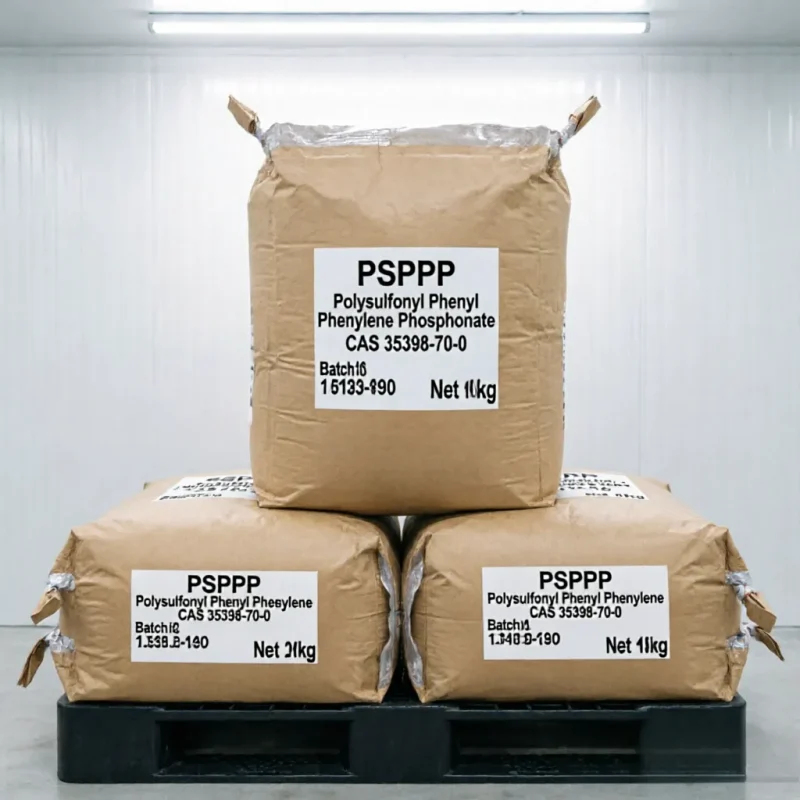
- Packaging: 25 kg fiber drum; Custom packaging available upon request.
- Main Applications: PC, PET/PBT, polyamides, epoxy composites
Introduction to PSPPP
PSPPP is an off-white to pale yellow solid polyphosphonate featuring a rigid backbone of alternating phenylphosphonate and aryl sulfone units. In engineering plastics and thermosets, it functions as a halogen-free, polymeric flame retardant that promotes robust char formation in the condensed phase without plasticizing the host matrix. Its aromatic structure supports thermal stability during polycarbonate and polyamide processing.
The macromolecular form helps keep phosphorus and sulfur fixed in the polymer phase, reducing surface blooming and volatile emissions during extrusion. The main processing pit is moisture sensitivity: residual water triggers hydrolytic degradation of the phosphonate ester bonds during melt compounding. This causes molecular weight drop, yellowing, and loss of mechanical strength, so pre-drying the powder below 0.1% moisture is critical before extrusion.
Key Features of PSPPP
- High Char Yield via P-S Synergy: The combination of phosphorus and sulfur in the polymer backbone catalyzes cross-linking during thermal decomposition, forming a stable, intumescent carbonaceous shield that protects the underlying polymer.
- Low Migration Profile: The macromolecular structure keeps phosphorus and sulfur in the polymer phase, reducing surface blooming and optical haze.
- Exceptional Thermal Stability: With a 5% weight loss temperature exceeding 350 °C (662 °F), it survives aggressive melt-processing conditions required for polycarbonate and polyamides.
- Halogen-Free Formulation: It achieves high Limiting Oxygen Index (LOI) and UL 94 V-0 ratings without generating corrosive or toxic halogenated dioxins during combustion, meeting strict RoHS and REACH environmental profiles.
- Mechanical Property Retention: The rigid aromatic backbone helps maintain heat deflection temperature (HDT) and tensile modulus in filled and unfilled resin systems.
PSPPP Chemical & Physical Properties
| Property | Value |
|---|---|
| Molecular Formula | (C18H13O5PS)n |
| Molecular Weight | Repeat unit 372.33 g/mol; polymer Mn typically >10,000 g/mol |
| Appearance | Off-white to pale yellow powder |
| Phosphorus Content | 8.0–8.5% |
| Sulfur Content | 8.2–8.8% |
| Decomposition Temp (Td 5%) | >350 °C (>662 °F) under N2 by TGA |
| Density | 1.28–1.35 g/cm³ at 25 °C (77 °F) |
| Solubility | Soluble in NMP, DMF, DMSO; insoluble in water and aliphatic hydrocarbons |
| Moisture Content | ≤0.1% by Karl Fischer |
Applications of PSPPP
Polycarbonate (PC) and PC Blends: Added at 4–10 wt% during twin-screw extrusion. The phosphonate groups interact with PC chains to promote rapid char network formation upon ignition. It is often paired with anti-drip agents like PTFE to achieve UL 94 V-0 at thin sections while maintaining transparency and impact strength.
Polyesters (PET / PBT): Used at 8–15 wt% in injection molding compounds for electronic connectors. During combustion, the sulfur and phosphorus species catalyze the dehydration of the polyester backbone into a protective carbon layer. To prevent transesterification side-reactions that lower the PET molecular weight, melt residence time must be strictly controlled and the powder must be rigorously dried.
Polyamides (Nylon 6 / Nylon 66): Dosed at 10–20 wt% for electrical and automotive components. The rigid aromatic structure resists the high melt temperatures of 260–290 °C (500–554 °F) typical for polyamides. It suppresses flaming drips by increasing the melt viscosity of the degrading polymer layer, helping the part pass glowing wire ignition tests (GWIT).
Epoxy Resin Composites: Incorporated at 10–15 phr into the resin matrix before curing for printed circuit boards (PCBs). The phenylphosphonate units integrate into the cross-linked network, raising the glass transition temperature (Tg) while providing a V-0 rating and reducing the coefficient of thermal expansion (CTE).
Storage & Safety Precautions for PSPPP
- Storage temperature: keep at 15–30 °C (59–86 °F); avoid heat sources and direct sunlight.
- Moisture control: keep the inner PE bag tied and the drum sealed; wet PSPPP can hydrolyze during extrusion.
- Warehouse: store in a dry, ventilated area; keep away from water lines, steam pipes, and open drains.
- After sampling: reseal immediately; do not leave powder exposed during weighing or feeding.
- Incompatibles: strong oxidizers, strong bases, and water.
- Dust control: use local exhaust or closed feeding to reduce airborne powder.
- PPE: N95/P2 dust mask, safety goggles, and nitrile gloves during weighing and charging.
- GHS: based on available data, not classified as hazardous; confirm the current SDS.
- Spill response: sweep gently to avoid dust, collect into a labeled container, then wipe with a damp cloth.
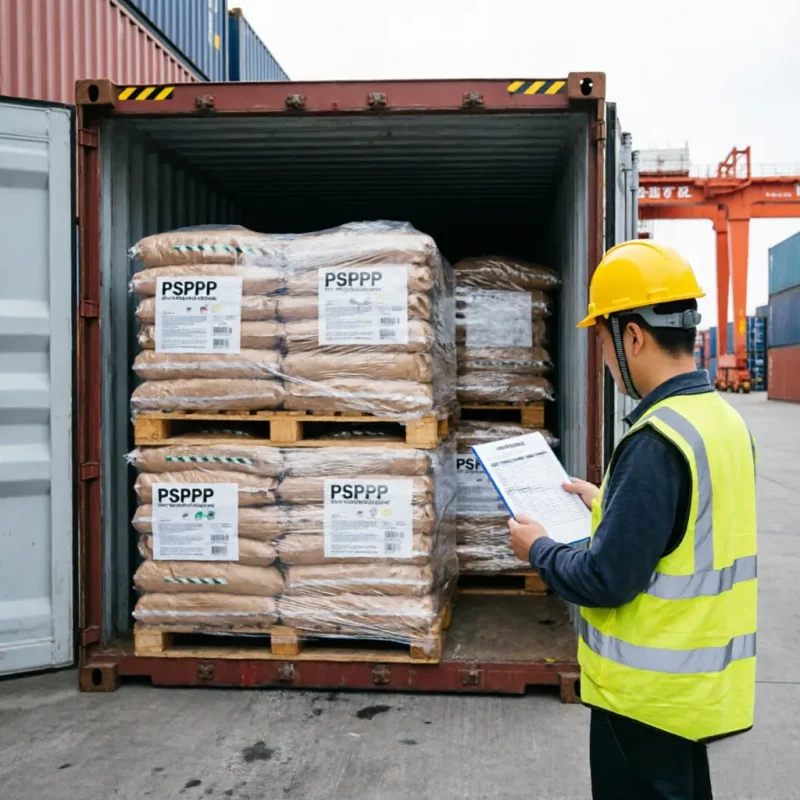
- Transport: Non-DG for air and sea freight under typical classification.
- QC moisture: verify Karl Fischer moisture before compounding; target ≤0.1%.
- Drying: if moisture is high, dry at 80–100 °C (176–212 °F) for 4–6 hours; keep dry-air dew point below -40 °C (-40 °F).
- Feeder calibration: bulk density may vary between batches; calibrate gravimetric feeders before production.
PSPPP FAQ
Q: What processing checks are important for CAS 35398-70-0 in polycarbonate extrusion?
A: PSPPP is a powder, so complete melting and dispersion are essential. Use a masterbatch or side-feed. Monitor melt pressure and filter differential pressure. Gel spots, streaks, or splay usually point to poor drying, screw design, or dispersion.
Q: Why is pre-drying required before compounding PSPPP into PET or Nylon?
A: PSPPP contains phosphonate ester bonds that hydrolyze at high temperature when moisture is present. This can cause yellowing, molecular-weight loss, and weaker parts. Keep moisture below 0.1%, dry at 80–100 °C (176–212 °F) for 4–6 hours, and verify by Karl Fischer.
Q: Can PSPPP be used alone to achieve UL 94 V-0 in glass-filled polyamides?
A: Alone, PSPPP is often difficult to use for V-0 glass-filled polyamide. Glass fibers can break char continuity, and high loadings reduce mechanical properties. A practical route is 10–15 wt% PSPPP with MPP or a small sulfonate-salt synergist.
Related products
Manufacturer & Exporter Since 2006
Get Tailored Chemical Raw Material Solutions — Reply Within 1 Hour
Factory-direct pricing, stable high-purity supply and complete compliance documentation for your industrial formulations.
- 1000+Products
- 200+QC Protocols
- 7–15Days Delivery
- Factory-Direct Pricing
- COA / TDS / SDS Included
- Free Samples for Testing
- 40+ Export Countries
Request a Free Quote
Our engineers reply within 1 hour during GMT+8 business hours.
Please include in your inquiry:
- Product name or CAS number
- Required quantity
- Destination country or port
- Preferred packaging