
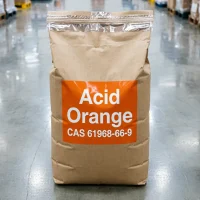
Acid Orange CAS 61968-66-9
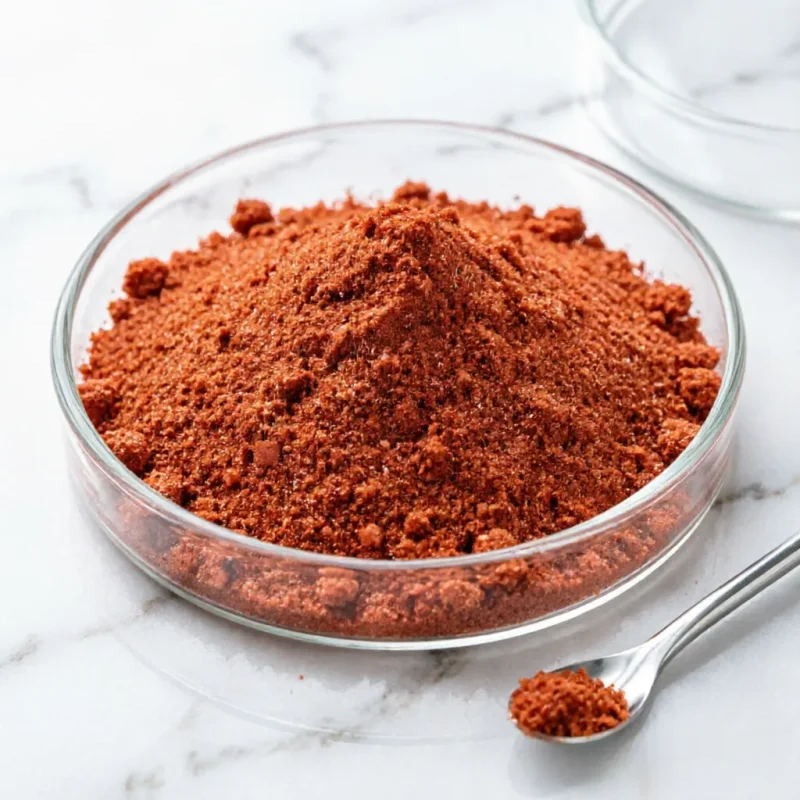
Acid Orange (CAS 61968-66-9) is a sulfonated anionic azo acid dye supplied as an orange to reddish-brown powder. Its sodium-sulfonate structure keeps the dye water-soluble and supports uptake on wool, silk, nylon and leather under acidic conditions, making it practical for textile dyeing, leather coloring and paper shade adjustment. Each shipment includes COA, TDS and SDS.
- CAS No.: 61968-66-9
- Synonyms: Acid Orange 56; C.I. Acid Orange 56; C.I. 22620
- EINECS: 263-476-0
- Molecular Formula: C22H15N4Na3O9S2 (commercial salt reference)
- Molecular Weight: 612.47 g/mol
- Appearance: Orange to reddish-brown powder
- Purity / Strength: Color strength 100% ±3% vs approved standard
- Color Index: Acid Orange 56 / 22620
- Solubility: Soluble in water; slightly soluble in ethanol
- pH (1% aq., 20°C): 6.5-8.5
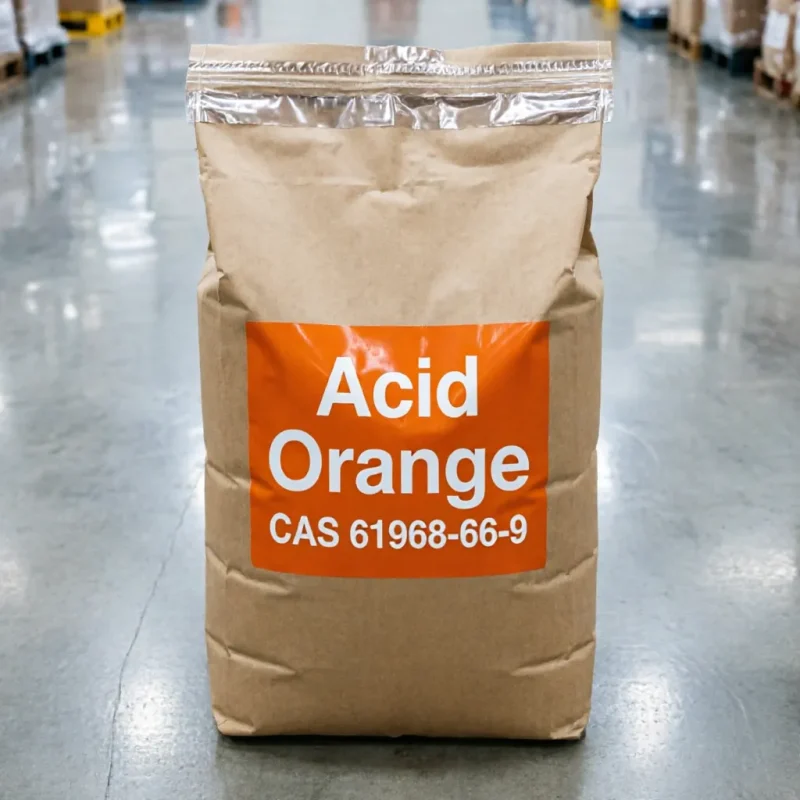
- Packaging: 25 kg fibre drum with PE inner liner. Custom packaging available upon request.
- Main Applications: Wool, nylon, silk, leather, paper, water-based ink
Introduction to Acid Orange
Acid Orange is a sulfonated azo acid dye, usually seen as an orange or reddish-brown powder. The sodium sulfonate groups keep the molecule in solution, while the azo chromophore develops the orange shade on protein and polyamide substrates. It is used mainly in wool/nylon dyeing and leather coloring.
Compared with C.I. Acid Orange 7, Acid Orange 56 typically shows higher wash/light fastness on wool: ISO 105-B02 lightfastness values around 5-6 are common, against 3-4 for Acid Orange 7. The main handling risk is dusting and hygroscopic caking; keep the bag closed, dose from a slurry, and recheck strength after long storage.
Key Features of Acid Orange
- Sulfonated anionic dye: Sodium sulfonate groups keep Acid Orange dissolved in water and allow ion-pair uptake on protonated wool and nylon amino sites in pH 4-5 dyebaths.
- Azo orange chromophore: The conjugated azo system develops a strong orange shade; small additions adjust paper or leather tone without masking base substrate color.
- Acid-bath compatibility: Acid Orange exhausts in ammonium sulfate or acetic acid systems and can run with common anionic leveling agents during wool and nylon dye cycles.
- Fastness balance for medium shades: On wool, ISO 105-B02 lightfastness is often reported at 5-6; ISO 105-C06 wash results improve when dyebath exhaustion is complete.
- Practical strength control: Commercial lots are standardized by color strength. Prepare a 0.05 g/L check solution and evaluate under D65 per ASTM E308 before bulk dosing.
Acid Orange Chemical & Physical Properties
| Property | Value |
|---|---|
| Molecular Formula | C22H15N4Na3O9S2 (commercial salt reference) |
| Molecular Weight | 612.47 g/mol |
| Color Index | Acid Orange 56 / C.I. 22620 |
| Boiling Point | Not established; solid azo dye salts decompose before boiling |
| Density | Apparent bulk density 0.45-0.75 g/cm³ (powder, as supplied) |
| Flash Point | Not applicable; non-volatile solid |
| Solubility | Soluble in water; slightly soluble in ethanol; insoluble in mineral oils |
| pH (1% aqueous, 20°C) | 6.5-8.5 |
| Moisture | ≤5.0% (typical commercial specification) |
| Shade | Orange to reddish brown |
| Thermal behavior | Darkens/decomposes on heating; no sharp melting point |
Applications of Acid Orange
Wool and nylon dyeing: Acid Orange shades protein and polyamide fibers by forming ionic pairs between sulfonate anions and protonated amino sites. Use 0.1-3.0% owf, pH 4.5-5.5 with acetic acid or ammonium sulfate, and run at 85-98°C. For pale nylon shades, add a leveling agent to slow strike.
Leather coloring: The dye penetrates collagen and binds to protonated protein side chains after acidification. Typical addition is 0.2-2.0% on shaved weight at 45-60°C and pH 3.8-5.5. Add after retanning and before fatliquoring to reduce surface staining.
Paper coloring: Anionic sulfonate groups are retained by cationic alum, polyamine or PAM retention aids. Use 0.01-0.30% on dry pulp, or 0.1-3.0 kg per tonne of paper, depending on target shade. Keep white water pH around 4.5-6.5 to stabilize retention.
Water-based inks: Acid Orange supplies a transparent orange color in water or water-glycol systems. The sulfonate salt form prevents pigment-like settling at typical dye loads of 0.1-3.0%. Filter stock solutions before use.
Storage & Safety Precautions for Acid Orange
Storage conditions for Acid Orange: Keep the powder in the original fibre drum with the PE inner liner sealed. Store below 30°C in a dry area. Acid Orange is hygroscopic; moisture uptake causes caking, poor flow and local high-concentration spots. Keep away from strong oxidizers, strong acids and cationic surfactants that can precipitate the dye. Tape the liner shut during sea freight and add desiccant where allowed.
Safety precautions for Acid Orange: Treat dye dust as an irritant. Lot SDSs may classify Acid Orange under GHS as Skin Irrit. 2, Eye Irrit. 2 and, where dust is significant, STOT SE 3; follow the actual SDS. Wear a particulate respirator, goggles and nitrile gloves. Use local exhaust at weighing and dosing. For spills, collect dry powder first, then rinse with water; dissolved dye stains concrete, grout and drains.
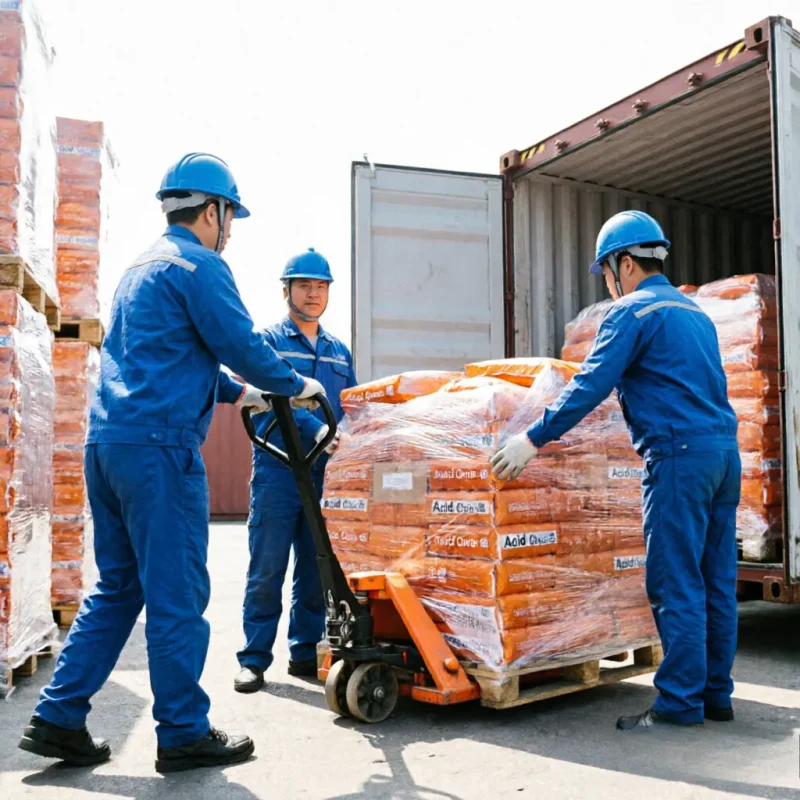
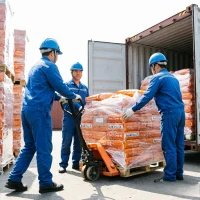
Transport classification: Non-DG for air and sea transport as a dye powder, unless the lot-specific SDS states otherwise. Use pallets and stretch wrap to avoid drum damage and moisture ingress.
Acid Orange FAQ
Q: Does Acid Orange CAS 61968-66-9 dye nylon 6/6 as well as wool?
A: Yes. It dyes both wool and nylon 6/6, but wool gives more predictable exhaustion. Nylon has fewer amine end groups, so saturation is lower. For medium shades use 0.5-2.0% owf, pH 4.0-5.0 and 90-98°C. Add a leveling agent for pale shades, and run a saturation/strike test before deep orange. Compare final shade under D65, because tungsten light can shift the perceived orange tone.
Q: Why does dyebath pH change exhaustion of Acid Orange?
A: Keep wool at pH 4.5-5.5. Acid groups protonate fiber amino sites, allowing Acid Orange sulfonate anions to bind. If pH is too low, dye strike becomes rapid and unlevel; if pH stays above about 6, fewer sites are available and exhaustion drops. In production, dissolve the dye first, add through a filter, adjust pH gradually, and check shade after 10 minutes at temperature.
Q: How should Acid Orange powder be stored and batched to avoid caking and staining?
A: Keep the PE liner sealed, dry and taped shut. Acid Orange is hygroscopic, so open drums can cake, flow poorly and form concentrated dust spots that stain floors and fabric. Make a 1-5% warm-water stock solution, filter before dosing, and recheck color strength if a drum has been open for weeks. Reject hard lumps that do not disperse after milling.
Related products
Manufacturer & Exporter Since 2006
Get Tailored Chemical Raw Material Solutions — Reply Within 1 Hour
Factory-direct pricing, stable high-purity supply and complete compliance documentation for your industrial formulations.
- 1000+Products
- 200+QC Protocols
- 7–15Days Delivery
- Factory-Direct Pricing
- COA / TDS / SDS Included
- Free Samples for Testing
- 40+ Export Countries
Request a Free Quote
Our engineers reply within 1 hour during GMT+8 business hours.
Please include in your inquiry:
- Product name or CAS number
- Required quantity
- Destination country or port
- Preferred packaging